Ottawa Airport Disruptions: PAL Airlines and Jazz Flight Cancellations

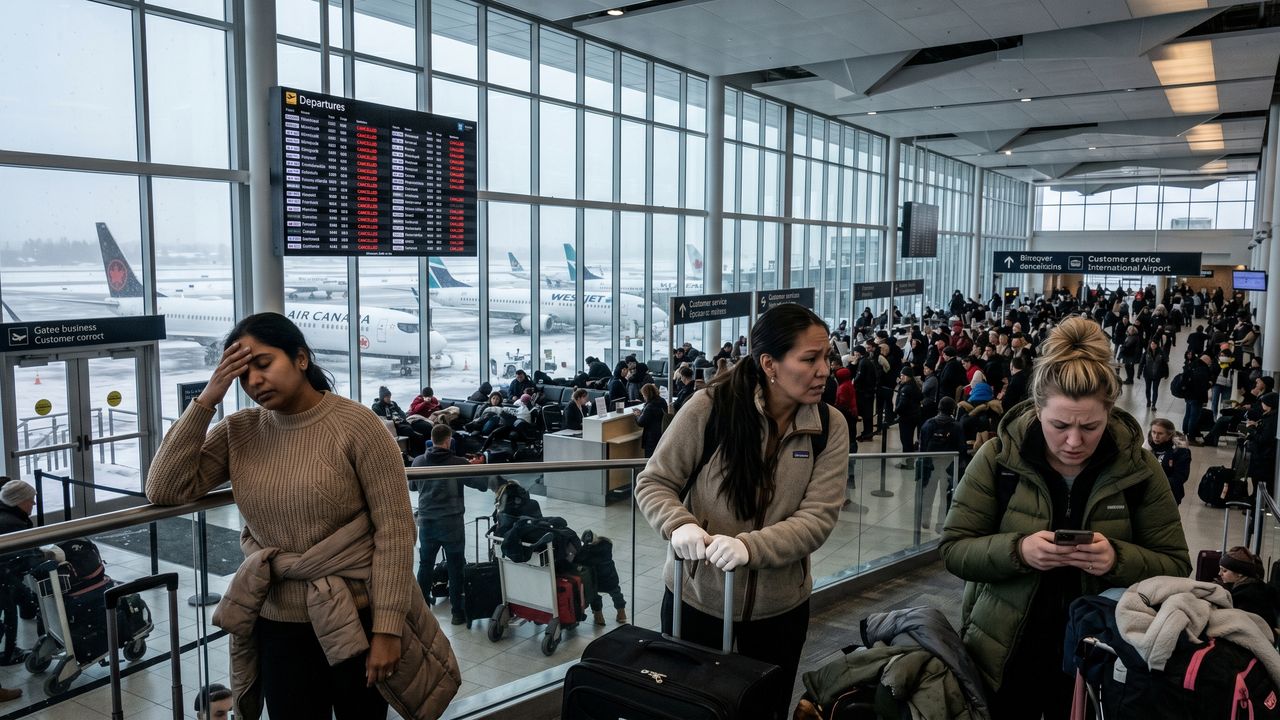
Image generated by AI
The Core Development
On June 29, 2026, Ottawa Macdonald–Cartier International Airport experienced significant operational instability. PAL Airlines and Jazz (Air Canada) recorded a combined five cancellations and a series of delays that disrupted both business and leisure travel.
The disruptions were not isolated to the capital. Because regional aviation relies on tight aircraft rotations, these cancellations caused knock-on effects in major hubs and remote destinations alike. Passengers faced immediate itinerary changes and extended wait times as airline staff struggled to stabilize schedules.
Key Facts Breakdown
- Primary Hub Impacted: Ottawa Macdonald–Cartier International Airport.
- Total Cancellations: 5 flights.
- Carrier Performance:
- PAL Airlines: 3 cancellations (20% of its scheduled operations at the airport).
- Jazz: 2 cancellations (7% of its scheduled services).
- Domestic Reach: Disruptions extended to Toronto, Fredericton, Halifax, Montreal, Calgary, Vancouver, Edmonton, Kelowna, Sudbury, Charlottetown, St. John’s, Hamilton, Moncton, Winnipeg, and Yellowknife.
- International Reach: Cross-border impacts were recorded in Washington, D.C., Boston, and Newark.
Flight Disruptions by Carrier
| Airport | Airline | Cancelled Flights | Delayed Flights |
|---|---|---|---|
| Ottawa Macdonald–Cartier | PAL Airlines | 3 | 0 |
| Ottawa Macdonald–Cartier | Jazz (ACA) | 2 | 7 |
Why This Matters
Industry observers note that this incident underscores the fragility of regional aviation networks. While five cancellations may seem statistically low, the percentage-based impact—specifically PAL Airlines losing 20% of its Ottawa capacity in a single day—reveals a lack of operational redundancy.
When regional carriers experience failures, the "ripple effect" is amplified. Because the same aircraft often services multiple short-haul legs (e.g., Ottawa to Fredericton to Halifax), a single cancellation in Ottawa can effectively shut down connectivity for multiple smaller cities. The extension of these delays into U.S. cities like Newark and Boston demonstrates that regional instability quickly escalates into international logistical failures.
Industry Outlook
Expect increased pressure on regional carriers to improve aircraft rotation buffers to prevent localized delays from becoming network-wide collapses. Travelers should anticipate continued volatility in regional connectivity and are advised to utilize real-time tracking tools and maintain flexible booking options to mitigate the risk of systemic delays.
Related Travel Guides
This article is for informational purposes. Flight routes, passenger regulations, visa rules, and transit advisories are subject to change by airlines and aviation authorities. Readers are advised to verify schedules and travel documentation with relevant carriers and border agencies before departure.
Related Stories

India Launches International Digi Yatra Biometric Trials at 7 Major Airports for 2027 Expansion

Avoiding Major Hubs: Using Portsmouth and Regional US Airports for Winter Travel 2026-27