Orient Express Mediterranean Yacht Sets Sail as Málaga Powers First Ship-to-Ship LNG Bunkering for France to Spain Cruises

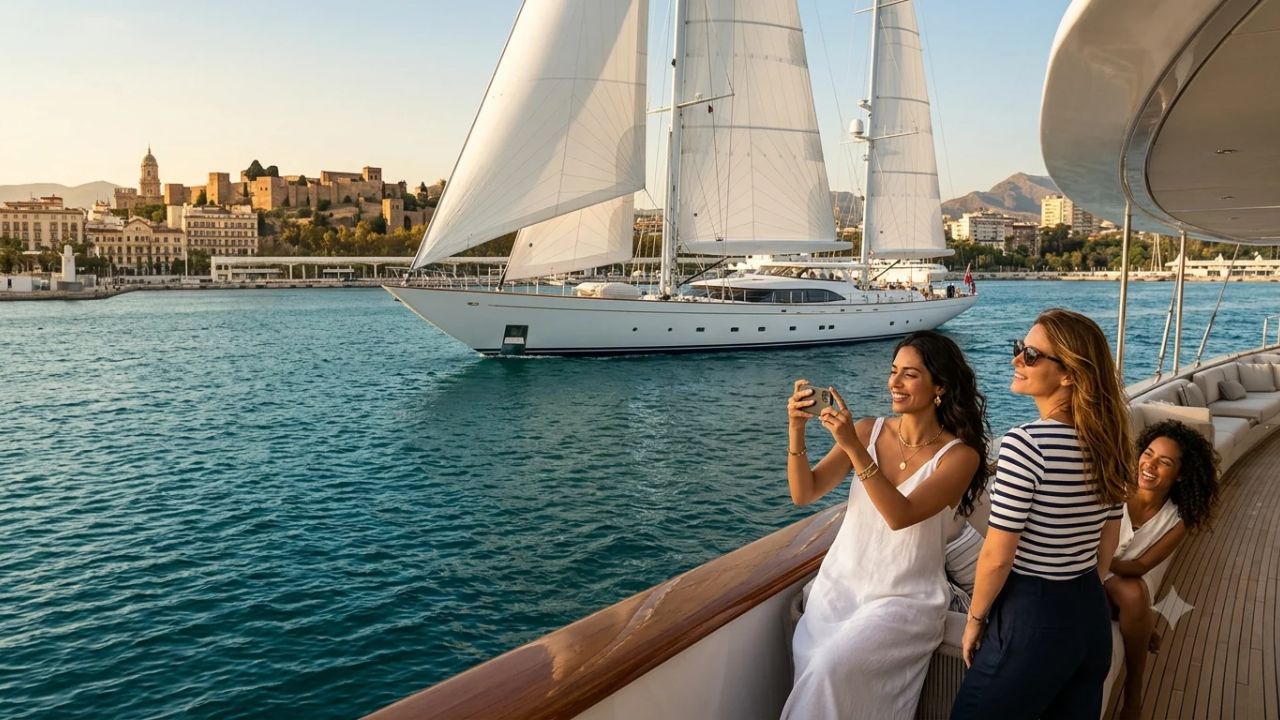
MÁLAGA, Spain — Gliding across the sun-drenched waters of the western Mediterranean between the historic harbors of Provence and the Andalusian coast, the emergence of hybrid wind-and-LNG mega-yachts is redefining the boundaries of ultra-luxury seafaring.
The strategic evolution of Mediterranean maritime travel came into sharp focus following an official operational milestone announced by the Port Authority of Málaga (Autoridad Portuaria de Málaga).
In a formal announcement published on 5 November 2026, port officials confirmed the successful execution of Málaga’s first-ever ship-to-ship liquefied natural gas (LNG) bunkering operation for a cruise vessel, delivering 300 cubic meters of cryogenic fuel directly to an Orient Express luxury sailing yacht during its October voyage.
The vessel, christened on 29 April 2026 and backed by public export financing from Bpifrance Assurance Export, represents a radical departure from conventional mass-market cruise ships.
Featuring just 54 bespoke suites accommodating up to 110 guests, the French-flagged vessel pairs dual-fuel LNG power plants with three monumental rigid sails that harness offshore Mediterranean winds when meteorological conditions permit.
Its autumn voyage—departing the French port of Marseille on 5 October, calling at Mahón on the Balearic island of Menorca, and docking in Málaga on 9 October—exemplifies a growing demand for intimate, small-capacity nautical itineraries connecting France and Spain.
The technological milestone unfolds within a broader macroeconomic surge across the Spanish visitor economy. Spain welcomed 10.1 million international tourists in September 2026 alone, with foreign visitor spending expanding by 8.1 percent year-on-year to €14.488 billion.
At the same time, international travelers boarding cross-border Mediterranean sailings must coordinate complex logistical arrangements, from Schengen short-stay rules and newly operational European biometric border systems to airport-port transit connections and comprehensive life-cycle environmental assessments.
ORIENT EXPRESS MEDITERRANEAN VOYAGE & MÁLAGA LNG SCORECARD (2026)
| Category / Entity | Details / Impact |
|---|---|
| Vessel Entity | Orient Express Luxury Sailing Yacht (French Maritime Flag) |
| Passenger Capacity | 54 Ultra-Luxury Suites; Maximum 110 Guests (Small-Ship Product) |
| Propulsion Technology | Dual-Fuel LNG Engine Systems + 3 Rigid Wind Sails (Solid Sail) |
| Vessel Christening Date | 29 April 2026 (Financing Guarantee by Bpifrance Assurance Export) |
| Designated Home Port | Saint-Tropez, French Riviera, France |
| Autumn Sailing Itinerary | 4 Nights: Marseille (5 Oct) -> Mahón, Menorca -> Málaga (9 Oct) |
| Port Authority Milestone | First Ship-to-Ship LNG Bunkering Supply to a Cruise Ship in Málaga |
| LNG Fuel Volume Delivered | 300 Cubic Meters Transferred Directly Ship-to-Ship (October 2026) |
| Málaga Autumn Cruise Traffic | 113 Forecast Cruise Calls & ~165,000 Passengers (Oct–Nov 2026) |
| Málaga Turnaround Ratio | 24 Turnaround Calls (21.2% of Total Calls; Boarding/Disembarking) |
| Spanish National Arrivals | 10.1 Million Foreign Tourists in September 2026 (+4.3% YoY Growth) |
| Spanish Visitor Expenditure | €14.488 Billion in September 2026 (+8.1% YoY; €212 Daily Spend) |
| Schengen Visa & Border Policy | EES Operational (10 April 2026); ETIAS Pending; €90 Standard Visa |
| Environmental Standard | IMO Life-Cycle GHG Assessment (Well-to-Wake Emissions Guidelines) |
The Vessel Architecture: Inside the 110-Guest Orient Express Sailing Yacht
The introduction of the Orient Express sailing yacht introduces a specialized ultra-luxury paradigm into the European cruise sector. For over a century, the Orient Express brand was synonymous with legendary continental railway journeys. Its maritime expansion translates that heritage of refined craftsmanship, private dining, and bespoke service to the open sea.
Constructed as the world's largest luxury sailing yacht, the vessel was formally christened on 29 April 2026, supported by an industrial financing guarantee issued through Bpifrance Assurance Export, France's national export credit agency.
Homeported in the glamorous French Riviera enclave of Saint-Tropez, the vessel was specifically designed to circumvent the environmental and infrastructural challenges associated with mega-cruise ships carrying 4,000 to 6,000 passengers.
The yacht’s interior configuration is deliberately exclusive:
- 54 Bespoke Suites: Offering expansive living spaces, private teak balconies, and customized interior finishes inspired by Art Deco elegance and French maritime traditions.
- 110 Passenger Capacity: Maintaining an intimate guest-to-crew ratio exceeding 1:1, ensuring individualized butler service, private shore excursions, and quiet communal spaces.
- Boutique Harbor Accessibility: With a streamlined hull profile and shallow draft compared to standard ocean liners, the vessel can dock directly at historic downtown quays and shallow Balearic anchorages that are strictly off-limits to larger commercial cruise vessels.
The defining technical breakthrough of the yacht is its hybrid propulsion system. The vessel integrates high-efficiency internal combustion engines running on liquefied natural gas with three towering rigid sails mounted on tiltable masts.
This modern aerodynamic rig, known in naval architecture as the "Solid Sail" system, deploys composite rigid panels that can rotate 360 degrees to capture offshore breeze. Under favorable Mediterranean wind conditions, the sails generate substantial aerodynamic thrust, allowing the yacht to glide quietly under wind power while dramatically reducing auxiliary engine load and fuel consumption.
ORIENT EXPRESS VESSEL SPECIFICATIONS & HYBRID PROPULSION
| Column 1 |
|---|
| [ Ultra-Luxury Hotel Component ] |
| 54 Panoramic Suites; 110 Guests Maximum; Michelin-caliber dining; spa & wellness salons. |
| v |
| [ Aerodynamic Wind Thrust ] |
| 3 Rigid "Solid Sail" Masts; automated rotational trim; zero-emission wind assistance. |
| v |
| [ Clean Cryogenic Fuel System ] |
| Dual-fuel internal combustion engines powered by Liquefied Natural Gas (LNG). |
| v |
| [ Regional Maritime Access ] |
| Small footprint permits direct berthing at Saint-Tropez, Mahón, and downtown Málaga. |
Port Infrastructure & The Málaga Milestone: Ship-to-Ship LNG Bunkering
While wind-assist technology captures public imagination, marine operations require reliable dockside bunkering infrastructure to maintain commercial schedules. The arrival of the Orient Express yacht in Andalusia provided the catalyst for a major infrastructural breakthrough at the Port of Málaga.
In its 5 November 2026 announcement, the Málaga Port Authority confirmed that it successfully completed its first-ever ship-to-ship LNG transfer to a cruise vessel during October. The operation involved transferring 300 cubic meters of liquefied natural gas directly from a specialized LNG supply vessel berthed alongside the Orient Express yacht at the cruise pier.
Ship-to-ship bunkering represents the pinnacle of modern maritime fueling logistics. Unlike truck-to-ship fueling—which requires fleets of pressurized cryogenic tanker trucks navigating congested port access roads and transfers fuel at slow pump rates—ship-to-ship delivery allows rapid, high-volume fueling from maritime barges without disrupting terminal passenger movements or dockside provisioning.
The successful transfer establishes Málaga as a fully certified LNG bunkering hub along the western Mediterranean shipping lane. This capability is essential because the European Union’s maritime emissions regulations and the International Maritime Organization’s decarbonization targets are accelerating the adoption of alternative fuels across European waters.
For cruise operators routing itineraries between France, Monaco, Italy, and Spain, having access to certified LNG bunkering in southern Spain eliminates the need for expensive detours to secondary fueling ports.
The bunkering milestone took place during a period of high operational density for Málaga. Official port authority projections for the autumn 2026 season (covering October and November) anticipated 113 cruise calls transporting approximately 165,000 passengers through the city.
Significantly, 24 of those scheduled calls were designated as turnaround operations—meaning passengers either commenced or concluded their voyages in Málaga. Representing 21.2 percent (more than one out of every five) of all autumn cruise calls, turnaround traffic generates substantial local economic benefits, as arriving and departing travelers book airport transfers, patronize city hotels, and dine in local tapas bars.
PORT OF MÁLAGA CRUISE INFRASTRUCTURE & AUTUMN 2026 TRAFFIC
| Infrastructure Metric | Operational Value | Strategic Context |
|---|---|---|
| Total Autumn Cruise Calls | 113 Scheduled Ship Calls | High seasonal density |
| Estimated Passenger Traffic | ~165,000 Cruise Guests | October–November period |
| Turnaround Calls (Homeport) | 24 Terminal Operations (21.2%) | Drives hotel & taxi yield |
| LNG Bunkering Milestone | 300 m³ Ship-to-Ship Transfer | First cruise LNG fueling |
| Marine Decarbonization Role | Western Mediterranean Hub | Complies with EU rules |
Environmental Realities: Decarbonization Claims vs. IMO Life-Cycle Standards
The combination of LNG propulsion and aerodynamic sails has prompted widespread public discussion regarding the environmental sustainability of modern luxury cruising. However, maritime environmental analysts and regulatory bodies emphasize that marketing claims must be evaluated through rigorous scientific frameworks.
According to the International Maritime Organization’s (IMO) comprehensive Life-Cycle GHG Assessment (LCA) guidelines, the climate impact of marine fuels cannot be determined solely by observing tailpipe exhaust at the ship's funnel. True environmental auditing requires a full "Well-to-Wake" assessment:
- Well-to-Tank (Upstream Extraction & Processing): Evaluating greenhouse gas emissions generated during natural gas extraction, pipeline transmission, liquefaction at -162 degrees Celsius, and maritime tanker transport to the bunkering depot. Methane leakage across upstream gas fields and liquefaction terminals represents a primary environmental challenge.
- Tank-to-Wake (Onboard Combustion & Methane Slip): Assessing onboard engine combustion. While LNG virtually eliminates sulfur oxides (SOx), reduces nitrogen oxides (NOx) by up to 85 percent, and cuts particulate matter (PM) by 99 percent compared to heavy fuel oil (HFO), unburned methane escaping through engine exhaust—known as "methane slip"—can diminish net carbon dioxide benefits due to methane's high global warming potential over a 20-year horizon.
- Rigid Wind Assistance: The deployment of three rigid sails provides clean, zero-emission thrust that reduces the total fuel burn required to maintain cruising speed. However, wind power remains inherently intermittent; during periods of calm seas, head winds, or narrow harbor maneuvers, the yacht operates exclusively under mechanical engine power.
The Málaga port announcement documents a completed logistical operation and equipment readiness. It does not publish an audited emissions log or establish that the specific voyage was emissions-free.
Responsible travelers should recognize that while hybrid wind-LNG mega-yachts represent a technological improvement over older diesel-burning cruise ships, marine operations still generate an environmental footprint that must be balanced through broader sustainability measures.
IMO "WELL-TO-WAKE" MARITIME EMISSIONS EVALUATION MATRIX
| Entity / Route | Metrics | Operational Status |
|---|---|---|
| Stage of Fuel Lifecycle | Primary Environmental Factors | Orient Express Mechanism |
| Upstream (Well-to-Tank) | Gas extraction, liquefaction, | Commercial LNG supply |
| cryogenic transport emissions | from European terminals | |
| Operational (Tank-to-Wake) | CO2, NOx, and methane slip | Dual-fuel combustion |
| from marine engine combustion | with low particulate rate | |
| Wind Assistance Offset | Variable wind aerodynamic push | 3 Solid Sail rigid masts |
| Overall Net Assessment | Reduced carbon intensity | Lower emissions per guest |
| compared to heavy bunker fuel | than legacy diesel liners |
Macroeconomic Tourism Context: Spain’s Record September and High-Yield Visitor Spending
The Orient Express yacht’s arrival along the Costa del Sol coincided with an extraordinary surge across Spain’s national tourism sector.
Official inbound tourism figures released by Spain’s National Statistics Institute (INE) in its FRONTUR report revealed that Spain welcomed 10.1 million international tourists during September 2026 alone. This performance represented a 4.3 percent expansion compared to September 2025.
Even more impressive was the financial yield recorded by the accompanying EGATUR tourism expenditure survey. Total spending by international visitors in Spain reached €14.488 billion during September, marking a remarkable 8.1 percent increase over the previous year.
Significantly, expenditure expanded at nearly double the rate of visitor volume (+8.1% spending vs. +4.3% volume), creating a 3.8 percentage point growth differential that underscores Spain’s successful strategic transition toward high-yield, quality-driven tourism.
SPANISH TOURISM MACROECONOMIC BENCHMARKS: SEPTEMBER 2026 (INE)
| Entity / Route | Metrics | Operational Status |
|---|---|---|
| Tourism Economic Indicator | September 2026 Official Total | Year-on-Year Growth Rate |
| International Tourist Inbound | 10.10 Million Foreign Visitors | +4.3% Volume Expansion |
| Total International Spend | €14.488 Billion Receipts | +8.1% Expenditure Growth |
| Expenditure Growth Advantage | Spending Outpaced Volume | +3.8 Percentage Points |
| Average Daily Spend per Guest | €212.00 per Person / Day | +4.0% Daily Spend Growth |
| Strategic National Shift | Transition from Mass Inbound | High-Value Yield Focus |
According to INE data, average daily spending per visitor climbed to €212, representing a 4.0 percent year-on-year increase. While mass-market beach holidaymakers contribute to these national aggregates, boutique cruise travelers occupy the pinnacle of the spending hierarchy.
A yacht hosting 110 guests generates minimal congestion along city sidewalks or public beaches, yet its passengers patronize Michelin-starred restaurants, purchase high-end Spanish leather goods and jewelry, hire private cultural docents, and book five-star pre-cruise hotel suites in cities like Málaga and Seville.
National tourism authorities have noted that final September arrival estimates remain subject to standard statistical adjustments, with consolidated data revisions scheduled for March 2027.
Upcoming releases in Spain’s official tourism calendar—including October air-passenger figures on 18 November and October hotel performance metrics on 23 November—will provide further clarity on how the autumn travel season concluded across Andalusia and the Mediterranean coast.
Transit & Border Logistics: Schengen Compliance, EES, and Multimodal Connections
For international travelers planning cross-border cruises between France and Spain, seamless maritime travel requires careful attention to evolving European border control protocols and airport-to-port connections.
Because both France and Spain are members of the European Schengen Area, voyages operating directly between French ports (such as Marseille or Saint-Tropez) and Spanish ports (such as Mahón or Málaga) are categorized as intra-Schengen movements.
However, non-European passengers must strictly comply with fundamental Schengen short-stay regulations:
- Passport Validity Rules: Passports issued to non-EU travelers must have been issued within the past ten years on the date of entry and must remain valid for a minimum of three months beyond the intended date of departure from the Schengen territory.
- The 90/180-Day Limitation: Travelers on standard tourist visas or visa-exempt passports are permitted to remain in the Schengen Area for a maximum of 90 days within any rolling 180-day window. Time spent cruising between European ports counts fully against this 90-day allotment.
- Visa Application Protocols: Citizens of nations requiring a Schengen short-stay visa must submit their applications through the consulate of the country where they spend the longest duration of their trip (or their first port of entry if stays are identical). The standard adult visa processing fee is €90, and applications require comprehensive proof of round-trip transport, medical travel insurance covering at least €30,000, and verified accommodation or cruise reservations.
- The Entry/Exit System (EES): The European Union’s new automated biometric Entry/Exit System (EES) became fully operational across all external Schengen air, land, and sea border checkpoints on 10 April 2026. Non-EU travelers entering the Schengen zone must register biometric data—including digital facial images and four fingerprint scans—at initial border gates, replacing manual passport stamping.
- ETIAS Status Clarification: The European Travel Information and Authorisation System (ETIAS)—the forthcoming digital travel permit for visa-exempt foreign travelers—is not yet operational or accepting applications; official European Commission portals will formally announce its launch date well in advance.
SCHENGEN BORDER & CRUISE TRANSIT CHECKLIST FOR TRAVELERS
| Entity / Route | Metrics | Operational Status |
|---|---|---|
| Regulatory Component | Compliance Rule / Requirement | Operational Detail |
| Passport Validity Standard | Issued within past 10 years; | Strictly verified at |
| valid 3 months post-departure | initial embarkation gate | |
| Permitted Duration of Stay | Maximum 90 days in 180 days | Intra-Schengen cruise |
| across all Schengen members | days count toward total | |
| Standard Tourist Visa Cost | €90.00 for Adult Applicants | Mandatory travel medical |
| (Subject to exemptions) | insurance required | |
| Biometric Entry/Exit (EES) | Fully Operational (10 Apr 2026) | Replaces manual stamps |
| Biometric scans at Schengen in | with digital logging | |
| ETIAS Travel Authorization | Not Yet Active / Operating | Beware of fraudulent |
| Official launch date pending | unauthorized websites |
Travelers must also coordinate domestic ground connections with precision. For example, official access documentation published by the Marseille Tourist Office emphasizes that there is no direct public bus or rail transit connection linking Marseille Provence Airport (MRS) directly with the city’s commercial cruise terminals (Marseille Provence Cruise Center).
Passengers arriving by air must either take a shuttle bus to the Saint-Charles railway station and transfer to local city buses, or pre-book direct licensed taxi or private chauffeur services to the cruise terminal gate.
Additionally, international passengers connecting through transit hubs outside Europe must comply with local transit regulations. Travelers routing flights through Canada must hold an Electronic Travel Authorization (eTA) or transit visa, while passengers connecting through North African gateways like Tunis Carthage Airport (TUN) must observe official connection windows requiring a minimum 90-minute buffer and a maximum 24-hour transit limit, ensuring onward boarding passes and through-checked luggage arrangements are finalized prior to arrival.
Finally, travelers booking independent flights and hotel nights around their sailing should note European Union Package Travel Directive regulations. When airfare, hotels, and cruise tickets are purchased separately through distinct booking channels rather than as an integrated package from a licensed tour operator, travelers do not automatically receive statutory insolvency and cancellation protections if one component experiences operational disruption.
CURATED 4-NIGHT FRANCE TO SPAIN NAUTICAL BLUEPRINT: MARSEILLE TO MÁLAGA
| Column 1 |
|---|
| DAY 1: MARSEILLE EMBARKATION & GULF OF LION SUNSET |
| - Midday: Private transfer from Marseille Saint-Charles or MRS Airport to cruise pier. |
| - 14:00: Board Orient Express luxury yacht; champagne welcome in private suite. |
| - 17:00: Vessel casts off; sails unfurl as the yacht passes the historic Château d'If. |
| - 20:00: Multi-course Mediterranean dinner paired with Provençal wines under sail. |
| DAY 2: AT SEA — BALEARIC NAVIGATION UNDER WIND POWER |
| - 08:30: Breakfast on the open aft deck while gliding past the Gulf of Lion. |
| - 11:00: Technical briefing on aerodynamic Solid Sail trimming and hybrid navigation. |
| - 14:00: Spa and wellness treatments utilizing marine sea-salt and organic botanicals. |
| - 18:30: Sunset cocktails on the bridge observation deck; celestial navigation briefing. |
| DAY 3: BALEARIC CHARM IN MAHÓN (MENORCA) |
| - 08:00: Enter the magnificent deepwater natural fjord harbor of Mahón. |
| - 09:30: Disembark for guided walking tour of Georgian colonial architecture and plazas. |
| - 12:30: Taste local Mahón artisan cheese and handcrafted Menorcan botanical gin. |
| - 15:00: Afternoon swimming excursion in a secluded, turquoise Menorcan coastal cala. |
| - 18:00: Evening departure southwest across the Alboran Sea toward Andalusia. |
| DAY 4: COASTAL PASSAGE ALONG THE CABO DE GATA |
| - 09:00: Scenic cruising past the dramatic volcanic cliffs of Cabo de Gata-Níjar. |
| - 13:00: Mediterranean seafood lunch featuring fresh catch from Andalusian fishing ports. |
| - 16:00: Lecture on Moorish architectural heritage and the Kingdom of Granada. |
| - 21:00: Gala dinner celebrating Spanish-French maritime culinary traditions. |
| DAY 5: MÁLAGA ARRIVAL & ANDALUSIAN IMMERSION |
| - 07:30: Morning docking at Málaga’s modern Palmeral de las Sorpresas cruise terminal. |
| - 09:00: Disembarkation; private luggage transfer to historic luxury boutique hotel. |
| - 10:30: Explore the 11th-century Moorish Alcazaba fortress and the Picasso Museum. |
| - 13:30: Traditional Andalusian lunch featuring fried fish (pescaíto frito) and tapas. |
| - Afternoon: Conclude journey or transfer to Málaga-Costa del Sol Airport (AGP). |
Essential Practical Guidance for Cruise Travelers
Travelers considering small-ship Mediterranean cruising between France and Spain should incorporate several practical steps into their voyage preparations:
- Verify Terminal Identifications: Major multi-quay ports like Marseille and Málaga operate distinct cruise docks separated by several kilometers. Ensure your driver or transfer operator is provided with the exact berth name (e.g., Marseille Mole Léon Gourret vs. J4 Promenade; Málaga Muelle de Levante vs. Palmeral) to prevent missed embarkations.
- Review Independent Booking Protections: If booking flights, pre-cruise hotel stays, and sailing tickets separately, acquire comprehensive third-party travel insurance that specifically covers supplier insolvency, missed port connections, and weather-related itinerary alterations.
- Pre-Book Shore Experiences: Because small luxury yachts cater to boutique groups, exclusive onshore excursions—such as private vineyard tours in Menorca or private after-hours visits to Málaga’s Alcazaba—have limited group capacities and should be reserved well prior to embarkation.
- Observe Biometric Entry Protocols: Ensure non-EU travelers allow additional buffer time when first landing at European international airports to complete the newly required EES digital biometric registrations.
As the cruise industry balances high-end passenger expectations with environmental imperatives, the maiden Mediterranean voyage of the Orient Express yacht and Málaga’s pioneering LNG bunkering milestone demonstrate that the future of seafaring lies in thoughtful innovation.
By marrying centuries-old wind power with modern cryogenic engineering, travelers can savor the timeless beauty of the Mediterranean coast while supporting a cleaner, more sophisticated maritime horizon.
Related Travel Guides
- Mediterranean Cruise Masterclass: Luxury Small-Ship Itineraries, Ports, and Shore Guides
- Schengen Border Control and EES Guide: Biometric Protocols, 90-Day Rules, and Visas
- Marseille to the French Riviera: Exploring Historic Ports, Provence Gastronomy, and Coastlines
- Málaga and the Costa del Sol: Moorish Fortresses, Art Museums, and Andalusian Cuisine
This article is for informational purposes. Flight routes, passenger regulations, visa rules, and transit advisories are subject to change by airlines and aviation authorities. Readers are advised to verify schedules and travel documentation with relevant carriers and border agencies before departure.
Related Stories
Australia and Pacific Island Nations Tighten Maritime Borders as New Biosecurity and Digital Entry Rules Reshape Oceania Cruise Tourism
Atlas Ocean Voyages Unveils Grand Voyage Collection Featuring 16 Extended Expeditions Across Europe and the Arctic for 2027–2028