
Ontario Wilderness Expeditions Spike Wild Tourism Demand For Thrill Seekers Seeking To Travel Canada, Find Out Now
Ontario Wilderness Expeditions Spike Wild Tourism Demand For Thrill Seekers Seeking To Travel Canada, Find Out Now

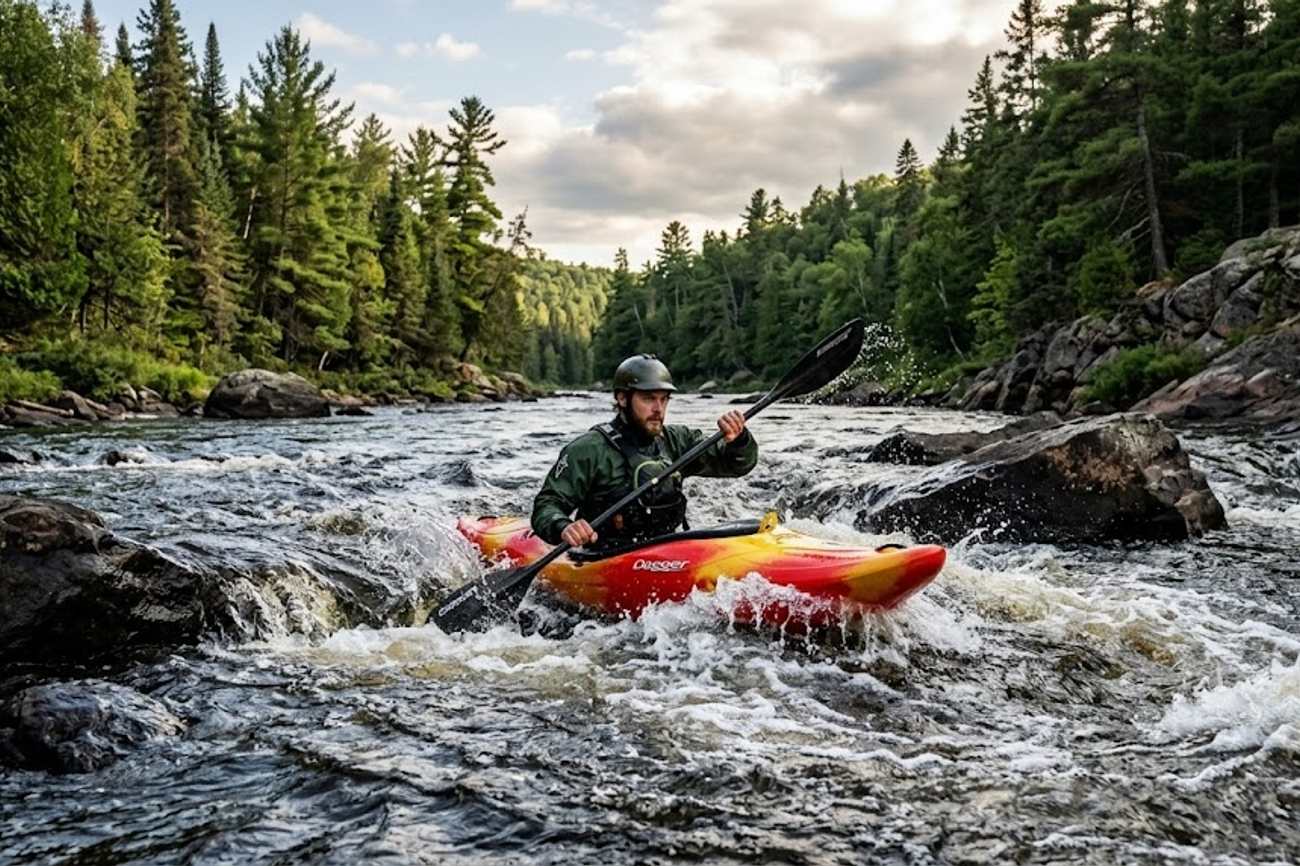
Image generated by AI
[Toronto, 2026] — Ontario tourism reached unprecedented heights in 2025, recording the first year in history where total visitor numbers exceeded the sum of all previous years combined. This surge was driven by a massive influx of domestic travelers and a sharp increase in high-value long-haul international arrivals seeking extreme wilderness experiences.
The growth was anchored by 25 million domestic visitors who utilized provincial wilderness outfitters and eco-tourism charters. Toronto acted as the primary international gateway, facilitating a total economic impact of £7.7 billion ($13.5 billion CAD). This infrastructure allowed global travelers to transition from urban hubs to remote northern regions, fueling a record-breaking year for the Canadian travel sector.
The Catalyst for Record Growth
The 2025 spike in visitation was fueled by a global shift toward "hard adventure" sports and immersion-style wilderness backpacking. International markets showed significant resilience, with overall overseas arrivals climbing 10.8% to reach 2.86 million visitors.
Growth was most pronounced in European markets, where the United Kingdom saw a 12% increase in arrivals and Germany followed with a 10% rise. These demographics specifically targeted Ontario’s remote sectors, including Muskoka, the Bruce Peninsula, and Northern Ontario, prompting local operators to expand their year-round active travel itineraries to meet the demand.
Markets and Regions Impacted
The surge in tourism was not uniform but concentrated in specific high-adrenaline and ecological zones:
- International Hubs: Toronto served as the central transit point for the $13.5 billion CAD economic injection.
- Aerial Sports Hubs: The Niagara region and Lake Huron’s Grand Bend zone emerged as the primary skydiving capitals of Canada.
- Climbing Zones: The limestone cliffs of Lion’s Head on the Bruce Peninsula saw a steady rise in multi-pitch traditional climbing.
- Trekking Corridors: Killarney Provincial Park, Sleeping Giant Provincial Park, and Lake Superior Provincial Park reported record registration for multi-day backcountry treks.
- Marine Conservation Areas: Fathom Five National Marine Park in Tobermory and the 1000 Islands region of the St. Lawrence River saw a peak in technical scuba diving.
- Subarctic Zones: Polar Bear Provincial Park experienced a rise in Indigenous-led air charter expeditions.
Practical Traveler Advisory and Strategic Insights
For those planning a trip to Ontario, the "record-breaking" nature of 2025 means that the infrastructure for adventure travel has expanded, but accessibility is now more strictly regulated to prevent environmental degradation.
Booking and Availability: The expansion of year-round itineraries in Muskoka and Northern Ontario means more options for winter and shoulder-season travel. However, the popularity of "bucket list" activities—such as skydiving over the Niagara Escarpment or diving in Tobermory—likely means longer lead times for bookings.
Environmental Restrictions: Travelers heading to the Bruce Peninsula or Killarney should expect rigorous visitor management. The Bruce Trail Conservancy and Ontario Parks have implemented strict protocols to protect ancient Eastern White Cedar trees and fragile limestone ecosystems. "Wild" camping is increasingly replaced by managed permit systems.
Access to Remote Areas: Travel to the far north, specifically Polar Bear Provincial Park, is not a "DIY" endeavor. Access is strictly controlled via Indigenous-led air charters. Travelers seeking subarctic wildlife must coordinate through these authorized providers to ensure safety and ecological compliance.
The Evolution of Ontario's Adventure Sector
The shift toward high-impact tourism has transformed the province's geological landmarks into global sporting destinations. The Niagara Escarpment now functions as a dual-purpose zone for both high-altitude skydiving and technical rock climbing. In the north, the Canadian Shield’s Precambrian granite has become a primary draw for technical backpackers.
The 78-kilometre La Cloche Silhouette Trail in Killarney now requires seven to ten days of technical navigation, reflecting a trend toward longer, more demanding itineraries. Similarly, the 65-kilometre Coastal Trail in Lake Superior Provincial Park has become a benchmark for experienced hikers due to its isolated beach campsites and demanding boulder-hopping terrain.
Underwater tourism has also professionalized. The cold, non-saline waters of Fathom Five National Marine Park, managed by Parks Canada, have preserved 19th-century wrecks like the schooner Sweepstakes and the steamer W.L. Wetmore. This has turned Tobermory into a world-class hub for freshwater diving, while the St. Lawrence River continues to attract technical drift-divers targeting deep-water wrecks like the steel freighter Keystorm at depths of 35 metres.
FAQ: Ontario Adventure Travel 2026
Do I need a permit to hike the Bruce Trail or visit Killarney? Yes. Due to record visitation in 2025, Ontario Parks and the Bruce Trail Conservancy have implemented strict visitor management protocols. Permits are required for backcountry camping and certain high-traffic technical trails to protect the ecosystem.
How do I visit Polar Bear Provincial Park? You cannot access this park independently. All visits must be coordinated through authorized Indigenous-led air charters. These providers manage all logistics, including transport and safety protocols for observing polar bears and beluga whales.
What is the best time for freshwater diving in Tobermory? While the water remains cold year-round—which helps preserve the shipwrecks—the peak season for visibility and accessibility in Fathom Five National Marine Park is during the summer months. Certified divers are required for most deep-water wreck sites.
Which regions are best for extreme aerial sports? The Niagara region and the Grand Bend zone of Lake Huron are the primary hubs for skydiving. These areas offer tandem jumps with views of the Niagara Escarpment and the Great Lakes basin.
Ontario has transitioned from a quiet wilderness retreat to a global powerhouse for high-adrenaline exploration.
Related Travel Guides
- Ohio,Oklahoma and Oregon Tourism Race: How Three US States Are Transforming Travel Growth in 2025–26
- China Teams Up With Sri Lanka and More Countries to Support Nepal Tourism Rebound After Bhote Koshi Floods
- China Launches Guangxi’s Massive Pinglu Canal as New River-to-Sea Route Transforms Trade and Maritime Connectivity
Disclaimer
This article is for informational and educational purposes only. It does not constitute legal, financial, or professional advice. While we strive to provide accurate and up-to-date information, travel policies, regulations, and conditions change rapidly. Always verify information with official sources before making travel decisions. Nomad Lawyer makes no representations about the accuracy, reliability, completeness, or suitability of the information provided. Readers should consult qualified professionals for advice specific to their circumstances. The views expressed in this article are those of the author and do not necessarily reflect the views of Nomad Lawyer.
Naina Thakur
Contributor & Travel Specialist
Travel enthusiast and legal writer covering visa regulations, responsible tourism, and cultural journeys across global destinations.
Learn more about our team →