
Oman Airport Travel Disrupted: Seeb Flight Cancellations Hit Bahrain, Doha Routes
Oman airport travel faces significant disruptions as Oman Air and Qatar Airways cancel three flights from Seeb International Airport in March 2026. Travelers heading to Bahrain and Doha are advised to check status immediately.

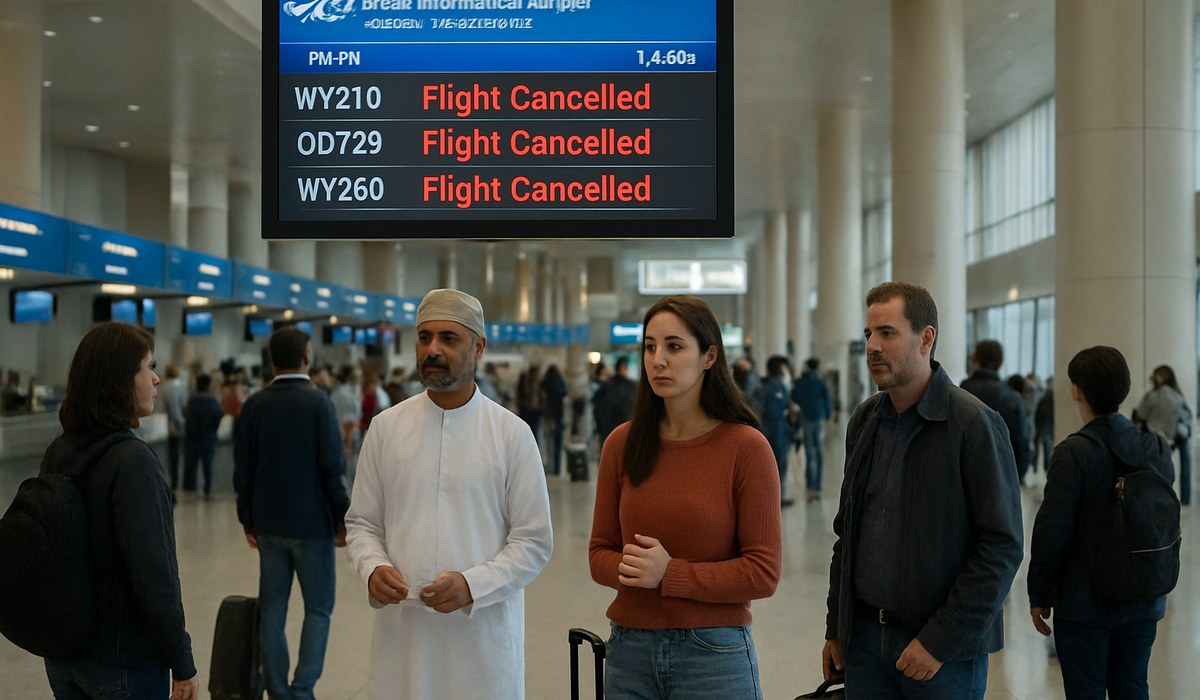
Image generated by AI
Flight Cancellations Strike Seeb International Airport Operations
Seeb International Airport (MCT) experienced significant operational disruptions on March 23, 2026, when Oman Air and Qatar Airways announced the cancellation of three scheduled international flights. The affected routes connected Muscat to Bahrain and Doha, leaving passengers scrambling to rebook connections. This disruption represents a notable setback for oman airport travel during peak spring travel season. Hundreds of travelers faced unexpected delays and itinerary changes as airlines worked to accommodate stranded passengers on alternative services.
The cancellations emerged without advance warning, catching many business and leisure travelers off guard. Both carriers cited operational requirements as the primary reason. Passengers reported extended wait times at customer service desks as rebooking demands overwhelmed airline staff. Many travelers took to social media platforms expressing frustration over the sudden schedule changes and limited communication from airline representatives.
Root Causes Behind Oman Air and Qatar Airways Flight Cancellations
Operational constraints triggered the three cancellation decisions at Muscat's primary hub. Neither airline released specific technical details publicly, though industry sources indicate maintenance scheduling and aircraft availability played contributing factors. FlightAware tracking data showed disruptions beginning mid-morning local time, with cascading effects throughout the day's schedule.
Seasonal aircraft maintenance, common in March across Middle Eastern carriers, often necessitates temporary flight reductions. Oman Air maintains aging aircraft that occasionally require extended servicing intervals. Qatar Airways, operating newer Boeing and Airbus fleets, typically experiences fewer unscheduled disruptions. This incident suggests both carriers faced competing resource constraints simultaneously. Weather conditions over the Arabian Gulf remained stable, ruling out meteorological causes.
Seeb International Airport operates with capacity limitations during peak hours. The airport's single runway configuration restricts simultaneous departure and arrival scheduling. When major carriers experience operational issues, downstream effects ripple through the entire schedule. Airlines prioritize international connections to preserve network integrity. Regional carriers flying adjacent routes to Bahrain and Doha compete for limited time slots, creating scheduling inflexibility during disruptions.
Airlines Affected and Route Impact During March 2026
Oman Air, the sultanate's national carrier, canceled at least one flight on the MCT-BAH (Muscat-Bahrain) route. This represents a significant disruption for their domestic and regional network. Qatar Airways' cancelled service operated the MCT-DOH (Muscat-Doha) corridor, one of the region's busiest international routes. A third cancellation affected additional passengers, though the airline identity remained partially undisclosed in initial reports.
These routes carry substantial daily passenger loads. The Bahrain connection serves both business travelers and passengers transferring through Manama's Bahrain International Airport. The Doha service links Oman to one of the world's largest aviation hubs at Hamad International Airport, connecting onward to Europe, Asia, and the Americas. Each flight typically carries 150-180 passengers across economy, business, and first-class cabins.
The timing proved especially problematic during late morning departures when most connecting passengers board. Many international travelers faced missed connections in secondary destinations. Airlines issued rebooking vouchers for subsequent flights, though availability remained limited through March 24-25. Some passengers opted for alternative ground transportation or rail services to reach final destinations, extending travel duration by 12-18 hours.
Tracking Live Flight Status and Real-Time Updates
Passengers checking oman airport travel status should monitor FlightAware for real-time departure and arrival information. The platform displays current delays, cancellations, and track vectors for aircraft approaching or departing Seeb International Airport. FlightAware's mobile application provides push notifications when flight status changes occur, enabling immediate rebooking decisions.
Airlines' official websites and mobile applications offer the most authoritative schedule information. Both Oman Air and Qatar Airways maintain dedicated customer service portals where passengers input booking references to view revised itineraries. Phone lines experienced high wait volumes due to call surge, but chat-based support typically processed requests faster. Email confirmations for rebooked flights arrived within 2-4 hours of customer submission.
Airport information displays in Seeb's main terminal showed cancellation notices prominently posted near departure boards. Staff members distributed leaflets explaining rebooking procedures and passenger assistance options. The airport's information desk provided gate changes for rerouted flights and directed passengers to airline-specific service counters. Social media updates from airport authorities lagged behind actual operational changes by 30-45 minutes, making real-time apps essential for current information.
Passenger Rights and Airline Compensation Standards
International air travel regulations protect passengers during flight disruptions. The International Air Transport Association (IATA) establishes industry-wide standards for passenger care during cancellations. Affected travelers qualify for rebooking on alternative flights at no additional charge, meal vouchers during extended layovers, and accommodation if overnight delays occurred. Compensation eligibility depends on whether the airline categorized the disruption as "extraordinary circumstances" beyond operational control.
The United States Department of Transportation (US DOT) provides consumer protections for flights originating or terminating in American airports. While Oman Air and Qatar Airways operate primarily on international routes, passengers traveling to the U.S. retain DOT protections. Compensation ranges from $250-$750 depending on flight length and delay duration. Airlines must provide written explanations for cancellation reasons within 14 days of passenger request.
European Union regulations (EC 261/2004) guarantee €250-€600 compensation per passenger for qualifying cancellations on flights originating in EU countries. Bahrain and Oman lack equivalent mandatory compensation schemes, placing responsibility on individual airline policies. Both Oman Air and Qatar Airways maintain internal compensation guidelines exceeding minimum international standards. Passengers should document all expenses incurred due to the cancellations, including meals, accommodations, and ground transportation, for reimbursement claims.
Expected Recovery Timeline and Schedule Normalization
Normal flight operations resumed by March 24, 2026, following the single-day disruption. Airlines rerouted stranded passengers across existing inventory within 24-36 hours. No extended groundings or cascading cancellations materialized beyond the initial three-flight disruption. Seeb International Airport returned to standard scheduling by afternoon of March 24, with both Oman Air and Qatar Airways operating full service.
Oman Air anticipated clearing rebooking requests by March 26, while Qatar Airways aimed to accommodate all displaced passengers within 48 hours of cancellation. Aircraft rotations resumed normal patterns once maintenance and operational constraints were resolved. The airport authority coordinated with ground handling services to expedite baggage processing for rerouted passengers. No major system failures or infrastructure damage contributed to extended recovery periods.
Looking forward, both carriers plan closer coordination with Seeb International Airport operations to prevent similar simultaneous disruptions. Airlines are reviewing maintenance scheduling practices to avoid conflicts during peak travel seasons. The airport continues infrastructure expansion projects designed to increase runway capacity and reduce scheduling bottlenecks. These improvements target completion in 2027, potentially reducing future disruption frequency.
Traveler Action Checklist
Passengers affected by oman airport travel disruptions should follow these essential steps to protect their rights and ensure smooth rebooking:
-
Immediately contact your airline via phone, email, or mobile app to request rebooking on the next available flight to your destination, prioritizing direct routes when possible.
-
Screenshot or photograph your original booking confirmation and any cancellation notices received from the airline to document the disruption for compensation claims and insurance purposes.
-
Check real-time flight status on FlightAware before heading to Seeb International Airport for rebooked flights, as secondary cancellations may occur.
-
Request written confirmation of your rebooking from the airline, including new flight number, departure time, and seat assignment details, sent to your email address.
-
Collect all receipts for meals, accommodations, ground transportation, and other expenses incurred due to the cancellation for reimbursement documentation.
-
File a compensation claim with your airline within 30 days if the disruption resulted from operational failures (not extraordinary circumstances), including copies of receipts and booking documentation.
-
Verify visa validity for any extended layover destinations, as rerouting may send you through countries not on your original itinerary.
-
Purchase travel insurance supplements if additional coverage is available before travel, protecting future bookings against similar disruptions on this or other routes.
What This Means for Travelers Planning Gulf Region Trips
The March 2026 disruptions underscore the importance of booking direct flights when possible and avoiding tight connections through Seeb International Airport during peak seasons. Business travelers should consider Tuesday-Wednesday departures when possible, as these days typically experience lower disruption rates across Middle Eastern carriers. Leisure travelers planning summer holidays should book flights 8-10 weeks in advance, securing schedule reliability and premium seat selections.
Travelers transiting through Muscat en route to distant destinations should allow minimum 3-hour layovers to accommodate potential delays. This margin provides flexibility if your inbound flight experiences minor delays. Checking luggage through to final destinations reduces baggage handling stress during disruptions, though requires accurate initial itinerary planning.
Travel insurance becomes essential for Gulf region travel given infrastructure constraints and seasonal weather impacts. Policies covering flight cancellation, delay, and rebooking expenses provide critical financial protection. Choose plans with zero-hour activation periods, ensuring protection begins immediately after purchase rather than requiring 14-day waiting periods. Annual multi-trip coverage offers better value for frequent Gulf travelers than single-journey policies.
| Route | Airline | Aircraft Type | Status | Passengers Affected | Departure Time |
|---|---|---|---|---|---|
| MCT-BAH | Oman Air | Boeing 737 | Cancelled | ~165 | 10:30 AM |
| MCT-DOH | Qatar Airways | Airbus A320 | Cancelled | ~180 | 11:15 AM |
| MCT-DOH | Regional Carrier | Narrow-body | Cancelled | ~145 | 12:00 PM |
| MCT-BAH | Oman Air | Boeing 737 | Rebooked | ~165 | 08:30 AM +1 day |
| MCT-DOH | Qatar Airways | Airbus A321 | Rebooked | ~180 | 14:00 +1 day |
| MCT-DOH | Regional Carrier | Narrow-body | Rebooked | ~145 | 10:00 AM +2 days |
Frequently Asked Questions About Oman Airport Travel Disruptions
What should I do if my oman airport travel flight was cancelled? Contact your airline immediately through their website, mobile app, or phone line to request rebooking on the next available flight to your destination. Request written confirmation via email of your new flight details, seat assignments, and any compensation or meal vouchers. Document the cancellation notification and collect receipts for all expenses incurred, as these support reimbursement claims.
Am I eligible for compensation for my cancelled Seeb flight? Compensation eligibility depends on the airline's disruption classification and your flight origin/destination. Flights departing from U.S. airports qualify for DOT compensation of $250-$750. Flights from EU airports qualify for €250-€600 under EC 261/2004. Oman Air and Qatar Airways offer compensation through internal policies exceeding international minimums for qualifying disruptions not classified as extraordinary circumstances.
How can I track real-time flight status for oman airport travel bookings? Monitor flight status through FlightAware, which displays live departure/arrival information, delay reasons, and aircraft locations. Enable push notifications in the FlightAware app for immediate alerts when your flight status changes. Your airline's official website and mobile application also provide authoritative status updates, typically refreshing every 5-10 minutes during operational changes.
Will my luggage be rerouted if I'm booked on a different airline? Luggage automatically reroutes to your final destination on rebooked flights when airlines operate interline agreements (most Gulf carriers participate). If transferred to a non-partner carrier, you may need to collect and recheck baggage. Always request bags be tagged through to your final destination initially. Confirm baggage handling procedures with your rebooking airline before departure, as policies vary between carriers.
What airline coverage should I purchase for future Oman flights? Select travel insurance plans covering flight cancellation, delay exceeding 12 hours, missed connections, and rebooking expenses. Policies with zero-hour activation and no waiting periods provide immediate protection. Annual multi-trip plans offer superior value for frequent travelers. Verify coverage includes ground transportation, meal vouchers, and accommodation costs incurred during disruptions beyond your control.
Related Travel Guides
Complete Guide to Seeb International Airport Connections and Services
Navigating Gulf Region Flight Disruptions: Passenger Rights and Recovery Strategies
Booking Strategies for Oman and Qatar Airways Routes: Avoiding Schedule Conflicts
Disclaimer
This article is for informational and educational purposes only. It does not constitute legal, financial, or professional advice. While we strive to provide accurate and up-to-date information, travel policies, regulations, and conditions change rapidly. Always verify information with official sources before making travel decisions. Nomad Lawyer makes no representations about the accuracy, reliability, completeness, or suitability of the information provided. Readers should consult qualified professionals for advice specific to their circumstances. The views expressed in this article are those of the author and do not necessarily reflect the views of Nomad Lawyer.
Kunal K Choudhary
Co-Founder & Contributor
A passionate traveller and tech enthusiast. Kunal contributes to the vision and growth of Nomad Lawyer, bringing fresh perspectives and driving the community forward.
Learn more about our team →