
United, American, Delta, and Alaska Ground Flights Triggering Widespread Chicago O'Hare Flight Disruptions and Cancellations Across Key Domestic and International Routes: New Aviation Updates
Chicago O'Hare International Airport faces massive travel chaos as United, American, Delta, and regional partners delay 200 flights and cancel 3.

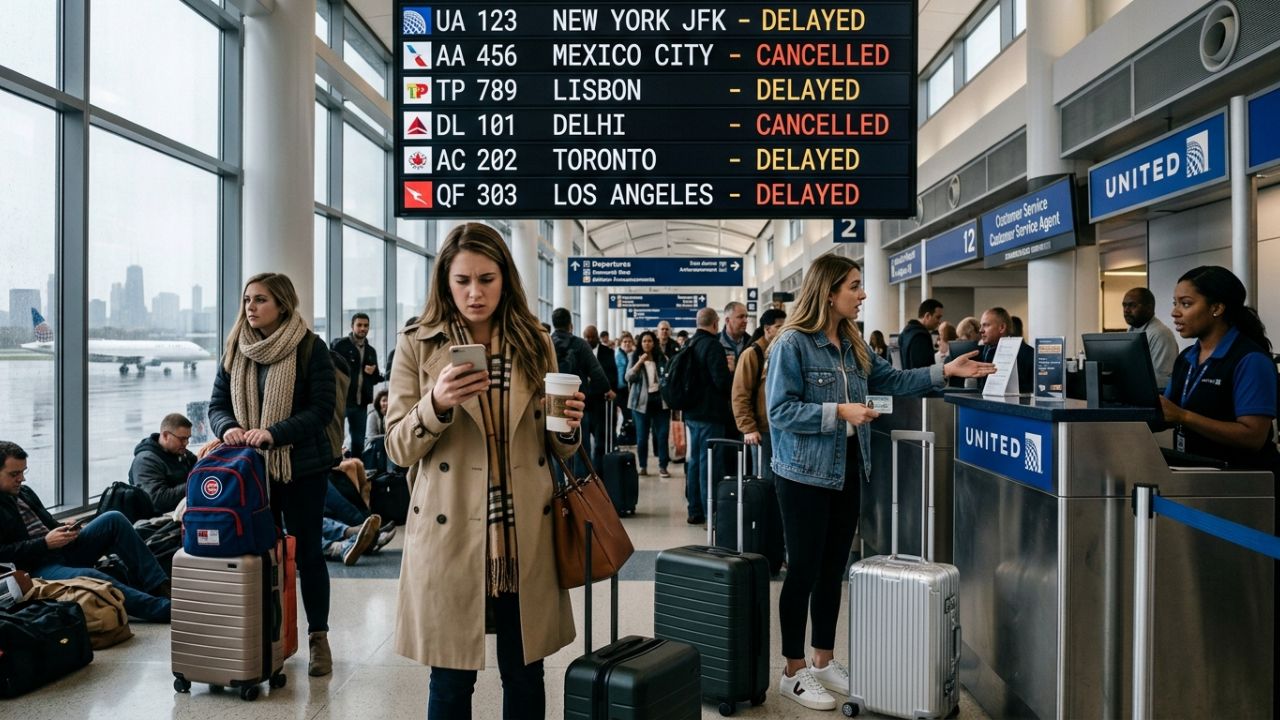
Image generated by AI
In a dramatic wave of operational instability that has swept across one of the busiest aviation hubs in the United States, thousands of travelers are facing severe terminal bottlenecks. On May 17, 2026, leading domestic and international carriers—including United Airlines, American Airlines, Delta Air Lines, Alaska Airlines, TAP Air Portugal, and Qantas—grounded a total of 3 flights and triggered a massive wave of 200 flight delays at the airport. This latest airline news update highlights the intense pressure on the airport's core terminals, causing extensive travel chaos and airport disruptions that have stranded domestic passengers and international transit travelers heading across the US, Canada, Mexico, Portugal, India, and beyond.
Subheading: Hub Congestion and Operational Bottlenecks Disrupt Peak Spring Flights at O'Hare
Aviation data suggests that the widespread operational slowdown was driven by severe weather patterns, high passenger volumes, and airport congestion. In compliance with strict safety directives, airlines adjusted schedules to manage regional runways and air traffic control constraints. Because Chicago O'Hare's high-density domestic corridors share heavy scheduling connectivity, minor delays at primary transit nodes quickly cascade through regional networks, disrupting flight rotations for smaller communities.
The timing of these disruptions is particularly critical given the high demand of the spring season. Large carriers like United Airlines manage massive passenger volumes at their main hubs, making them vulnerable to crew allocation shortages and gate capacity bottlenecks when traffic staggers. Meanwhile, regional partners like SkyWest and GoJet face concentrated operational challenges, directly impacting essential travel links for smaller regional airports.
Detailed Section-Wise Breakdown of Chicago O'Hare Disruptions
The scheduling bottleneck has affected multiple flight corridors, forcing passengers to navigate long queues, crowded terminals, and rapidly changing departure boards:
Domestic Corridor Backlogs: Major US Hubs Face Rolling Delays
Domestic routes connecting to Chicago O'Hare (ORD) experienced widespread disruptions. Busiest domestic gateways contributed high delay volumes, with Los Angeles International (LAX) reporting 3 delays and 1 cancellation, Dallas-Fort Worth International (DFW) recording 4 delays, and LaGuardia (LGA) experiencing 7 delays. In addition, flights from Newark (EWR), John F. Kennedy (JFK), Reagan National (DCA), Seattle-Tacoma (SEA), and San Francisco International (SFO) contributed significantly to delayed arrivals, causing severe gate congestion at O'Hare.
Regional Feeders Severely Impacted: 100% Cancellations at Small Facilities
The fragility of regional feed routes was highlighted by severe schedule cuts. Mid-sized regional facilities including Green Bay (GRB), Quad Cities (MLI), and Eppley Airfield (OMA) reported delays ranging from 2 to 3 flights. More dramatically, smaller regional stations including Kearney Regional (EAR), Santa Barbara (SBA), and Waynesville Regional (TBN) suffered 100% cancellations, leaving local travelers without immediate air links to the national network.
International Gateways Grounded: Intercontinental Outages from Lisbon to Delhi
Long-haul intercontinental routes suffered severe disruptions, cutting key global links. Flights departing from Lisbon Humberto Delgado (LIS) in Portugal, Indira Gandhi International (DEL) in India, and General Mariano Escobedo (MTY) in Monterrey, Mexico, were cancelled entirely. Meanwhile, key regional international gateways—including Mexico City (MEX), Luis Muñoz Marín (SJU) in Puerto Rico, and Toronto Pearson (YYZ) in Canada—experienced single delayed flights, complicating customs clearances.
Flight Details and Operational Performance Matrices
The following tables outline the detailed breakdown of the scheduling disruptions across domestic and international routes, highlighting the scope of the operational pressure:
Summary of Flight Disruptions by Domestic Origin Airport
| Origin Airport Name | Code | Delayed Flights | Cancelled Flights | Operational Status |
|---|---|---|---|---|
| Los Angeles International | LAX | 3 | 1 | Partially Affected |
| Dallas-Fort Worth International | DFW | 4 | 0 | Delays Only |
| LaGuardia Airport (NY) | LGA | 7 | 0 | Delays Only |
| Green Bay Austin Straubel | GRB | 2–3 | 0 | Regional Delays |
| Quad Cities International | MLI | 2–3 | 0 | Regional Delays |
| Eppley Airfield (Omaha) | OMA | 2–3 | 0 | Regional Delays |
| Kearney Regional Airport | EAR | 0 | Yes (100%) | Fully Cancelled |
| Santa Barbara Municipal | SBA | 0 | Yes (100%) | Fully Cancelled |
| Waynesville Regional | TBN | 0 | Yes (100%) | Fully Cancelled |
Summary of Flight Disruptions by International Origin Airport
| Origin Airport Name | Code | Country | Delayed Flights | Cancelled Flights | Operational Status |
|---|---|---|---|---|---|
| Humberto Delgado Airport | LIS | Portugal | 0 | Yes (100%) | Fully Cancelled |
| Indira Gandhi International | DEL | India | 0 | Yes (100%) | Fully Cancelled |
| General Mariano Escobedo | MTY | Mexico | 0 | Yes (100%) | Fully Cancelled |
| Mexico City International | MEX | Mexico | 1 | 0 | Single Delay |
| Luis Muñoz Marín International | SJU | Puerto Rico | 1 | 0 | Single Delay |
| Toronto Pearson International | YYZ | Canada | 1 | 0 | Single Delay |
Major Airlines Affected
- United Airlines: 42 delayed flights.
- American Airlines: 38 delayed flights.
- Delta Air Lines: 8 delayed flights.
- Other Impacted Carriers: Alaska Airlines, SkyWest Airlines, GoJet Airlines, Endeavor Air, Qantas, and TAP Air Portugal.
Passenger Impact and Terminal Realities
The emotional and financial toll of these airport disruptions extends far beyond simple scheduling inconveniences. Stranded passengers across Chicago O'Hare have reported long lines at customer service counters, missed family milestones, postponed business meetings, and high travel anxiety. Because many international travelers utilize Chicago as a major gateway, these flight delays have resulted in numerous missed connections, requiring airlines to coordinate extensive hotel re-accommodations and baggage re-routing.
Furthermore, passengers are facing unexpected out-of-pocket costs for meals and communications while waiting in crowded terminals. Depending on their origin airport, travelers experienced delays of up to 6–27%, pushing many travelers to seek last-minute hotel stays or expensive airport dining options.
Industry Analysis: Root Causes of Chicago O'Hare Disruptions
Aviation analysts explain that the widespread travel chaos is not solely a result of terminal gate capacity bottlenecks. Rather, carriers are dealing with complex geopolitical and operational challenges:
- Operational Adjustments: Ground crews and dispatch teams actively modify schedules to manage high traffic volumes and maintain flight safety.
- Regional Feeder Vulnerability: Small regional facilities represent high operational risk when weather or crew scheduling constraints arise.
- Crew Duty-Hour Limits: Flight delays frequently push crew allocations past legal duty-hour restrictions, forcing subsequent flight cancellations.
- High Traffic Volumes: Chicago O'Hare is one of the busiest hubs in the United States, meaning that minor disruptions quickly cascade.
Conclusion: Recovery Outlook and Stabilizing Operations
Despite the current turbulence, airport authorities and airline dispatch teams are working to stabilize flight schedules and restore passenger confidence. Departure boards continue to show updated times, and flight dispatchers are gradually returning delayed aircraft to their regular rotations. While terminals remain crowded, international aviation experts are optimistic that operational stability will steadily return to Chicago's busy air corridors over the next 24 hours.
Key Takeaways
- Scale of Disruptions: Exactly 3 flights were cancelled and 200 flights delayed at Chicago O'Hare International Airport on May 17, 2026.
- High-Risk Gateways: Domestic hubs like LAX, DFW, and LGA logged high delay volumes, while international flights from LIS, DEL, and MTY were cancelled entirely.
- Core Causes: Safety schedule modifications, high traffic volumes, crew duty-hour limits, and regional feeder vulnerabilities.
- Airlines Impacted: United Airlines (42 delays), American Airlines (38 delays), Delta Air Lines (8 delays), TAP Air Portugal, Qantas, and regional partners.
- Advice for Travelers: Frequently check live flight status trackers, monitor official carrier applications, and keep essential documents in carry-on bags.
Related Travel Guides
- Lufthansa, United, Air Canada, and Air France Ground Flights Triggering Widespread Germany Flight Cancellations and Delays Across Munich and Frankfurt Airports: New Aviation Updates
- Emirates, Etihad, Air Arabia, and flydubai Ground Flights Triggering Widespread UAE Flight Cancellations and Delays Across Dubai, Sharjah, and Abu Dhabi Airports Amid Regional Airspace Disruptions: New Aviation Updates
- The 10 Best Activities for a Chicago O'Hare Layover, According to Reddit
Disclaimer
This article is for informational and educational purposes only. It does not constitute legal, financial, or professional advice. While we strive to provide accurate and up-to-date information, travel policies, regulations, and conditions change rapidly. Always verify information with official sources before making travel decisions. Nomad Lawyer makes no representations about the accuracy, reliability, completeness, or suitability of the information provided. Readers should consult qualified professionals for advice specific to their circumstances. The views expressed in this article are those of the author and do not necessarily reflect the views of Nomad Lawyer.
Kunal K Choudhary
Co-Founder & Contributor
A passionate traveller and tech enthusiast. Kunal contributes to the vision and growth of Nomad Lawyer, bringing fresh perspectives and driving the community forward.
Learn more about our team →