
New York Aviation Alert: Flight Attendants Expose the 5 Pre-Boarding Red Flags Triggering Immediate Denied Boarding and Travel Chaos: Latest Airline News
As global air travel demand surges, flight crews at massive New York mega-hubs are aggressively deploying early behavioral profiling at the departure gate to instantly identify and offload disruptive passengers.

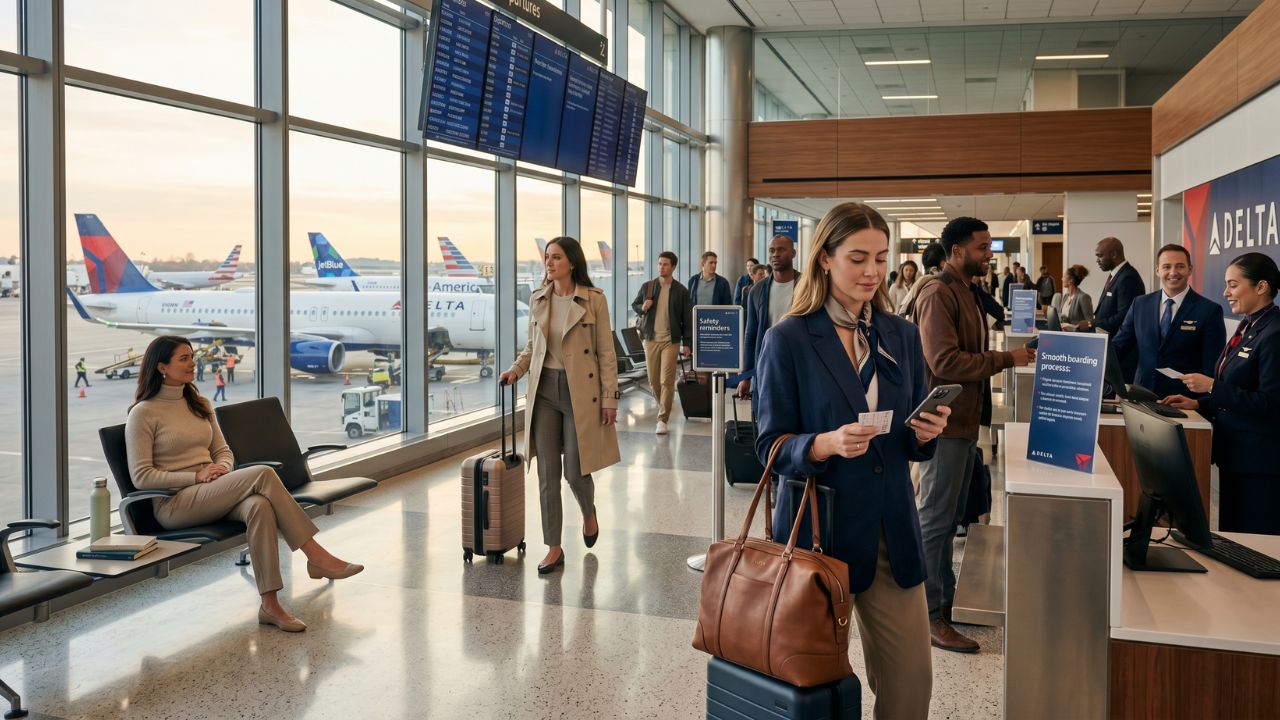
Image generated by AI
In a massive, unannounced operational shift designed to ruthlessly eradicate inflight safety incidents before an aircraft even leaves the tarmac, flight attendants operating out of major New York mega-hubs are issuing a severe aviation alert. Crews from massive global carriers—including Delta Air Lines, American Airlines, Southwest Airlines, Air India, and Turkish Airlines—have explicitly identified five specific pre-boarding behavioral "red flags" that now trigger immediate intervention. As boarding environments become dangerously congested in 2026, airlines are quietly weaponizing behavioral profiling at the gate to offload high-risk passengers. This aggressive strategy aims to prevent massive airport disruptions and crippling flight cancellations, representing the premier headline in today's breaking airline news and global aviation updates.
By introducing direct passenger coordination and dynamic scheduling backups, the regional aviation hubs target growing passenger demand across vital commerce sectors. The choice to coordinate flight departures in phases helps to manage gate capacity, supporting the country's broader regional transportation network.
Context: The Quiet Shift to Gate-Level Profiling
Historically, aviation security was almost entirely focused on sterile documentation checks and TSA physical screening.
However, a terrifying surge in inflight passenger violence has forced airlines to completely rewrite their operational playbooks. The critical insight driving this change is that the vast majority of inflight disruptions do not spontaneously generate at 35,000 feet; they incubate at the departure gate. Airlines realized that allowing a highly agitated, non-compliant passenger to cross the aircraft threshold was a massive operational failure. Consequently, gate agents and flight attendants are now heavily trained in rapid behavioral observation. They are actively hunting for specific cues—ranging from subtle intoxication to overt aggression—and are fully empowered to deny boarding before the aircraft door closes. This highly aggressive pre-emptive strategy ensures that a single disruptive passenger cannot trigger a multi-million-dollar diversion, completely shielding compliant travelers from cascading travel chaos.
To view live flight schedules, real-time terminal maps, or check-in rules at the massive New York mega-hubs, travelers can consult the official JFK International Airport (JFK) or Newark Liberty International (EWR) directories. For direct booking access, specific baggage rules, and passenger conduct policies, travelers can check the official Delta Air Lines or American Airlines portals. To explore live flight tracking, check delay maps, or monitor exact widebody fleet routing, passengers can consult the official FlightAware tracking service.
Section-Wise Breakdown: The 5 Pre-Boarding Red Flags
Red Flag 1: Visible Intoxication at the Gate
Airport lounges and terminal bars provide easy access to alcohol, but airlines now treat pre-flight intoxication as a severe operational threat. Crews are heavily trained to spot slurred speech, unsteady movement, and unnaturally loud communication. Flight attendants from Delta and American Airlines are explicitly instructed not to negotiate with intoxicated individuals; they are immediately escalated to ground security and denied boarding.
Red Flag 2: Persistent Complaining and Escalation
Airports are inherently stressful, but persistent, aggressive complaining directed at gate agents regarding flight delays, baggage fees, or seat allocations is a massive warning sign. Crews know that a passenger who cannot regulate their emotions on the ground will likely explode inflight when trapped in a confined space. Airlines like Southwest and Air India have confirmed that highly combative complainers are increasingly being flagged for secondary screening or outright denied entry.
Red Flag 3: Disruptive Group Dynamics
Large, disorganized groups—such as traveling sports teams or massive family reunions—create severe logistical bottlenecks. When these groups block aisles, shout across seating zones, and ignore boarding zone sequences, they destroy cabin entry efficiency. Delta and Turkish Airlines crews note that if a group displays aggressive defiance of basic boarding logistics on the ground, it signals a massive risk of inflight non-compliance.
Red Flag 4: Ignoring Ground Crew Instructions
Aviation safety requires absolute obedience to crew commands. If a passenger is caught deliberately ignoring gate announcements, refusing to consolidate baggage, or actively defying boarding zone restrictions, they are immediately profiled as a high-risk liability. If you will not listen to a gate agent regarding your carry-on bag, the crew assumes you will not listen to a flight attendant during an actual emergency evacuation.
Red Flag 5: Visible Aggression and Emotional Volatility
This is the ultimate red flag. Any passenger displaying visible rage, shouting at staff, or engaging in physical intimidation with other passengers will not be permitted to fly. Confined aircraft cabins act as pressure cookers; airlines will never allow a visibly volatile individual to enter a sealed metal tube at cruising altitude.
Technical Roster: The Behavioral Threat Matrix
To ensure absolute factual accuracy regarding what airlines are specifically hunting for during the boarding sequence, the following table details the five critical behavioral red flags and their direct operational consequences:
| Pre-Boarding Red Flag | Specific Behavioral Cues Monitored by Crew | Immediate Operational Consequence |
|---|---|---|
| 1. Intoxication | Slurred speech, unsteady gait, erratic volume | Immediate Denied Boarding; escalation to airport police |
| 2. Aggressive Complaining | Relentless hostility over delays or seat assignments | Passenger flagged for inflight monitoring or removal |
| 3. Disruptive Groups | Deliberate aisle blocking, loud communication | Massive boarding sequence delays; potential group offloading |
| 4. Ignoring Instructions | Refusing to consolidate baggage or follow zone rules | Indicates high risk of emergency non-compliance |
| 5. Emotional Volatility | Shouting, verbal intimidation, physical posturing | Absolute flight denial; potential placement on airline ban list |
Passenger Impact: The Zero-Tolerance Boarding Environment
For the everyday global traveler, this massive shift toward behavioral profiling fundamentally alters the psychology of the airport experience.
Passengers must understand that the departure gate is no longer a passive waiting area; it is an active surveillance zone. The moment you approach the podium, gate agents and flight attendants are actively evaluating your emotional stability. The days of shouting at a gate agent over a missed upgrade and still being allowed to board the aircraft are completely over. Airlines are operating under a highly aggressive "zero-tolerance" mandate. If you exhibit any of these five red flags, the crew will flawlessly execute a denied boarding procedure. While this strict environment may seem draconian to stressed travelers, it provides a massive layer of psychological comfort for the 200 compliant passengers on the aircraft, guaranteeing that their flight will not be violently diverted to a random city due to a single unruly individual.
Industry Analysis: The New Standard of Aviation Security
Aviation industry analysts view this quiet shift toward gate-level behavioral awareness as a brilliant, highly necessary evolution in global airline security.
According to Mr. Anup Kumar Keshan, Founder and Editor-in-Chief of TTW, the industry has fundamentally changed its defensive posture. "Modern aviation safety is increasingly shaped by human behavior on the ground," he notes. "Airlines are quietly shifting toward early behavioral awareness as a core part of operational stability." When a flight is forced to divert because of an inflight violent incident, the airline instantly loses hundreds of thousands of dollars in fuel, crew overtime, and passenger compensation. By weaponizing behavioral profiling at the gate, airlines are heavily protecting their financial bottom lines. It is exponentially cheaper to offload one angry passenger in New York than to divert an entire Boeing 777 to Halifax over the Atlantic Ocean.
Actionable Advice for Passengers Boarding in 2026
To ensure you are never falsely flagged by an airline's behavioral profiling matrix during a highly stressful delay, execute this tactical survival checklist:
- Maintain Absolute Emotional Control: If your flight is delayed or your seat is reassigned, never raise your voice at the gate agent. The agent does not control the weather or the aircraft routing. If you shout, you will be flagged as volatile and potentially denied boarding. Handle disputes calmly or wait until you can speak to a customer service representative via the airline app.
- Control Your Pre-Flight Alcohol Intake: Do not exploit the free alcohol in the premium airport lounges. The cabin altitude will magnify the effects of alcohol once airborne. If a flight attendant smells heavy alcohol on your breath or notices unsteady walking during boarding, they possess the absolute legal authority to remove you from the flight.
- Obey Zone Boarding Strictly: Do not crowd the gate podium before your designated boarding zone is called. "Gate lice" behavior not only frustrates other passengers but signals to the crew that you are willing to ignore basic logistical instructions.
- Remove Headphones During Cabin Entry: When stepping onto the aircraft, remove your noise-canceling headphones. Flight attendants issue critical greetings and subtle instructions during the boarding process to assess passenger responsiveness. Ignoring their greeting because you cannot hear them is frequently logged as a sign of non-compliance.
FAQ: Airline Passenger Behavioral Warning Signs
What massive new operational shift are airlines using at the departure gate?
Airlines are aggressively utilizing behavioral profiling prior to boarding, training gate agents and flight attendants to identify five specific "red flags" that indicate a passenger may become disruptive inflight.
What are the top behaviors that will get a passenger denied boarding?
The most critical red flags include visible intoxication, persistent aggressive complaining, ignoring crew instructions, highly disruptive group dynamics, and visible emotional volatility or anger.
Why are airlines executing this pre-boarding surveillance?
Because it is exponentially safer and cheaper to deny a disruptive passenger boarding on the ground than to risk a massive, multi-million-dollar emergency diversion once the aircraft is airborne.
Securing the Tarmac Before Takeoff
The aggressive deployment of gate-level behavioral profiling by carriers like Delta, American, and Turkish Airlines proves definitively that the era of passenger leniency is officially dead. By successfully weaponizing the identification of these five critical red flags, flight crews are actively taking absolute control of the boarding environment. As global travel demand continues to explode through mega-hubs like New York, airlines are no longer waiting for violence to erupt at 35,000 feet. They are neutralizing the threat on the ground, permanently ensuring that the skies remain safe, stable, and completely free from the terrifying chaos of inflight disruptions.
Key Takeaways
- Gate-Level Profiling: Airlines have quietly shifted their security focus to active behavioral observation at the departure gate to prevent inflight incidents.
- The 5 Red Flags: Flight crews actively monitor for intoxication, aggressive complaining, disruptive group behavior, ignoring instructions, and emotional volatility.
- Zero-Tolerance Execution: Passengers exhibiting these warning signs are immediately escalated to security and face absolute denied boarding.
- Massive Carrier Adoption: Mega-carriers operating out of New York, including Delta, American, Southwest, Air India, and Turkish Airlines, actively utilize this threat matrix.
- Industry Shift: Aviation experts confirm this pre-emptive strategy heavily protects airline profitability by preventing catastrophic, multi-million-dollar inflight diversions.
Related Travel Guides
Noida International Airport Officially Launches With IndiGo Strike
Severe Travel Chaos Paralyzes Europe With 56 Flight Cancellations
Disclaimer
This article is for informational and educational purposes only. It does not constitute legal, financial, or professional advice. While we strive to provide accurate and up-to-date information, travel policies, regulations, and conditions change rapidly. Always verify information with official sources before making travel decisions. Nomad Lawyer makes no representations about the accuracy, reliability, completeness, or suitability of the information provided. Readers should consult qualified professionals for advice specific to their circumstances. The views expressed in this article are those of the author and do not necessarily reflect the views of Nomad Lawyer.
Kunal K Choudhary
Co-Founder & Contributor
A passionate traveller and tech enthusiast. Kunal contributes to the vision and growth of Nomad Lawyer, bringing fresh perspectives and driving the community forward.
Learn more about our team →