
Ohio's Ancient Earthworks Trail: Hopewell UNESCO Mounds, Wild Gorges, and Historic River Towns
Discover southern Ohio's sacred UNESCO Hopewell ceremonial mounds, Serpent Mound, secluded hiking gorges in Adams County, and 18th-century pioneer settlements in Zoar.

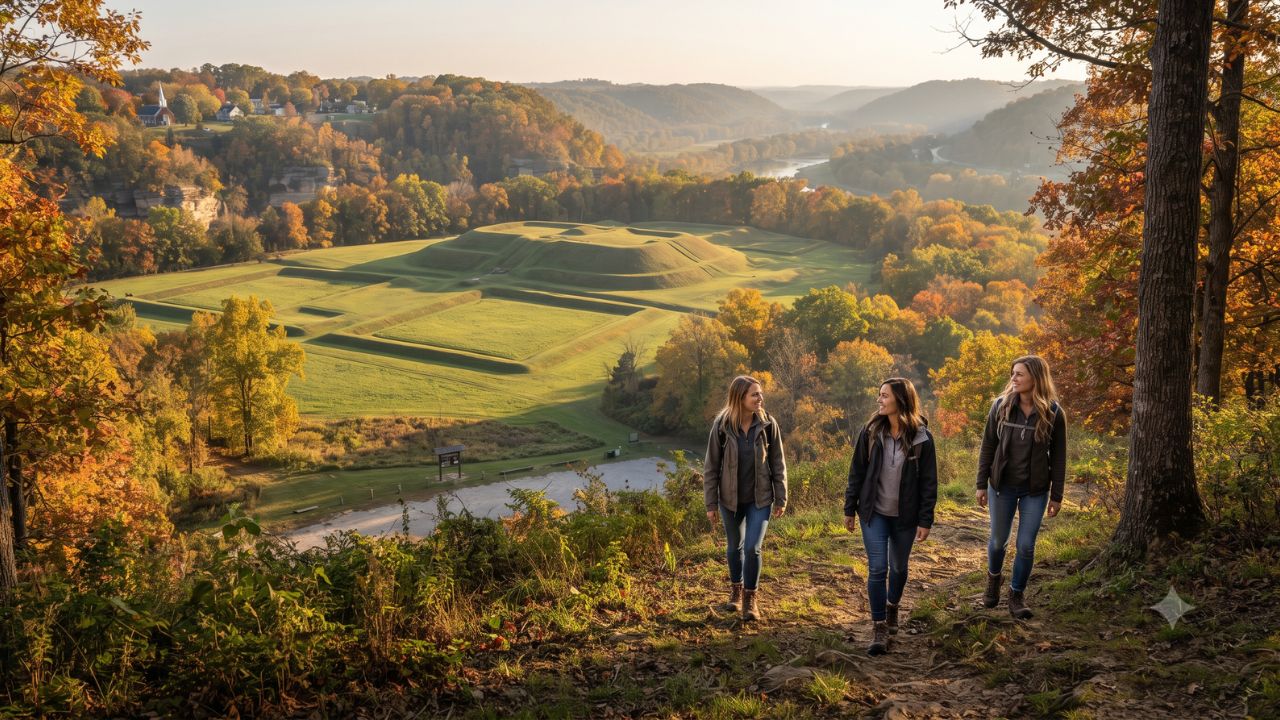
Image generated by AI
More than two millennia ago, Indigenous architects along the Scioto and Ohio river valleys constructed monumental geometric earthen walls and ceremonial mounds aligned with lunar cycles with precision that rivals Stonehenge. Today, these sacred sites form part of the UNESCO World Heritage Centre - Hopewell Ceremonial Earthworks inscription, anchoring a southern Ohio heritage corridor where Appalachian foothills, hemlock gorges, and preserved 18th-century communal villages offer an antidote to highway travel.
From the ceremonial silence of Chillicothe's Mound City to the winding curves of Serpent Mound and the quiet waterfalls of Quiverheart Gorge, exploring rural Ohio uncovers one of North America's most profound archaeological corridors.
The Heritage Corridor: Ancient Earthworks and Appalachian Foothills
Located just an hour south of Columbus, Chillicothe serves as the northern gateway to Ohio’s Indigenous ceremonial heartland. At Hopewell Culture National Historical Park, preserved earthen enclosures at Mound City Group, Hopeton Earthworks, and the Hopewell Mound Group reveal complex earthen architecture designed between 200 BCE and 500 CE for inter-tribal gatherings, sacred funerary rites, and celestial tracking.
Moving southwest into Highland and Adams counties, the terrain transitions into steep limestone ridges and deep forested ravines. Fort Hill Earthworks preserves ancient stone walls perched on a high promontory, while Serpent Mound near Peebles showcases the world’s largest prehistoric serpent effigy, stretching 1,348 feet across a crater ridge.
Southern and Eastern Ohio Heritage Trail Itinerary
| Trail Stop & Region | Landmark & Protected Site | Unique Experience & Heritage Significance | Visitor Logistics |
|---|---|---|---|
| Chillicothe (Ross County) | Hopewell Culture National Historical Park | UNESCO World Heritage earthen enclosures, Mound City visitor center, sacred burial mounds | Open daily 08:30–17:00; free park admission; paved trail loops |
| Bainbridge (Highland County) | Fort Hill Earthworks & Preserve | Ancient hilltop perimeter walls, 11 miles of hiking trails, deep wooded gorge | Spring wildflowers, steep ridge climbs, rugged dirt trails |
| Peebles (Adams County) | Serpent Mound & Quiverheart Gorge | 1,348-foot prehistoric serpent effigy, secluded dolomite gorge waterfall | Observation tower access; preserve parking fee applies |
| Portsmouth (Scioto County) | Ohio River Esplanade & Rock Run | Historic 2,000-foot river floodwall murals, serene ridge woodland trails | Free riverfront walking; local Appalachian artisan dining |
| Logan (Hocking County) | Resilience Preserve & Outer Hocking | High meadows, sandstone ridges, secluded alternative to crowded cave paths | Ideal for eco-cabin rentals; low visitor foot traffic |
| New Philadelphia (Tuscarawas) | Schoenbrunn Village (1772) | Reconstructed Moravian and Delaware (Lenape) mission settlement, original cemetery | Seasonal museum tours; living history demonstrations |
| Zoar Village (Tuscarawas) | Historic Zoar Utopian Community (1817) | German Separatist communal village, restored 19th-century public gardens | Weekend bakery visits; preserved heritage brick architecture |
State park maps, historical schedules, and regional road-trip planning can be accessed via TourismOhio.
What Makes Southern Ohio’s Ancient Sites Different
Unlike heavily commercialized national parks, Ohio's ceremonial earthworks offer a reflective, open-air encounter with ancient history. The vast scale of the Hopewell earthworks—enclosing dozens of acres in precise geometric squares, octagons, and circles—demonstrates sophisticated mathematics and astronomical alignment developed by native societies long before European contact.
In Adams County, Quiverheart Gorge and Rock Run Preserve protect rare cedar glades, dolomite rock shelters, and delicate prairie wildflowers that thrive on mineral-rich Appalachian limestone soils. Further south in Portsmouth, massive hand-painted murals along the Ohio River floodwall illustrate centuries of steamboat trade, steel manufacturing, and Underground Railroad crossings.
To the northeast in Tuscarawas County, Schoenbrunn Village documents the complex frontier history of 1772, where Moravian missionaries and Christian Delaware (Lenape) residents established Ohio's first schoolhouse and civil code before Revolutionary War unrest forced its abandonment. Nearby, Zoar Village preserves the communal lifestyle of German Separatists who built a self-sustaining agrarian society in 1817, complete with a geometric central garden symbolizing the New Jerusalem.
Visitor Insider Tips
- Best Time for Earthwork Photography: Visit Mound City Group in Chillicothe at sunrise or late afternoon. Low-angled sunlight casts distinct shadows across the earthen mounds, revealing the subtle contours of the mounds and geometric earthworks that flatten under midday glare.
- Navigating Serpent Mound Tower: Climb the historic iron observation tower at Serpent Mound in Peebles to see the entire coil and open jaws of the serpent effigy, which cannot be fully appreciated from ground level.
- Escape Hocking Hills Weekend Congestion: If visiting the Hocking Hills region during peak autumn foliage in October, bypass the crowded Old Man's Cave parking lot and head to the quieter trails at Resilience Preserve or nearby nature preserves for uncrowded ridge walks.
- Local Appalachian Fare in Portsmouth: Stop in downtown Portsmouth along the riverfront to sample traditional Ohio River comfort dishes, including slow-smoked pork barbecue, homemade fruit cobblers, and regional pawpaw ice cream during late-summer harvest weeks.
Cultural and Environmental Context
The inscription of the Hopewell Ceremonial Earthworks on the UNESCO World Heritage list in 2023 marked a milestone for Indigenous heritage recognition in North America. State and federal park managers work closely with federally recognized American Indian tribes—including the Shawnee Tribe, the Eastern Shawnee, and the Miami Tribe of Oklahoma—to ensure interpretive signs honor the spiritual sanctity of these ancestral gathering spaces.
Visitors are asked to respect tribal customs by staying strictly on marked mowed pathways and refraining from climbing onto ancient earthen mounds. Additionally, conservation groups like the Arc of Appalachia manage preserves like Quiverheart Gorge through strict Leave No Trace principles, protecting endangered plant species and native songbird habitats across fragile karst watersheds.
FAQ: Exploring Ohio’s Ancient Earthworks and Quiet Trails 2026
What is the entrance fee for Hopewell Culture National Historical Park? Admission to all units of Hopewell Culture National Historical Park in Chillicothe, including the Mound City Group visitor center and museum exhibits, is free year-round.
How far is Serpent Mound from Chillicothe? Serpent Mound is located in Peebles, Adams County, approximately 45 miles (a 55-minute scenic rural drive) southwest of Chillicothe along State Route 41.
When is the best season to hike southern Ohio’s gorge preserves? Mid-April through May brings spectacular spring wildflower blooms across forest floors, while mid-to-late October provides brilliant autumn foliage across the Appalachian ridges.
Are guided tours available at Schoenbrunn Village and Zoar? Yes. Both historic villages offer guided tours, costumed living history demonstrations, and seasonal weekend workshops from spring through autumn.
Beneath the quiet hills and towering hardwoods of southern Ohio, ancient earth and forgotten riverfronts tell a story of North America that time has never erased.
Related Travel Guides
Colombia International Tourism Boom: US, Spain, and Brazil Fuel 20 New Global Flight Routes in 2026
The 10 Best Hidden National Park Monuments in the United States, According To Reddit
Disclaimer
This article is for informational and educational purposes only. It does not constitute legal, financial, or professional advice. While we strive to provide accurate and up-to-date information, travel policies, regulations, and conditions change rapidly. Always verify information with official sources before making travel decisions. Nomad Lawyer makes no representations about the accuracy, reliability, completeness, or suitability of the information provided. Readers should consult qualified professionals for advice specific to their circumstances. The views expressed in this article are those of the author and do not necessarily reflect the views of Nomad Lawyer.
Naina Thakur
Contributor & Travel Specialist
Travel enthusiast and legal writer covering visa regulations, responsible tourism, and cultural journeys across global destinations.
Learn more about our team →