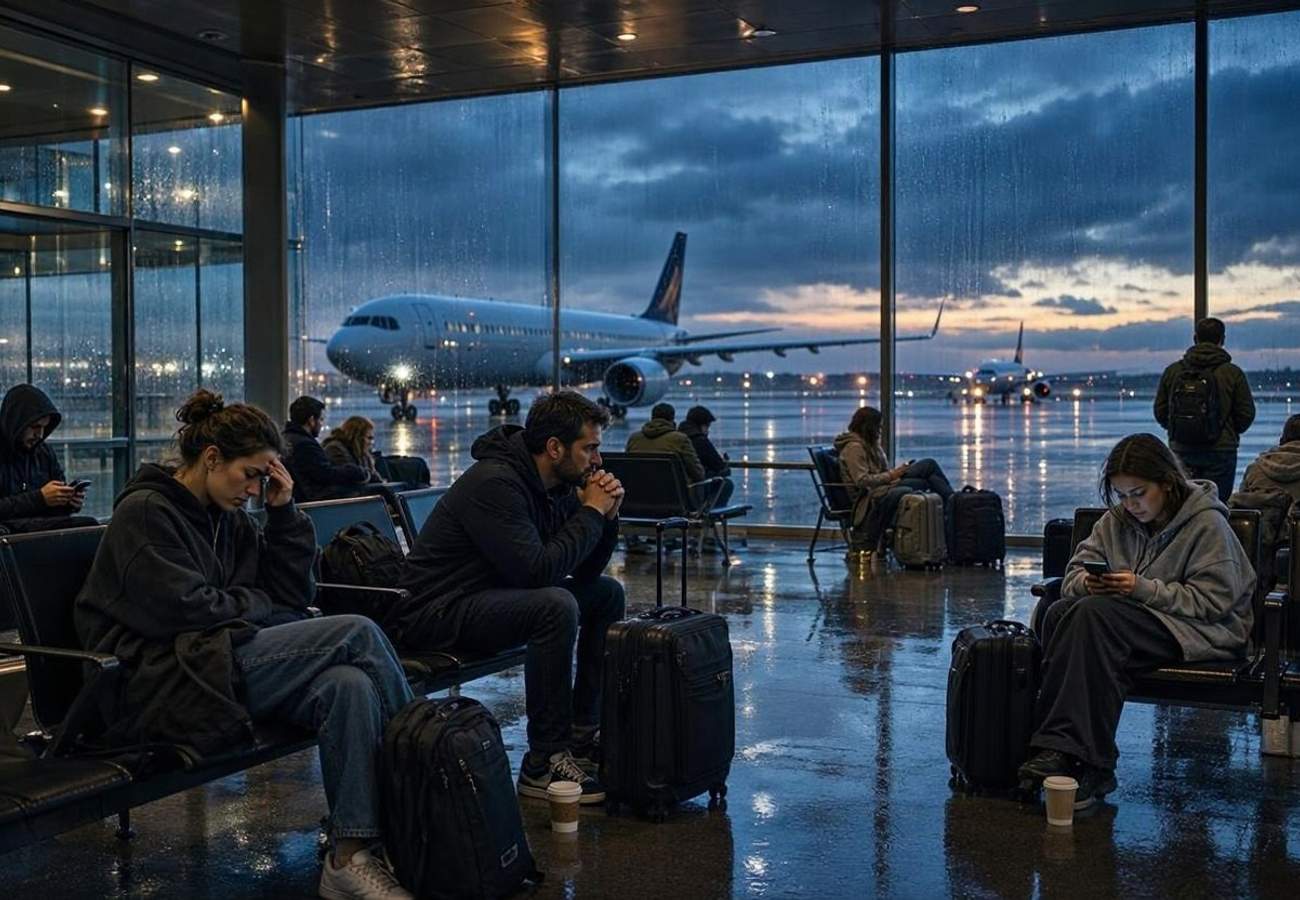
Northeast Nor'easter Triggers Emergency Travel Waivers Across American, United, and JetBlue Networks

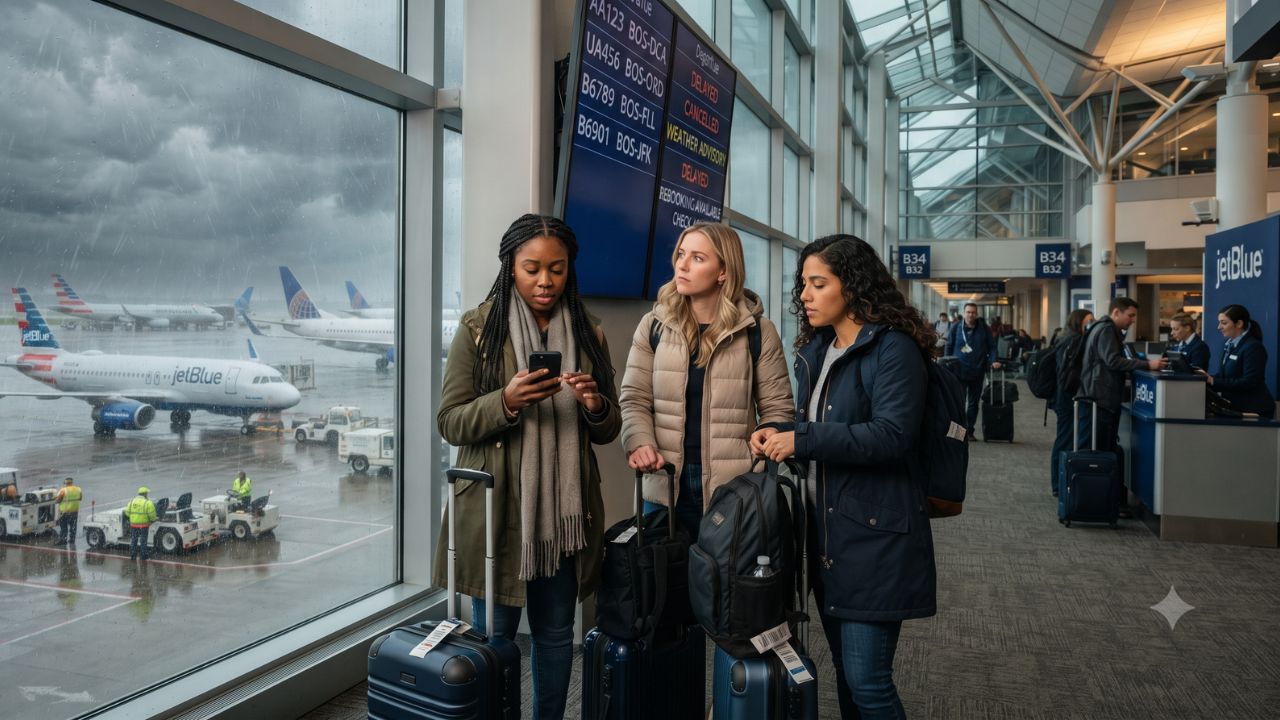
Major carriers enacting flight change waivers across New York and Boston airports ahead of coastal storm conditions
When a deep North Atlantic low-pressure system collides with onshore coastal winds, air corridors linking New York and Boston can grind to a halt faster than a Manhattan subway during rush hour. Facing dangerous wind gusts and torrential rain from an incoming autumn Nor’easter, American Airlines, United Airlines, and JetBlue Airways have issued temporary flight waivers across major hubs, allowing passengers scheduled between Friday and Sunday to adjust itineraries without modification fees.
Dissecting Carrier Policy Rules Across New York and Boston Hubs
The weather-driven waivers specifically cover high-volume transit facilities managed by the Port Authority of New York and New Jersey and Massport, including John F. Kennedy International Airport (JFK), LaGuardia Airport (LGA), Newark Liberty International Airport (EWR), and Boston Logan International Airport (BOS). Because heavy crosswinds and localized flooding force air traffic controllers to widen aircraft spacing, carriers preemptively released flexible rebooking terms to thin out departure queues.
Each airline enforces distinct qualification boundaries. Under United Airlines' policy, passengers who purchased tickets on or before Wednesday for travel between Friday and Sunday can reschedule without change fees, provided they keep their original origin and destination cities and remain in the same cabin class. United mandates that replacement itineraries be completed by Tuesday to avoid standard fare differentials.
American Airlines offers a slightly different framework. While requiring eligible ticket issue dates and travel windows matching the storm advisory, American allows travelers to change cabin classes provided they pay the difference in fare. JetBlue Airways has enacted independent waiver terms that waive change and cancellation fees, while also extending refund options for passengers whose flights are canceled outright due to severe weather.
The disruption extends beyond aviation into regional sports. Major League Baseball adjusted its final regular-season weekend schedule to avoid coastal gales, shifting the Baltimore Orioles versus New York Yankees matchup to a Friday evening doubleheader and moving the Chicago Cubs versus Boston Red Sox series earlier to create a doubleheader configuration.
What Makes Nor’easters Structurally Challenging for Northeast Transit
Nor’easters are cyclonic storms that draw immense energy from the temperature contrast between cold polar air masses over eastern Canada and warm ocean currents in the Atlantic Gulf Stream. Unlike fast-moving summer squalls, these expansive systems linger over the coast for forty-eight to seventy-two hours, generating sustained gale-force winds that directly impact coastal runways surrounded by water, such as LaGuardia's Flushing Bay decks and Boston Logan’s harbor peninsulas.
The interconnected nature of the Northeast airspace magnifies ground stops. When crosswinds exceed safe operating limits at JFK or Newark, incoming aircraft are diverted to inland staging grounds across Pennsylvania and upstate New York, creating rolling aircraft repositioning deficits across national route networks.
For travelers caught in the corridor between Washington D.C., Philadelphia, New York, and Boston, severe coastal storms test urban mobility. However, the region’s dual rail-and-air architecture offers strategic escape routes that experienced locals use to bypass terminal gridlock entirely.
Visitor Insider Tips for Surviving Northeast Coastal Storms
Handling seasonal weather disruptions across New York and Boston requires proactive booking maneuvers, transit alternatives, and neighborhood awareness.
Pivoting to Regional Rail Networks
When major Northeast airports institute severe ground delay programs, switch from short-haul regional flights (such as Boston to New York or New York to Washington) to Amtrak’s Northeast Regional or Acela high-speed rail lines. Operating along inland rights-of-way between Boston South Station and New York Penn Station, electric rail corridors remain resilient during heavy rain and wind events when regional turboprops and regional jets are grounded.
Mastering Airline Mobile Application Rebooking
Do not wait in airport customer service lines when a weather waiver is active. The fastest way to confirm an alternative seat is through the airline’s mobile application the moment the travel advisory publishes. If your flight is delayed by more than two hours, airline systems automatically open inventory on adjacent flights without requiring manual agent overrides. Live storm tracking and regional radar updates should be verified through the National Weather Service.
Selecting Weather-Proof Neighborhood Bases
If stranded for an unexpected weekend in New York City, base yourself in Midtown Manhattan or Downtown Brooklyn near major underground subway junctions. This allows you to explore world-class indoor cultural institutions—such as the Metropolitan Museum of Art or the New York Public Library—without stepping out into driving rain. In Boston, base yourself in Back Bay, where enclosed skybridges link hotels, shopping galleries, and transit stations between Copley Place and the Prudential Center. Neighborhood navigation tools are maintained by NYC Tourism + Conventions.
Seeking Warm Comfort Food in Storm Season
Take advantage of a stormy afternoon by exploring classic regional comfort food. In Boston, seek out a steaming bowl of traditional New England clam chowder paired with oyster crackers in historic taverns around Faneuil Hall. In New York, head to Chinatown for steaming bowls of hand-pulled noodles or visit classic Jewish delicatessens for hot pastrami on rye and matzo ball soup.
Cultural and Environmental Context of Coastal Climate Resilience
The increasing intensity of autumn coastal storms places immense pressure on historic maritime infrastructure across the eastern seaboard. Both New York and Boston have initiated multi-billion-dollar coastal protection programs to shield low-lying airports, rail tunnels, and subway portals from rising sea levels and storm surges.
Boston Logan Airport has elevated electrical substations and installed deployable flood barriers along its harbor perimeter, while New York’s airports have rebuilt drainage basins and elevated runway seawalls to withstand tidal inundation.
These climate challenges also influence how travelers interact with urban spaces. Tourism authorities in both cities increasingly encourage visitors to support local independent businesses, historic neighborhood theatres, and municipal cultural spaces during adverse weather, ensuring that local hospitality workers and cultural performers remain supported when outdoor events and seasonal sightseeing pause.
FAQ: Navigating Northeast Storm Travel Waivers 2026
Which airports are covered under the airline Nor'easter waivers?
The flexible travel waivers cover major Northeast transit hubs, including John F. Kennedy International (JFK), LaGuardia (LGA), Newark Liberty (EWR), and Boston Logan (BOS).
Do I have to pay a fee to change my flight during the storm?
No. Eligible passengers traveling between Friday and Sunday who meet ticket purchase deadlines can change flights without paying standard modification fees.
What happens if my flight is canceled by the airline?
If an airline cancels your flight due to storm conditions, you are legally entitled to a full refund to your original payment method or a complimentary rebooking on the next available flight.
Is Amtrak a reliable backup option between Boston and New York?
Yes. Amtrak’s Northeast Corridor trains generally continue operating during moderate to severe rainstorms, providing a dependable alternative when regional flights are grounded.
When coastal skies turn iron-gray and winds sweep off the harbor, the seasoned traveler knows that patience and a train ticket are the finest tools in the bag.
Related Travel Guides
This article is for informational purposes. Flight routes, passenger regulations, visa rules, and transit advisories are subject to change by airlines and aviation authorities. Readers are advised to verify schedules and travel documentation with relevant carriers and border agencies before departure.
Related Stories
US Aviation Crisis: FAA Nationwide Shutdown Sparks Push for $30.1 Billion Modern Skies Act

Using Airline Miles and Hotel Points for Caribbean Winter Travel 2026: US Virgin Islands and Beyond