
Delta Pilots Avert Disaster After American Jet Cleared Into Their Path At Boston Logan
Delta Pilots Avert Disaster After American Jet Cleared Into Their Path At Boston Logan

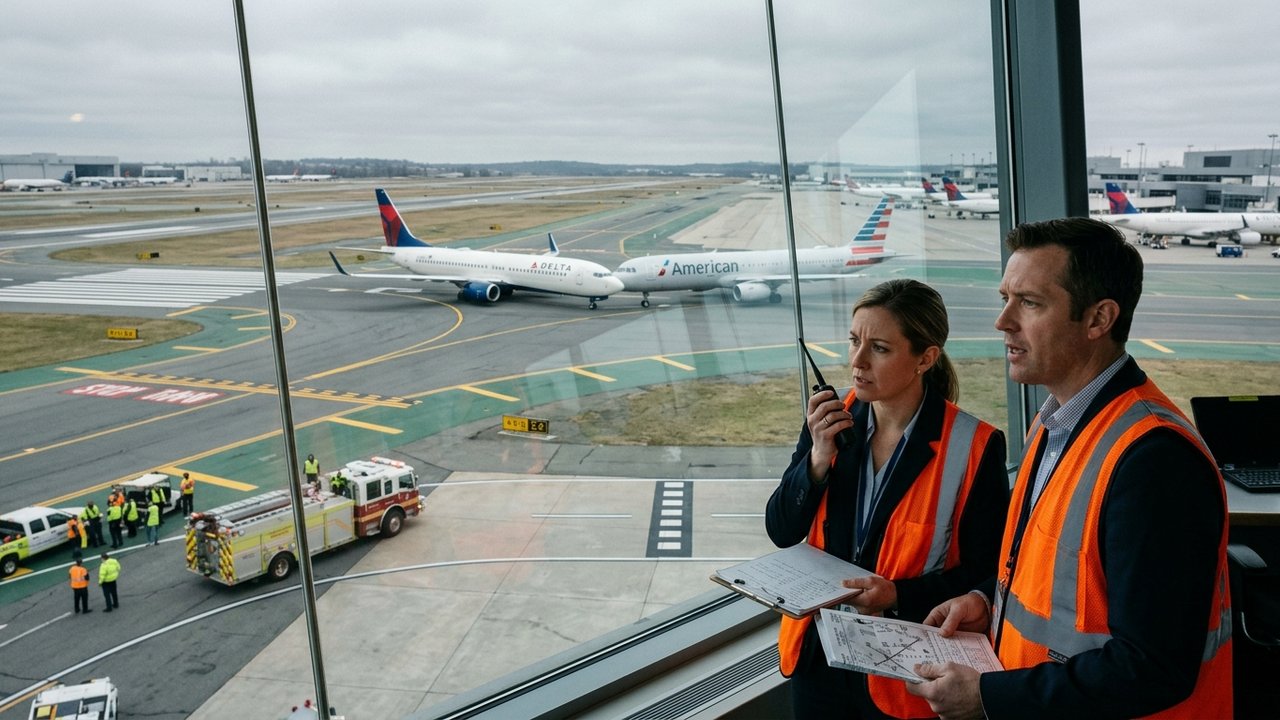
Image generated by AI
Delta Flight 2351 Executes Emergency Go-Around at Boston Logan After American Airlines Aircraft Cleared onto Active Runway
BOSTON, June 20, 2026 — Delta Air Lines Flight 2351 executes a critical go-around maneuver at Boston Logan International Airport on Saturday afternoon after air traffic controllers inadvertently cleared an American Airlines jet onto an active landing runway. The close-call incident, which unfolded around 11:30 a.m. local time, was narrowly avoided thanks to rapid situational awareness from the cockpit crew. Federal investigators have now opened a formal review to determine the exact sequence of communication breakdowns that triggered the Boston Logan runway incursion. Aviation safety experts are closely monitoring the event as authorities begin their preliminary analysis of ground radar data and cockpit voice recordings.
Background and Operational Context
Boston Logan International Airport operates one of the most complex airspace environments in the northeastern United States. The facility manages intersecting runway configurations that require precise sequencing during peak traffic hours. Runway 33L and Runway 27 cross at a sharp angle, creating multiple conflict points that demand strict air traffic control coordination. Commercial carriers utilize these runways for simultaneous arrivals and departures, which significantly increases operational efficiency but also raises the stakes for separation standards. When controllers issue takeoff clearances, they must verify that all landing aircraft have safely crossed the intersection or are cleared to land past it. This incident highlights how quickly procedural lapses can translate into immediate ground hazards.
Cockpit Vigilance Prevents Catastrophe at Terminal Runway
Flight tracking data and publicly released cockpit audio reveal the exact moment the hazard materialized. Delta Air Lines Flight 2351, operating an Airbus A319, was established on final approach for Runway 33L when the aircraft reached its decision altitude. Simultaneously, American Airlines Flight 3161, a Boeing 737-800, began its takeoff roll from the perpendicular Runway 27. The Delta flight crew visually identified the American jet crossing the runway intersection just seconds before touchdown would have occurred. Recognizing the imminent collision risk, the pilots immediately announced their intention to execute a go-around, which is the standardized procedure for aborting a landing when the runway environment is no longer safe or clear.
The go-around maneuver involves applying full thrust, pitching the nose upward, and climbing to a safe altitude while following pre-programmed departure paths. In this scenario, the Delta aircrew initiated the climb before the tower controllers became aware of the conflicting traffic. Audio from the cockpit indicates the pilots alerted the tower directly, shouting their go-around clearance. However, ground controllers appeared unaware of the developing conflict. Tower operators subsequently asked the American Airlines pilot, "Where are you going?" despite the aircraft already rolling down the active strip. The American crew confirmed they held an active takeoff clearance and continued their departure while the Delta aircraft climbed away to restart its landing approach. The incident concluded without physical contact, though the Delta flight faced a significant schedule delay.
Federal Aviation Administration Launches Formal Review
The Federal Aviation Administration has confirmed that an official investigation is underway following the Saturday afternoon incident. Agency representatives issued a statement noting that the crew of Delta Air Lines Flight 2351 executed a go-around at Boston Logan International Airport because another aircraft was departing from an intersecting runway. The FAA emphasized that the event occurred around 11:30 a.m. local time on Saturday, June 20, and that investigators are compiling all available surveillance and communication records. Regulatory inspectors will examine the timing of clearance issuance, the sequencing of runway assignments, and the effectiveness of controller workload management during the operation. The agency has not yet released preliminary findings, but the investigation will likely focus on whether standard separation protocols were properly followed during the conflicting movements.
Recurring Ground Safety Challenges Across U.S. Hubs
This Boston incident joins a troubling pattern of ground-level near-misses that have strained aviation safety confidence across the United States. Aviation safety observers note that terminal environments remain vulnerable to human factors, system delays, and communication gaps. The frequency of runway incursions and loss-of-separation events has drawn intense scrutiny following several high-profile accidents over the past year. In January 2025, a tragic collision occurred at Washington Dulles International Airport when American Airlines Flight 5342 struck a military helicopter during approach. The crash claimed the lives of 67 passengers and crew, prompting a nationwide reassessment of airspace management and helicopter routing procedures.
Similar ground safety failures have emerged at other major hubs. Air Canada Express Flight 8646 recently collided with a fire truck on the active runway at LaGuardia Airport, resulting in a fatal crash that destroyed the cockpit and killed both pilots. Preliminary reports from the investigation indicate that both the regional jet and the emergency vehicle received runway clearance simultaneously, exposing critical flaws in ground movement authorization. These events demonstrate that despite improved training and technological upgrades, the human-machine interface at busy airports remains a persistent vulnerability. Flight tracking data shows that ground conflicts continue to spike during high-traffic periods, particularly when multiple runways operate in close proximity.
Infrastructure Upgrades and Regulatory Overhauls Underway
Airlines and airport authorities are responding to these safety challenges with coordinated infrastructure improvements and regulatory reforms. The FAA has accelerated the deployment of Airport Surface Detection Equipment, version X, commonly known as ASDE-X, alongside Airport Surface Surveillance Capability systems. These technologies provide controllers with high-resolution radar imagery, automatic vehicle location tracking, and conflict alert warnings that supplement traditional voice communication. The National Transportation Safety Board has issued multiple safety recommendations urging faster adoption of surface surveillance upgrades and stricter staffing standards during peak operational windows.
Massport, the agency responsible for operating Boston Logan International Airport, has initiated collaborative safety reviews with federal regulators. Industry sources indicate that initial assessments point toward taxiway redesigns, enhanced runway holding position markings, and improved controller training focused on intersecting runway operations. The airport currently ranks fourth among major U.S. facilities for runway incursion frequency, according to recent transportation reports. This ranking has accelerated planning for ground movement optimization, including revised taxi routing protocols and expanded use of automated conflict detection tools. Airlines are also reassessing their ground handling procedures to ensure tighter synchronization between pushback, taxi, and takeoff clearance phases.
Impact Analysis
The Boston Logan runway incursion carries immediate operational and long-term regulatory implications for commercial aviation. Passengers will experience schedule disruptions as airlines adjust flight paths and implement additional safety briefings for ground operations. Air traffic control facilities nationwide may face increased oversight, with potential requirements for additional controller certifications during high-traffic shifts. Airlines will likely revise their cockpit resource management training to emphasize earlier visual confirmation of runway status and more assertive communication with tower operators during final approach. The incident also reinforces the necessity of automated conflict alert systems, as reliance on human monitoring alone proves insufficient in complex terminal environments. Regulatory bodies are expected to fast-track mandates for surface surveillance upgrades, which could reshape how major airports manage intersecting runway operations for years to come.
Forward-Looking Conclusion
Federal investigators are continuing their review of the Boston Logan incident while airport operators implement immediate procedural adjustments. The combination of technological modernization, revised training standards, and stricter separation protocols will determine whether ground safety can keep pace with growing air traffic volumes. Aviation authorities will likely announce updated compliance timelines for surface detection systems as they work to eliminate the communication gaps that enabled this close call. Industry observers expect tighter coordination between air traffic control and airline dispatchers to become a permanent operational requirement. The focus remains on preventing future ground conflicts through systemic improvements rather than isolated incident responses.
Related Travel Guides
Disclaimer
This article is for informational and educational purposes only. It does not constitute legal, financial, or professional advice. While we strive to provide accurate and up-to-date information, travel policies, regulations, and conditions change rapidly. Always verify information with official sources before making travel decisions. Nomad Lawyer makes no representations about the accuracy, reliability, completeness, or suitability of the information provided. Readers should consult qualified professionals for advice specific to their circumstances. The views expressed in this article are those of the author and do not necessarily reflect the views of Nomad Lawyer.
Preeti Gunjan
Contributor & Community Manager
A passionate traveller and community builder. Preeti helps grow the Nomad Lawyer community, fostering engagement and bringing the reader experience to life.
Learn more about our team →