
North Dakota Autumn Tourism Surge: Analyzing the Shift Toward Rural Prairie and Badlands Travel in 2026
North Dakota is seeing a significant spike in autumn visitor numbers as travelers pivot from traditional foliage hubs toward the state's Badlands and prairie scenic routes.

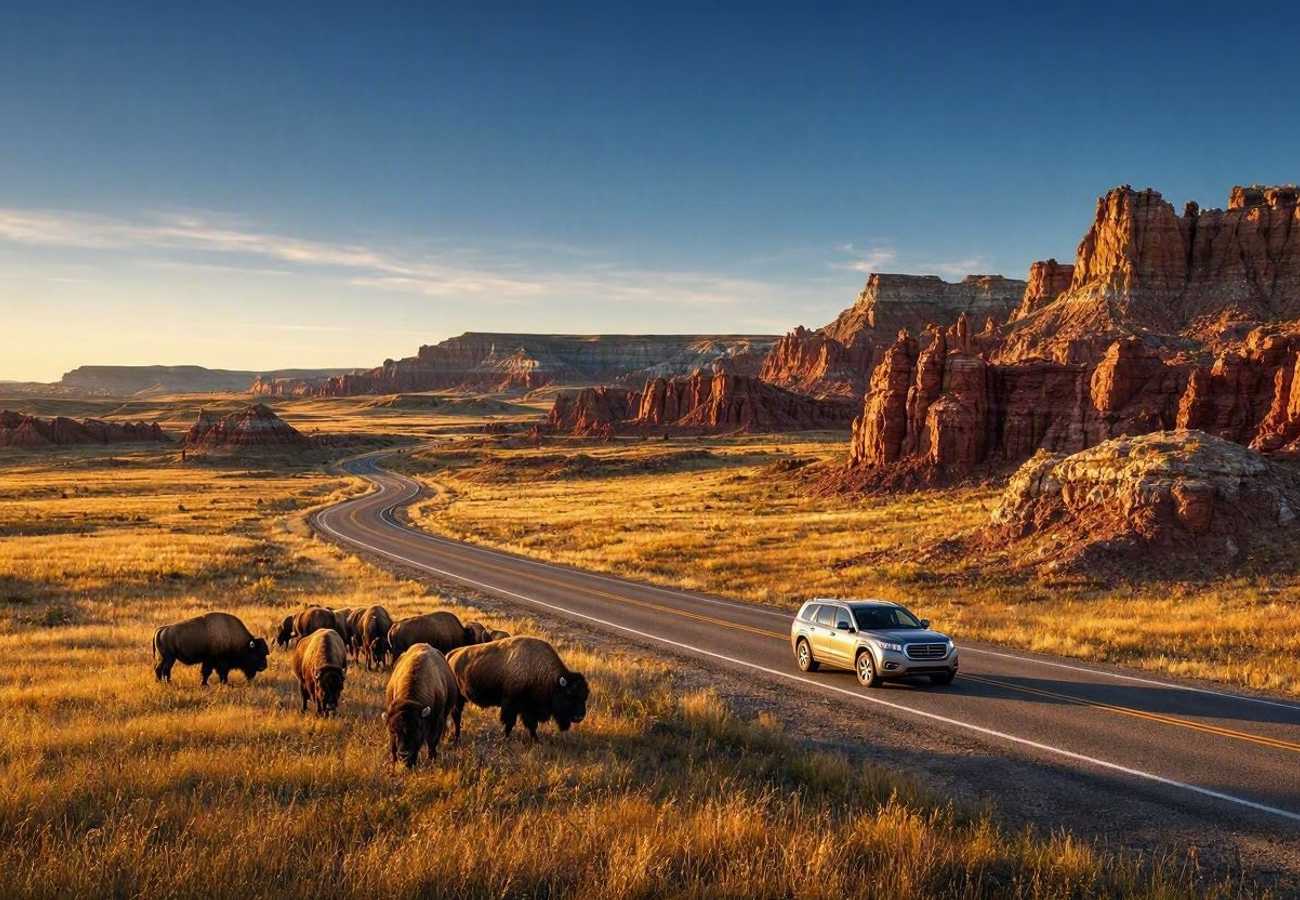
Image generated by AI
Domestic travel patterns in the United States have seen a measurable pivot toward "under-visited" rural corridors, with North Dakota's autumn visitor metrics now challenging traditional New England foliage benchmarks in terms of growth rate. While traditional East Coast hubs maintain higher absolute volume, the percentage increase in search intent and road-trip bookings for the Great Plains during the September-October window signals a structural shift in how American travelers define "seasonal escapes."
The Prairie Pivot in Numbers
The current surge in North Dakota travel is not a random occurrence but a response to a broader market movement toward "slow travel" and authentic community engagement. Data indicates that the primary drivers for this growth are the state's expansive scenic byways and the unique geological appeal of the Badlands. Specifically, the Theodore Roosevelt National Park South Unit Loop has emerged as a critical anchor for the region, serving as a high-density point for wildlife sightings—including bison and elk—which acts as a primary draw for nature-based tourists.
The timing of this growth is precise. The peak foliage window, stretching from mid-September through October, creates a concentrated demand spike. This period coincides with a broader industry trend identified by the World Travel & Tourism Council (WTTC), where travelers are increasingly seeking destinations that offer lower crowd density compared to primary tourist hubs. In North Dakota, this is manifesting as a rise in "hidden community" exploration, where the journey along the highway is valued as much as the destination itself.
Comparative Context: Rural vs. Urban Autumn Flow
When comparing North Dakota's autumn trajectory to previous years and other regional benchmarks, we see a clear move toward agritourism and specialized scenic routes. The state has successfully diversified its offerings beyond the primary national park, integrating "anchor" attractions like the Enchanted Highway and the Turtle Mountain Scenic Byway to distribute tourist traffic across a wider geographic area.
The following table illustrates the shift in attraction priority for autumn visitors:
| Attraction Category | Previous Market Focus (Pre-2024) | Current Market Focus (2026) | Primary Driver |
|---|---|---|---|
| National Parks | Peak Summer Visitation | Shoulder Season (Fall) | Cooler Temps / Fewer Crowds |
| Rural Communities | Transit Points | Primary Destinations | Authentic Local Culture |
| Agritourism | Localized/Seasonal | Regional Draw | Pumpkin Patches/Corn Mazes |
| Scenic Routes | Utility-based Travel | Experience-based Travel | Foliage / Large-scale Art |
This shift is supported by the growth of specialized seasonal sites. For example, Papa’s Pumpkin Patch in Bismarck and Berry Acres in Minot have evolved from local weekend spots into regional tourism assets that draw out-of-state visitors. This mirrors a national trend where "harvest tourism" becomes a significant economic contributor to rural GDP, as noted in recent U.S. Department of Agriculture reports regarding the expansion of farm-to-consumer experiences.
What This Means for Travelers
For the individual traveler or digital nomad, the data suggests that the window for "undiscovered" North Dakota is closing, though it remains far less congested than the Appalachian or New England trails. To maximize the experience and avoid the emerging seasonal bottlenecks, the following strategies are recommended:
- Route Optimization: Because attractions like the Enchanted Highway and Turtle Mountain are geographically dispersed, a linear itinerary is inefficient. Travelers should utilize a "hub-and-spoke" model, basing themselves in cities like Bismarck or Minot to access surrounding pumpkin patches and scenic loops.
- Booking Windows: While North Dakota is not yet experiencing the "overtourism" of National Park gateways in the West, the rise in autumn popularity means that lodging near Theodore Roosevelt National Park should be secured 6-8 weeks in advance for October visits.
- Weather Contingency: The data on North Dakota's autumn climate shows high volatility. Travelers must plan for rapid temperature drops, particularly in the Badlands, where overnight lows can deviate significantly from daytime highs.
Forward Projection: The 2027 Trajectory
Based on current growth patterns, North Dakota is positioned to transition from a "hidden gem" to a primary autumn destination. We expect to see a further integration of luxury glamping and boutique rural lodging to accommodate the increasing number of high-spend nature tourists.
The expansion of the "experience economy" will likely lead to more curated harvest festivals and arts-and-crafts fairs, further extending the average length of stay (ALOS) for visitors. As travelers continue to shun overcrowded urban centers, the "Prairie Charm" metric will likely drive a steady 4-7% year-over-year increase in autumn visitation through 2028. This growth will be underpinned by the state's ability to market its solitude as a luxury commodity.
FAQ: North Dakota Autumn Travel 2026
Will travel costs increase in North Dakota during the fall? Yes, as demand for lodging near Theodore Roosevelt National Park and in hub cities like Bismarck increases, expect a moderate rise in hotel rates during the peak foliage window (late September to October).
Is this the best time to visit the Badlands? Statistically, yes. Autumn offers a critical balance of cooler temperatures and reduced crowd density compared to the summer peak, making it ideal for hiking and wildlife photography.
Which routes are best for first-time visitors? The Theodore Roosevelt National Park South Unit Loop is the highest-priority route for wildlife, while the Enchanted Highway is recommended for those seeking unique, art-driven road trip experiences.
Are pumpkin patches and corn mazes accessible to non-locals? Absolutely. Sites like Berry Acres and Papa’s Pumpkin Patch have scaled their operations to accommodate regional tourism, offering comprehensive family-oriented autumn experiences.
The prairie is no longer just a fly-over zone; it is becoming a destination for those who value silence over spectacle.
Related Travel Guides
Disclaimer
This article is for informational and educational purposes only. It does not constitute legal, financial, or professional advice. While we strive to provide accurate and up-to-date information, travel policies, regulations, and conditions change rapidly. Always verify information with official sources before making travel decisions. Nomad Lawyer makes no representations about the accuracy, reliability, completeness, or suitability of the information provided. Readers should consult qualified professionals for advice specific to their circumstances. The views expressed in this article are those of the author and do not necessarily reflect the views of Nomad Lawyer.
Raushan Kumar
Founder & Lead Developer
Full-stack developer with 11+ years of experience and a passionate traveller. Raushan built Nomad Lawyer from the ground up with a vision to create the best travel and law experience on the web.
Learn more about our team →