
Yellowstone Summer Tourism Moderates in 2026 as West Entrance Absorbs 43% of Park Traffic: Insider Survival Guide
Yellowstone records 3.49 million visits through August 2026, with the West Entrance processing nearly 425,000 cars. Discover local strategies to bypass summer traffic jams.

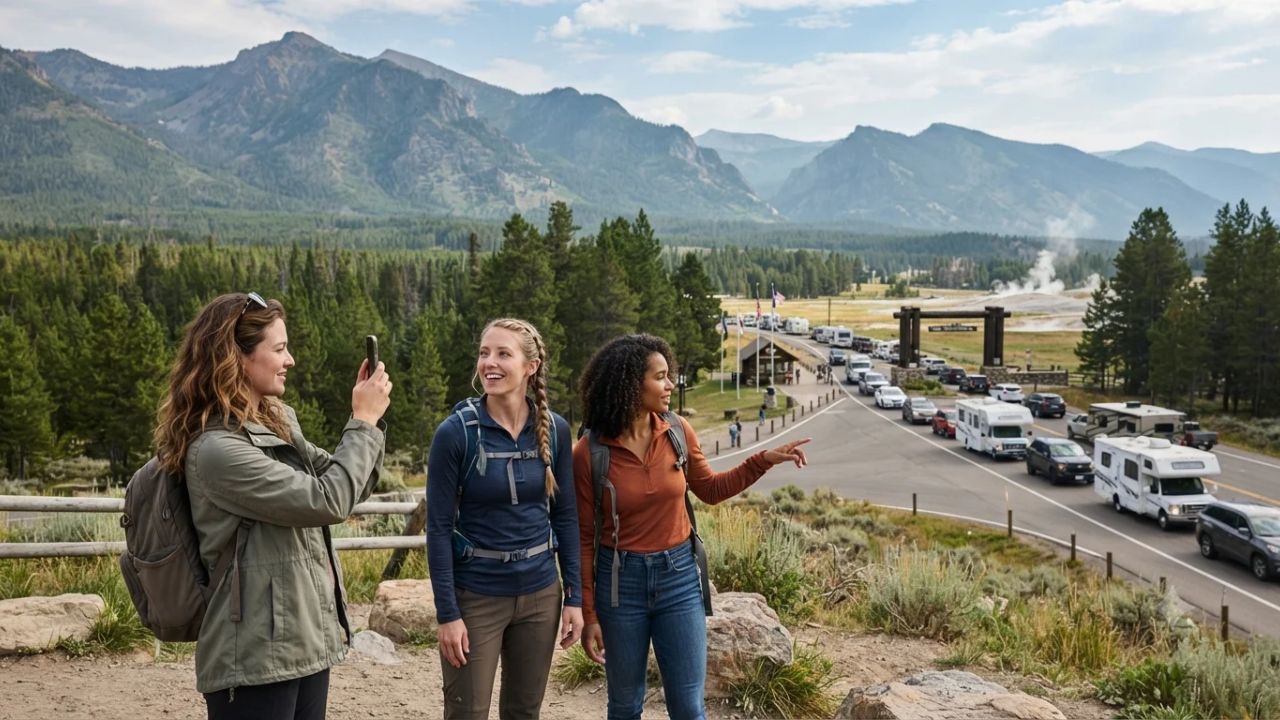
Image generated by AI
Nearly forty-three percent of all automobile traffic entering Yellowstone National Park funnels through a single gate—the West Entrance—where nearly 425,000 recreational vehicles queued through July 2026, while the remote Northeast Entrance welcomed barely 75,000 cars over the exact same timeframe. This stark geographic imbalance highlights the daily reality of navigating America's oldest national park during its summer peak. Official visitation records compiled by the National Park Service reveal that Yellowstone logged approximately 3.49 million recreation visits between January and August 2026, reflecting a modest 1.6% ease compared to the 3.54 million tally recorded during the same period in 2025.
While total visitor tallies eased by approximately 56,000 visits, the park remains an international magnet. August 2026 alone accounted for 856,467 recreation visits, representing a slight 3% drop from August 2025. When measured against the historic post-pandemic peak of August 2021—which registered approximately 3.59 million visits—current numbers sit about 100,000 visits below that benchmark, with full calendar-year statistics expected from federal authorities in January 2027. For travelers who understand local wildlife rhythms and entrance geography, this slight moderation creates rare opportunities to experience geothermal wonders and predator valleys without gridlock.
Anatomy of the Chokepoints: How Five Entrances Split 3.5 Million Visitors
Yellowstone spans over 2.2 million acres across Wyoming, Montana, and Idaho, yet vehicle access is governed by five historic gateways. The vehicular distribution through July 2026 illustrates why certain roadway corridors become paralyzed by bumper-to-bumper delays while others offer unhindered mountain transit.
The West Entrance, situated right beside the vibrant border hub of West Yellowstone, Montana, processed nearly 425,000 recreational automobiles through July. Serving as the primary conduit for visitors arriving from eastern Idaho, Salt Lake City, and southwest Montana, this single gateway absorbed approximately 43% of all traditional vehicular traffic. By contrast, the historic North Entrance at Gardiner, Montana—famed for the stone Roosevelt Arch—handled approximately 244,000 automobiles. Further south, the South Entrance channeled around 152,000 vehicles arriving from Jackson Hole and Grand Teton National Park. In the east, the East Entrance rising out of Cody, Wyoming, logged approximately 84,000 vehicles, while the rugged Northeast Entrance near Silver Gate and Cooke City recorded just 75,000 automobiles.
For regional gateway communities including West Yellowstone and Island Park, Idaho, this continuous stream of recreation visits forms the economic lifeblood of local motels, river outfitters, restaurants, and supply shops. Because federal recreation-visit calculations track total park entries rather than unique individuals, a family staying in West Yellowstone that re-enters the park across four consecutive days registers four distinct recreation visits, underscoring how concentrated lodging along the western boundary compounds gate congestion.
What Makes Navigating the Greater Yellowstone Ecosystem Distinct
Yellowstone is not a conventional tourist attraction; it is an active volcanic caldera recognized by the UNESCO World Heritage Centre for harboring the greatest concentration of geysers, fumaroles, and hydrothermal features on Earth. Its pristine wilderness encompasses the last intact temperate ecosystem in the Northern Hemisphere, where grizzly bears, gray wolves, wild bison herds, and pronghorn migrate across unfenced river valleys.
Experiencing this terrain requires syncing your schedule with animal biology rather than vacation hours. During peak afternoon heat, thermal steam dissipates, and megafauna retreat deep into lodgepole pine timber. Wildlife enthusiasts who venture into the broad glacial expanse of Lamar Valley or Hayden Valley at first dawn encounter subalpine meadows alive with wolf packs hunting elk and bison crossing misty rivers, free from the chaotic "bison jams" that snarl central loop roads by midday.
Furthermore, state travel authorities like Explore Montana emphasize the stark scenic contrast between the western hydrothermal plateaus and the dramatic canyon geology of the east. Entering through Cody takes drivers across high alpine passes along the Shoshone River, while the Northeast Entrance winds down the dramatic switchbacks of the Beartooth Highway, dropping travelers straight into prime wildlife habitat without a traffic light in sight.
Visitor Insider Tips
Mastering Yellowstone during high season requires disciplined timing and strategic route selection.
- Pass Through Gates Before 7:00 AM: The West Entrance begins forming severe automobile queues by 8:30 AM, with waits often exceeding an hour. Set your alarm early and pass through the fee booths before 7:00 AM. You will glide through with zero wait and arrive at popular geothermal sights like Grand Prismatic Spring or Old Faithful while morning fog keeps crowds minimal.
- Base Yourself at Alternative Gateways: Rather than competing for expensive lodging in West Yellowstone, base yourself in Gardiner near the North Entrance or Cooke City near the Northeast Entrance. Cooke City provides direct, twenty-minute morning access to Lamar Valley, saving you ninety minutes of driving across the interior loop.
- Respect the 25-Yard and 100-Yard Rules: Park regulations mandate staying at least 25 yards away from bison, elk, and deer, and a minimum of 100 yards away from bears and wolves. Never approach wildlife for selfies; carry high-power binoculars or a spotting scope on a sturdy tripod.
- Never Step Off Boardwalks in Thermal Basins: The thin mineral crusts surrounding hot springs like Norris Geyser Basin conceal boiling, acidic water. Stay strictly on designated wooden boardwalks to preserve fragile microbial mats and prevent severe burns.
- Pack a Cooler and Fuel Up Outside the Park: In-park dining facilities face long lunch lines and elevated prices. Stop at a local grocery in Island Park or Gardiner to pack sandwiches, fruit, and snacks, and top off your fuel tank before entering the gates.
Cultural and Environmental Context
The influx of millions of visitors places tremendous pressure on delicate park ecosystems and small municipal infrastructures. Gateway communities like West Yellowstone, with a permanent resident population of around 1,300 people, must scale emergency services, water treatment plants, and waste disposal to handle over four hundred thousand vehicles in summer alone.
Environmentally, roadside crowding creates ongoing human-wildlife friction. Vehicle strikes remain a primary source of mortality for park wildlife, while uneducated visitors approaching bison too closely result in avoidable injuries and animal relocations. Non-profit conservation alliances work continuously with park rangers to advocate for wildlife overpasses, educate motorists, and enforce strict food-storage orders to ensure bears do not become conditioned to human garbage. By adhering to posted speed limits, packing out all trash, and showing patience during wildlife crossings, visitors help preserve Yellowstone's wild integrity for future generations.
FAQ: Visiting Yellowstone National Park 2026
Why does the West Entrance experience the worst traffic in Yellowstone? The West Entrance processes nearly 43% of all recreational vehicles because it provides the most direct highway access from major interstate routes, airport corridors, and extensive lodging in West Yellowstone and Island Park.
Which entrance is the best choice for viewing wildlife? The Northeast Entrance is the premier choice for wildlife enthusiasts, depositing visitors directly into Lamar Valley, renowned as America's Serengeti for wolves, bison, and grizzly bears.
How much time should I allocate for a comprehensive Yellowstone trip? Plan for at least three to four full days. Yellowstone's Grand Loop Road forms a figure-eight spanning 142 miles, and summer traffic and wildlife delays make traversing the park time-intensive.
Do I need advance reservations to enter Yellowstone National Park? Yellowstone does not currently require advance timed-entry vehicle reservations for general gate access, but securing lodging and campground permits six to twelve months in advance is essential.
Beyond the crowded asphalt of the western gate lies a primeval wilderness where steam rises eternal and wild bison still command the open road.
Related Travel Guides
Travel California & New York 2026: Rising Costs Reshape US Destination Appeal
10 Best Wildlife Watching Spots in Yellowstone, According To Reddit
Disclaimer
This article is for informational and educational purposes only. It does not constitute legal, financial, or professional advice. While we strive to provide accurate and up-to-date information, travel policies, regulations, and conditions change rapidly. Always verify information with official sources before making travel decisions. Nomad Lawyer makes no representations about the accuracy, reliability, completeness, or suitability of the information provided. Readers should consult qualified professionals for advice specific to their circumstances. The views expressed in this article are those of the author and do not necessarily reflect the views of Nomad Lawyer.
Kunal K Choudhary
Co-Founder & Contributor
A passionate traveller and tech enthusiast. Kunal contributes to the vision and growth of Nomad Lawyer, bringing fresh perspectives and driving the community forward.
Learn more about our team →