
Gordie Howe International Bridge Bans Bluetooth Speakers as 270,000 Cross in First Month
The Gordie Howe International Bridge has implemented strict noise and device regulations following a massive first-month surge of 270,000 travelers between Detroit and Windsor.

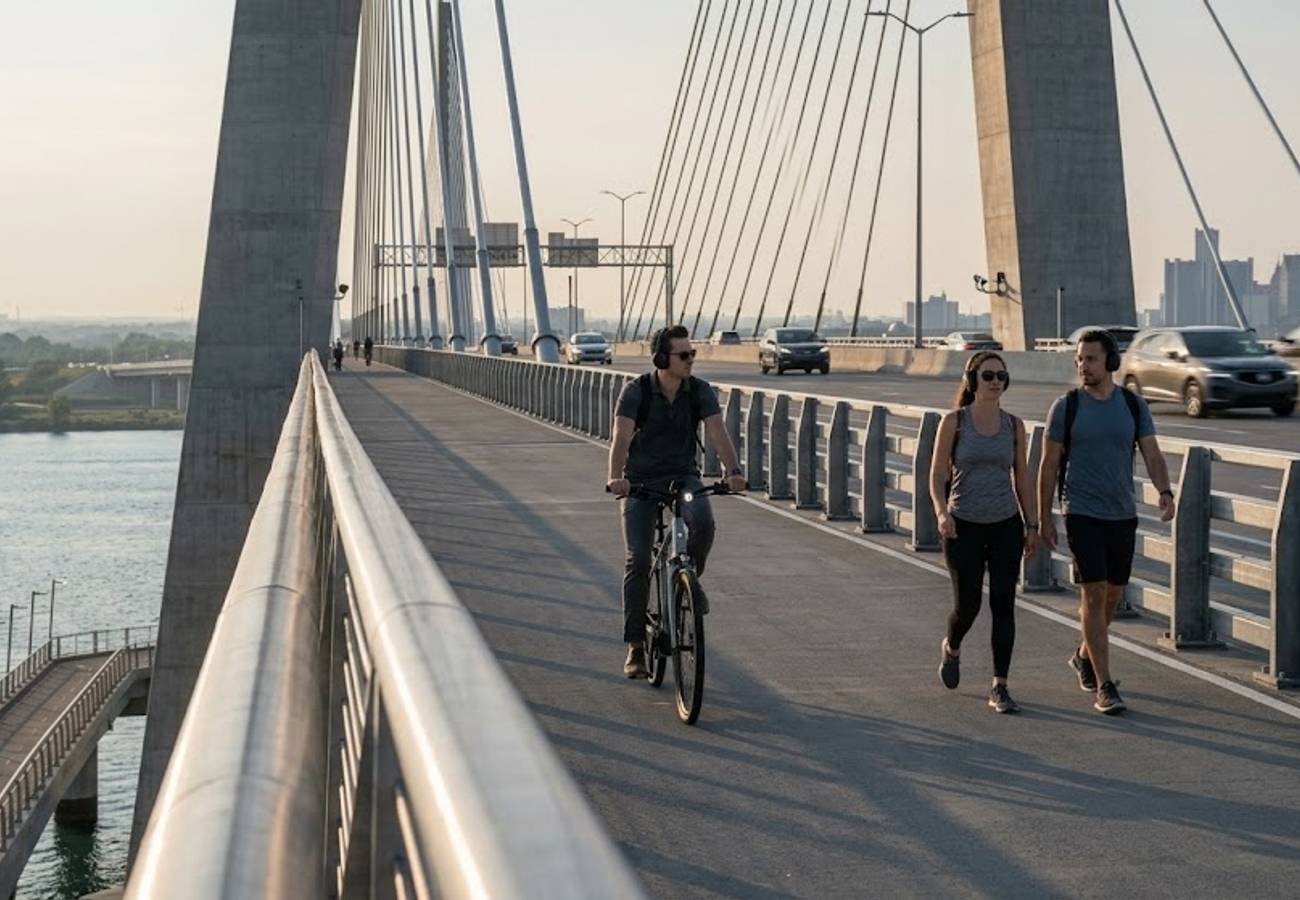
Image generated by AI
134,900 Canadian-resident return trips from the United States by automobile dominated the first full month of operations at the Gordie Howe International Bridge in August 2026. This surge in volume, totaling more than 270,000 total crossings, has forced bridge authorities to pivot from an opening-phase honeymoon period to a strict regulatory enforcement phase. As the new artery between Detroit, Michigan, and Windsor, Ontario, rapidly absorbs traffic from older crossings, the administration is now prioritizing "acoustic hygiene" and safety by banning specific electronic devices and disruptive behaviors on its multi-use paths.
Market Displacement and Border Traffic Shifts
The operational launch of the Gordie Howe International Bridge has caused an immediate and drastic realignment of cross-border logistics in the Great Lakes region. The bridge has not merely added capacity; it has actively cannibalized the user base of existing infrastructure. Data reveals a 35.4% decline in visitor numbers at the Ambassador Bridge and the Windsor-Detroit Tunnel when compared to August 2025 figures.
The shift is driven largely by short-term, high-frequency travel. According to Statistics Canada, the bridge serves as a primary conduit for same-day commuters and leisure seekers. The breakdown of August 2026 traffic underscores this pattern:
| Traveler Origin | Total Automobile Trips | Same-Day Trip Percentage |
|---|---|---|
| Canadian Residents (Return) | 134,900 | 56.7% |
| U.S. Residents (to Canada) | 101,000 | 52.2% |
This volume of pedestrian and cyclist traffic on the multi-use path has necessitated a granular update to the bridge's code of conduct, moving beyond standard customs requirements to include "quality of life" restrictions for those crossing on foot or by bike.
Regulatory Framework for Multi-Use Paths
The bridge authority has established a strict hierarchy of permitted and prohibited transportation modes. While the facility aims to be inclusive of mobility needs, it has drawn a hard line against motorized "micro-mobility" devices that exceed specific safety thresholds.
Permitted transportation now includes class one pedal-assist bicycles, provided the motor only engages during active pedaling, lacks a throttle, and automatically ceases assistance at 19 miles per hour (32 kilometers per hour). The facility also accommodates motorized wheelchairs and mobility scooters in compliance with accessibility legislation, alongside standard cargo bikes and folding bicycles.
Conversely, the bridge has banned a wide array of motorized rideables. This includes electric scooters, Segways, hoverboards, one-wheelers, and any throttle-equipped e-bikes capable of exceeding the 19 mph limit. Traditional wheeled leisure devices, such as skateboards and roller skates, are also strictly forbidden.
Expert Analysis: The Psychology of Border Friction
For travelers booking this route, the direct consequence of these new rules is a transition from a "public road" mindset to a "controlled facility" mindset. The ban on Bluetooth speakers and "loud/disruptive devices" is a preemptive strike against the friction often found in high-density transit corridors. By mandating headphones, the bridge authority is attempting to mitigate conflict between thousands of diverse users—ranging from stressed commercial commuters to leisure cyclists—sharing a narrow physical space.
The pricing and logistical pressure this creates is subtle but real. As the Ambassador Bridge and the Tunnel see a 35.4% drop in traffic, we can expect a potential shift in tolling strategies or service levels at those older ports to remain competitive. However, the Gordie Howe bridge is positioning itself as the "premium" experience—cleaner, more regulated, and more efficient.
The inclusion of drones on the prohibited list is not merely a nuisance rule but a security imperative. Given the bridge's role as a critical piece of national infrastructure connecting the U.S. and Canada, the U.S. Customs and Border Protection (CBP) and Canadian counterparts view unmanned aerial vehicles as potential security breaches. For the nomad or digital traveler, this means the bridge is a "sterile zone"; any attempt to capture aerial footage will likely result in immediate intervention by security personnel.
Key Takeaways
- Volume Shift: 270,000+ crossings occurred in August 2026, causing a 35.4% traffic drop at the Ambassador Bridge and Windsor-Detroit Tunnel.
- Acoustic Ban: Bluetooth speakers and all loud electronic devices are prohibited on the bridge; headphones are required for audio content.
- E-Bike Limits: Only pedal-assist bikes without throttles and a top speed of 19 mph (32 km/h) are permitted.
- Strict Prohibitions: Drones, e-cigarettes, vaporizers, and all forms of cannabis or alcohol consumption are banned on the structure.
- Micro-Mobility Ban: Electric scooters, hoverboards, and skateboards are not allowed on the multi-use path.
FAQ: Gordie Howe Bridge Rules 2026
Can I use my electric scooter to cross the bridge? No. Electric scooters, Segways, and hoverboards are explicitly prohibited on the multi-use path. Only specific class one pedal-assist bicycles and approved mobility devices for persons with disabilities are allowed.
Am I allowed to smoke or vape while crossing? No. The bridge authority has banned smoking, including the use of e-cigarettes and vaporizers, as part of its updated prohibited activities list.
Can I play music through a speaker on the pedestrian path? No. The use of Bluetooth speakers or any loud, disruptive electronic devices is banned. Travelers are advised to use headphones to avoid violating bridge regulations.
What happens if I try to fly a drone over the bridge? Drones and other unmanned devices are prohibited due to safety and security risks. Using one may lead to security intervention and potential legal penalties at the border.
The era of the "open road" border crossing is being replaced by the era of the managed transit corridor.
Related Travel Guides
Disclaimer
This article is for informational and educational purposes only. It does not constitute legal, financial, or professional advice. While we strive to provide accurate and up-to-date information, travel policies, regulations, and conditions change rapidly. Always verify information with official sources before making travel decisions. Nomad Lawyer makes no representations about the accuracy, reliability, completeness, or suitability of the information provided. Readers should consult qualified professionals for advice specific to their circumstances. The views expressed in this article are those of the author and do not necessarily reflect the views of Nomad Lawyer.
Raushan Kumar
Founder & Lead Developer
Full-stack developer with 11+ years of experience and a passionate traveller. Raushan built Nomad Lawyer from the ground up with a vision to create the best travel and law experience on the web.
Learn more about our team →