
The Odyssey Film Triggers 3,000% Search Surge for Scotland, Morocco, Greece and Iceland
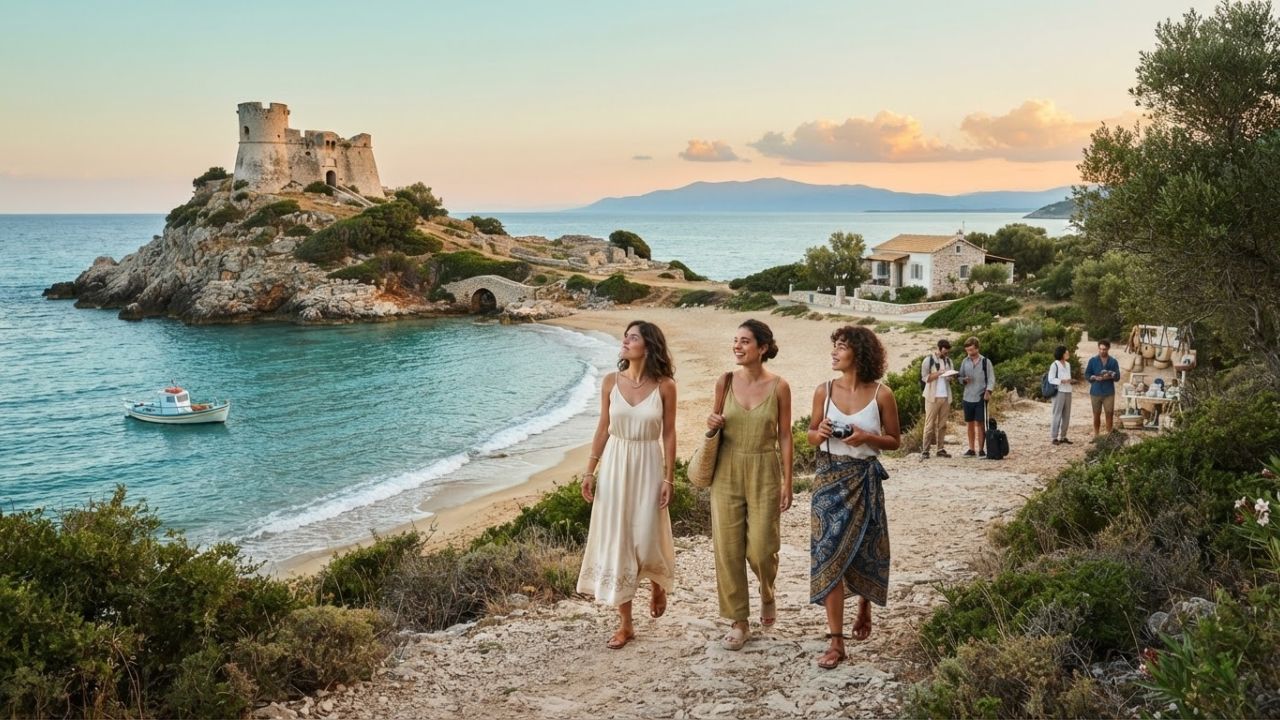
Image generated by AI
Official data released in the first week of August 2026 confirmed that search engine queries for the regions featured in Christopher Nolan's The Odyssey spiked by over 3,000% within weeks of its July 17 theatrical premiere — and forward-booking data shows that demand extends well into autumn 2026 and spring 2027.
How One Film Moved Six Countries Onto the Global Travel Radar
Christopher Nolan's The Odyssey, released globally on July 17, 2026, did not arrive quietly. Shot entirely on IMAX 70mm technology across six countries over a five-month production period, the epic adaptation of Homer's ancient Greek poem committed to practical locations at a scale that is now reshaping the strategies of national tourism boards from Athens to Reykjavík.
Set-jetting — the practice of choosing destinations based on film and television locations — has been a documented trend for years. What the first week of August 2026 data made clear is that this production has accelerated that trend at a pace the industry has not previously measured. The Screen Tourism Forecast Index 2026, published by international tourism bodies in coordination with UN Tourism (the United Nations World Tourism Organization), identified The Odyssey as the primary catalyst for the current summer travel shift globally.
National statistical offices across Europe and North Africa are reporting simultaneous surges in airline ticket reservations, hotel occupancy rates, and local tour bookings tied directly to the film's shooting locations. The 3,000% search spike is not a single-weekend viral moment — forward booking data stretching into spring 2027 confirms the demand is structural, not transient.
Greece: Voidokilia Beach and the Peloponnese Reclaim the Spotlight
Greece forms the mythological and geographical centre of the film, and it is recording the most concentrated tourism response. The production focused heavily on the Peloponnese peninsula and the region of Messinia — directing international attention toward the relatively unspoiled southwestern coast rather than the Aegean islands that have historically dominated Greek visitor statistics.
Confirmed filming locations in the region include Voidokilia Beach (the precisely horseshoe-shaped bay used as a key coastal setting), the ruins of Methoni Castle, the fortress of Acrocorinth, and Nestor's Cave. The production also drew on the archaeological reality of the Palace of Nestor nearby, prompting regional authorities to connect cinematic promotion directly to educational heritage tourism.
The Greek National Tourism Organisation (GNTO) has reported that search interest for the Peloponnese has skyrocketed since the premiere. Because Voidokilia Beach sits within the Natura 2000 protected ecological network, the Greek Ministry of Environment and Energy has issued new operational guidelines to manage the influx — including strict limitations on vehicular access near the sand dunes and deployment of additional environmental wardens.
For Messinia, this represents a strategic win that Greek tourism planners have been attempting to engineer for years: decentralising demand away from Santorini and Mykonos and extending the active tourism season into autumn. Local municipalities report that luxury resorts and traditional guesthouses throughout the region are operating at maximum capacity. The Greek Ministry of Tourism is working with the Ministry of Culture to implement visitor caps and timed-entry ticketing at the archaeological sites connected to the film.
Italy: Favignana and the Aegadian Islands Face a Sudden Reckoning
Italy's contribution to the production centred on Favignana, the largest island in the Aegadian archipelago off the western coast of Sicily. In Homeric scholarship, Favignana is associated with the island of goats. Christopher Nolan selected it to recreate the ancient mariners' perilous landings, drawing on its turquoise waters and cave di tufo — the ancient tuff quarries that time has transformed into natural sheltered pools of clear water. Cala Rossa has emerged as the most immediately recognisable focal point for international visitors.
The Italian National Tourist Board (ENIT) reported a massive spike in maritime traffic and accommodation bookings for the Aegadian archipelago immediately following the mid-July premiere.
Favignana is a small island with finite infrastructure, and the pace of arrival has prompted governmental action. The local municipality, the Sicilian regional government, and maritime authorities have introduced regulated ferry schedules from Trapani to prevent overcrowding, alongside strict anchoring regulations for private vessels. These measures protect the Aegadian Islands Marine Protected Area — the largest marine reserve in Europe. Trapani–Birgi Airport has officially announced increased flight frequencies to accommodate the surge.
This aligns with Italy's longer-term strategy of promoting "slow tourism" and directing visitors to the Mezzogiorno (southern Italy), easing pressure on overvisited coastal areas like the Amalfi Coast and Capri.
Scotland: Findlater Castle and the Moray Coast Enter the International Frame
The production's decision to film in North East Scotland — capturing the bleak, open atmospheres required for specific mythological sequences — is generating an economic impact that Aberdeenshire and Moray have not previously experienced from a single external trigger.
In a statement released by Aberdeenshire Council and VisitScotland in late July 2026, the region was confirmed as a primary international filming location. Key sites include the clifftop ruins of Findlater Castle (which stood in for the mythical island of Aeaea), Sunnyside Beach, and the dune system of Culbin Forest in Moray. The latter carries its own remarkable history — the Great Sand Drift of 1694 buried an entire village here, making it one of the most geologically singular filming environments in the UK.
Because Findlater Castle's ruins are structurally unsafe for direct visitor access, local authorities have upgraded coastal path signage and established designated safe viewing points. Forestry and Land Scotland has reported a significant uptick in visitor numbers to Culbin Forest. Hotels in Portsoy, Cullen, and Buckie are recording bookings at levels not seen in prior summers. Moray Council has publicly linked the attraction of high-end film production to the long-term prosperity of rural communities, signalling intent to pursue more production agreements.
The Scottish Environmental Protection Agency (SEPA) and NatureScot are actively monitoring the ecological footprint of increased coastal and forest visitor numbers to ensure wildlife habitats are not disrupted by the sudden surge.
Morocco: Aït Benhaddou Draws Conservation Pressure Alongside Opportunity
For the ancient, heavily fortified aesthetics required by the production, filming moved to the UNESCO World Heritage site of Aït Benhaddou in the Ouarzazate region. The Moroccan National Tourist Office (ONMT) has confirmed exponential search growth for Saharan expeditions, Marrakech riads, and guided tours of traditional mud-brick ksars since the film's premiere. The Ministry of Youth, Culture and Communication in Morocco has moved proactively to leverage the exposure for the country's architectural heritage.
Aït Benhaddou is constructed entirely from earthen clay — a material that is genuinely fragile under high foot traffic. Conservation bodies working alongside UNESCO representatives have reinforced visitor pathways and established guided-tour requirements to prevent physical degradation of the ancient kasbahs. Unguided wandering through the ksar is no longer permitted for groups arriving during peak periods.
The economic impact on the Drâa-Tafilalet region is already transformative. The surge in international arrivals is creating sustained employment for local artisans, guides, and hospitality workers who had previously depended on a narrower domestic travel season.
Iceland: Hjörleifshöfði and Black Sand Beaches Under Ecological Scrutiny
Iceland provided the visual vocabulary for the film's open-ocean sequences and mythic encounters. The production utilised the volcanic coastlines of southern Iceland, notably the area around Hjörleifshöfði mountain and the country's famous black sand beaches. One of the more historically detailed production choices was the reported use of authentic ocean-faring replica Viking ships along the Icelandic coast — a decision that has driven a specific wave of maritime heritage tourism from history enthusiasts.
The Icelandic Tourist Board (Ferðamálastofa) has integrated these filming locations into national promotional materials while simultaneously reinforcing Iceland's well-documented environmental protection framework. Iceland manages cinematic tourism carefully, having navigated previous large-scale influxes from earlier productions.
The Icelandic Environment Agency (Umhverfisstofnun) is enforcing regulations around the black sand beaches and volcanic moss fields — both of which are highly susceptible to physical damage from foot traffic. Visitors are required to remain on designated trails, and digital monitoring systems are being used to regulate parking and access at the most visited filming sites.
Visitor Insider Tips: Planning a Set-Jetting Trip Around The Odyssey
Voidokilia Beach (Greece) — come by foot, not by car: The Natura 2000 designation means vehicular access near the sand dunes is now actively restricted. Park at the designated area near Gialova Lagoon and walk the marked path to the beach. Early morning (before 09:00) remains the least crowded window.
Favignana (Italy) — ferry timing is now controlled: Take the regulated ferry from Trapani rather than a private water taxi. The municipality has introduced restricted ferry schedules specifically to manage crowd flow — independent maritime arrivals face anchoring restrictions in the marine protected area. Book ferry tickets in advance; departures now sell out.
Findlater Castle (Scotland) — do not attempt to reach the ruins directly: The structure is unsafe for access. The upgraded coastal path runs along the clifftop and offers unobstructed sightlines to the castle. Allow at least two hours for the round walk from Sandend Bay and wear appropriate footwear — the path is exposed and uneven.
Aït Benhaddou (Morocco) — guided entry is now mandatory for groups: Arrive with a registered local guide. Solo travellers can enter independently via the main bridge crossing, but groups without a guide are turned back at peak times. The best light for photography is 07:00–09:00 before tour coaches arrive. Stay in Ouarzazate rather than at the ksar itself — the nearby hotels offer far better infrastructure and direct access to the Drâa-Tafilalet region.
Culbin Forest (Scotland) — a genuinely off-radar location: Despite the production exposure, Culbin Forest remains less visited than the castle sites. The dune system is accessible via the Forestry and Land Scotland trail network from Kintessack. Go mid-week for near-solitude.
Iceland black sand beaches — never approach breaking waves: This is a standing safety rule enforced by local authorities year-round. Reynisfjara and other black sand beaches near Hjörleifshöfði have dangerous sneaker waves. Fines for crossing protective barriers are enforced. Check Umhverfisstofnun access status before visiting remote coastal areas.
Kalamata International Airport (Greece): Direct seasonal routes from several European hubs make Kalamata a better entry point for Messinia than Athens, which requires a 2.5-to-3-hour drive to the Peloponnese. Check schedule increases that have been introduced specifically for autumn 2026.
Tourism Outlook: What Happens After the Credits Roll
The OECD has consistently documented film-induced tourism as one of the most effective forms of regional economic activation — particularly in rural areas that lack the infrastructure for conventional mass-market promotion. What The Odyssey has done in a matter of weeks is concentrate that effect across six countries simultaneously, producing a multiplier that national tourism budgets could not have purchased independently.
Hotel occupancy rates in Messinia, Moray, and Ouarzazate have reached levels unprecedented for the late summer period. Local transport providers — regional airlines, ferry operators, and car hire agencies — are recording revenues that will carry their operations through traditionally quieter winter months. The VAT and tourism levy revenue generated by this influx is being officially earmarked by regional governments for heritage conservation and infrastructure reinvestment.
The longer-term trajectory depends on how effectively each country converts first-time cinematic visitors into repeat cultural travellers. Greece's policy of tying film promotion to archaeological education at the Palace of Nestor is the model worth watching: it uses screen tourism as an entry point for heritage engagement rather than a terminal destination in itself.
As the film moves from theatrical release onto streaming platforms, it will continue seeding new cohorts of travellers over the next two to three years. Destinations that have built the infrastructure and conservation frameworks to absorb that sustained demand — rather than simply reacting to the initial spike — will be the ones that emerge with durable economic benefit.
FAQ: The Odyssey Set-Jetting Tourism 2026
Where was The Odyssey filmed? Christopher Nolan's The Odyssey was filmed across six countries using IMAX 70mm cameras over a five-month shoot. Confirmed locations include Voidokilia Beach and Methoni Castle in Greece, Favignana island in Italy, Findlater Castle and Culbin Forest in Scotland, Aït Benhaddou in Morocco, and volcanic coastlines around Hjörleifshöfði in Iceland.
How much have travel searches increased for Odyssey filming locations? Official data released in the first week of August 2026 confirmed that global search engine queries for the specific regions featured in the film spiked by over 3,000% within weeks of the July 17 theatrical premiere.
Which airport should I fly into for the Greek filming locations? Kalamata International Airport is the most practical entry point for the Peloponnese and Messinia region. Additional direct seasonal routes from European hubs have been introduced for autumn 2026 specifically in response to the increased demand.
Related Travel Guides
Greece Cyclades Islands Summer Tourism Growth: Mykonos and Santorini 2026
Morocco Tourism Boom: Brazilian Visitors and Royal Air Maroc Growth 2026
The Best Set-Jetting Film Locations to Visit in Europe and North Africa 2026
Disclaimer
This article is for informational and educational purposes only. It does not constitute legal, financial, or professional advice. While we strive to provide accurate and up-to-date information, travel policies, regulations, and conditions change rapidly. Always verify information with official sources before making travel decisions. Nomad Lawyer makes no representations about the accuracy, reliability, completeness, or suitability of the information provided. Readers should consult qualified professionals for advice specific to their circumstances. The views expressed in this article are those of the author and do not necessarily reflect the views of Nomad Lawyer.