
Nicaragua Travel Routes and Risk Logistics: Navigating Volcanic Corridors Under Level 3 Advisories

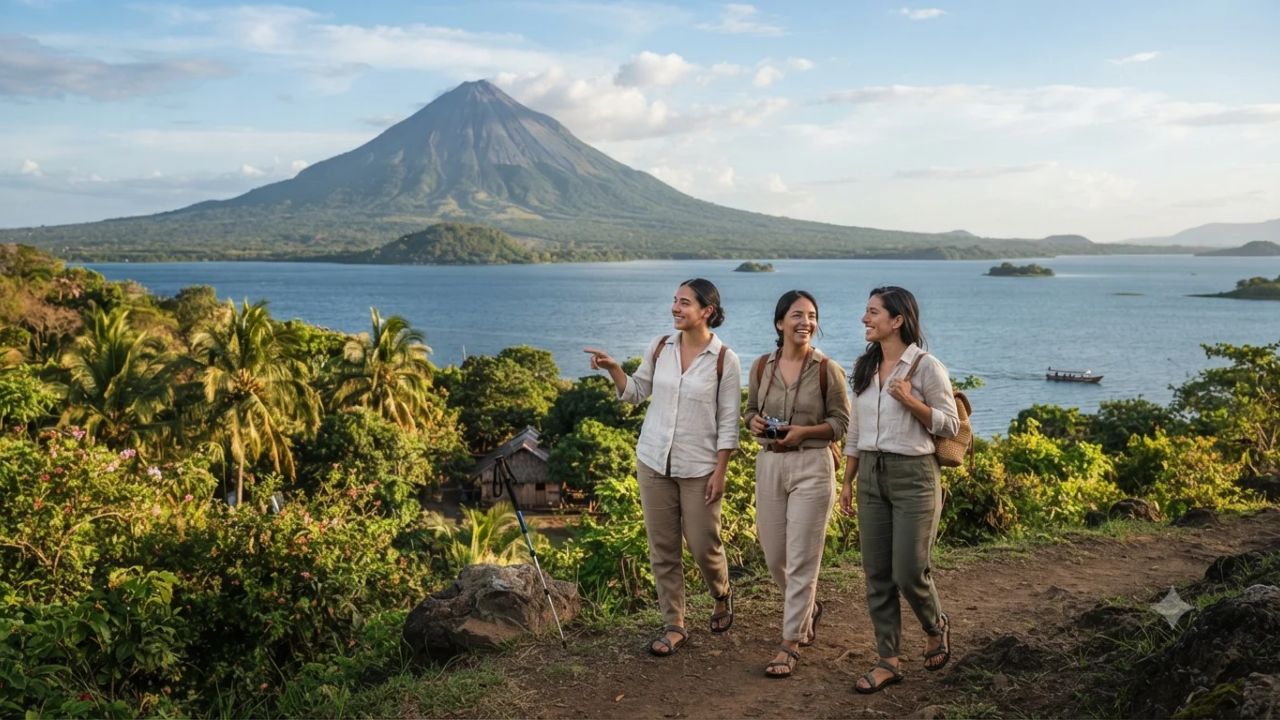
Image generated by AI
Operating under an active Level 3 'Reconsider Travel' advisory issued by the U.S. Department of State and an absolute nationwide ban on civilian drones, Nicaragua presents an intricate paradox for international travelers balancing dramatic volcanic topography against stringent legal regulations. Bordered by Honduras to the north and Costa Rica to the south, the largest country in Central America spans dual coastlines along the Pacific Ocean and the Caribbean Sea, centered around the vast waters of Lake Nicaragua. While regional packaging frequently promotes the destination as an undiscovered alternative to its heavily commercialized southern neighbor, the operational reality of navigating this territory requires methodical contingency planning, robust medical evacuation coverage, and strict adherence to municipal security ordinances.
The country diverges sharply from standard Central American tourist corridors. Rather than encountering polished resort infrastructure, independent visitors navigate a raw travel environment where colonial architecture, volcanic peaks, and indigenous artisanal traditions intersect with severe regulatory boundaries. Travelers moving between Pacific surf breaks, inland freshwater volcanic islands, and isolated Caribbean archipelagos must manage unique cross-border transport bottlenecks, limited diplomatic support, and sudden changes in local administrative enforcement. Successfully experiencing the nation hinges on recognizing that adventure tourism in this region cannot be separated from its underlying legal and institutional framework.
Bilateral Advisory Alerts and Regulatory Constraints: The Realities of Crossing Central America’s Largest Nation
The diplomatic context surrounding travel in Nicaragua is shaped by explicit government cautions. Official alerts from Washington warn travelers against arbitrary detention, selective enforcement of local statutes, and limited availability of specialized medical care outside major urban centers. Photography of government offices, military installations, and police personnel is strictly restricted, with infractions leading to questioning, equipment confiscation, or expulsion. Furthermore, customs authorities enforce a total prohibition on the importation of unmanned aerial vehicles, confiscating drones at international airport checkpoints and land border crossings without financial compensation.
Consular limitations introduce additional friction for international citizens. The UK Foreign, Commonwealth & Development Office maintains no resident British diplomatic mission within Nicaragua, having transferred all emergency consular casework to the British Embassy in San José, Costa Rica. This cross-border administrative arrangement means British and Commonwealth travelers who encounter lost passports, legal detentions, or severe accidents must coordinate emergency documentation remotely across international boundaries. Ground travel poses parallel logistical demands: night driving across regional highways is strongly discouraged due to unlit agricultural transport, stray livestock, and sparse emergency roadside support, making certified daytime private transfers or vetted group transport an operational necessity.
| Geographic Circuit | Flagship Attractions | Primary Transit Modalities | Regulatory & Safety Considerations |
|---|---|---|---|
| Pacific Colonial Corridor | Granada, León Cathedral, Las Isletas, Masaya Caldera | Paved highway transit, private shuttle services | Restrictive photography laws near civic buildings; heavy pedestrian congestion |
| Volcanic Adventure Zone | Cerro Negro, Concepción, Maderas | Guided 4WD excursions, mountain hiking trails | Mandatory local certified mountain guides; loose scree hazards on boarding tracks |
| Lake Nicaragua & Ometepe | Petroglyphs, Charco Verde, volcanic dual-peaks | Mainland vehicle and passenger roll-on ferries | Unpredictable freshwater swells; seasonal cancellation of ferry services |
| Caribbean Archipelago | Big Corn Island, Little Corn Island, coral reefs | Regional prop aircraft from Managua, coastal panga boats | Total absence of motor vehicles on Little Corn; flight baggage limits and weather delays |
| Southern River Corridor | Río San Juan, tropical rainforest reserves | Riverine motorboats, guided river barges | Remote border territory; strict requirement for portable water purification gear |
Regional Circuit Logistics: From Colonial Heritage to Island Volcanology
Travel across the western Pacific strip concentrates the majority of cultural and adventure infrastructure, anchored by the heritage hubs of Granada and León. Granada sits directly on the western shore of Lake Nicaragua, functioning as an accessible base for exploring Las Isletas—a dense archipelago of volcanic rock islets navigated via small outboard watercraft. In contrast to Granada's aristocratic Spanish architecture, the northern city of León features a more contentious political and intellectual identity, centered on its historic university system and the imposing Cathedral of the Assumption of Mary. Inscribed as a UNESCO World Heritage Centre property, the cathedral allows rooftop pedestrian access, offering unobstructed perspectives across the volcanic Maribios chain.
Just outside León, the charcoal-black slopes of Cerro Negro provide the setting for volcano boarding, an extreme adventure activity requiring travelers to hike up loose basaltic scree before descending on wooden sleds. The activity presents genuine physical risks, necessitating protective jumpsuits, safety goggles, and experienced local expedition leaders. Further south, the Masaya Volcano national reserve showcases a rare active lava lake within an easily accessible caldera, though seismic monitoring regularly alters park access hours without advance warning. Along the Pacific coastline, the fishing settlements of Las Peñitas and Poneloya provide relief from the lowland heat, serving as primary destinations for surfing and seasonal seafood dining.
In the center of Lake Nicaragua, the hourglass-shaped expanse of Ometepe Island represents one of the region's most distinctive geographical formations. Formed by two contrasting volcanic cones—the active, symmetrical cone of Volcán Concepción and the extinct, cloud-forest-cloaked peak of Volcán Maderas—the island requires ferry connections departing from the mainland port of San Jorge. Ometepe demands a relaxed travel rhythm, featuring ancient pre-Columbian petroglyphs, dirt road networks optimal for cycling, and challenging volcano ascents where rapid cloud cover frequently disorients unguided hikers.
On the Atlantic side, the Corn Islands in the Caribbean Sea demonstrate an entirely distinct cultural setting, defined by Afro-Caribbean heritage, English Creole dialects, and offshore coral formations. While Big Corn Island supports paved roads, vehicle traffic, and regional air service from Managua, neighboring Little Corn Island maintains a completely car-free environment accessed only via open-water panga transfers across choppy Caribbean waters. In the extreme south, the riverine corridor of the Río San Juan channels water eastward from Lake Nicaragua to the Caribbean coast, offering remote rainforest exploration that demands flexible schedules and support for localized eco-tourism operators.
Expert Analysis: Navigating Asymmetric Consular Access and Independent Travel Logistics
For travelers booking this route, the direct consequence is that standard commercial travel insurance policies routinely exclude emergency medical evacuations and geopolitical claims in countries placed under high-level government warnings. Because international flight operations at Managua’s Augusto C. Sandino International Airport remain limited compared to regional hubs like Panama City or San José, outbound flight capacity is easily disrupted. Travelers must secure specialized insurance riders that explicitly underwrite medical transport back to home territories or regional private hospitals in Costa Rica.
The pricing pressure this creates means independent visitors cannot rely on budget public transport if they wish to mitigate operational exposure. Although everyday on-the-ground spending for meals, artisan goods, and lodging remains exceptionally modest compared to North American benchmarks, securing reliable safety buffers requires contracting vetted private drivers, reserving certified bilingual adventure guides, and purchasing comprehensive satellite tracking devices. Navigating the country requires treating destination logistics as a dynamic risk-management exercise, balancing the appeal of uncrowded natural attractions against the non-negotiable boundaries of civic compliance.
Key Takeaways
- Travel throughout Nicaragua is subject to an active Level 3 'Reconsider Travel' advisory from the United States, alongside specific warnings regarding medical limitations and arbitrary administrative detentions.
- Civilian unmanned aerial vehicles (drones) are strictly illegal, with customs authorities immediately seizing all equipment detected at airports and land borders.
- United Kingdom citizens must navigate consular emergencies remotely, as diplomatic oversight is administered through the British Embassy in San José, Costa Rica.
- Key cultural and adventure circuits include Granada, the UNESCO-listed rooftop of León Cathedral, Cerro Negro volcano boarding, and the twin-volcano biosphere of Ometepe Island.
- The offshore Corn Islands offer vehicle-free Caribbean diving and marine tourism, though access remains dependent on regional domestic flights and weather-sensitive boat transfers.
FAQ: Nicaragua Travel Logistics and Safety 2026
Can tourists bring camera drones into Nicaragua?
No. Drones are entirely prohibited for civilian use in Nicaragua. Customs authorities will confiscate any drone discovered in passenger luggage at airport terminals and land border crossings, without reimbursement or guarantee of recovery.
What should travelers know about taking photographs in public areas?
Travelers must exercise extreme caution. Photographing government buildings, military structures, police checkpoints, or political demonstrations is prohibited and can lead to immediate questioning, equipment seizure, or detention by local authorities.
How do visitors reach Ometepe Island from the mainland?
Travelers take passenger or vehicle ferries from the mainland port of San Jorge, near Rivas, across Lake Nicaragua. Crossing schedules fluctuate based on lake swells and wind conditions, requiring travelers to budget ample buffer time.
Where can British citizens obtain emergency consular support in Nicaragua?
The United Kingdom does not maintain an operational embassy in Managua. Consular assistance, including emergency travel documents, is administered remotely by the British Embassy in San José, Costa Rica.
By approaching Central America's largest nation with rigorous legal awareness and disciplined logistical preparation, well-informed travelers can experience its volcanic geography while safely navigating its complex regulatory terrain.
Disclaimer
This article is for informational and educational purposes only. It does not constitute legal, financial, or professional advice. While we strive to provide accurate and up-to-date information, travel policies, regulations, and conditions change rapidly. Always verify information with official sources before making travel decisions. Nomad Lawyer makes no representations about the accuracy, reliability, completeness, or suitability of the information provided. Readers should consult qualified professionals for advice specific to their circumstances. The views expressed in this article are those of the author and do not necessarily reflect the views of Nomad Lawyer.
Preeti Gunjan
Contributor & Community Manager
A passionate traveller and community builder. Preeti helps grow the Nomad Lawyer community, fostering engagement and bringing the reader experience to life.
Learn more about our team →