
New York City Ranks Third in Global Tourism City Attractiveness Index 2026

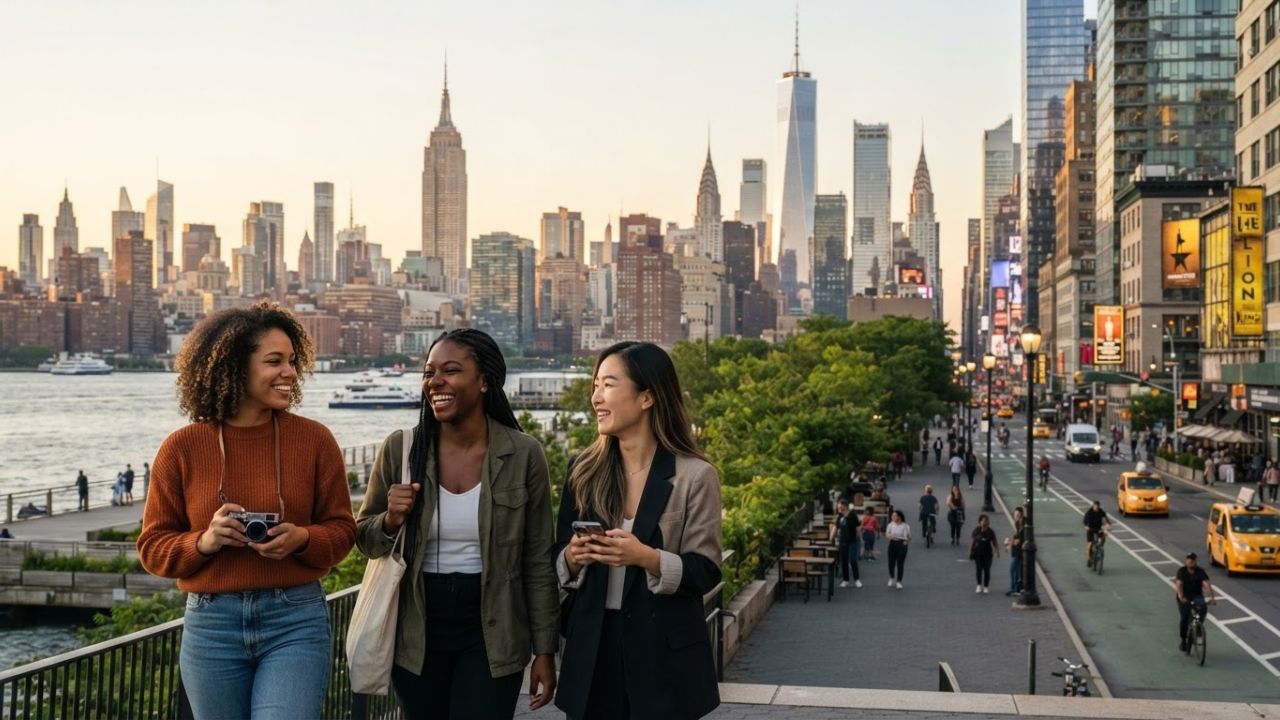
Image generated by AI
New York City has claimed third place in the 2026 Global Tourism City Attractiveness Index, outranking Paris — which placed fifth — in a study that analysed online traveller sentiment across 14 languages from June 2025 to May 2026. The ranking assessed 261 cities globally and selected the top 200 destinations based on a combination of worldwide awareness and the quality of digital conversations surrounding each destination, placing New York behind only Osaka and Kyoto.
The study's methodology sets it apart from traditional tourism rankings. Rather than relying solely on visitor arrival numbers or heritage designations, the index used artificial intelligence to evaluate positive and negative sentiment from digital discussions across social networks, travel forums, blogs, and visitor reviews. Traditional news and broadcast media were excluded entirely, making the result a direct reflection of how real travellers discuss and recommend destinations globally.
The Local Trend: Sentiment-Driven Tourism Rankings Reshape City Competitiveness
The emergence of AI-powered sentiment analysis as a ranking tool represents a significant shift in how destinations measure their global appeal. For New York City, this methodology works strongly in its favour. The city generates an exceptionally high volume of online conversation because it serves such a wide range of traveller types — first-time visitors, repeat cultural travellers, business passengers, food tourists, performing arts audiences, and outdoor recreation visitors all contribute distinct streams of positive online content throughout the year.
The scoring framework awarded equal weighting to destination awareness and attractiveness, meaning cities needed both strong international visibility and high-quality traveller sentiment to rank at the top. Urban beauty and natural scenery, cultural and historical value, and experiential tourism content each contributed 30% of the attractiveness score, with hospitality accounting for the remaining 10%.
New York's third-place finish reflects a specific strength: the city does not depend on a single attraction category. It generates high scores across all four attractiveness dimensions simultaneously — something that single-focus heritage cities or purpose-built resort destinations cannot replicate.
The results also confirm that the global tourism competition has shifted decisively. Osaka's first-place and Kyoto's second-place positions demonstrate the strength of Japan's combination of food culture, traditional heritage, accommodation quality, and visitor experience management. Seoul's fourth-place finish further confirms East Asia's dominant position in 2026 traveller sentiment.
Cultural & Environmental Value: How New York's Diversity Drives Sustained Global Appeal
For the visitor, the real impact of New York's ranking is that it validates the city's identity as a genuinely multi-layered destination. Central Park alone spans 843 acres in the centre of Manhattan, serving as one of the world's most visited urban green spaces. The High Line linear park, running 1.45 miles along a former elevated railway, offers free public access to curated landscaping, public art installations, and Hudson River views.
The New York City Department of Cultural Affairs supports over 1,000 cultural organisations across the five boroughs, the largest municipal cultural funding programme in the United States. The result is a city where free cultural programming — from the Metropolitan Museum of Art's pay-what-you-wish evening sessions to free summer concerts in Central Park — is woven into the everyday visitor experience.
New York's environmental credentials have strengthened significantly. The NYC Mayor's Office of Sustainability has committed to reducing city government emissions by 50% by 2030. The city's 800-mile subway network, managed by the MTA, remains one of the most comprehensive urban transit systems in the world, allowing visitors to travel between all five boroughs without a car. The recently expanded Citi Bike network now covers more than 1,000 stations across Manhattan, Brooklyn, Queens, and the Bronx.
The city's tourism economy, managed by NYC Tourism + Conventions, directly supports hundreds of thousands of local jobs across hospitality, food service, retail, performing arts, and cultural institutions. Spending by international visitors contributes billions of dollars annually to the five boroughs' local economies.
Traditional Gastronomy: New York's Global Food Identity
New York's food culture directly contributes to its high sentiment scores by offering visitors an unmatched concentration of regional American and global cuisines within a single city:
- New York-Style Pizza (Brooklyn): A wide, thin-crust slice with a slightly charred, foldable base, tomato sauce, and mozzarella, sold by the slice from coal or gas-fired pizza ovens.
- New York Bagel with Lox (Lower East Side): A dense, chewy bagel boiled in water before baking, topped with cream cheese, cold-smoked salmon, capers, and thinly sliced red onion.
- Pastrami on Rye (Katz's Delicatessen): Thick-sliced, slow-steamed pastrami brisket on seeded rye bread with yellow mustard, a dish deeply embedded in New York's Jewish culinary heritage.
- Oysters (Grand Central Oyster Bar): Fresh Atlantic oysters from Long Island, Cape Cod, and the Chesapeake Bay, served raw on the half-shell with mignonette sauce.
- Harlem Soul Food (Harlem, Manhattan): Fried chicken, collard greens cooked with smoked ham hocks, cornbread, and macaroni cheese, representing the African American culinary heritage of Upper Manhattan.
- Dim Sum (Chinatown, Manhattan): Steamed dumplings, char siu bao, turnip cakes, and congee served from rolling carts in family-style Cantonese restaurants.
Visitor Insider Tips: Making the Most of New York's Free and Off-Peak Experiences
To access New York at its most rewarding and avoid peak-crowd conditions, follow these guidelines:
- Visit the Metropolitan Museum of Art on Weekday Mornings: The Met opens at 10:00 AM Thursday through Tuesday. Arriving at opening time on a weekday gives you the Egyptian Wing, Temple of Dendur, and Roof Garden almost to yourself before group tours begin.
- Explore Brooklyn's Prospect Park Rather Than Central Park on Weekends: Prospect Park covers 585 acres with the same Olmsted and Vaux design as Central Park but attracts far fewer tourists. The park's Boathouse and Audubon Center are free to visit.
- Take the Staten Island Ferry for Free Harbour Views: The Staten Island Ferry runs 24 hours a day, 7 days a week, and is entirely free. The 25-minute crossing provides close-range views of the Statue of Liberty and the Lower Manhattan skyline without the cost of a ferry ticket to Liberty Island.
- Walk the High Line Between 6:00 AM and 8:00 AM: The High Line opens at 7:00 AM and is significantly quieter in the early morning before tour groups arrive. The northern section near Hudson Yards offers the best Manhattan skyline views.
- Purchase the New York CityPASS for Major Attraction Savings: The CityPASS covers admission to the Empire State Building Observatory, American Museum of Natural History, 9/11 Memorial and Museum, and other major attractions at a combined discount.
- Travel Off-Peak Between January and March: New York's least crowded and most affordable hotel rates typically fall between January and March, excluding Presidents' Day weekend. Broadway show ticket prices also drop significantly during this window.
Outlook: New York's Competitive Position in the Global Tourism Decade
New York's third-place finish in the 2026 Global Tourism City Attractiveness Index confirms the city's ability to generate sustained positive international sentiment across a wide range of traveller demographics. As the index methodology — combining AI sentiment analysis with destination awareness — becomes more widely adopted, cities that offer genuinely diverse and high-quality visitor experiences will gain a structural advantage over those that rely solely on historic reputation.
For New York, the long-term tourism outlook is underpinned by continued investment in public transit, cultural programming, waterfront development, and sustainability infrastructure. The opening of new cultural institutions, expansion of the city's greenway network, and growth of neighbourhood tourism across all five boroughs position New York to maintain its top-three global ranking in future editions of this and similar indices.
The city's management of overtourism remains an ongoing challenge in high-density districts. NYC Tourism + Conventions actively promotes borough-wide itineraries to distribute visitor spending and reduce pressure on the most congested Manhattan sites, a strategy aligned with global sustainable tourism best practices.
Related Travel Guides
Disclaimer
This article is for informational and educational purposes only. It does not constitute legal, financial, or professional advice. While we strive to provide accurate and up-to-date information, travel policies, regulations, and conditions change rapidly. Always verify information with official sources before making travel decisions. Nomad Lawyer makes no representations about the accuracy, reliability, completeness, or suitability of the information provided. Readers should consult qualified professionals for advice specific to their circumstances. The views expressed in this article are those of the author and do not necessarily reflect the views of Nomad Lawyer.
Raushan Kumar
Founder & Lead Developer
Full-stack developer with 11+ years of experience and a passionate traveller. Raushan built Nomad Lawyer from the ground up with a vision to create the best travel and law experience on the web.
Learn more about our team →