
The G7 Nations' Presidential Aircraft Ranked
Explore the impressive presidential and government aircraft used by the world's most influential nations. From luxurious cabins to advanced technology, discover how the G7 leaders travel in style and security.

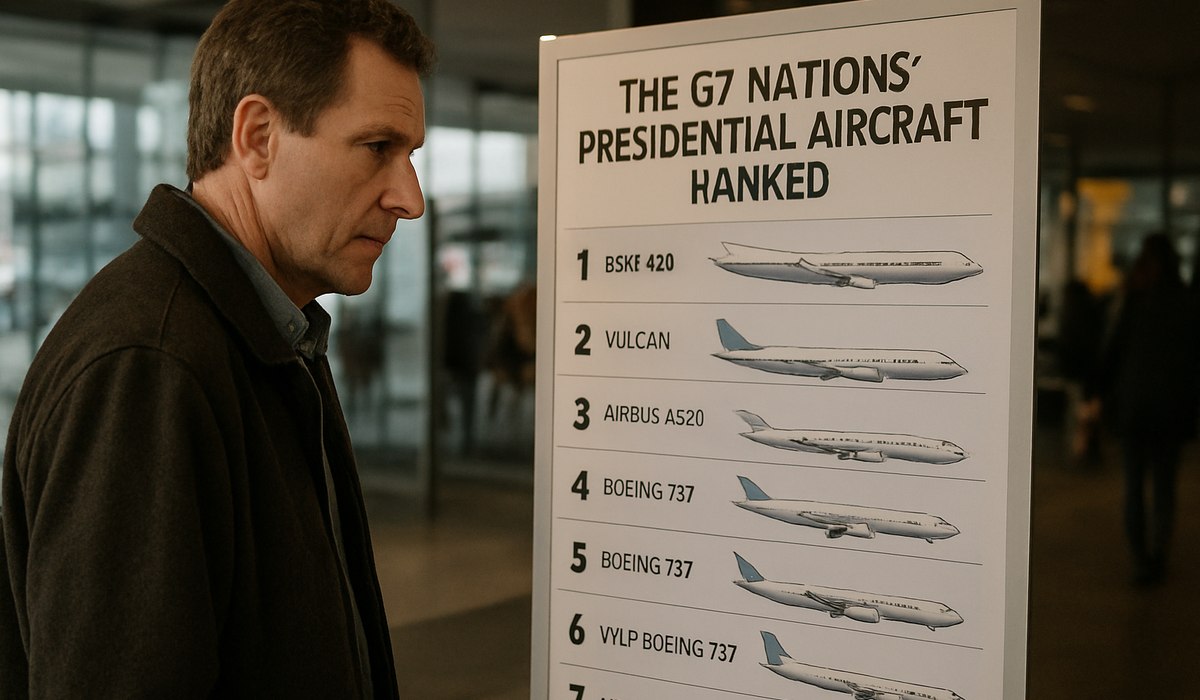
Image generated by AI
The G7 Nations' Presidential Aircraft Ranked
The G7 (short for 'Group of Seven') is an organization made up of seven of the world's most influential nations. Consisting of Canada, France, Germany, Italy, Japan, the United Kingdom, and the United States, its members are among the world's largest economies, and collectively, the organization promotes the values of free-market capitalism, representative democracy, and cultural pluralism. While it is an informal forum, it wields significant influence in world politics, with its members also among the world's most influential nations.
As leaders of these powerful nations navigate the complexities of international diplomacy, they do so aboard some of the world's most sophisticated and luxurious aircraft. These presidential and government planes are more than mere modes of transportation—they are flying symbols of national power, equipped with state-of-the-art technology, unparalleled security features, and opulent interiors designed to accommodate world leaders and their delegations.
Understanding Presidential Aircraft
Presidential aircraft serve a critical role in modern governance. They enable leaders to conduct diplomatic missions, attend international summits, and respond to crises with unparalleled flexibility and security. These aircraft are typically equipped with advanced communication systems, allowing world leaders to remain in constant contact with their governments regardless of their location. They also feature sophisticated security measures and are capable of traveling long distances without refueling.
Each G7 nation has invested substantially in its presidential and government aircraft fleet, reflecting both the importance of international travel and the prestige associated with these machines.
The G7 Presidential Aircraft: A Detailed Ranking
1. United States - Air Force One (Boeing 747-200B)
Undoubtedly the most iconic presidential aircraft in the world, Air Force One represents American power and prestige on the global stage. The current fleet consists of two Boeing 747-200B aircraft, though new Boeing 747-8 variants are under development for future use.
Key Features:
- Maximum range of approximately 7,000 nautical miles
- Advanced communications and defense systems
- Presidential suite with private quarters
- Multiple dining and meeting areas
- Operating cost: approximately $206,337 per hour
Air Force One is equipped with technology that allows the President to effectively govern from anywhere in the world, making it not just a luxury aircraft but a mobile command center.
2. France - Airbus A330 (Government Transport)
France's presidential aircraft reflects European sophistication and engineering excellence. The French government operates an Airbus A330 configured specifically for presidential and ministerial transport.
Key Features:
- Capacity for approximately 60-80 passengers
- Range of up to 7,400 nautical miles
- Modern avionics and communication systems
- Elegantly appointed cabin with conference facilities
- Cost-effective operation compared to larger alternatives
The French approach emphasizes efficiency and practicality while maintaining the comfort expected by world leaders.
3. Germany - Airbus A340-300
Germany's Airbus A340-300 stands as a testament to European engineering prowess. Operating under the designation "Konrad Adenauer," this aircraft represents the backbone of German government transport.
Key Features:
- Four-engine configuration for reliability
- Maximum range exceeding 8,000 nautical miles
- Advanced cabin pressurization systems
- Sophisticated avionics suite
- Capacity for approximately 50 passengers in presidential configuration
The A340's reliability and range make it ideally suited for long-distance diplomatic missions.
4. United Kingdom - Boeing 787 Dreamliner
The UK has selected the Boeing 787 Dreamliner for its next-generation government transport, reflecting a commitment to modern technology and operational efficiency.
Key Features:
- Cutting-edge composite construction
- Superior fuel efficiency
- Advanced environmental control systems
- Range of approximately 7,600 nautical miles
- Enhanced cabin comfort with lower cabin pressure
This aircraft represents the future of European presidential aviation.
5. Italy - Airbus A340-500
Italy operates an Airbus A340-500, designating it as a symbol of Italian government prestige. This long-range, four-engine aircraft provides reliable service for Italian diplomatic missions.
Key Features:
- Extended range capabilities
- Spacious cabin for Italian delegations
- Modern security and communication systems
- Elegant interior design reflecting Italian aesthetics
- Capacity for approximately 45 passengers in presidential layout
6. Canada - Airbus A310-304
Canada's presidential aircraft, known as the "Canadian Armed Forces Air Mobility," consists of Airbus A310-304 jets configured for government transport.
Key Features:
- Proven reliability in long-distance operations
- Range of approximately 4,000 nautical miles
- Modern communication systems
- Comfortable accommodation for the Prime Minister and delegation
- More modest operational costs compared to larger alternatives
7. Japan - Boeing 777-300ER
Japan operates a fleet of Boeing 777-300ER aircraft designated for government transport, reflecting Japanese preferences for American aviation technology combined with Japanese engineering refinement.
Key Features:
- Twin-engine efficiency
- Range exceeding 7,600 nautical miles
- Advanced avionics systems
- Sophisticated interior design
- Capacity for approximately 50 passengers in presidential configuration
The Technology Behind Presidential Aircraft
Modern presidential aircraft incorporate technologies that would have seemed like science fiction mere decades ago. These include:
- Advanced Communications Systems: Allowing world leaders to communicate securely with their governments from any location
- Sophisticated Defense Systems: Designed to protect against threats
- Real-time Monitoring: Of weather, terrain, and airspace
- Customized Interiors: Tailored to the specific needs and preferences of each nation
Security Considerations
The security features of presidential aircraft remain largely classified, but they include:
- Multiple redundant systems for critical aircraft functions
- Advanced threat detection capabilities
- Secure communications networks
- Specialized defensive measures
- Highly trained security personnel
Operating Costs and Maintenance
The operational costs of presidential aircraft represent a significant expense for each nation:
| Nation | Aircraft | Estimated Hourly Cost | Annual Operating Budget |
|---|---|---|---|
| United States | Boeing 747-200B | $206,337 | Classified |
| France | Airbus A330 | ~$140,000 | ~$150-200 million |
| Germany | Airbus A340-300 | ~$145,000 | ~$170-200 million |
| United Kingdom | Boeing 787 | ~$130,000 | ~$160-190 million |
| Italy | Airbus A340-500 | ~$150,000 | ~$140-180 million |
| Canada | Airbus A310 | ~$95,000 | ~$80-120 million |
| Japan | Boeing 777 | ~$120,000 | ~$130-170 million |
The Future of Presidential Aviation
As the G7 nations look toward the future, several trends are emerging:
Sustainability
Nations are increasingly focused on reducing the environmental impact of presidential air travel, with some exploring sustainable aviation fuels and more efficient aircraft designs.
Technology Integration
Next-generation aircraft will feature even more advanced communication and defense systems, as well as improved passenger comfort systems.
Cost Efficiency
While maintaining security and prestige, governments are seeking ways to operate these aircraft more cost-effectively.
Fleet Modernization
Several G7 nations are in the process of replacing aging aircraft with newer, more efficient models.
FAQ
Q: Which G7 nation has the most expensive presidential aircraft? A: The United States' Air Force One is the most expensive to operate, with hourly costs exceeding $206,000, though initial acquisition and modification costs for all aircraft are classified.
Q: Can presidential aircraft be used for commercial purposes? A: No, presidential and government aircraft are exclusively reserved for official government use and diplomatic missions.
Q: How often are presidential aircraft replaced? A: Aircraft typically remain in service for 20-30 years, with major overhauls and upgrades conducted periodically to maintain safety and functionality.
Q: Are presidential aircraft armed? A: While specific defensive capabilities are classified, modern presidential aircraft are equipped with advanced defensive systems. They are not configured as military combat aircraft.
Q: How many crew members operate a presidential aircraft? A: Presidential aircraft typically require a crew of 20-25 personnel, including pilots, flight engineers, security, medical staff, and support personnel.
Q: Can the public tour presidential aircraft? A: Occasionally, museums or aviation shows may display presidential or similar government aircraft, but the actual working presidential aircraft are not available for public tours.
Conclusion
The presidential aircraft of the G7 nations represent far more than simple transportation. They are symbols of national power, mobile command centers, and testaments to each nation's commitment to international leadership. From the iconic Boeing 747 of Air Force One to the modern efficiency of Europe's Airbus fleet, these aircraft embody the technological prowess and diplomatic importance of the world's most influential economies.
As these nations continue to modernize their fleets and adapt to new challenges, their presidential aircraft will remain at the forefront of aviation technology, security, and luxury—essential tools for leaders navigating an increasingly complex global landscape.
Disclaimer
This article is for informational and educational purposes only. It does not constitute legal, financial, or professional advice. While we strive to provide accurate and up-to-date information, travel policies, regulations, and conditions change rapidly. Always verify information with official sources before making travel decisions. Nomad Lawyer makes no representations about the accuracy, reliability, completeness, or suitability of the information provided. Readers should consult qualified professionals for advice specific to their circumstances. The views expressed in this article are those of the author and do not necessarily reflect the views of Nomad Lawyer.
Preeti Gunjan
Contributor & Community Manager
A passionate traveller and community builder. Preeti helps grow the Nomad Lawyer community, fostering engagement and bringing the reader experience to life.
Learn more about our team →