Nepal Travel Boom as Annapurna Rural Municipality Unlocks Over NPR Thirteen Million From Stunning Tourist Sites

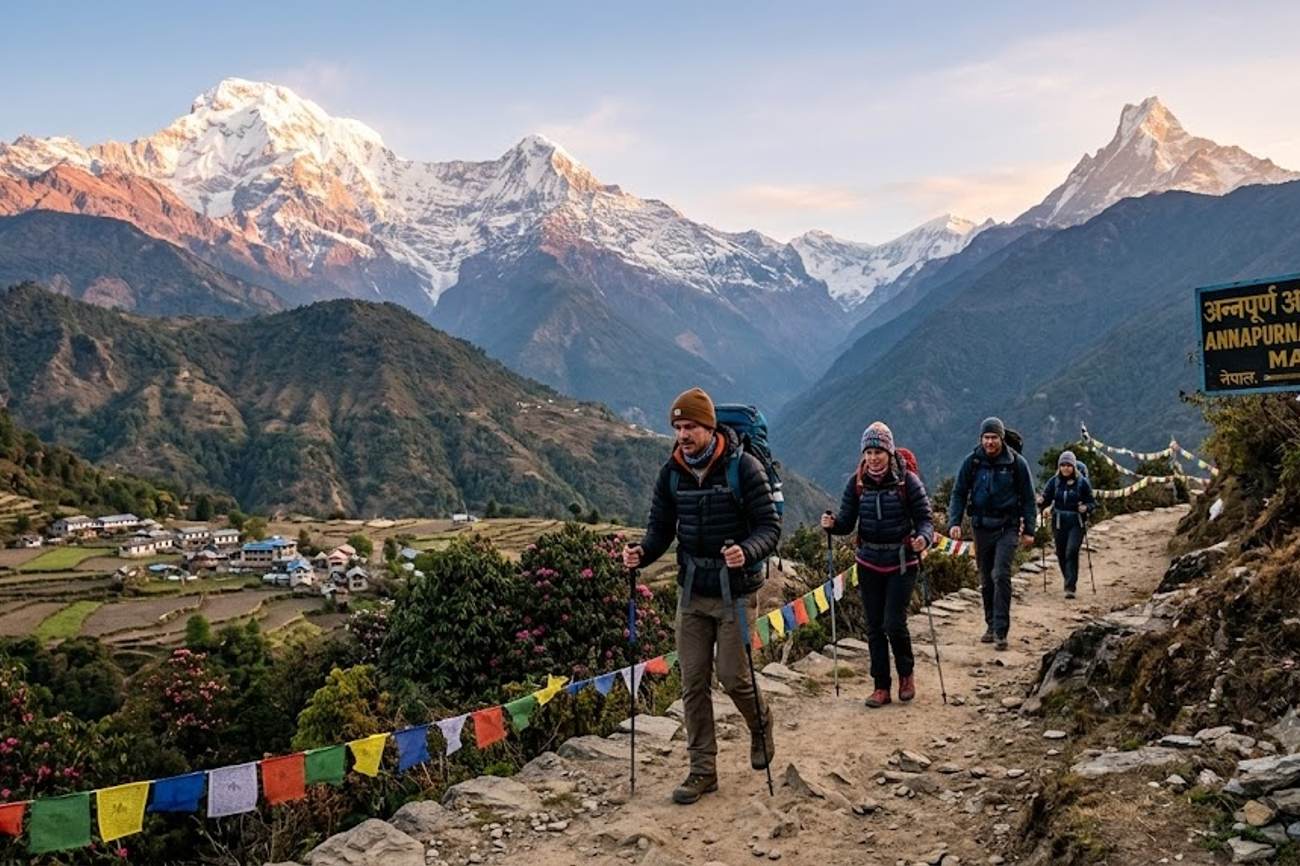
Image generated by AI
[Annapurna, October 2024] — Annapurna Rural Municipality has generated NPR 13.06 million in internal revenue through the strategic commercialization of its primary tourism assets and the implementation of formal visitor service contracts.
The local government is leveraging high-traffic Himalayan landmarks to stabilize its financial base, shifting from passive tourism to an active management model. By auctioning the rights to collect entry fees and operate visitor amenities at key sites, the municipality is funneling direct profits from international and domestic trekking traffic into local infrastructure and community development.
The Commercialization of Himalayan Assets
The revenue surge is the result of a targeted fiscal strategy for the 2083/084 fiscal year. The municipality has moved away from informal site management, instead awarding competitive contracts to private operators for the management of entrance gates and the operation of tea stalls and snack houses. This shift ensures a guaranteed minimum income for the local government regardless of daily visitor fluctuations.
The most significant financial driver is the Punahill viewpoint in Ward No. 6, a critical stop for trekkers seeking panoramic views of the Annapurna and Dhaulagiri ranges. The municipality secured a contract for Punahill valued at NPR 7.1 million, far exceeding the initial minimum bid of NPR 5.25 million.
Other contributing sites include:
- Paudwar Tatopani Kund: Secured at NPR 5.01 million (Base bid: NPR 2.75 million).
- Rupse Jharna: Secured at NPR 555,555 (Base bid: NPR 200,000).
- Rato-Pani Kund: Secured at NPR 400,500 (Base bid: NPR 400,000).
Expansion efforts are currently underway at Bhurung-Tatopani Kund. The municipality is currently reviewing proposals for entry fee collection and food service operations at this site, having set a minimum bidding threshold of NPR 950,000.
Impacted Routes and Markets
The financial restructuring affects a wide corridor of the Annapurna region, impacting both the operators of trekking lodges and the travelers who frequent these trails. The revenue model targets specific high-density zones:
| Location | Primary Revenue Stream | Impact Level |
|---|---|---|
| Punahill | Entry Fees & Tea Stalls | High |
| Paudwar Tatopani Kund | Entry Fees & Facility Management | High |
| Khopra | Business Taxes & Public Land Use Fees | Medium |
| Ghorepani / Moharedanda | General Business Taxation | Medium |
| Rupse Jharna / Rato-Pani | Entry Fee Collection | Low-Medium |
| Chhotepa / Humkhola | Service-related Payments | Medium |
Beyond direct site fees, the municipality is enforcing a strict taxation regime on hospitality providers. Hotels in the Khopra area, for instance, are now required to pay an annual business tax of NPR 30,000, alongside an additional NPR 36,000 fee for the utilization of public land. Similar tax structures are being applied to coffee shops, restaurants, and lodges operating near the Annapurna Base Camp and other key transit points.
Practical Traveler Advisory and Strategic Insights
For the average trekker or tourist, these administrative changes translate into a more structured—but more costly—experience. The era of "free" access to many of these natural landmarks is ending as the municipality formalizes its borders and entry points.
Direct Cost Increases Visitors must now budget for mandatory entry fees at specific destinations. The current pricing structure is tiered based on nationality:
The Annapurna Rural Municipality in Nepal has witnessed a significant surge in tourism, unlocking over NPR thirteen million from its stunning tourist sites, according to official reports from the Nepal Tourism Board. This influx of tourists has been attributed to the municipality's efforts to promote its natural beauty and cultural heritage. As a result, the local economy has received a substantial boost, with many tourists visiting the region to experience its unique trekking routes and scenic landscapes.
- Nepali Citizens: NPR 50 per person.
- Foreign Nationals: NPR 150 per person.
These fees apply specifically to Punahill and Bhurung-Tatopani Kund. Travelers should expect to pay these at the gate via cash, as digital payment infrastructure in these remote wards remains limited.
Service Quality and Infrastructure The trade-off for these fees is a planned increase in facility quality. The municipality is reinvesting these funds into the visitor experience. For example, NPR 23 million has been earmarked specifically for infrastructure construction at Bhurung-Tatopani Kund this fiscal year. Travelers can expect better-maintained paths, more regulated food services, and improved sanitation at the contracted "snack house" locations.
Regulatory Oversight With the Government of Nepal and local municipalities tightening controls, travelers will find that lodging and dining options in areas like Ghorepani and Khopra are more formally regulated. This reduces the likelihood of arbitrary pricing by lodge owners but increases the overall tax burden passed down to the consumer.
Fiscal Targets and Infrastructure Pipeline
The Annapurna Rural Municipality is treating tourism as a primary engine for economic sovereignty. The growth in internal revenue is aggressive: in the previous fiscal year (2082/083), the municipality targeted NPR 21.27 million and successfully collected NPR 11.5 million from tourism sites. For the current cycle, the internal revenue target has been raised to NPR 25 million.
The municipality is utilizing these funds to manage a diverse portfolio of attractions, including:
- High-Altitude Peaks: Annapurna I (located in Ward No. 4 of Narchyang), which continues to draw elite adventure climbers.
- Natural Springs: Multiple Tatopani Kund sites.
- Scenic Vistas: Moharedanda, Khayrlekh, and Mahabhir Jharna.
By integrating the Nepal Tourism Board standards with local government enforcement, the region is attempting to create a sustainable loop where the environmental cost of tourism is offset by the funds generated to protect and maintain the landscape.
FAQ: Annapurna Tourism Fees 2024
How much are the entry fees for Punahill? Foreign tourists are charged NPR 150 per person, while Nepali citizens pay NPR 50. These fees are collected at the entrance to support local municipality development.
Are there taxes on hotels and lodges in the region? Yes. Operators in areas like Khopra pay an annual business tax of NPR 30,000 plus a public land use fee of NPR 36,000. This may affect the final price of accommodation for guests.
Which sites are receiving the most investment right now? Bhurung-Tatopani Kund is a primary focus, with NPR 23 million allocated for infrastructure construction in the current fiscal year to improve visitor facilities.
Do I need a permit in addition to these entry fees? Yes. These municipality entry fees are separate from the standard ACAP (Annapurna Conservation Area Project) permits required for trekking in the region.
The Himalayas are moving from an open-access frontier to a managed economic zone.
Related Travel Guides
- Ireland Strengthens Tourism Network as Irish Rail Autumn 2026 Changes Promise More Reliable Dublin Connections
- Saint Lucia Unveils a Living Creole Spectacle as La Marguerite Flower Festival Blooms This October
- Saint Kitts and Nevis Delivers a Powerful Caribbean Escape From Volcano Trails to Calm Shores
This article is for informational purposes. Flight routes, passenger regulations, visa rules, and transit advisories are subject to change by airlines and aviation authorities. Readers are advised to verify schedules and travel documentation with relevant carriers and border agencies before departure.
Related Stories

European Mass Protests Disrupt Travel Across France, Italy, Belgium, and Turkey in 2026
The Best Things to Do in Vero Beach with Family: A Local Parent & Traveler's Guide