Ireland Strengthens Tourism Network as Irish Rail Autumn 2026 Changes Promise More Reliable Dublin Connections

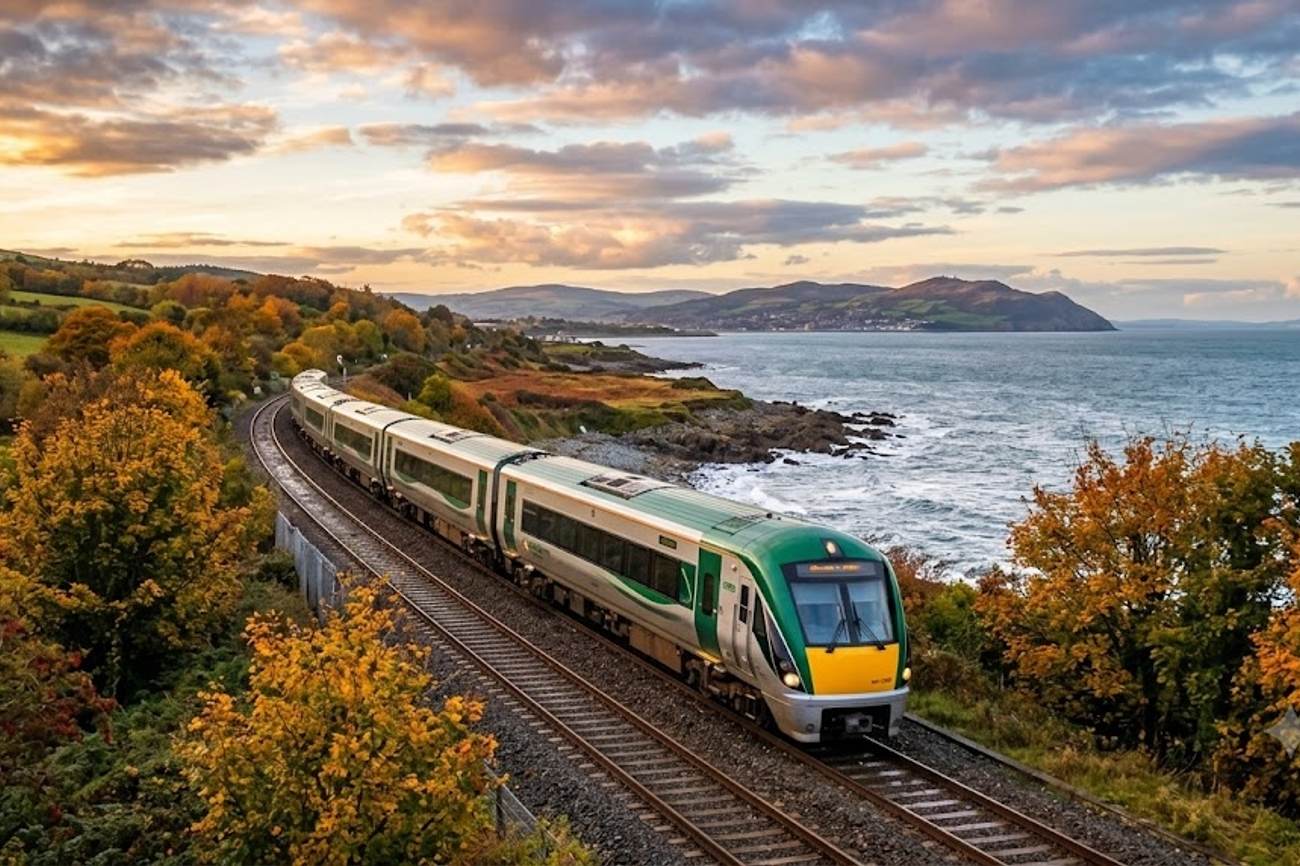
Image generated by AI
[Dublin, September 2026] — Irish Rail is implementing a revised Greater Dublin Area timetable effective September 21, 2026, to combat systemic delays caused by seasonal leaf fall. The strategic adjustment aims to stabilize punctuality across the DART and commuter networks during the peak autumn tourism window, preventing the "knock-on" delays that frequently plague the region's rail infrastructure.
The operational shift, which remains in effect until December 12, 2026, targets the specific physics of "low rail adhesion." When wet leaves accumulate on the tracks, they create a slippery film similar to black ice, forcing drivers to reduce acceleration and braking speeds for safety. By baking extra time into the schedules, Iarnród Éireann (Irish Rail) intends to maintain a reliable cadence of service despite these environmental hazards.
The Science of Low Rail Adhesion
The primary trigger for this timetable overhaul is the annual phenomenon of autumn leaf fall. In the Greater Dublin Area, damp foliage compresses under the weight of trains, forming a Teflon-like coating on the rail head. This significantly reduces the friction between the steel wheel and the rail, making it difficult for trains to stop or start efficiently.
To mitigate this, Irish Rail is not relying solely on schedule changes. The operator is deploying a multi-pronged technical strategy to keep the lines clear. This includes aggressive vegetation management to reduce the volume of leaves on the tracks, the use of specialized high-pressure water-jetting equipment to blast the rails clean, and the application of targeted chemical treatments to improve grip.
By adjusting the timetable now, the operator avoids the reactive cancellations and unpredictable delays that typically occur when a network attempts to run a summer schedule during autumn weather conditions.
Affected Travelers, Airlines and Logistics
The timetable adjustments are concentrated on the Greater Dublin Area, specifically targeting services that experience the highest volume of foliage and passenger traffic.
| Service Category | Impact Level | Specific Changes |
|---|---|---|
| DART Services | High | Journey times extended by 1–3 minutes on most routes. |
| Dublin Commuter | High | Morning peak departures may shift earlier; evening arrivals may be later. |
| Coastal Routes | Medium | Impacted services to Howth, Dún Laoghaire, and Bray. |
| Intercity Rail | None | No changes to schedules for long-distance routes. |
| Regional Rail | None | Services outside the Greater Dublin Area remain unchanged. |
The changes primarily target morning and evening peak periods, where the density of traffic makes the network most vulnerable to delays. Passengers traveling to coastal hubs—essential for the autumn tourism trade—will see the most consistent, albeit slight, increases in travel time.
Practical Traveler Advisory and Strategic Insights
For the average passenger or tourist, these changes are designed to be nearly invisible but functionally significant. While a three-minute addition to a journey seems negligible, it provides the operational "buffer" necessary to ensure a train actually departs and arrives on time.
Passenger Impact Assessment:
- Booking and Planning: Travelers should not rely on summer 2026 schedules when planning trips between September 21 and December 12. Checking the National Transport Authority (NTA) or the official Irish Rail app is mandatory for real-time accuracy.
- Tight Connections: Passengers with tight transfers between DART services and other transport modes should allow an extra 5–10 minutes of leeway.
- Coastal Exploration: Those visiting Howth or Bray will find the service more reliable, though the actual transit time may be slightly longer than in the spring or summer.
- Commuter Shifts: Local workers should verify their specific morning departure times, as some trains are scheduled to leave earlier to ensure they hit their arrival targets despite the slippery conditions.
In plain language: Your train might take three minutes longer to get to the station, but it is far less likely to be 20 minutes late or cancelled entirely.
Ireland's tourism network is set to receive a significant boost with the introduction of Irish Rail's Autumn 2026 changes, which promise more reliable connections to Dublin. For the most up-to-date information on these changes, passengers can visit the Irish Rail website to plan their journeys and book tickets in advance. This enhancement is expected to increase visitor numbers, further solidifying Dublin's position as a major tourist hub.
Infrastructure and Tourism Growth
The timing of this rollout is critical for Dublin's tourism economy. Autumn is a key period for international visitors who utilize the DART to move from the city center to the coast. By stabilizing the rail network, Ireland is attempting to increase "visitor confidence"—the psychological certainty that a traveler can reach a destination without unexpected transport failures.
Reliable transport is a primary driver for sustainable tourism. By ensuring the DART remains a viable alternative to car rentals, Irish Rail is supporting the city's goal of reducing road congestion and lowering the carbon footprint of the tourism sector. This reliability allows visitors to venture further beyond the city core to explore cultural venues, restaurants, and suburban districts without the stress of unpredictable transit.
The move signals a shift toward proactive rather than reactive management. Instead of apologizing for delays after they happen, the operator is adjusting the expectations of the traveler to match the reality of the environment.
FAQ: Dublin Rail Autumn 2026
Do I need a different ticket for the autumn timetable? No. All existing tickets and Leap Cards remain valid. The changes apply only to the timing of the services, not the ticketing structure or fare pricing.
Will these delays affect my trip to Galway or Cork? No. Intercity services are not affected by this specific timetable change. The adjustments are strictly limited to the DART and commuter routes within the Greater Dublin Area.
Why can't Irish Rail just clear the leaves? While they use water-jetting and vegetation management, the sheer volume of foliage in the Greater Dublin Area makes total removal impossible. Timetable buffers are the only way to guarantee punctuality.
When does the normal schedule return? The autumn timetable expires on December 12, 2026, at which point the network will transition back to its standard operational schedule.
Precision scheduling today prevents the gridlock of tomorrow.
#IrishRail2026 #DART #DublinTravel #GreaterDublinArea #IarnródÉireann #AutumnTravel2026
Related Travel Guides
This article is for informational purposes. Flight routes, passenger regulations, visa rules, and transit advisories are subject to change by airlines and aviation authorities. Readers are advised to verify schedules and travel documentation with relevant carriers and border agencies before departure.
Related Stories
Ireland's Iarnród Éireann Announces €600 Million Rail Infrastructure Framework for 2026-2031

European Mass Protests Disrupt Travel Across France, Italy, Belgium, and Turkey in 2026