Saint Lucia Unveils a Living Creole Spectacle as La Marguerite Flower Festival Blooms This October

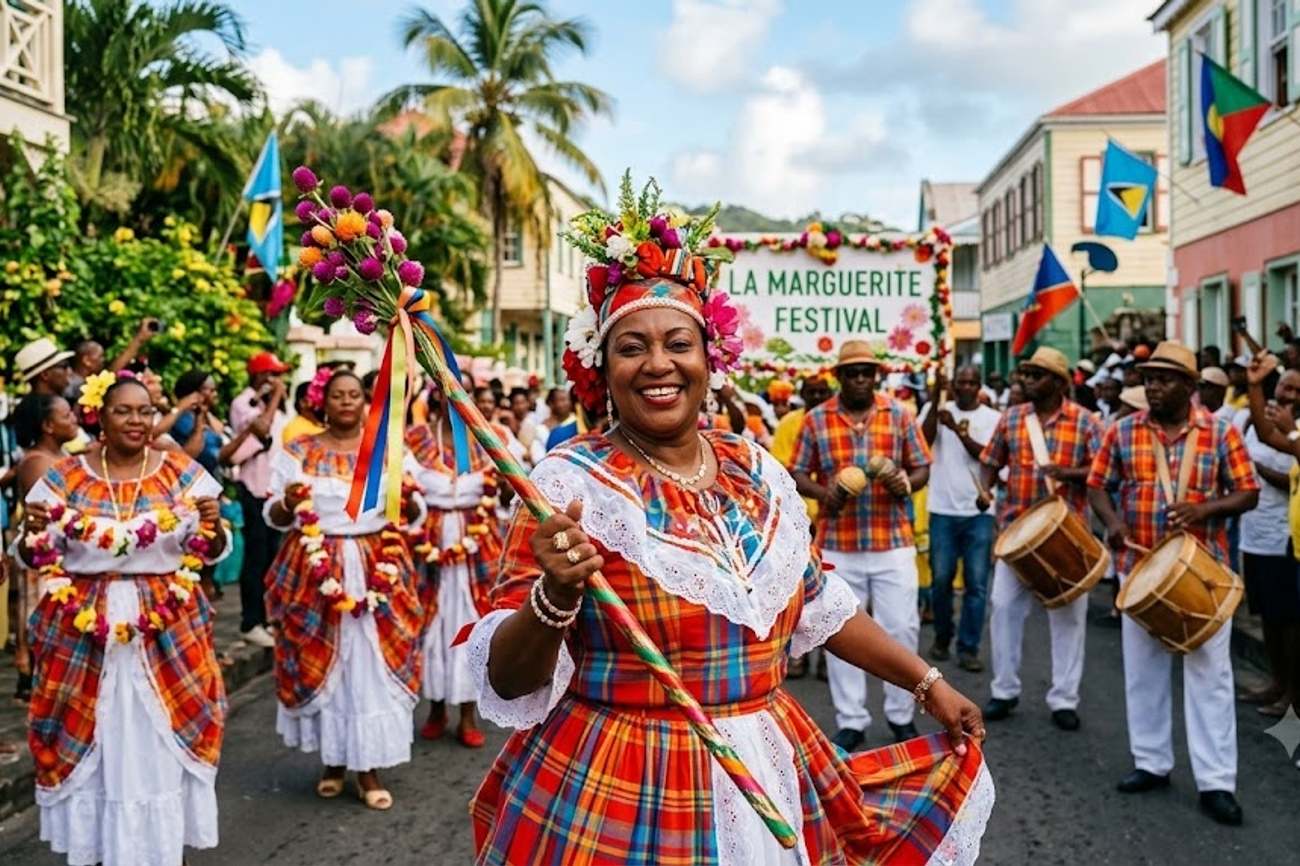
Image generated by AI
[Castries, October 2024] — Saint Lucia has officially scheduled the La Marguerite Flower Festival for 17 October 2026, anchoring a major cultural pillar of the island's Creole Heritage Month. The event represents a 250-year-old tradition that transforms local communities into living museums of song, dance, and ceremonial pride.
The festival is organized by one of the island's two historic flower societies, known in Saint Lucian Kwéyòl as La Magwit. While the competing La Rose society holds its celebrations on 30 August, La Marguerite centers its festivities on the feast day of its patron saint, St Margaret Mary Alacoque. This event serves as a critical vehicle for the preservation of the Kwéyòl language and traditional Caribbean social structures.
The Origins of the Flower Societies
The La Marguerite festival is not a curated tourist attraction but a grassroots community movement. For over two and a half centuries, Saint Lucian society was divided between two friendly but fierce rivalries: the followers of the Rose and the followers of the Marguerite. These societies functioned as mutual aid networks, providing friendship and a shared identity for citizens during periods of extreme hardship.
The 17 October date is strictly tied to the religious calendar, specifically the feast of St Margaret Mary Alacoque. This intersection of Catholic tradition and African-Caribbean heritage creates a unique cultural hybrid. The society persists today as a way for families and villages to maintain a link to their ancestral memory, ensuring that the customs of the 18th century remain relevant in the 21st.
Participants and Cultural Roles
The festival is visually defined by a strict color code: all La Marguerite participants dress in white. This contrasts sharply with the red attire worn by the La Rose society. The event is a multi-generational effort involving elders, youth, and professional musicians.
The festival employs a symbolic royal court to organize its processions. Participants are assigned specific ceremonial roles, including:
- The Monarchy: A designated King and Queen.
- The Nobility: Princes and Princesses.
- The Civil Guard: Soldiers and Police Officers.
- Community Care: Nurses and other civic figures.
This royal structure is a playful yet formal reenactment of old social hierarchies, turning the street parade into a choreographed narrative of community status and pride.
The Mechanics of the Celebration
The festivities do not begin and end on a single day. The lead-up to 17 October is characterized by "grand séances"—evening gatherings that serve as rehearsals and social hubs. These séances often run late into the night and are centered around the chantwèl, a lead singer who directs the music.
The musical structure relies on a call-and-response format. The chantwèl delivers a line, and the community responds in a powerful chorus. This style is designed for inclusivity, allowing non-professionals to participate fully. The lyrics, primarily in Kwéyòl, serve three purposes: praising the Marguerite society, honoring the royal court, and engaging in lighthearted mockery of the rival La Rose society.
Instrumentation and Choreography
The sonic identity of the festival is driven by a specific ensemble of traditional instruments. These include:
- String Instruments: Violin, banjo, cuatro, and guitar.
- Percussion: Drums, shak-shak, and baha.
The music ranges from high-tempo celebratory tracks to slow, reflective melodies. This auditory backdrop supports several traditional dance forms that highlight the island's diverse influences. Visitors will observe the quadrille, lancers, and belair—dances that blend African rhythms with French colonial structure. These movements are not merely performances; they are a form of non-verbal history passed from elders to the youth.
The Event Sequence: From Church to Street
While the Saint Lucia Tourism Authority has not yet released the specific 2026 venue, the festival typically follows a rigorous three-part sequence based on previous iterations in locations like Vieux Fort.
- The Religious Service: The day opens with a church service dedicated to St Margaret Mary Alacoque, grounding the celebration in its spiritual roots.
- The Procession: Following the service, the royal court and society members parade through the streets. This segment is characterized by the sea of white clothing and the loud, rhythmic accompaniment of the traditional band.
- The Grande Fête: The event culminates in a public cultural climax. This is the primary space for food, communal dancing, and the official performances of the society's songs.
Practical Traveler Advisory and Strategic Insights
For those planning a visit to Saint Lucia in October 2026, the La Marguerite festival shifts the travel experience from passive resort lounging to active cultural immersion. Because the event is part of Creole Heritage Month, travelers can expect an island-wide surge in local food markets, language workshops, and musical events.
Practical Impact for Visitors:
- Accommodation: Expect higher demand for lodging in the host town (to be announced), as the Grande Fête attracts thousands of locals.
- Transportation: Street parades often lead to road closures in town centers; travelers should anticipate delays and plan for pedestrian movement.
- Etiquette: While visitors are welcome, the event is a community rite. Respectful observation of the royal court's formal rules is encouraged.
- Booking Window: Travelers should monitor the Saint Lucia Tourism Authority and the Government of Saint Lucia official portals for the announcement of the 2026 host venue to secure nearby hotels.
Cultural Preservation and Future Outlook
The continued existence of La Marguerite is a victory for heritage tourism. By integrating these traditions into the official tourism calendar, Saint Lucia ensures that the youth have a financial and social incentive to learn the Kwéyòl language and traditional instruments.
The 2026 festival will serve as a benchmark for how the island balances modern tourism with the protection of "living" culture. Unlike staged performances, La Marguerite remains a community-led event, meaning its authenticity is preserved through the participation of local families rather than a corporate production team.
FAQ: La Marguerite Festival 2026
Do I need a ticket to attend the La Marguerite festival? No. The festival is a community celebration. The church services, street parades, and the Grande Fête are generally open to the public and free to attend.
What is the dress code for visitors? There is no mandatory dress code for tourists. However, dressing modestly and comfortably for walking is advised. Avoid wearing red if you wish to avoid being mistaken for a member of the rival La Rose society.
Where exactly will the 2026 festival take place? The specific host venue has not been announced yet. Previous festivals have been held in areas like Vieux Fort. Check official tourism channels closer to October 2026 for the location.
Is the festival family-friendly? Yes. The event is a multi-generational community gathering featuring music, dance, and food, making it appropriate for travelers of all ages.
A white-clad procession through the heart of the Caribbean, where history is sung and the past refuses to fade.
#LaMarguerite2026 #SaintLuciaCulture #CreoleHeritageMonth #KwéyòlTraditions #StLuciaTourism2026 #VieuxFortCulture
Related Travel Guides
This article is for informational purposes. Flight routes, passenger regulations, visa rules, and transit advisories are subject to change by airlines and aviation authorities. Readers are advised to verify schedules and travel documentation with relevant carriers and border agencies before departure.
Related Stories

European Mass Protests Disrupt Travel Across France, Italy, Belgium, and Turkey in 2026
The Best Things to Do in Vero Beach with Family: A Local Parent & Traveler's Guide