
Nepal Floods Annapurna Trekking Routes Disrupted
Heavy monsoon rains trigger floods and landslides in Nepal's Annapurna region, disrupting key trekking routes near Nayapul and Ghandruk. Read updates.

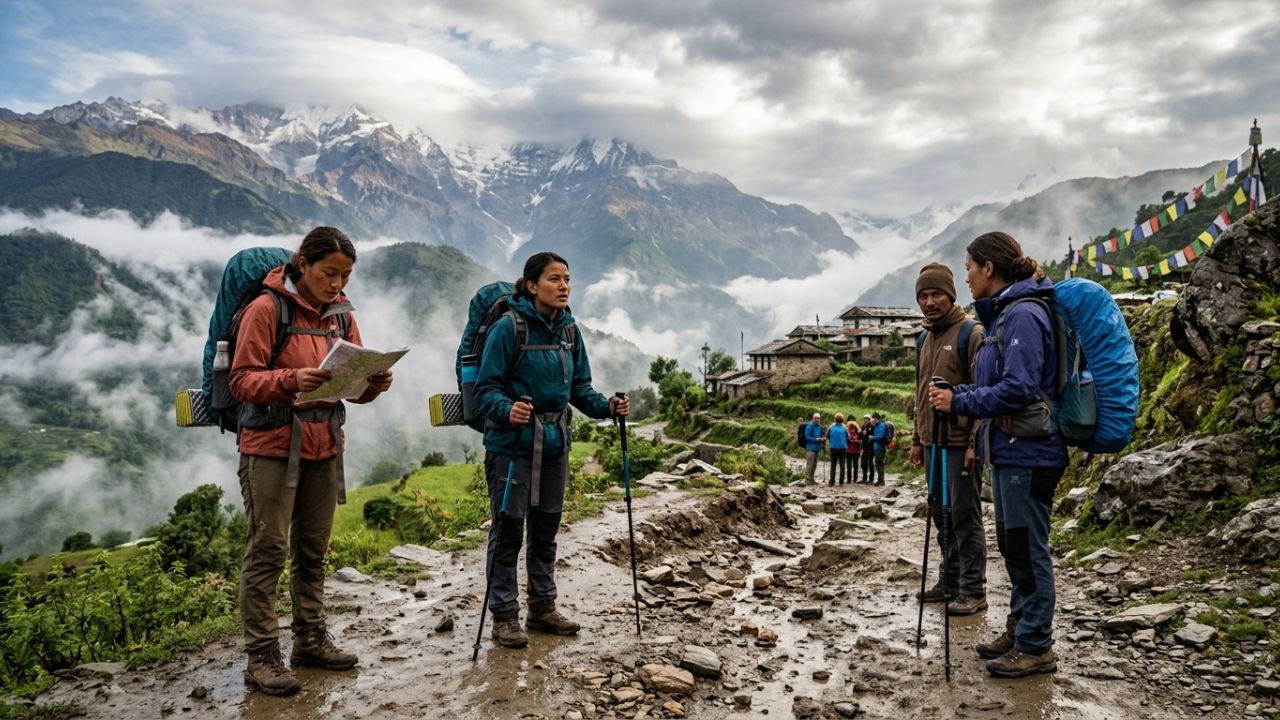
Image generated by AI
According to updates from Himalayan emergency services, a regional travel alert has been issued for the Annapurna region on August 15, 2026, as heavy monsoon rains cause flooding and trail disruptions.
Landslides and swelling rivers have damaged road sections, making key parts of the trekking network temporarily inaccessible. The Trekking Agencies' Association of Nepal (TAAN) Gandaki division (referred to in regional reports as TAAN Mandakini) has advised operators to monitor trail conditions carefully and brief travelers before beginning journeys. Safety teams are coordinating with local authorities to assess the damage along major travel corridors and establish alternative routes for adventure tourists.
The disruption followed intense rainfall around Birethanti in Kaski (reported as biretta in Kasai), where flooding in the Modi Khola river (reported as modify kola) damaged the road connecting major destinations. This affected route links the popular trailhead at Nayapul (reported as Jayapura), the Gurung village of Ghandruk, and the pilgrimage destination of Muktinath. While these blockages create delays for trekking groups, regional conservation representatives are working to restore access and ensure that mountain guides can navigate the terrain safely. Visitors are urged to remain flexible, monitor weather reports, and follow the guidance of registered safety field teams.
Heavy Monsoon Rains Cause Modi Khola Flooding and Trail Blockages
The Annapurna region is a major hub for international adventure travel, but extreme weather during the rainy season presents significant challenges for transport networks. Landslides can block trails and roads quickly, requiring tourists to adjust their itineraries to avoid hazardous zones. To help hikers compare the safety status, affected trail segments, and regional recommendations issued during the current monsoon disruption, the following table summarizes the primary points of the alert:
| Trekking Route Segment | Current Status & Road Damage | Trailhead Accessibility | Recommended Safety Guidelines |
|---|---|---|---|
| Modi Khola Valley | River flooding near Birethanti in Kaski | Nayapul trailhead remains open with delays | Avoid camping near riverbanks; monitor water levels |
| Ghandruk Access | Minor landslide debris on walking paths | Ghandruk village accessible via alternative trails | Hire local guides with real-time route knowledge |
| Muktinath Corridor | Transit road sections damaged by landslips | Jomsom transport links operating under caution | Verify road conditions with local transport offices |
| Annapurna Sanctuary | High trail erosion, wet conditions | Base camp routes restricted during heavy downpours | Carry waterproof gear and leeches repellent |
| TAAN Safety Advisory | Active monitoring of weather patterns | Unified communication protocol implemented | Brief all participants on emergency shelters |
Trekking Agencies Association Issues Safety Directives for Annapurna Trails
The regional advisory issued by TAAN Gandaki emphasizes the importance of sharing accurate safety information with travelers before they begin their journeys. Trekking operators are advised to explain the latest weather forecasts, road damage, and trail conditions to tourists, guides, and porters. In remote mountain areas, changing weather patterns can create sudden safety risks, making preparation and local updates critical for safe navigation.
Agencies are also being encouraged to review alternative routing arrangements where trail blockages are reported. By adjusting itineraries to bypass damaged sections of the Modi Khola valley, operators can reduce risks and support safer outdoor experiences during periods of heavy rain. The primary focus of the guidelines is to prevent unnecessary movement through active landslide zones, ensuring that adventure tourism continues responsibly while restoration efforts are underway.
Guides and Field Teams Instructed to Maintain Continuous Communication
To coordinate emergency responses effectively, mountain guides and field support staff have been instructed to maintain regular communication with their respective agencies. These guides play a vital role in ensuring visitor safety in remote mountain environments, as their knowledge of local terrain, weather indicators, and safe shelters is invaluable. By remaining in contact, field teams can report changes in trail stability immediately, allowing operators to adjust plans for upcoming groups.
Tourism teams are also coordinating with the Annapurna Conservation Area Project (ACAP) representatives and local security forces. This joint effort helps identify safe detours, monitor river levels, and manage tourist movement through sensitive zones. The advisory highlights that cooperation between private operators and regional conservation bodies is essential to minimize risks and ensure that emergency services can respond rapidly if evacuation is required.
Infrastructure Resilience Emerges as a Key Priority for Nepal Adventure Tourism
The recent flood disruption has highlighted the need for resilient transportation infrastructure in Nepal's adventure tourism sector. Mountain roads and trails are not only critical for connecting travelers with remote destinations, but they also serve as economic lifelines for local communities. Hotels, teahouses, transport operators, porters, and guides all rely on a steady flow of international visitors to support their livelihoods and businesses.
When roads and paths are damaged, the economic impact extends beyond immediate travel delays, as local businesses face reduced income during prolonged closures. This situation has increased calls for faster maintenance and the construction of more resilient trails and bridges that can withstand seasonal monsoon flooding. By improving infrastructure design and maintaining regular trail checks, Nepal's tourism sector can manage future weather-related challenges more effectively, protecting both travelers and the local economy.
Why This Matters (Information Gain & Experience)
For the traveler, this means that trekking in the Annapurna region during the monsoon requires high flexibility and a reliance on experienced local guides. Choosing to travel during the peak dry seasons in autumn or spring is the most effective way to avoid trail blockages and ensure clear mountain views. From a logistical standpoint, travelers must carry waterproof backpack covers, water purification tablets to avoid water-borne illnesses, and verify that their trekking agency has a clear emergency evacuation protocol in place before setting out.
Additionally, choosing to practice sustainable travel during your trek directly supports the recovery of Gurung and Magar communities in the Annapurna foothills. Travelers can support the local economy by staying in family run teahouses, hiring native guides and porters, and purchasing meals that feature regional specialties like traditional dal bhat (lentil soup and rice), dhido, and thukpa noodle soup. Using reusable water bottles with purification systems avoids plastic waste on fragile mountain trails. Respecting local cultural etiquettes, dressing modestly when visiting sacred sites like Muktinath, and supporting trail conservation programs ensures a safe, eco-friendly, and culturally respectful journey, helping preserve the beauty of the Himalayas for future global trekkers.
Related Travel Guides
Disclaimer
This article is for informational and educational purposes only. It does not constitute legal, financial, or professional advice. While we strive to provide accurate and up-to-date information, travel policies, regulations, and conditions change rapidly. Always verify information with official sources before making travel decisions. Nomad Lawyer makes no representations about the accuracy, reliability, completeness, or suitability of the information provided. Readers should consult qualified professionals for advice specific to their circumstances. The views expressed in this article are those of the author and do not necessarily reflect the views of Nomad Lawyer.
Raushan Kumar
Founder & Lead Developer
Full-stack developer with 11+ years of experience and a passionate traveller. Raushan built Nomad Lawyer from the ground up with a vision to create the best travel and law experience on the web.
Learn more about our team →