
Flores Indonesia Earthquake US Travel Alert
A magnitude 7.7 earthquake hits Flores Island, East Nusa Tenggara, prompting a U.S. travel alert for Indonesia. Read travel safety updates.

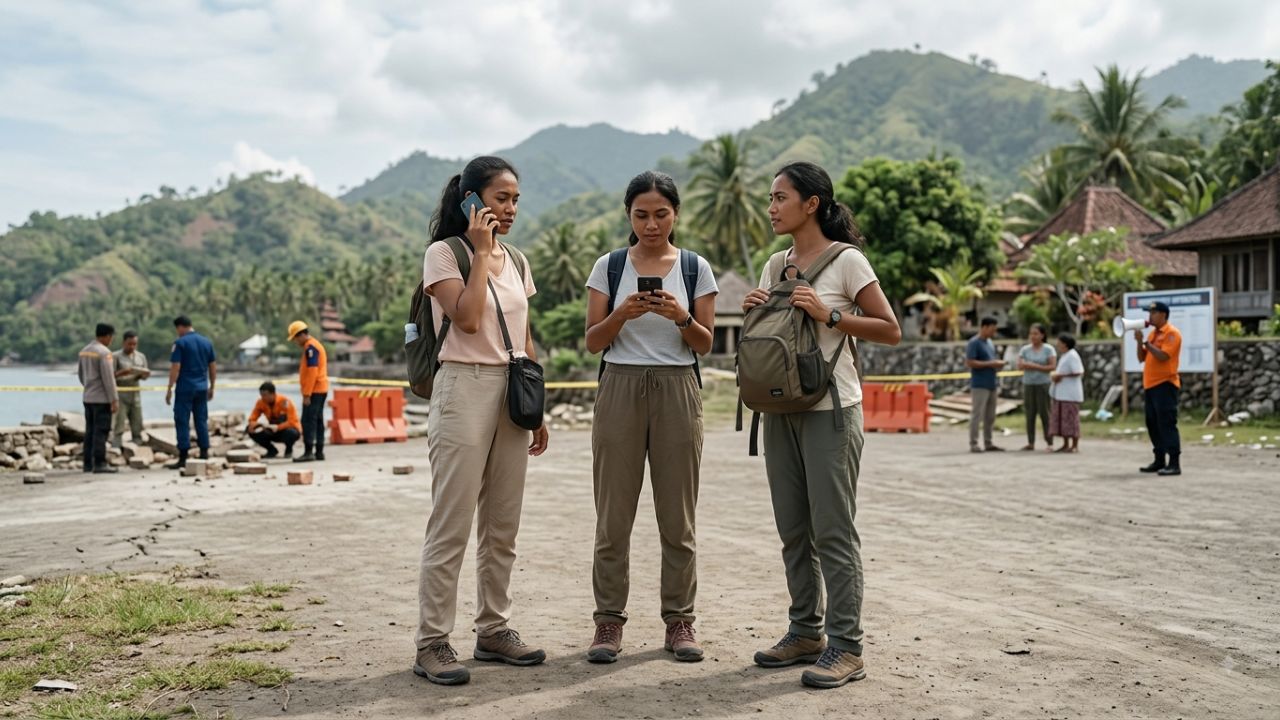
Image generated by AI
According to official alerts published on August 15, 2026, the U.S. government has issued a new travel safety warning for Indonesia after a powerful magnitude 7.7 earthquake occurred near Flores Island in East Nusa Tenggara.
The U.S. Embassy in Jakarta advised American citizens traveling or residing in the affected region to take immediate safety measures and follow instructions from local emergency management teams. The emergency alert emphasizes the importance of securing shelter, maintaining communications with family members, and monitoring local media reports for updates regarding potential tsunami risks or aftershock activity. To assist U.S. nationals during unexpected emergencies, consular officials are urging travelers to register their itineraries through official security databases.
The massive under-sea tremor occurred close to Flores Island, raising concerns about potential damage to coastal infrastructure and tourist facilities in East Nusa Tenggara, a region popular for eco-tourism and marine exploration. While no immediate widespread casualties have been reported, the U.S. government is reminding travelers that safety must remain the top priority during natural disasters. By taking proactive measures, such as knowing evacuation routes to high ground and maintaining continuous contact with friends and family, international visitors can manage emergency situations with greater confidence. Local authorities, including Indonesia's disaster management agency, are continuing to monitor the Flores Sea for any aftershock activity.
US Embassy in Jakarta Issues Alert Following Flores Sea Tremor
The magnitude 7.7 earthquake highlights the challenges international visitors face when traveling through seismically active regions. Consular officials in Jakarta are working alongside local emergency services to distribute safety updates and coordinate assistance for registered travelers. To help visitors understand the key safety directives and emergency contacts issued during this active alert, the following table summarizes the primary emergency recommendations:
| Emergency Alert Parameter | U.S. Government Advisory Guidelines | East Nusa Tenggara Impact Zones | Primary Action Steps for Visitors |
|---|---|---|---|
| Earthquake Magnitude | 7.7 on the Richter scale | Flores Island, Maumere, Labuan Bajo, Riung | Move inland and seek shelter on higher ground |
| US Embassy Hub | U.S. Embassy in Jakarta, Indonesia | East Nusa Tenggara administrative region | Register itinerary through the STEP platform |
| Tsunami Advisory | Coastal monitoring active by local agencies | Low-lying coastal beaches and ports | Avoid coastal zones and watch for ocean changes |
| Communication Directive | Notify family and friends of safety status | Global cellular networks and internet portals | Keep phones charged and use text messaging |
| Information Source | Monitor local media and BMKG alerts | Official disaster management dashboards | Adhere to evacuation orders from park rangers |
| Aftershock Security | Prepare for secondary under-sea tremors | Municipalities across central and eastern Flores | Secure loose heavy items in hotel rooms |
Three Key Safety Directives for International Travelers in Indonesia
The emergency advisory issued by the U.S. Embassy focuses on three key safety directives to help travelers protect themselves during the emergency period. First, travelers situated in affected locations must seek secure shelter and protect themselves from potential structural hazards in the surrounding area. Visitors should avoid damaged buildings, stay away from low-lying coastal beaches due to tsunami risks, and follow the direct safety instructions of local park rangers or hotel management staff.
Second, travelers are urged to establish contact with their family members and friends to confirm their safety. Natural disasters often cause communication networks to become congested as millions attempt to make calls simultaneously. Consular officials recommend sending brief text messages or using internet-based social platforms to share updates, which keeps communication channels open for emergency services. This simple step reduces anxiety for loved ones abroad and ensures that families are aware of the traveler's current location and safety status.
Smart Traveler Enrollment Program Offers Critical Emergency Updates
Third, the U.S. Embassy advises travelers to monitor local media reports and official announcements from Indonesia's Meteorology, Climatology, and Geophysical Agency (BMKG). Information regarding road closures, structural damage, and harbor restrictions can change quickly after a magnitude 7.7 event. By following reliable news channels and avoiding unverified social media updates, travelers can make safe decisions based on verified facts.
To support these safety measures, the embassy is encouraging all U.S. citizens to enroll in the Smart Traveler Enrollment Program (STEP). This free service allows travelers to register their travel plans, making it easier for the embassy to contact them during natural disasters or security emergencies. Enrolled citizens receive real-time travel alerts and safety updates directly from government sources, which is critical when access to local communication channels is limited or disrupted.
Flores Island Positioned Along the Seismically Active Sunda Megathrust
Flores Island is located within one of the world's most seismically active zones, situated near the complex plate boundaries where the Australian Plate subducts beneath the Sunda Plate. This ongoing geological movement creates significant tectonic pressure, resulting in frequent under-sea earthquakes along the Flores back-arc thrust. While minor tremors are common and rarely noticed, major events like the recent magnitude 7.7 earthquake highlight the importance of earthquake preparedness and infrastructure resilience in eastern Indonesia.
Indonesia's disaster management agencies maintain extensive monitoring networks to detect seismic activity and issue timely tsunami warnings. For travelers, understanding these regional geological characteristics is a key component of international travel preparation. By familiarizing themselves with local emergency protocols, recognizing natural tsunami signs—such as a sudden retreat of the ocean shore—and following local building safety standards, visitors can explore Flores and the wider Sunda Islands safely.
Why This Matters (Information Gain & Experience)
For the traveler, this means that real-time safety preparation must be integrated into your Flores itinerary. If you are exploring coastal areas like Labuan Bajo or the Riung 17 Islands, a magnitude 7.7 earthquake requires immediate movement inland and to elevated ground without waiting for official tsunami warnings to be broadcast. From a logistical standpoint, travelers should secure comprehensive travel insurance that includes emergency medical evacuation, and ensure their mobile phones are registered with STEP to receive immediate alerts from the U.S. Embassy in Jakarta.
Additionally, choosing to practice sustainable travel during your recovery stay directly supports Flores communities as they rebuild local infrastructure. Travelers can support the regional economy by staying in locally owned eco-lodges, hiring native guides to visit cultural sites like Wae Rebo, and buying traditional handwoven ikat textiles directly from independent weavers' cooperatives. Experiencing local culinary traditions, such as tasting kolo bamboo rice or dining at small family run warungs, ensures that your spending directly supports the host population. Following the guidance of local disaster management agencies (BNPB), respecting the fragile marine environment around Komodo National Park, and avoiding areas affected by minor structural damage ensures a safe, eco-friendly, and culturally respectful journey across East Nusa Tenggara.
Related Travel Guides
Disclaimer
This article is for informational and educational purposes only. It does not constitute legal, financial, or professional advice. While we strive to provide accurate and up-to-date information, travel policies, regulations, and conditions change rapidly. Always verify information with official sources before making travel decisions. Nomad Lawyer makes no representations about the accuracy, reliability, completeness, or suitability of the information provided. Readers should consult qualified professionals for advice specific to their circumstances. The views expressed in this article are those of the author and do not necessarily reflect the views of Nomad Lawyer.
Raushan Kumar
Founder & Lead Developer
Full-stack developer with 11+ years of experience and a passionate traveller. Raushan built Nomad Lawyer from the ground up with a vision to create the best travel and law experience on the web.
Learn more about our team →