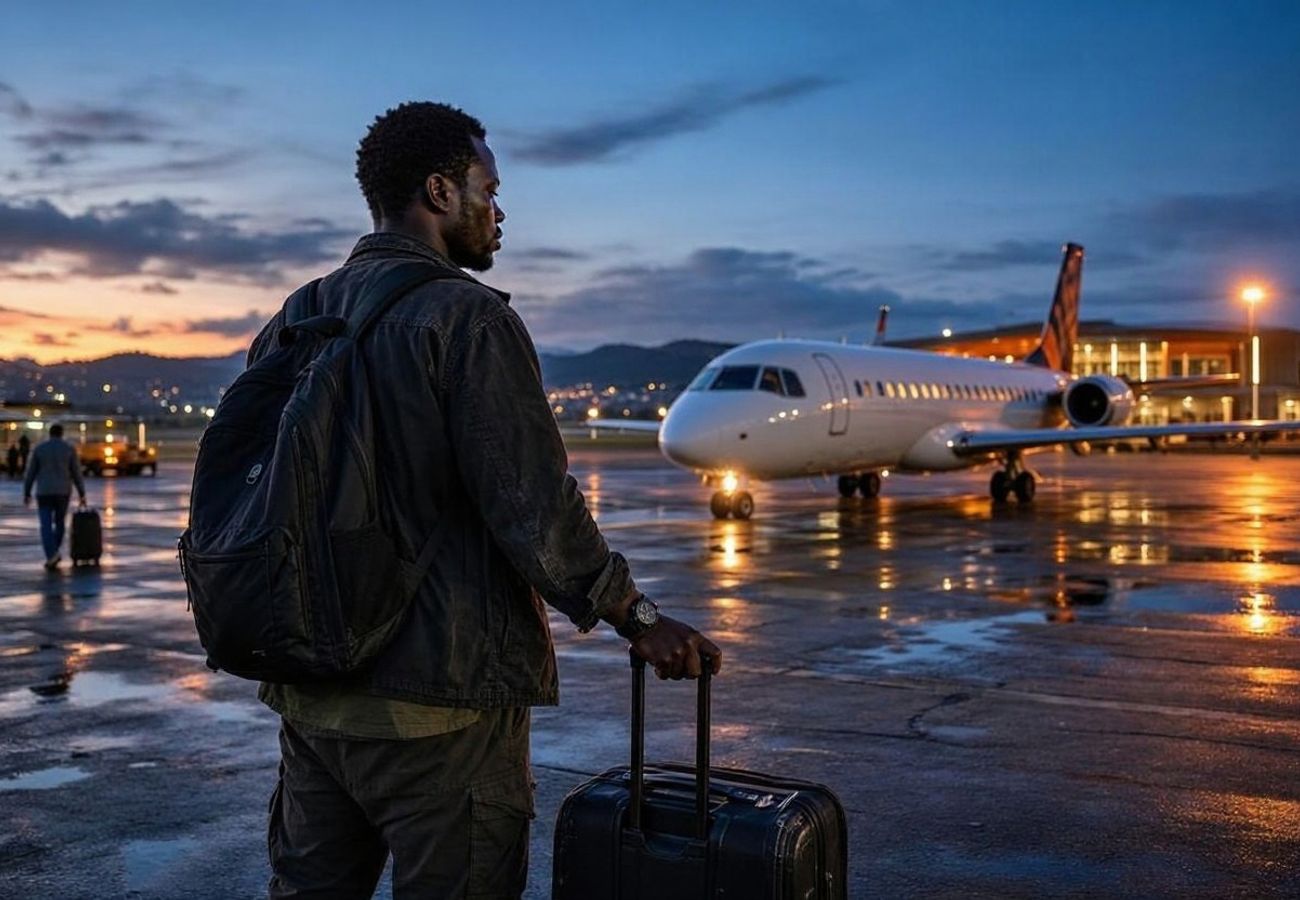
Nepal Flood Crisis Sees Major Aid Delivery Through BlueLight Humanitarian Airlines Mission

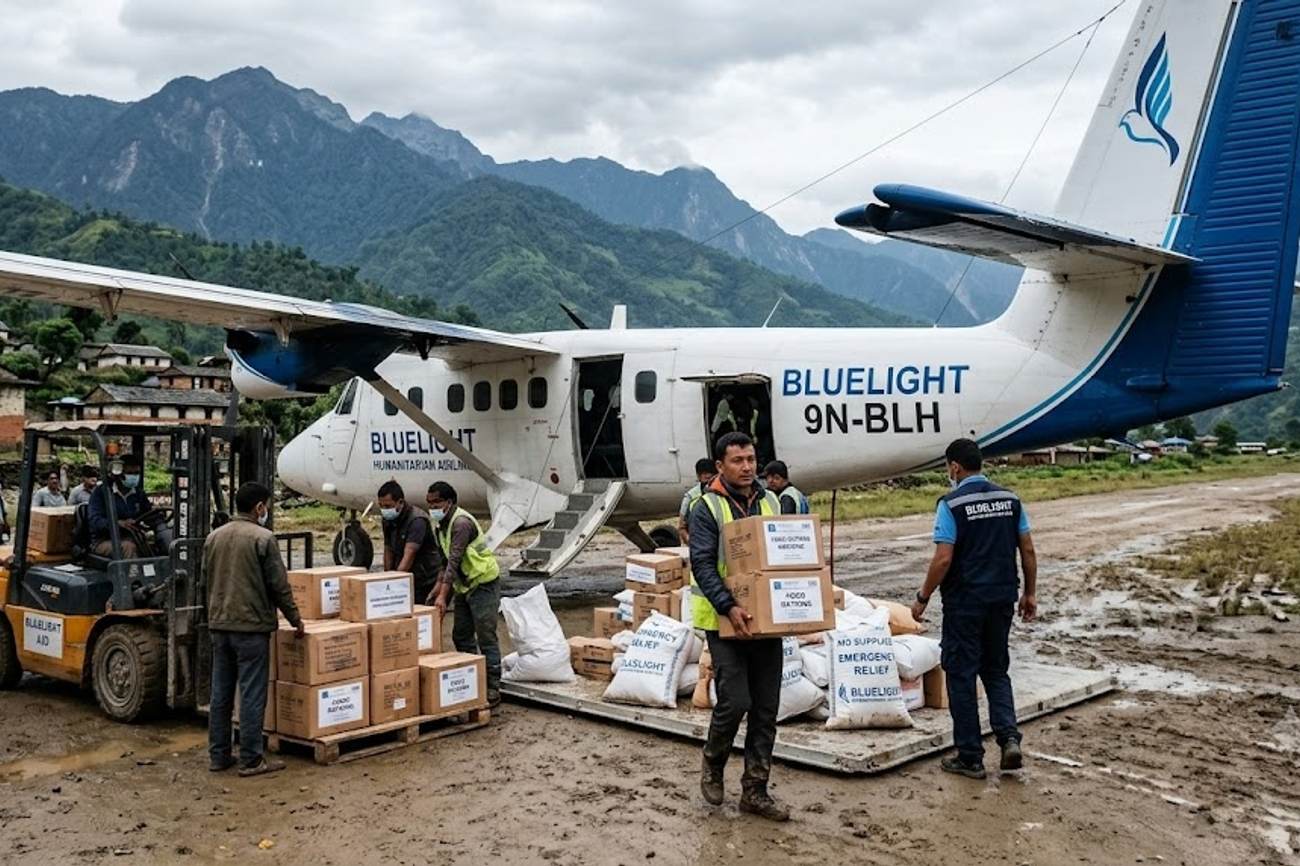
Image generated by AI
Flood response activities in Nepal escalated with the successful completion of the first humanitarian air mission by BlueLight Humanitarian Airlines. 49 metric tons of relief supplies, transported from Dubai to Kathmandu by a Boeing 767 freighter, will assist thousands of people affected by recent flooding. The relief supplies were distributed to people living in makeshift shelters and contained kitchen sets and water containers. The monsoon season flooding devastated and cut off many communities in Nepal.
The mission was carried out on behalf of the Belgian Red Cross-Flanders, with relief materials supplied and donated by the Belgian Red Cross and the International Federation of Red Cross and Red Crescent Societies (IFRC). BlueLight’s role was to arrange and operate the transport of the humanitarian cargo to Nepal.
A chartered Boeing 767 freighter departed Dubai World Central on 20 September carrying 125 pallets of essential relief equipment. The shipment included kitchen sets, high and medium thermal blankets, jerrycans, geodesic family tents and Xpert 48 tents, which were destined for people impacted by severe flooding in Nepal.
The emergency response followed flash floods that struck the Rasuwa, Nuwakot and Dhading regions on 26 August. The disaster caused major disruption, with Rasuwa becoming inaccessible by road. According to the Belgian Red Cross, around 17,000 people required urgent humanitarian assistance following the flooding.
With relief supplies already positioned in Dubai, the Belgian Red Cross needed a rapid and reliable air transport solution to deliver aid to affected communities. BlueLight responded by identifying suitable aircraft capacity and preparing a proposal within 30 hours of receiving the cargo requirements.
Although BlueLight does not currently operate its own aircraft fleet, the organisation was able to secure a Boeing 767 freighter capable of handling the humanitarian shipment. The aircraft selection allowed the relief operation to move forward while meeting the specific requirements of the cargo and destination.
To support the humanitarian mission, BlueLight subsidised the charter cost, allowing the Belgian Red Cross to access air transport at a rate below typical market prices for comparable aircraft. This approach reflects BlueLight’s operating model, where commercial activities and donor support help reduce logistics costs for humanitarian organisations.
The Nepal flood crisis has prompted a major aid delivery effort, with BlueLight Humanitarian Airlines playing a crucial role in transporting relief supplies and personnel to affected areas. According to the Civil Aviation Authority of Nepal, the airline has been working closely with government agencies to ensure the safe and efficient delivery of aid. This collaborative effort has helped to alleviate the suffering of thousands of people affected by the floods.
Through this structure, more of the available relief funding can be directed towards affected communities rather than being consumed by transportation expenses. The organisation aims to provide affordable aviation solutions for Red Cross, Red Crescent and other non-governmental organisation partners during emergency responses.
While aircraft capacity was secured quickly, the complete preparation process required approximately 14 days from the initial request to the aircraft’s departure. During this period, multiple operational requirements had to be completed, including cargo planning, documentation, regulatory approvals, airport handling arrangements and flight slot coordination.
These processes needed to be completed in sequence, highlighting the complex challenges humanitarian organisations face when arranging emergency air capacity after a disaster has already occurred. The timeline reflected the detailed coordination required among aviation operators, aid agencies, authorities and airport teams.
The Kathmandu operation also presented additional aviation challenges. Tribhuvan International Airport, Nepal’s main international gateway, is located in mountainous terrain, creating specific approach requirements and aircraft performance limitations. These conditions reduce the number of suitable aircraft operators and affect the amount of cargo that can be carried on each flight.
The humanitarian mission required close coordination between aviation, regulatory and relief agencies across multiple countries. Ensuring that aircraft availability, safety requirements, customs procedures and humanitarian priorities were aligned was essential for the successful delivery of emergency supplies.
In terms of passenger logistics, BlueLight Humanitarian Airlines has been working to evacuate stranded tourists and locals from flood-affected areas, with many being flown to safety at Tribhuvan International Airport. The Tribhuvan International Airport authority has been providing critical support to the airline, including facilitating the transportation of relief supplies and providing medical assistance to those in need. As the situation continues to evolve, the airport remains a key hub for humanitarian efforts.
BlueLight’s first humanitarian mission demonstrates the role specialised aviation solutions can play in supporting disaster response operations. By connecting available aircraft capacity with humanitarian organisations, such operations can help deliver critical supplies to communities facing urgent needs following natural disasters.
Waleed Rawat, Co-founder and CEO of BlueLight Humanitarian Airlines, said: “Our first mission showed what determined collaboration can achieve, and why dedicated humanitarian aviation is needed. We do not operate our own aircraft yet, and within 30 hours we had secured a freighter for the Belgian Red Cross and subsidised the rate so that more of their budget could reach families in Nepal. From that moment, everyone involved worked with complete focus to move the relief as quickly and as responsibly as possible.
“Even so, around 14 days passed between the request and take off. Those 14 days are not a criticism of anyone. They are what happens when humanitarian air capacity has to be built from nothing after an emergency has already begun. BlueLight was created to change that. We want the aviation part of a humanitarian response to be ready before the call comes, with the discipline of commercial aviation and the urgency and transparency that humanitarian work demands.”
“We are grateful to everyone in Flanders whose donations helped make this relief flight to Nepal possible. By working closely with our partners, we can deliver aid efficiently to families affected by the floods. This mission shows how their generosity translates into practical help where it is needed,” said Jan Poté, spokesperson for Belgian Red Cross-Flanders.
Pierre Bernheim, Co-founder of BlueLight Humanitarian Airlines, said: “Humanitarian aviation takes far more than an available aircraft. It takes crews, airports, regulators, ground handling, documentation and performance planning, all aligned, and often in some of the most demanding places in the world. Our aim is to have those capabilities in place in advance, so that when humanitarian organisations need to move, the aviation side is ready and waiting.”
Despite the challenges posed by the flood crisis, the Nepal Tourism Board is urging tourists to continue visiting the country, citing the importance of tourism to the local economy and the many areas that remain unaffected by the floods. For the latest travel advisories and information on affected areas, visitors can check the Nepal Tourism Board website, which provides up-to-date guidance and support for travelers. By continuing to visit Nepal, tourists can help support the country's recovery efforts and experience the unique culture and natural beauty that it has to offer.
From Emergency Capacity to Future Humanitarian Readiness
BlueLight is developing a humanitarian aviation model focused on reducing the delays, uncertainty and cost challenges often faced when securing aircraft through the open charter market during emergencies. By operating its own dedicated fleet in the future, BlueLight aims to provide greater certainty around aircraft availability, establish humanitarian procedures before deployment and complete key commercial and operational preparations in advance.
This approach could help transform emergency air logistics by allowing multiple processes to move forward simultaneously instead of following a traditional step-by-step sequence. Aircraft readiness, approvals and logistics planning could progress together, helping reduce mobilisation times while maintaining essential safety, regulatory and humanitarian standards.
Strong safeguards remain central to every humanitarian air operation. Requirements such as cargo documentation, customs procedures, government clearances and aid tracking systems ensure that relief supplies are delivered safely and reach the communities they are intended to support. BlueLight’s objective is to strengthen these processes by creating a more prepared aviation framework rather than bypassing established procedures.
The Nepal relief operation, known as Mission 01, represents BlueLight’s first operational humanitarian deployment. Looking ahead, the organisation plans to provide NGOs, Red Cross
FAQ: Nepal Flood Crisis Sees Major Aid Delivery 2026
Is Nepal safe for travel in 2026? Nepal is open, but check local advisories.
What airlines are operating aid flights? BlueLight Humanitarian Airlines is leading efforts.
Can I volunteer for flood relief? Contact local NGOs for volunteer opportunities.
Are flights to Nepal affected by the crisis? Some flights are disrupted, check with airlines.
Related Travel Guides
- Tahiti Tourism Surges as New Sydney Route Brings More Australian Travellers to Pacific Paradise
- Virgin Australia Named Australia's Most Trusted Travel Brand for Fourth Consecutive Year at 2026 Roy Morgan Awards in September 2026
- Virgin Australia Strengthens Holiday Schedule as Sports Fans and Families Take to the Skies
This article is for informational purposes. Flight routes, passenger regulations, visa rules, and transit advisories are subject to change by airlines and aviation authorities. Readers are advised to verify schedules and travel documentation with relevant carriers and border agencies before departure.
Related Stories
India Launches International Digi Yatra Biometric Trials at 7 Major Airports for 2027 Expansion

Avoiding Major Hubs: Using Portsmouth and Regional US Airports for Winter Travel 2026-27