
Nepal Airlines Faces Aviation Storm As Tourism Growth Is Blocked By Grounded Jets And Reform Failures
Nepal Airlines Faces Aviation Storm As Tourism Growth Is Blocked By Grounded Jets And Reform Failures

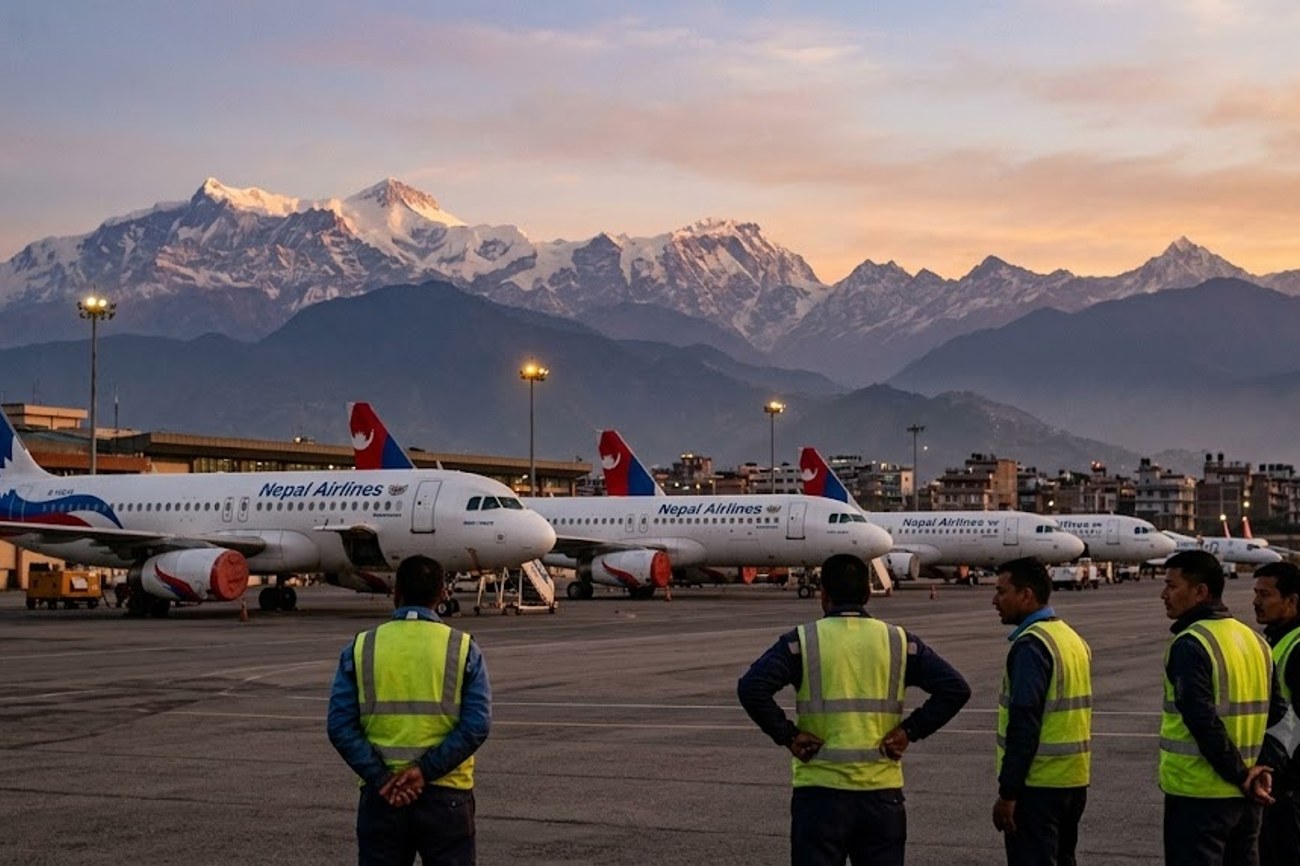
Image generated by AI
[Kathmandu, October 2024] — Nepal Airlines is currently grappling with its most severe operational crisis to date as its entire wide-body fleet remains grounded, crippling international connectivity during the nation's peak tourism window. The national flag carrier has been forced to cancel numerous long-haul flights and reroute thousands of passengers, effectively forfeiting a critical revenue opportunity tied to the surge in travel surrounding the upcoming 2026 Asian Games in Japan.
The crisis centers on the simultaneous grounding of both of the airline's Airbus A330-200 aircraft. One jet is stranded in Japan following the discovery of extensive engine blade damage, while the second is held in Italy due to a failure in the thrust-reverser system discovered during final testing after scheduled maintenance. These two aircraft constitute the entirety of the carrier's long-haul capacity, leaving the airline with no wide-body alternatives to service its primary international corridors.
Technical Failures Triggering the Grounding
The operational collapse was triggered by two separate, critical technical failures occurring in different global regions. In Japan, engineers initially identified a problem with an engine blade designed to manage airflow and generate thrust. While the airline attempted a replacement of the damaged component, subsequent technical inspections revealed that the structural damage was far more extensive than first estimated. The aircraft remains stationary in Japan awaiting final technical clearance.
Simultaneously, the airline's second Airbus A330-200 underwent a scheduled maintenance overhaul in Italy. During the final phase of testing, technicians identified a malfunction within the thrust-reverser system—a critical safety component used to decelerate the aircraft upon landing. This discovery prevented the aircraft from being cleared for its return flight to Kathmandu, forcing it to remain at the Italian maintenance facility for further repairs.
The inability to return either aircraft to service has left Nepal Airlines without the necessary equipment to operate flights to high-demand destinations. The reliance on a two-plane wide-body fleet has proven to be a catastrophic single point of failure for the carrier's international strategy.
Markets and Routes Under Impact
The grounding has created a vacuum in Nepal's international aviation sector, specifically impacting high-traffic routes during the September–October window, which is traditionally the most profitable period for Nepalese tourism due to cultural festivals and favorable weather.
The following routes and passenger groups are currently experiencing the highest levels of disruption:
- East Asia: Services to Japan and China are severely impacted, including the loss of projected growth linked to the 2026 Asian Games.
- Middle East: Flights connecting Kathmandu to Qatar and the United Arab Emirates are facing significant schedule instability.
- Southeast Asia: Connectivity to Malaysia has been disrupted.
- Priority Passengers: The airline is attempting to prioritize rerouting for elderly travelers, children, passengers with urgent medical needs, and those with expiring visas.
Because the wide-body jets are the only aircraft in the fleet capable of these long-distance hops, the airline cannot simply swap in smaller narrow-body aircraft to maintain the schedule. This has forced a reliance on third-party carriers to move stranded passengers, adding massive operational costs to the airline's balance sheet.
What This Means for Travelers
For passengers currently holding tickets or planning trips to Nepal, this crisis translates to immediate instability. The "corporate" reality is that the airline lacks the physical assets to fly its advertised long-haul schedule.
Immediate Passenger Impact:
- High Probability of Cancellations: If your flight is operated by an Airbus A330, there is a significant risk of cancellation or rerouting via a partner airline.
- Increased Transit Times: Rerouting through alternative hubs often involves longer layovers and additional transfers compared to the direct flights previously offered.
- Accommodation Delays: Travelers stranded at airports—particularly in Japan—may receive accommodation support, but this does not compensate for the loss of planned itinerary time.
- Visa Risks: Travelers with strict visa entry windows are at high risk; while the airline is prioritizing these individuals, the limited availability of alternative seats makes guarantees difficult.
Travelers are advised to monitor their flight status through official channels and consider booking flexible fares or utilizing travel insurance that covers carrier-initiated cancellations.
Financial Fallout and Systemic Failure
The economic consequences of this grounding are twofold: the immediate cost of repairs and the long-term loss of market share. Preliminary data suggests that repair expenses alone will reach hundreds of millions of Nepalese rupees. However, the "opportunity cost" is arguably higher. By failing to operate during the peak September–October season, the airline is missing out on peak-rate ticket sales and high-yield cargo revenue.
This crisis exposes a systemic failure in fleet planning. Aviation experts note that operating a long-haul network with only two aircraft leaves zero margin for error. A single technical glitch in one plane reduces capacity by 50%; two glitches result in a 100% shutdown of the international wide-body network.
The situation has drawn renewed scrutiny toward the Civil Aviation Authority of Nepal (CAAN), as the national carrier's inability to maintain its fleet hinders the broader goal of increasing tourist arrivals to boost the national GDP. Without a reliable flag carrier, international visitors are pushed toward competing regional hubs and foreign airlines, diminishing Nepal's sovereign control over its air corridors.
The Path to Recovery
The timeline for recovery remains uncertain, as it depends entirely on the speed of repairs in Italy and the final technical clearance in Japan. The airline is currently working with international technical specialists to resolve the thrust-reverser and engine blade issues.
Looking ahead, the crisis has sparked urgent calls for comprehensive reform within Nepal Airlines. Industry analysts argue that the carrier must move beyond "patchwork" repairs and invest in a more robust fleet expansion strategy. This would include:
- Increasing the number of wide-body aircraft to ensure redundancy.
- Implementing a more rigorous preventative maintenance schedule to avoid "discovery" failures during final testing.
- Establishing better contingency agreements with other global carriers to ensure seamless passenger transfers during fleet groundings.
Until these structural changes occur, the airline remains vulnerable to the same patterns of failure that have characterized its recent operational history.
FAQ: Nepal Airlines Crisis 2024
What should I do if my Nepal Airlines flight is cancelled? Contact the airline immediately to request rerouting. Priority is being given to passengers with medical needs, children, the elderly, and those with expiring visas. Keep all receipts for unplanned accommodation or transport for potential reimbursement claims.
Why can't Nepal Airlines use other planes for these routes? The routes to Japan, Qatar, and the UAE require wide-body aircraft (like the Airbus A330) due to the distance and passenger volume. The airline's smaller aircraft lack the range and capacity to service these specific long-haul destinations.
Is it safe to fly with Nepal Airlines once the planes return? Yes. The aircraft are grounded specifically because technical issues were identified during inspections. They will not be cleared for flight until they receive official technical clearance and pass all safety certifications from aviation regulators.
Will this affect travel for the 2026 Asian Games? While the games are in 2026, the airline is currently missing the window to build the capacity and reliability needed to handle the projected surge in passengers. Recovery of the fleet is essential for the airline to be competitive by 2026.
A national carrier cannot fly on ambition alone; it requires functioning engines.
#NepalAirlines #AirbusA330 #KathmanduAirport #KTM #AviationCrisis2024 #NepalTourism
Related Travel Guides
- China Aligns With Japan And More Countries in Growing Technology Tourism Through Robotics AI and Innovation Tours
- Malaysia’s Retail And Tourism Landscape Enters A Powerful New Phase As Suburban Malls Draw Institutional Capital
- Vietnam’s Quảng Trị Unlocks A New Tourism Era With World-Class Caves, Nature And Heritage Attractions
Disclaimer
This article is for informational and educational purposes only. It does not constitute legal, financial, or professional advice. While we strive to provide accurate and up-to-date information, travel policies, regulations, and conditions change rapidly. Always verify information with official sources before making travel decisions. Nomad Lawyer makes no representations about the accuracy, reliability, completeness, or suitability of the information provided. Readers should consult qualified professionals for advice specific to their circumstances. The views expressed in this article are those of the author and do not necessarily reflect the views of Nomad Lawyer.
Kunal K Choudhary
Co-Founder & Contributor
A passionate traveller and tech enthusiast. Kunal contributes to the vision and growth of Nomad Lawyer, bringing fresh perspectives and driving the community forward.
Learn more about our team →