
China Aligns With Japan And More Countries in Growing Technology Tourism Through Robotics AI and Innovation Tours
China Aligns With Japan And More Countries in Growing Technology Tourism Through Robotics AI and Innovation Tours

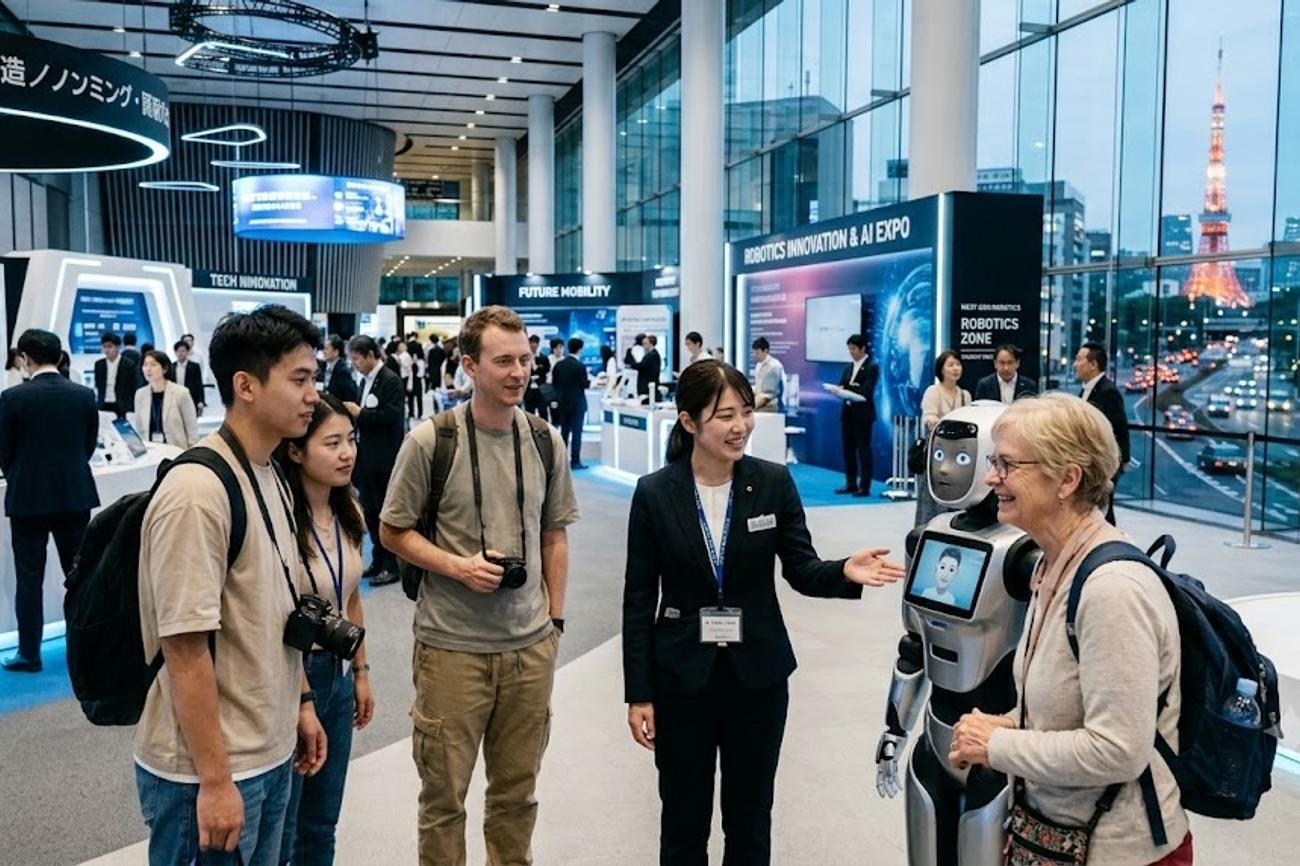
Image generated by AI
Are you planning a business scouting trip or a technical exploration of the world's leading innovation hubs? If your itinerary involves visiting semiconductor plants in Taiwan, smart factories in Germany, or robotics labs in Shenzhen, you are navigating a specialized segment of travel known as technology tourism. Moving beyond traditional sightseeing, this type of transit requires a different logistical approach, focusing on industrial zones and research parks rather than city centers.
The Rise of Global Tech Tourism Hubs
A significant shift in international travel is occurring as entrepreneurs, engineers, and investors pivot from historical landmarks toward innovation centers. China is currently leading this wave, positioning itself alongside Japan, South Korea, Germany, the United States, Taiwan, and Singapore as a primary destination for those seeking exposure to artificial intelligence (AI), electric vehicles (EVs), and advanced manufacturing.
In China, the focus has shifted toward "industrial learning." Visitors are no longer content with museums; they are booking access to production facilities and robotics companies. This trend is most visible in cities like Shenzhen, which serves as a global epicenter for electronics and drone manufacturing. Similarly, the "Industry 4.0" model in Germany and the semiconductor dominance in Taiwan have turned industrial parks into primary tourist attractions.
For the modern professional, these trips are rarely about leisure. They are strategic missions to understand supply chains, identify investment opportunities, and witness the deployment of smart city infrastructure. Whether it is the fintech ecosystem of Singapore or the aerospace innovation of the US, the logistics of these trips require precise planning around corporate campuses and specialized industrial zones.
Regional Innovation Centers and Focus Areas
The following table outlines the primary global destinations for technology tourism, the specific industries they specialize in, and the key cities you must include in your transit plan.
| Region | Primary Tech Focus | Key Hub Cities | Primary Attraction Type | Status |
|---|---|---|---|---|
| China | AI, Robotics, EVs, Drones | Shenzhen, Shanghai, Beijing, Hangzhou, Hefei | Smart Factories & Research Centers | Expanding |
| Japan | Automation, Robotics, Engineering | Tokyo, Osaka, Nagoya, Tsukuba | Robotics Exhibitions & Innovation Centers | Established |
| South Korea | Semiconductors, AI, EVs | Seoul, Suwon, Incheon, Busan | Smart Manufacturing Systems | Growing |
| Germany | Industry 4.0, Automotive | Munich, Stuttgart, Berlin | Automation Facilities & Factory Tours | Established |
| United States | AI, Aerospace, Start-ups | San Francisco, Seattle, Boston, Austin | Tech Campuses & Venture Hubs | Established |
| Taiwan | Semiconductors, Precision Engineering | Hsinchu | Science and Technology Parks | Specialized |
| Singapore | Smart City, Fintech, Urban Tech | Singapore City | Automated Urban Infrastructure | Integrated |
Traveler Logistics Guide
Navigating technology hubs requires a different set of rules than standard tourism. Most innovation centers are located in outskirts or specialized "Science Parks" that are not served by standard tourist shuttles.
1. Ground Transport and Last-Mile Connectivity In cities like Shenzhen or Hsinchu, you cannot rely on walking. You must utilize specialized ride-hailing apps. For travel within China, ensure you have Alipay or WeChat Pay configured with an international card, as these are essential for calling Didi (the primary ride-hailing service) to reach industrial zones. In Singapore, the Land Transport Authority (LTA) provides an integrated network, but for efficiency between tech campuses, private hire vehicles are recommended.
2. Access and Security Clearances Unlike a museum, a semiconductor plant or a robotics lab requires pre-clearance.
- Booking: Do not attempt "walk-in" visits to smart factories. You must arrange tours through official corporate channels or specialized industrial tour operators at least 4-6 weeks in advance.
- Documentation: Carry a valid passport and, in some cases, a professional business card. Some high-security facilities in South Korea or Taiwan may require a list of visitors submitted to security 72 hours prior to arrival.
- Hardware Restrictions: Be aware that many advanced manufacturing sites in China and Taiwan prohibit photography and may require you to store smartphones in lockers before entering the production floor.
3. Optimal Layover and Transit Strategies If you are visiting multiple hubs (e.g., Seoul $\rightarrow$ Tokyo $\rightarrow$ Shenzhen), prioritize airports with strong rail links to the city centers to avoid traffic congestion in industrial corridors.
- Tokyo: Use the Narita Express or Keisei Skyliner to reach the city quickly.
- Seoul: Utilize the AREX (Airport Railroad Express) for the fastest transit to the business districts.
- Shenzhen: Use the Shenzhen Bao'an International Airport rail link to connect to the electronics markets.
4. Visa and Entry Requirements Tech tourists often fall into a grey area between "Tourist" and "Business" visas. If you are visiting factories for the purpose of investment or procurement, a standard tourist visa may not be sufficient. Check the specific requirements for a Business (M) visa for China or similar professional designations for other regions to avoid issues at customs.
Regional Connectivity Impact
The emergence of tech tourism is reshaping how these nations manage their infrastructure. We are seeing a transition where "Industrial Tourism" is being integrated into national economic strategies.
In East Asia, this has led to the development of "Innovation Corridors." For example, the connection between Seoul and Incheon is no longer just about airport transit; it is a pipeline for visitors moving between the airport and the smart manufacturing clusters. In Taiwan, the Hsinchu Science Park has become a destination in its own right, necessitating better transport links from Taipei.
In Europe, Germany's focus on Industry 4.0 has turned cities like Stuttgart and Munich into classrooms for global engineers. This has increased the demand for short-term, high-frequency transit between automotive hubs. In the US, the "Silicon Valley" effect continues to drive massive demand for regional transit between San Francisco and the surrounding tech campuses in Palo Alto and Mountain View.
This shift means that the "tourist map" is being redrawn. The center of gravity is moving away from the city square and toward the research park. For the traveler, this means prioritizing proximity to industrial zones over proximity to hotels or shopping districts.
FAQ: Technology Tourism 2024
Do I need a specific visa for visiting factories? Yes, if the visit is for business, investment, or professional research, a Business Visa is typically required. A standard tourist visa may be insufficient for official corporate tours or site inspections. Always verify with the embassy of the destination country.
How should I plan my layovers for tech hubs? Allow at least 48 hours in each hub city. Most innovation centers are located in suburban science parks, and the commute from the airport to these facilities can take 2-3 hours depending on local traffic.
Can I visit semiconductor plants without a corporate invitation? Generally, no. Facilities in Taiwan and South Korea are highly secure. You must either be part of an organized industrial tour group or have a direct invitation from the company's public relations or investor relations department.
What is the best way to get around industrial zones? Avoid public buses in industrial areas as they are often infrequent. Use verified ride-hailing apps or arrange a private driver through your hotel or the company you are visiting for the entire day.
Stop sightseeing and start scouting; the future of global industry is now a destination.
#ShenzhenTech2024 #HsinchuSemiconductors #Industry4.0Germany #SiliconValleyLogistics #SmartCitySingapore #EastAsiaInnovationTransit
Related Travel Guides
Disclaimer
This article is for informational and educational purposes only. It does not constitute legal, financial, or professional advice. While we strive to provide accurate and up-to-date information, travel policies, regulations, and conditions change rapidly. Always verify information with official sources before making travel decisions. Nomad Lawyer makes no representations about the accuracy, reliability, completeness, or suitability of the information provided. Readers should consult qualified professionals for advice specific to their circumstances. The views expressed in this article are those of the author and do not necessarily reflect the views of Nomad Lawyer.
Raushan Kumar
Founder & Lead Developer
Full-stack developer with 11+ years of experience and a passionate traveller. Raushan built Nomad Lawyer from the ground up with a vision to create the best travel and law experience on the web.
Learn more about our team →