
Mumbai Airport Uber and Ola Pickup Guide 2026: Navigating T1 and T2 Parking Zones
A comprehensive 2026 guide to navigating rideshare pickups at Chhatrapati Shivaji Maharaj International Airport, detailing the specific P4, P6, and P7 parking zones for Uber and Ola users.

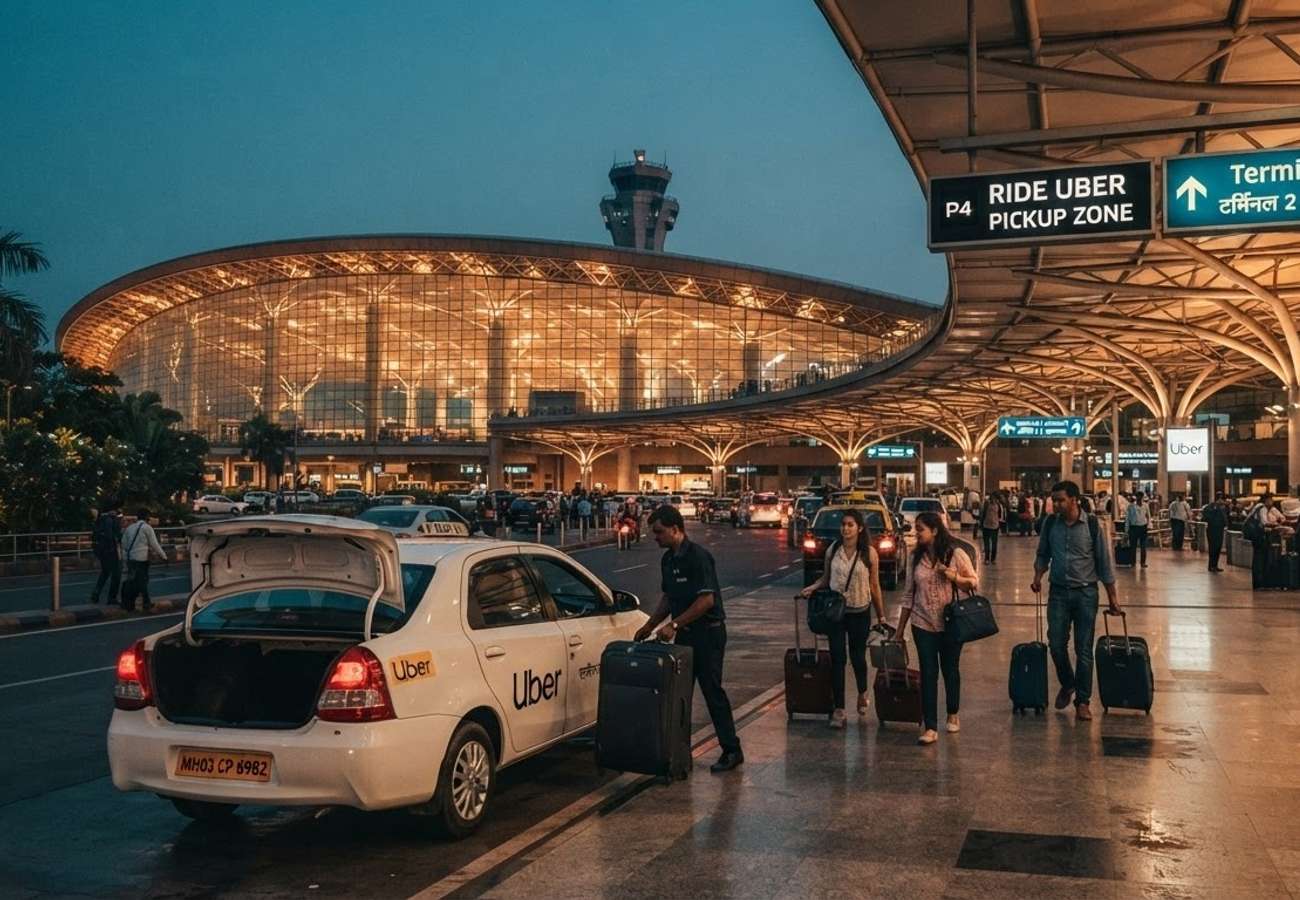
Image generated by AI
Navigating the ride-hailing maze at Chhatrapati Shivaji Maharaj International Airport (BOM) in 2026 requires a clear understanding of the multi-level parking systems to avoid lengthy delays. For passengers landing in Mumbai, the transition from baggage claim to a vehicle often involves navigating specific zones like P4, P6, and P7, depending on the terminal and service tier.
The airport operates a dual-terminal structure designed to separate traffic flows. Terminal 1 primarily serves domestic low-cost carriers, while Terminal 2 manages all international arrivals and the majority of full-service domestic flights. To prevent curb-side congestion, airport authorities have shifted almost all app-based pickups into designated multi-level car park structures. This means passengers cannot simply walk outside and find their driver; they must follow specific directional signage to reach the correct parking level.
Navigating Rideshare Logistics at Terminal 2 (T2)
Terminal 2 is the primary hub for international travelers and is where most navigation errors occur. The arrivals area is generally located at level P6. However, the actual pickup point for Uber and Ola frequently differs from the arrival floor to optimize traffic flow.
As of mid-2026, the airport has shifted a significant portion of rideshare operations to level P4 to facilitate a faster exit toward the city. While budget options like Uber Go and standard Ola rides are typically staged at P4, some premium categories or specific vehicle arrangements may still utilize P6, which offers the advantage of being on the same level as the arrivals hall.
The standard procedure for T2 passengers involves:
- Collecting luggage and entering the public arrivals hall.
- Requesting the ride via the app only after reaching the public area.
- Following signage toward the elevators or ramps leading to the car park.
- Locating the driver at the specific zone (e.g., P4 or P7 West) indicated in the app.
The walk from baggage claim to the pickup bay generally takes between 3 and 7 minutes. Travelers should be aware that the P4 area can become congested and humid, particularly during peak night hours. A recommended strategy is to remain in the air-conditioned terminal until the app indicates the driver is 3–5 minutes away to minimize exposure to vehicle exhaust.
Uber and Ola Procedures at Terminal 1 (T1)
Terminal 1 offers a more traditional layout compared to the vertical complexity of T2. Upon exiting the arrivals hall, passengers encounter a forecourt divided into three distinct streams: metered black-and-yellow taxis, prepaid taxi counters, and a dedicated zone for app-based cabs.
Unlike T2, T1 does not rely heavily on P-level codes. Instead, the app usually specifies "Terminal 1 Arrivals pick-up" or a nearby landmark within the domestic parking area. Because drivers are prohibited from idling directly in front of the terminal doors, they often wait in a holding loop until the passenger confirms their presence.
A critical warning for T1 arrivals: the area is frequented by unofficial touts who may offer "app-free" rides for a flat fee. These offers are typically higher than official app rates and bypass the safety and GPS tracking features of Uber and Ola. Industry observers recommend sticking to official bookings or the airport's prepaid taxi booths, especially for solo travelers or those arriving after dark.
2026 Fare Estimates and Surge Pricing Trends
Ride costs from Mumbai Airport in 2026 are subject to high volatility based on traffic and demand. For trips to South Mumbai (Colaba or Fort), off-peak fares for Uber Go or standard Ola rides typically range from 600 to 900 rupees, with travel times spanning 60 to 90 minutes. During monsoon rains or peak evening rush hours, these fares can exceed 1,000 rupees.
For shorter distances, such as trips to Powai, Kurla, or the Bandra Kurla Complex (BKC), fares generally fluctuate between 250 and 500 rupees. While traditional black-and-yellow taxis may offer similar pricing, they lack the cashless convenience and real-time tracking of app-based services.
| Destination | Estimated Fare (Off-Peak) | Estimated Duration |
|---|---|---|
| South Mumbai (Colaba/Fort) | 600 – 900 INR | 60 – 90 Minutes |
| Bandra Kurla Complex (BKC) | 250 – 500 INR | 20 – 40 Minutes |
| Powai / Kurla | 250 – 500 INR | 30 – 50 Minutes |
| T2 to T1 Transfer | 200 – 300 INR | 15 – 30 Minutes |
Surge pricing is most aggressive between 11 p.m. and 2 a.m., coinciding with the arrival of major international flights. During these windows, budget categories can occasionally cost as much as premium services. In such instances, opting for a larger vehicle like Uber Premier or an Ola sedan often provides better value for families or those with significant luggage.
Why This Matters: The Traveler's Perspective
For the modern traveler, the shift toward "parking-level pickups" changes the airport experience from a simple walk-and-ride to a logistical exercise. The reliance on P4, P6, and P7 means that connectivity is paramount; if a passenger's phone dies or data fails upon landing, finding a ride becomes significantly more difficult.
From a logistical standpoint, the distance between the arrivals gate and the P4 level at T2 can be a deterrent for elderly passengers or those with limited mobility. In these specific cases, the traditional prepaid taxi—which often allows for closer pickup points—may be the superior choice despite the lack of app-based tracking.
Furthermore, the "hidden" cost of airport rides in Mumbai is often the time spent in the parking loop. The 200–300 rupee fare for a short trip between T1 and T2 reflects not the distance, but the complexity of the airport's internal road system and access charges. Travelers seeking to avoid these costs should consider the inter-terminal coach service or the city's expanding metro network.
Staying updated on the specific parking zone assigned by your app is the only way to avoid unnecessary walking in the Mumbai humidity.
Related Travel Guides
Disclaimer
This article is for informational and educational purposes only. It does not constitute legal, financial, or professional advice. While we strive to provide accurate and up-to-date information, travel policies, regulations, and conditions change rapidly. Always verify information with official sources before making travel decisions. Nomad Lawyer makes no representations about the accuracy, reliability, completeness, or suitability of the information provided. Readers should consult qualified professionals for advice specific to their circumstances. The views expressed in this article are those of the author and do not necessarily reflect the views of Nomad Lawyer.
Raushan Kumar
Founder & Lead Developer
Full-stack developer with 11+ years of experience and a passionate traveller. Raushan built Nomad Lawyer from the ground up with a vision to create the best travel and law experience on the web.
Learn more about our team →