
Leo Express Launches 1,300km Direct Route: Game-Changer for Central Europe
Leo Express opens a groundbreaking 1,300km direct rail corridor from Przemyśl to Frankfurt Airport on June 25, 2026, reshaping cross-border travel across Poland, Czechia, and Germany.

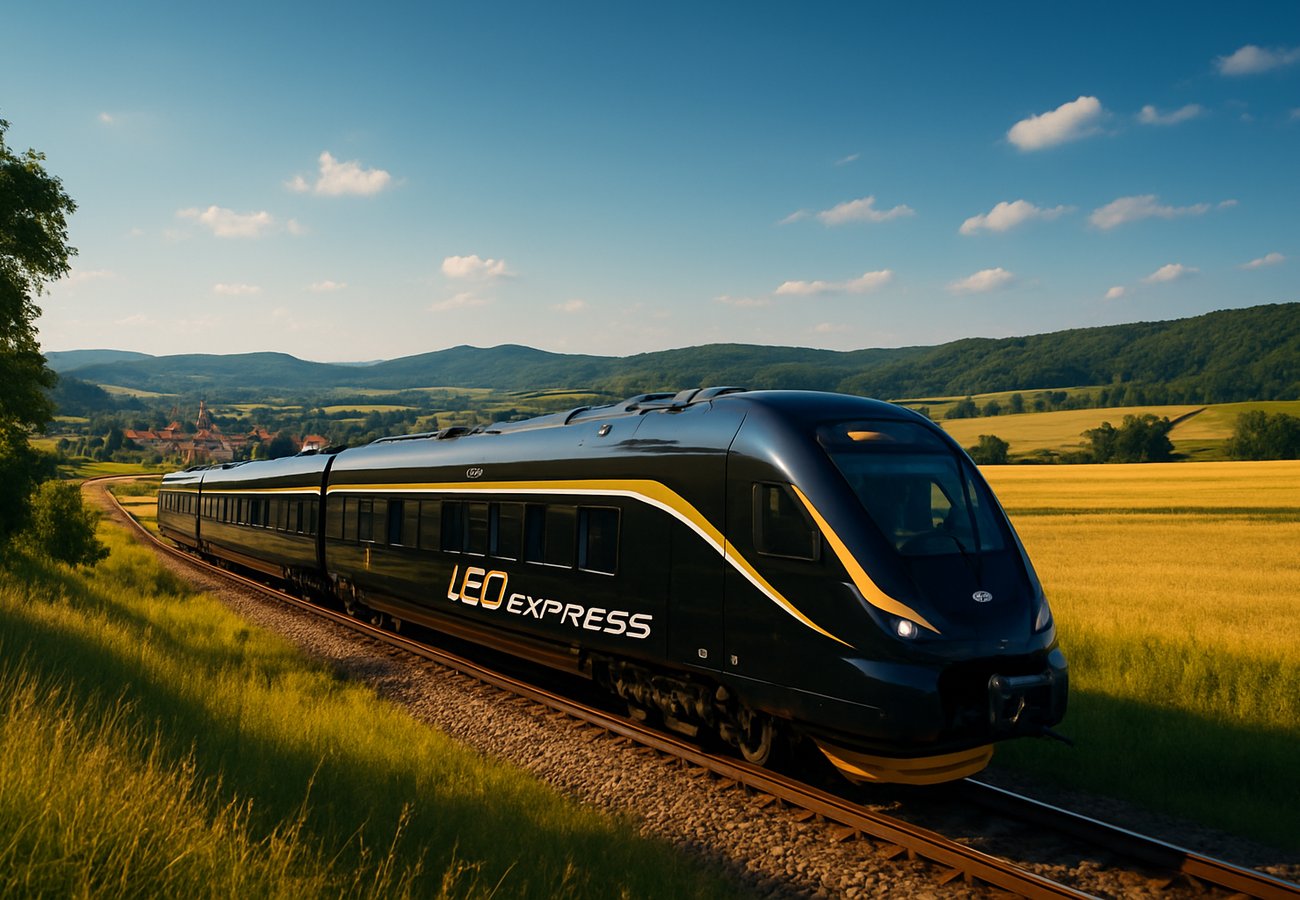
Image generated by AI
A Dramatic New Rail Corridor Reshapes Central Europe
Leo Express is about to fundamentally alter how travellers move across Central Europe. On 25 June 2026, the operator launches a direct long-distance service spanning over 1,300 kilometres—from Przemyśl in southeastern Poland all the way to Frankfurt Airport in Germany. This isn't just another train route. It's a corridor that directly connects three nations, eliminates frustrating changes, and places a borderland city at the heart of Europe's rail revolution.
The significance here cuts deeper than logistics. This route physically links the historic cities of Kraków, Prague, Dresden, and Leipzig in a single overnight sweep. It starts near Poland's Ukrainian frontier and terminates at one of Europe's busiest aviation hubs. For travel law journalists covering cross-border mobility and international transportation infrastructure, this launch represents a watershed moment for EU rail harmonization.
Reddit: "No more changing trains every 200km. One seat from Kraków to Frankfurt? That's the future rail travellers have been waiting for." — r/travel
The Full Route: Where Geography Meets Practicality
The westbound service (Train 232) departs Przemyśl at 13:31, arriving at Frankfurt Airport at 07:53 the next morning. The eastbound service (Train 235) reverses the journey, leaving Frankfurt at 08:27 and reaching Przemyśl at 02:23 the following day. These eighteen-hour passages create an overnight travel experience that transforms distance into opportunity rather than ordeal.
Major stops along the corridor include Kraków, Ostrava (Czech Republic), Prague, Dresden, Leipzig, Erfurt, and Frankfurt. Leo Express plans one daily service in each direction—simple, reliable, and passenger-centric. Travellers can board at any intermediate city or ride the full corridor. That flexibility matters enormously for international mobility, particularly for students, business travellers, and families building multi-country itineraries.
Why This Route Matters Legally and Strategically
From a travel law perspective, this launch signals critical shifts in open-access rail services and cross-border transport harmonization. Leo Express operates as a competitor to incumbent national carriers, challenging the traditional monopoly model that dominated Eastern European rail for decades. The service demonstrates that private operators can successfully manage complex international corridors involving multiple signalling systems, border crossings, and regulatory frameworks.
The route also strengthens practical connectivity for travellers navigating visa zones and border procedures. By placing Przemyśl—a town sitting roughly 65 kilometres from the Ukrainian frontier—as a major international hub, Leo Express inadvertently supports humanitarian and visa-related travel patterns that have intensified since 2022.
Frankfurt Airport: The Global Gateway That Changes Everything
Frankfurt Airport's inclusion as a terminus fundamentally elevates this route's relevance. International arrivals can clear customs, claim baggage, and board a direct train to Prague or Kraków without entering the airport city itself. This eliminates a major friction point for long-haul travellers: the exhausting transfers between aviation and rail.
Many tourists actively avoid complex airport-to-rail connections after transatlantic flights. A direct airport-to-Eastern Europe corridor removes that anxiety entirely. Travellers landing on morning flights from New York or Tokyo can walk directly onto a train heading east. This single operational detail may drive adoption far more than cheaper fares ever could.
Prague, Kraków, and Dresden: The Cities That Benefit Most
Prague, already one of Europe's most visited cities, gains stronger directional connectivity. The Czech capital sits perfectly positioned as a midpoint between Frankfurt's western orientation and Kraków's eastern heritage. Visitors can now plan comprehensive three-country itineraries without obsessing over train schedules or missed connections.
Kraków's medieval old town, UNESCO-protected architecture, and cultural institutions have drawn steady tourism growth. Direct rail access from Germany and Czechia will likely accelerate this trend, particularly among eco-conscious travellers seeking alternatives to budget airlines. Weekend breaks from Berlin, Prague, or Munich just became substantially easier to organize.
Dresden, with its riverside setting and meticulously restored baroque architecture, completes this cultural triangle. The city's position on the route—roughly equidistant between Prague and Leipzig—makes it a natural stopover. Rail passengers have historically spent more per visit than flight-and-rental-car tourists, suggesting Dresden's tourism revenue could see meaningful increases.
The Borderland Dimension: Przemyśl's Strategic Significance
Przemyśl occupies unique geopolitical space. Positioned roughly 70 kilometres from the Polish-Ukrainian border, the city serves as both a practical gateway and a symbolic anchor. Leo Express explicitly promotes onward connections toward Ukraine, acknowledging the humanitarian travel patterns that intensified after 2022.
Importantly, the direct service does not enter Ukraine. The corridor operates entirely within Poland, Czechia, and Germany. However, Przemyśl functions as a major interchange point for passengers continuing eastward. This distinction matters for regulatory accuracy—the route maintains full EU operational standards throughout its entire length.
Onboard Experience and Fare Structure
Leo Express equips these trains with Wi-Fi, power outlets, air conditioning, and refreshment services. On an eighteen-hour journey, these amenities transform the experience from ordeal to opportunity. Passengers can work, charge devices, and rest comfortably rather than treating the journey as mere transport logistics.
The operator advertises fares starting from ten euros. Treat this as a floor price, not a guaranteed rate. Rail fares fluctuate by season, demand, class, and booking timing—standard practice across European operators. Still, the entry-level pricing signals accessibility, which matters for budget travellers and young explorers building rail passes across multiple routes.
Practical Planning for Travellers
Before booking, check Leo Express's official timetable for current schedules, as minor adjustments occasionally occur. The operator notes that domestic Polish rail sections currently cannot accept all ticket purchase methods, potentially affecting short-haul bookings within Poland's borders.
Overnight rail journeys require strategic planning. Build buffer time before connecting flights or hotel check-ins. Allow flexibility for minor delays—all rail operators experience occasional scheduling variations. Smart travellers treat a 18-hour journey as part of the holiday experience rather than mere transport, packing books, downloaded entertainment, and comfort items accordingly.
Tourism and Economic Impact Across the Corridor
This launch will likely distribute visitors more evenly across the three-country region. Rather than concentrating tourism in headline cities like Prague and Kraków, the direct route may encourage exploration of secondary cities: Ostrava (Czech industrial heritage and music scene), Erfurt (medieval architecture and religious history), and Leipzig (arts districts and creative culture).
Travellers building rail-based itineraries typically spend more per destination than flight-and-hotel tourists. Hotels, restaurants, museums, guided tours, and local transport operators across this corridor stand to benefit from increased footfall. The route essentially extends tourism seasons by making shoulder-month travel more convenient.
The Broader Rail Revolution Context
This route positions itself within Europe's accelerating shift toward rail-based tourism. Post-pandemic travellers increasingly reject the flight-rental car model in favour of slower, greener itineraries. Leo Express's expansion directly addresses this demand. According to recent European railway industry reports, open-access operators are capturing meaningful market share specifically on premium long-distance routes like this one.
The psychological impact shouldn't be underestimated either. Seeing a single train cross three borders overnight, stopping in historic city centres, fundamentally reshapes traveller expectations around what's possible on European rail networks.
What Happens Next
Watch for adoption patterns in the first six months. If this route approaches capacity during peak season, expect expansion announcements. If demand remains modest, Leo Express may adjust frequencies or marketing strategies. Either way, the infrastructure is now in place. The real question isn't whether the route works—it's how quickly it reshapes travel behaviour across Central Europe.
Rail travellers just got a direct path through the continent's most underrated cultural corridor.
Related Travel Guides
Lufthansa Strike Ripples Through Istanbul to U.S. Routes in April 2026
United Airlines Economy Relax Row: Tourism Boards Anticipate 2027 Surge
Tourism gulf events market splits along passport divisions in 2026
Disclaimer
This article is for informational and educational purposes only. It does not constitute legal, financial, or professional advice. While we strive to provide accurate and up-to-date information, travel policies, regulations, and conditions change rapidly. Always verify information with official sources before making travel decisions. Nomad Lawyer makes no representations about the accuracy, reliability, completeness, or suitability of the information provided. Readers should consult qualified professionals for advice specific to their circumstances. The views expressed in this article are those of the author and do not necessarily reflect the views of Nomad Lawyer.
Preeti Gunjan
Contributor & Community Manager
A passionate traveller and community builder. Preeti helps grow the Nomad Lawyer community, fostering engagement and bringing the reader experience to life.
Learn more about our team →