Montana, Minnesota and Michigan Move With Seven Other States as Northern Lights Forecast Opens Autumn Viewing

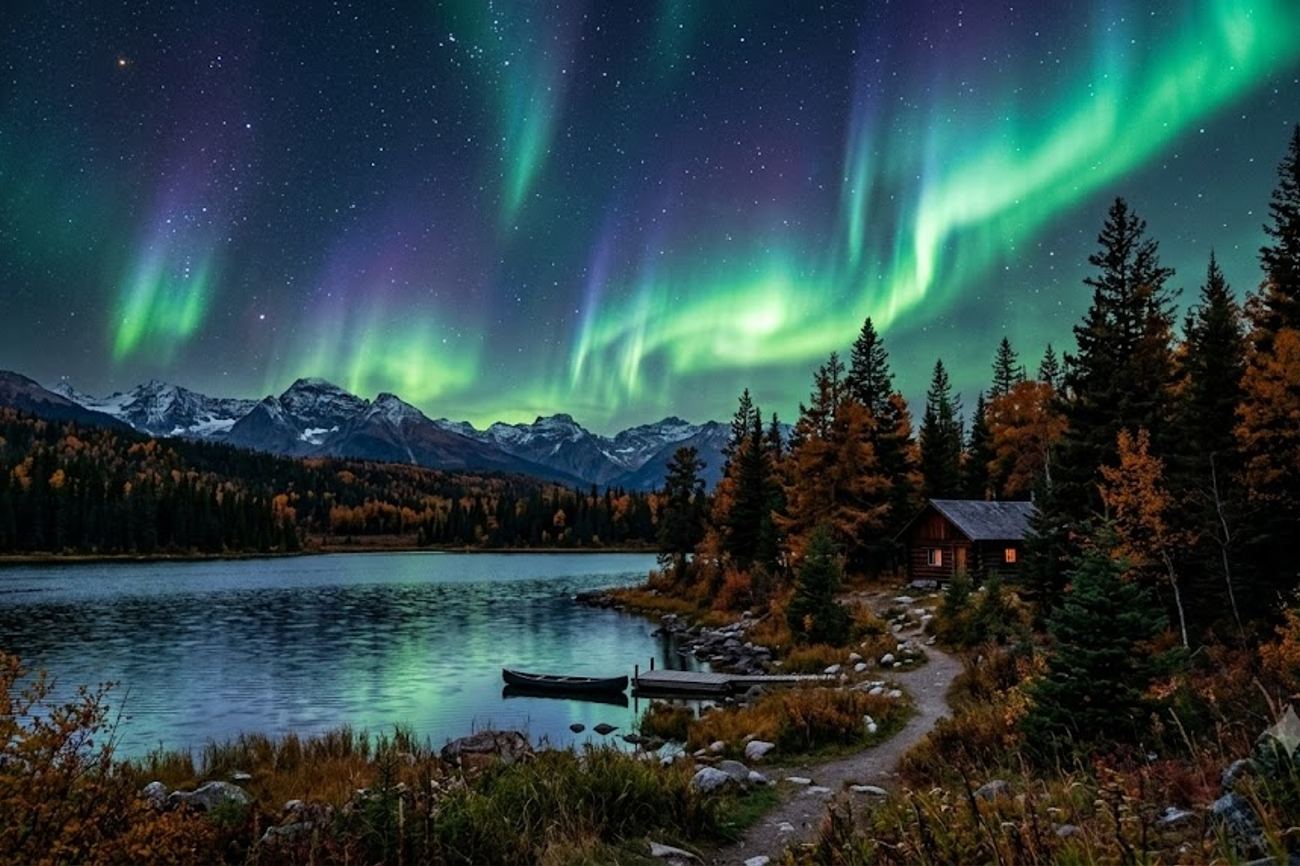
Image generated by AI
[Washington, D.C., September 2024] — Up to 10 U.S. states are positioned to witness the aurora borealis this Wednesday night as geomagnetic activity pushes the auroral oval further south into the contiguous United States.
The National Oceanic and Atmospheric Administration (NOAA) forecasts a Kp 5 level of activity, a metric that indicates the strength of geomagnetic storms and determines how far south the Northern Lights can be seen. While Alaska remains the premier destination for high-probability viewing, the current forecast expands the potential viewing corridor to include several northern border states, provided that local weather conditions remain clear and light pollution is minimized.
The Kp 5 Trigger
The catalyst for this event is a forecasted Kp index of 5. The Kp index is a global scale from 0 to 9 used by scientists to measure disturbances in the Earth's magnetic field. A Kp 0 indicates quiet conditions, while a Kp 9 represents an extreme geomagnetic storm.
At a Kp 5 level, the auroral oval—the ring-shaped region around the magnetic pole where the aurora is most frequent—shifts southward. This shift allows residents and travelers in the northern United States to potentially see the lights without traveling to the Arctic Circle. However, officials emphasize that this is not a major geomagnetic storm. Unlike the rare, high-intensity solar events that push the lights into the mid-latitudes or southern states, a Kp 5 event is more localized and subtle.
Affected Regions and Viewing Zones
The potential viewing area spans a broad belt across the northern tier of the U.S. visibility is not guaranteed across these regions but is statistically possible based on the current geomagnetic forecast.
| Region | Forecast Opportunity | Critical Travel Consideration |
|---|---|---|
| Alaska | High Probability | Strongest visibility; primary destination |
| Montana | Broad Potential | Extensive rural areas offer optimal darkness |
| Washington | Possible (Northern) | Must avoid urban light pollution |
| Idaho | Possible (Northern) | High-altitude rural areas recommended |
| Wyoming | Possible (Border) | Focus on Montana-Wyoming border elevations |
| North Dakota | Possible | Open horizons provide wide viewing angles |
| South Dakota | Possible (Northern) | Avoid highway and town lighting |
| Minnesota | Possible (Northern) | Lakeside and rural zones are ideal |
| Wisconsin | Possible (Northern) | Priority on furthest northern latitudes |
| Michigan | Possible (Upper Peninsula) | Remote areas provide best conditions |
| Michigan | Possible (Northern) | Cloud cover is the primary risk factor |
Practical Traveler Advisory and Strategic Insights
For the average traveler, a Kp 5 forecast is an invitation, not a guarantee. The "aurora zone" refers to where conditions support visibility, not where a display is certain to appear.
The Light Pollution Challenge The most significant hurdle for Wednesday's observers is the Moon, which will be 91% illuminated. This high level of lunar brightness creates a "washout" effect, reducing the contrast of the aurora and making faint greens or purples harder to distinguish with the naked eye. Travelers must seek "dark sky" locations—areas far from city centers and streetlights—to compensate for the lunar glare.
The Timing Window The peak viewing window is narrow, projected between 10:00 PM and 2:00 AM. Travelers should not treat this as a rigid appointment but as a window of maximum probability. Because auroral activity can spike or vanish in minutes, patience and flexibility are required.
The Weather Variable Space weather (the Kp index) is only half of the equation. Terrestrial weather is the final arbiter of success. Thick cloud cover will completely block the aurora regardless of the Kp level. Travelers are advised to cross-reference NOAA's Space Weather Prediction Center with local meteorological reports before departing their hotels.
Capturing the Event: Technical Requirements
Because a Kp 5 event is relatively weak, the aurora may appear as a faint white or grey haze to the naked eye. However, digital sensors can "see" colors and structures that the human eye cannot.
Smartphone Users: To capture the lights, users must disable the flash and activate "Night Mode." Because long-exposure shots are required to pull in enough light, any camera shake will result in a blurred image. Using a tripod or leaning the phone against a stable surface is mandatory.
DSLR and Mirrorless Users: Professional results require a wide-angle lens to capture the scale of the sky and a low aperture (wide open) to maximize light intake. A tripod is non-negotiable for the multi-second exposures needed to render the colors of the aurora. Including a foreground element, such as a mountain range or a lake, helps provide scale and visual interest.
The Outlook for Thursday
The window for viewing is expected to close rapidly. Forecasts for Thursday indicate a significant contraction of the auroral oval, with the potential viewing area shrinking to approximately three states. This suggests that Wednesday night represents the peak opportunity for travelers in the contiguous U.S. during this specific cycle.
For those booking travel specifically for the Northern Lights, this event highlights the risk of "single-night" itineraries. Tourism operators are increasingly shifting toward flexible, multi-night packages that allow guests to pivot based on real-time data from the World Meteorological Organization and space agencies.
FAQ: Northern Lights Forecast 2024
Do I need special equipment to see the aurora? No special equipment is needed to see the lights, but a camera with night mode or a DSLR can reveal colors invisible to the naked eye. A tripod is essential for photography.
Will I see the lights if I am in a city? It is unlikely. City lights create "skyglow" that masks the aurora. You must travel to a rural area with a clear view of the northern horizon.
What does "Kp 5" actually mean for me? It means the magnetic activity is strong enough to push the lights into the northern U.S. states, but it is not a "major storm," so the display may be subtle.
Why does the Moon matter for aurora viewing? A bright Moon (91% illumination) lights up the sky, making it harder to see the faint glow of the aurora. Darker nights provide the best contrast.
Keep your eyes north and your lenses clear.
Related Travel Guides
- Why Border Tourism in Võru County, Estonia, Is Surging Right Now: A Traveller’s Guide to Eastern Fortifications
- Western Railway Adds More Festive Season Train Options With Four Special Services Extended Till November 2026
- Washington DC Joins Massachusetts, New York and More US States on Bilingual Workers Gain Higher Earnings in America
This article is for informational purposes. Flight routes, passenger regulations, visa rules, and transit advisories are subject to change by airlines and aviation authorities. Readers are advised to verify schedules and travel documentation with relevant carriers and border agencies before departure.
Related Stories

EEA Photo Awards 2026: Spain, Türkiye, and Iceland Reveal the Fragile State of European Nature Tourism

Alabama Tourism Surge: 29.22 Million Visitors Drive $24.87 Billion in State Spending for 2026