
Mongolia Records 417,600 Inbound Tourist Arrivals in First Half of 2026
Mongolia welcomed 417,600 international visitors in H1 2026, marking a 27.2% YoY increase driven by Russian, Chinese, and Korean travelers.
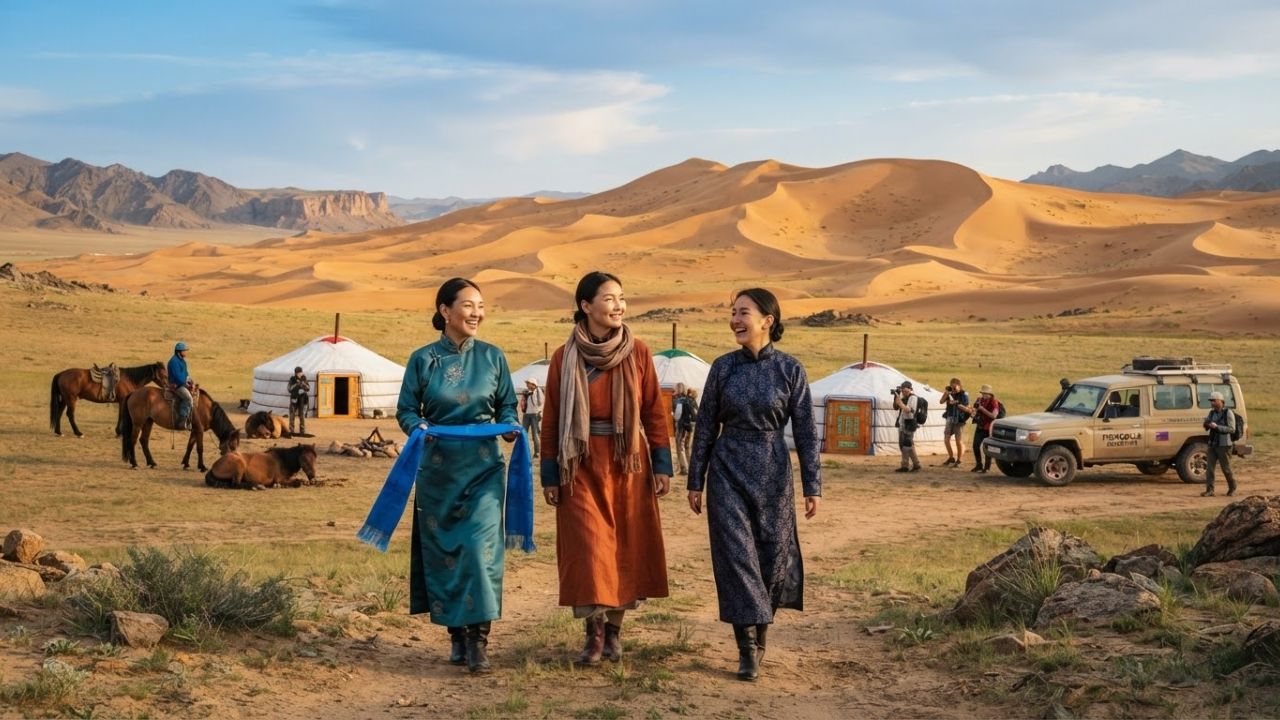
Image generated by AI
Welcoming 417,600 international visitors between January and June 2026—a 27.2 per cent year-on-year increase—Mongolia is moving closer to its target of one million annual tourists under the 'Go Mongolia' campaign.
The Core Transit Update
Regional immigration corridors and aviation pipelines in Northeast Asia are managing growing passenger volumes. According to data released by the National Statistics Office of Mongolia, first-half arrivals rose by more than 89,000 compared to the previous year.
Rather than relying solely on international air routes, Mongolia leverages its land gateways, with the Zamiin-Uud border post connecting China handling 34.9 per cent of foreign arrivals, and the northern Altanbulag post connecting Russia handling 7.9 per cent. For aviation transit, Chinggis Khaan International Airport (Ulaanbaatar) handles 25.4 per cent of arrivals, supported by the Seoul-Ulaanbaatar route, which accounts for more than 31 per cent of international flight traffic.
Gateway Crossings & Source Market Volumes
Coordinating a multi-border journey in Northeast Asia requires tracking arrival statistics across entry points. The following tables outline the traveler entry share by crossing gate and compare the major source markets.
| Mongolia Border Crossing / Gateway | Stated Share of H1 Arrivals (%) | Primary Transport Mode & Border Gateway |
|---|---|---|
| Zamiin-Uud Border Post | 34.9% of foreign entries | Main overland gateway connecting China rail/road |
| Chinggis Khaan Airport | 25.4% of foreign entries | Main international aviation gateway; Ulaanbaatar |
| Gashuunsukhait Post | 10.4% of foreign entries | Regional land port connecting southern routes |
| Altanbulag Border Post | 7.9% of foreign entries | Northern land gateway connecting Russia road |
Mongolia border crossing entry point distribution (H1 2026).
| Inbound Source Market Country | H1 2026 Arrivals Volume | Stated Primary Entry Pipeline |
|---|---|---|
| Russian Federation | 154,800 tourists | Northern overland crossings & road routes |
| People's Republic of China | 115,800 tourists | Southern overland crossings via Zamiin-Uud |
| Republic of Korea | 55,200 tourists | Direct flights (Seoul-Ulaanbaatar route) |
Mongolia's leading international source markets (H1 2026).
Traveler Logistics Guide
From a ground-level perspective, the best way to navigate this is to arrange your local transport through a registered Ulaanbaatar tour operator before arriving at Chinggis Khaan International Airport, as there are no public rail services to remote wilderness areas like the Gobi Desert or Terelj National Park, making private 4WD vehicles and experienced local drivers essential. Checking road permit requirements is recommended.
To plan your steppe holiday:
- Allow Safe Transit Windows: The flight from Seoul Incheon (ICN) to Chinggis Khaan International Airport (Ulaanbaatar) takes approximately 3 hours and 20 minutes. Keep a three-hour transit buffer when connecting from other Asian flights.
- Observe 2026 Visa Exemptions: Citizens of 34 countries—including the United Kingdom, Australia, and New Zealand—can enter Mongolia visa-free for tourism stays of up to 30 days during 2026.
- Coordinate Naadam Festival Travel: The National Great Naadam Festival takes place annually from July 10 to 15. Book central Ulaanbaatar hotels months in advance.
- Prepare for Desert Currency: Carry local Mongolian Tögrög (MNT) in cash when traveling through the Gobi Desert, as nomadic camps and rural service stations do not accept digital cards.
Infrastructure Impact Assessment
The implementation of visa exemptions for 34 countries and the growth of overland road connections from Russia and China protect regional border economies from stagnation.
By directing traveler spending to nomadic ger camps, horse-guiding operators, and regional transport firms in Karakorum, Khustai National Park, and Lake Khövsgöl, the visitor surge generates local livelihood support, funds park protection infrastructure, and balances the economic footprint away from the capital city.
Related Travel Guides
Disclaimer
This article is for informational and educational purposes only. It does not constitute legal, financial, or professional advice. While we strive to provide accurate and up-to-date information, travel policies, regulations, and conditions change rapidly. Always verify information with official sources before making travel decisions. Nomad Lawyer makes no representations about the accuracy, reliability, completeness, or suitability of the information provided. Readers should consult qualified professionals for advice specific to their circumstances. The views expressed in this article are those of the author and do not necessarily reflect the views of Nomad Lawyer.