Mexico Travel Boosts As Mexicana Adds Ninth Embraer Jet With Over Eleven Percent Capacity Growth

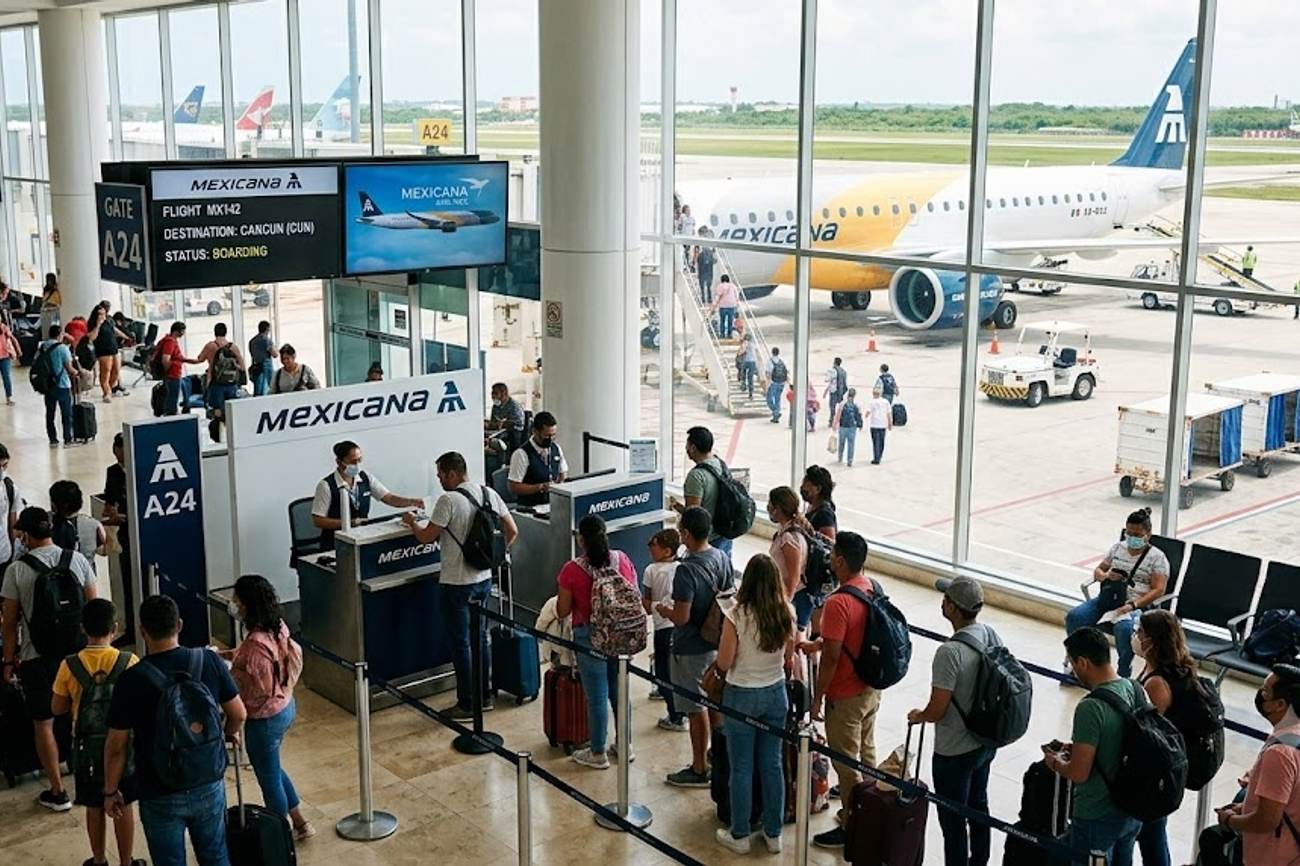
Image generated by AI
Mexicana’s monthly seat capacity has surged by over 11% following the integration of its ninth Embraer E2 aircraft, a growth rate that signals a concentrated effort to aggressively capture domestic market share. This expansion, centered at Felipe Ángeles International Airport (AIFA), transforms the carrier's operational scale from a boutique regional player into a systemic domestic competitor. By increasing its total monthly seat availability to 57,020, Mexicana is not merely adding hardware; it is executing a calculated capacity play to decentralize Mexican aviation away from the saturated Mexico City International Airport (AICM).
The Fleet Expansion in Numbers: Capacity and Configuration
The arrival of the aircraft registered as XA-MXI is the primary driver behind a significant shift in Mexicana's operational metrics. The data reveals a strategic preference for the Embraer 190-E2, a model specifically selected for its balance of fuel efficiency and right-sized capacity for regional routes.
Each Embraer 190-E2 added to the fleet provides a fixed capacity of 108 passengers. The aircraft utilizes a 2+2 seating configuration, which completely eliminates the middle seat—a critical differentiator in passenger experience metrics. From a data perspective, the jump to 57,020 monthly seats indicates that the airline is scaling its flight frequencies and route density to meet a growing domestic demand that has historically been underserved by legacy carriers.
The operational focus on AIFA (Felipe Ángeles International Airport) is a key data point. By basing these assets in Santa Lucía, Mexicana is leveraging a lower-cost operating environment compared to the congested AICM. This allows the airline to maintain a more aggressive pricing strategy while utilizing aircraft that boast lower fuel consumption and reduced maintenance cycles than previous generation regional jets. According to IATA, the transition to newer-generation aircraft like the E2 series is a primary lever for airlines to mitigate the volatility of jet fuel prices while increasing total available seat kilometers (ASK).
Comparative Context: Regional Jet Market Shifts
The decision to standardize on the Embraer E2 fleet places Mexicana in a specific competitive bracket. While ultra-low-cost carriers (ULCCs) in the region often rely on larger Boeing 737 or Airbus A320 families to maximize volume, Mexicana is prioritizing "frequency over volume." This strategy allows them to serve secondary cities where a 180-seat aircraft would be economically unviable due to low load factors.
When comparing this growth to historical regional trends, the 11% capacity increase from a single aircraft addition highlights the lean nature of the current fleet. For a larger carrier, one aircraft would represent a negligible percentage of growth; for Mexicana, it is a transformative leap.
| Metric | Pre-XA-MXI Status | Post-XA-MXI Status | Variance |
|---|---|---|---|
| Total E2 Fleet Size | 8 Aircraft | 9 Aircraft | +12.5% |
| Monthly Seat Capacity | ~51,300 (est.) | 57,020 | >11% |
| Per-Aircraft Capacity | 108 Seats | 108 Seats | 0% |
| Seating Layout | 2+2 (No Middle) | 2+2 (No Middle) | 0% |
| Primary Hub | AIFA | AIFA | Stable |
This shift mirrors a broader trend seen in other emerging markets where state-backed or restructured airlines utilize regional jets to stimulate "thin" routes—paths between smaller cities that do not have enough demand for narrow-body jets but are too far for efficient bus or rail travel. Data from Statista suggests that regional connectivity is a primary driver for GDP growth in developing economies, as it lowers the cost of business travel and opens secondary cities to international tourists who previously stayed in primary hubs.
Practical Traveler Advisory and Strategic Insights
The expansion of Mexicana’s fleet directly translates into three actionable advantages for the individual traveler:
- Avoidance of the "Middle Seat Lottery": Because the Embraer 190-E2 utilizes a 2+2 configuration, the probability of being assigned a middle seat is 0%. For business travelers and nomads, this increases the value proposition of Mexicana over competitors using 3+3 configurations on similar routes.
- Increased Route Frequency from AIFA: With a capacity increase of over 11%, travelers can expect more flexible scheduling. If you are planning travel within Mexico for the upcoming quarters, checking AIFA-based departures will likely yield more options and potentially lower fares due to the airline's drive to fill these new 57,020 monthly seats.
- Improved Reliability: Newer aircraft (like the XA-MXI) have significantly lower mechanical failure rates than older fleets. Travelers can expect fewer delays related to technical issues, which is a common pain point in regional Mexican aviation.
For those booking domestic flights, the current trajectory suggests that AIFA is becoming a viable alternative to the chaos of AICM. Travelers should now factor in the transit time to Santa Lucía, as the increased seat capacity makes it a more competitive option in terms of both price and schedule.
Forward Projection: The Trajectory of Mexican Domestic Air
Based on the current rate of acquisition, Mexicana is positioning itself to become the primary "connective tissue" of the Mexican interior. The addition of the ninth aircraft is not an end-point but a proof-of-concept for a larger scaling phase.
We can project that as the fleet grows beyond nine aircraft, Mexicana will move from simply "strengthening" routes to "creating" new ones. The efficiency of the E2 aircraft allows the airline to experiment with low-demand city pairs that were previously ignored by the market. If the airline maintains this growth rate, we will see a shift in the WTTC data regarding domestic tourism distribution, with a higher percentage of visitors reaching "Tier 2" and "Tier 3" cities.
The long-term play is clear: by controlling the regional jet market at AIFA, Mexicana is building a moat around domestic connectivity. As they continue to replace older, less efficient models with the E2 series, their operational cost per seat will drop, likely leading to a period of aggressive pricing to attract passengers away from established incumbents.
FAQ: Mexicana Fleet Expansion 2024
Will ticket prices decrease with the 11% capacity increase? Historically, an increase in seat capacity leads to more competitive pricing. While not guaranteed, the addition of 57,020 monthly seats creates downward pressure on fares, especially on routes served from AIFA.
Is AIFA a better option than AICM for domestic travel? For those flying Mexicana, yes. The newer fleet and expanded capacity at AIFA often result in a more streamlined boarding process and a more modern aircraft experience compared to the congested AICM.
Which aircraft is Mexicana using for this expansion? The airline is utilizing the Embraer 190-E2. This aircraft is specifically chosen for its 2+2 seating (no middle seats) and high fuel efficiency on shorter regional hops.
How does the 2+2 seating benefit the passenger? It ensures that every single passenger has either a window or an aisle seat. This removes the discomfort of the middle seat, which is a significant upgrade for passenger comfort on domestic routes.
As Mexicana scales its fleet, the map of Mexican connectivity is being redrawn one Embraer at a time.
Related Travel Guides
- Australia Aligns With Singapore and Other Leading Destinations as Malaysia Cafe Tourism Drives Kuala Lumpur Food Travel Growth
- Italy Aligns With Spain And More As MSC Cruises Expands Winter Sailings Across Global Destinations
- Vietnam Tourism Showcases Hoi An’s Most Beautiful Instagrammable Locations For Holidaymakers
This article is for informational purposes. Flight routes, passenger regulations, visa rules, and transit advisories are subject to change by airlines and aviation authorities. Readers are advised to verify schedules and travel documentation with relevant carriers and border agencies before departure.
Related Stories

New Mexico Flood Crisis 2026: San Juan River Surges and Road Closures Impact US Southwest Travel

European Mass Protests Disrupt Travel Across France, Italy, Belgium, and Turkey in 2026