
Malaysia Cafe Tourism Drives Kuala Lumpur Food Travel Growth

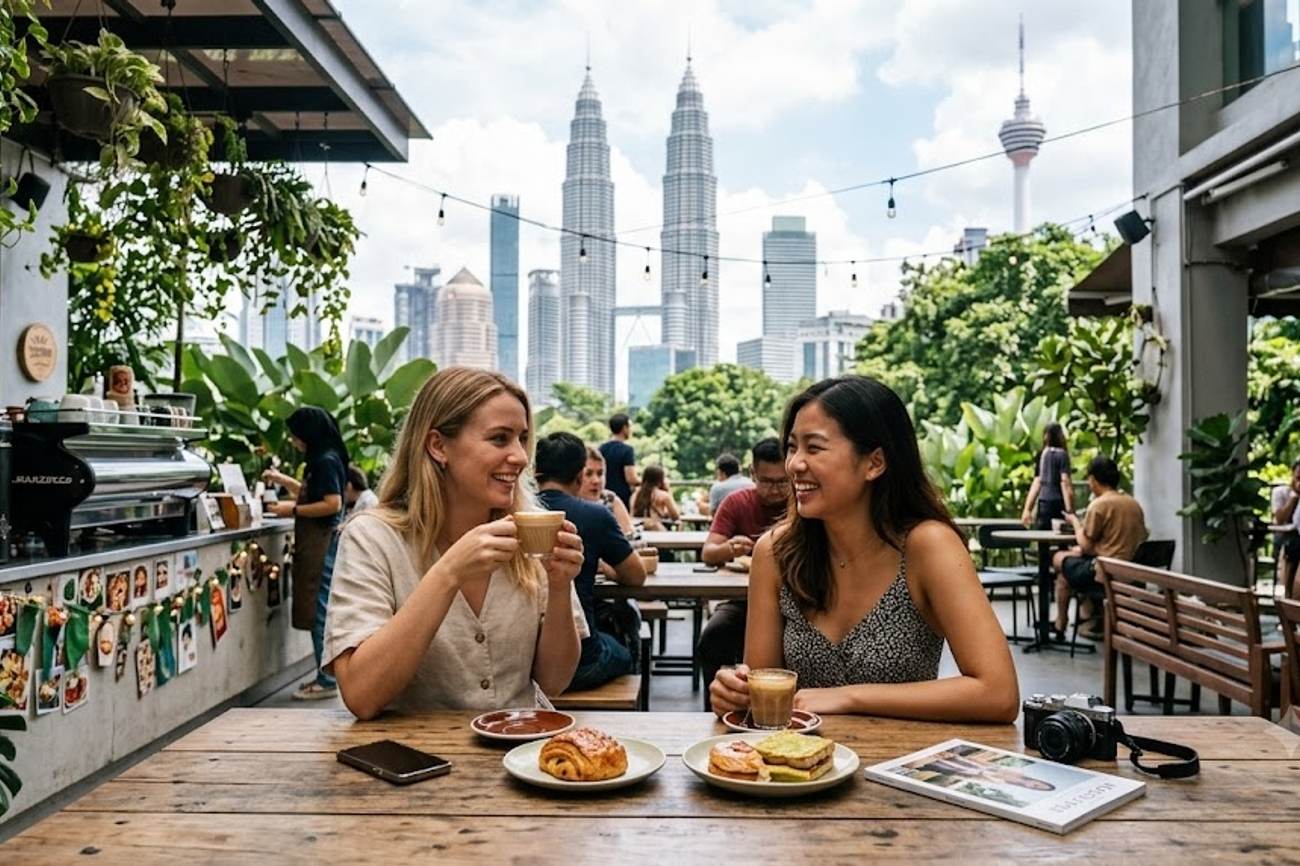
Image generated by AI
10.65 million international visitor arrivals during the first quarter of 2026 mark a pivotal shift in Malaysia's tourism strategy, signaling a move away from generic sightseeing toward high-value, niche culinary experiences. This 5.4% year-on-year increase is not merely a recovery of numbers but a qualitative change in how travelers consume the city of Kuala Lumpur. The emergence of "cafe tourism" as a primary driver suggests that the modern traveler no longer views dining as a logistical necessity of travel, but as the destination itself.
The Infrastructure of Taste: Kuala Lumpur's Culinary Pivot
The surge in visitor numbers coincides with the strategic rollout of the Visit Malaysia 2026 campaign, which has successfully repositioned Kuala Lumpur as a global hub for specialty coffee and artisan brunch. This shift is most visible in the spatial distribution of the city's dining scene. We are seeing a transition from centralized food courts to neighborhood-specific culinary clusters.
In districts like Bukit Bintang and the Tun Razak Exchange (TRX), the focus is on "lifestyle dining"—spaces designed for the business traveler and the luxury nomad. Conversely, in Chinatown and Chow Kit, the trend is "heritage fusion," where traditional Malaysian architecture meets modern beverage science. This duality allows the city to capture multiple demographics simultaneously: the luxury seeker at Plan B @ TRX and the cultural explorer at Kafei Dian in Petaling Street.
The logistics supporting this growth are equally important. The integration of these cafe clusters with Kuala Lumpur’s public transport network has lowered the friction for international visitors, allowing them to navigate between the specialty roasts of VCR and the Japanese-inspired matcha of Niko Neko Matcha 2.0 without relying on expensive private transport.
Market Segmentation and Visitor Data
The growth is not uniform across all demographics; rather, it is driven by three distinct international corridors, each seeking a different value proposition from the Malaysian cafe scene.
| Market Source | Q1 2026 Arrivals | YoY Growth | Primary Driver | Key Interest |
|---|---|---|---|---|
| Singapore | 5.14 Million | Leading Market | Proximity/Frequency | Weekend dining & shopping |
| China | 1.41 Million | >25% | Digital Trends | Photogenic spaces & fusion |
| Australia | Not Specified* | 11.4% | Cultural Synergy | Specialty coffee & brunch |
| *Source provides percentage growth rather than raw arrival totals for Australia. |
The data reveals a sophisticated interplay of market needs. Singaporean visitors, who constitute the largest volume of arrivals, utilize Kuala Lumpur for high-frequency, short-duration trips. For them, the cafe scene provides a reason for repeat visitation—the "new opening" effect. Chinese travelers, meanwhile, are driving the "Instagrammable" economy, where the visual presentation of the food and the interior design of the cafe are as important as the taste.
Australian travelers represent a specific psychological fit. With a domestic coffee culture that is among the most rigorous in the world, their 11.4% growth indicates that Kuala Lumpur’s specialty coffee scene—exemplified by outlets like Three Years Old Cafe and Urban Daybreak Bangsar—has reached a quality threshold that satisfies "first-world" standards while offering the novelty of Southeast Asian flavors.
Australia's alignment with Singapore and other leading destinations is expected to boost Kuala Lumpur's food travel growth, driven by Malaysia's thriving cafe tourism scene. According to Malaysia Tourism Board, the country's culinary delights are a major draw for visitors, with popular dishes like nasi lemak and char kway teow. As a result, passenger traffic at Kuala Lumpur International Airport (KLIA) is anticipated to increase, with airlines like Malaysia Airlines offering convenient flight schedules and routes.
Expert Analysis: The Economics of the "Brunch Bridge"
For travelers booking trips to Southeast Asia, the rise of the Kuala Lumpur cafe scene creates a "brunch bridge"—a psychological comfort zone that lowers the barrier to entry for Western tourists. When a traveler from Sydney or Melbourne sees an Australian-style brunch menu in Bangsar, it reduces the perceived "culture shock" and encourages longer stays.
However, the real economic impact is the increase in "dwell time." Traditionally, a tourist might visit a temple or a museum and then leave the district. The current trend of "lifestyle tourism" means visitors are spending four to six hours in a single neighborhood, moving from a specialty coffee shop to a boutique store and then to a heritage cafe. This creates a multiplier effect for local businesses beyond the food and beverage sector.
The pricing pressure here is fascinating. By offering "affordable premium" dining, Kuala Lumpur is positioning itself against Singapore. For a Singaporean or Australian traveler, the ability to access high-end, single-origin coffee and artisan sourdough at a fraction of the cost in their home city makes Kuala Lumpur a "value-luxury" destination. This is a powerful competitive advantage that leverages Malaysia's lower operational costs to provide a world-class experience.
The direct consequence for the traveler is a shift in itinerary planning. We are seeing the "cafe crawl" replace the "landmark tour." The focus has shifted from the Petronas Towers to the specific roast profile of 103 Coffee in Chow Kit or the artisan breads at Kenny Hills Bakers.
The growth of cafe tourism in Kuala Lumpur is also driven by the city's vibrant atmosphere and diverse dining options, ranging from traditional coffee shops to modern cafes. For travelers planning to visit Kuala Lumpur, Malaysia Airports Holdings Berhad provides essential information on flight arrivals and departures, as well as airport facilities and services. With its rich culinary heritage and modern amenities, Kuala Lumpur is poised to become a top destination for food travelers, offering a unique and unforgettable experience for visitors from around the world.
Key Takeaways
- Volume Growth: Malaysia saw 10.65 million international arrivals in Q1 2026, a 5.4% increase, fueled largely by the Visit Malaysia 2026 initiative.
- Market Leaders: Singapore remains the dominant source market (5.14 million arrivals), while China is the fastest-growing segment with over 25% year-on-year growth.
- Australian Synergy: A 11.4% increase in Australian visitors highlights the success of "Australian-style" brunch and specialty coffee in districts like Bangsar and Bukit Bintang.
- Strategic Clusters: Tourism is concentrating in specific hubs: Bukit Bintang (lifestyle), Bangsar (brunch), Chinatown (heritage), and TRX (modern business).
- Value Proposition: The "affordable premium" model is attracting high-spending travelers from first-world economies who seek luxury experiences at a lower price point than in Singapore or Australia.
FAQ: Kuala Lumpur Cafe Tourism 2026
Which neighborhoods are best for cafe hopping in Kuala Lumpur? For modern lifestyle and specialty coffee, head to Bukit Bintang and TRX. For artisan brunch and a social atmosphere, Bangsar is the primary hub. If you prefer heritage settings and fusion flavors, explore Chinatown and Chow Kit.
Is Kuala Lumpur's coffee scene comparable to Australia's? Yes, particularly in Bangsar and Bukit Bintang. Many cafes employ Australian-inspired brunch concepts and high-standard specialty coffee roasting, making it a familiar yet exotic experience for coffee enthusiasts from Melbourne or Sydney.
How accessible are these cafes for international tourists? Most major cafe clusters are highly accessible via Kuala Lumpur's public transport network. The city's layout allows visitors to easily move between dining hubs in Chinatown and Bukit Bintang using rail and bus services.
Why is China becoming a major market for Malaysia's cafe tourism? Chinese travelers are increasingly drawn to "lifestyle tourism," which emphasizes photogenic, social-media-friendly environments and a blend of modern urban dining with traditional cultural heritage found in areas like Chinatown.
The shift from sightseeing to "taste-seeking" suggests that for the 2026 traveler, the menu is the new map.
Tags: Kuala Lumpur, Visit Malaysia 2026, Bukit Bintang, Bangsar, Specialty Coffee Tourism, Southeast Asia Gastronomy
Related Travel Guides
This article is for informational purposes. Flight routes, passenger regulations, visa rules, and transit advisories are subject to change by airlines and aviation authorities. Readers are advised to verify schedules and travel documentation with relevant carriers and border agencies before departure.
Related Stories
Oceania Tourism Shifts to Night-Time Operations to Combat Extreme Heatwaves in 2026

European Mass Protests Disrupt Travel Across France, Italy, Belgium, and Turkey in 2026
