Malta Launches Inquiry After St Julian’s Parasailing Incident Highlights Tourism Water Sports Challenges

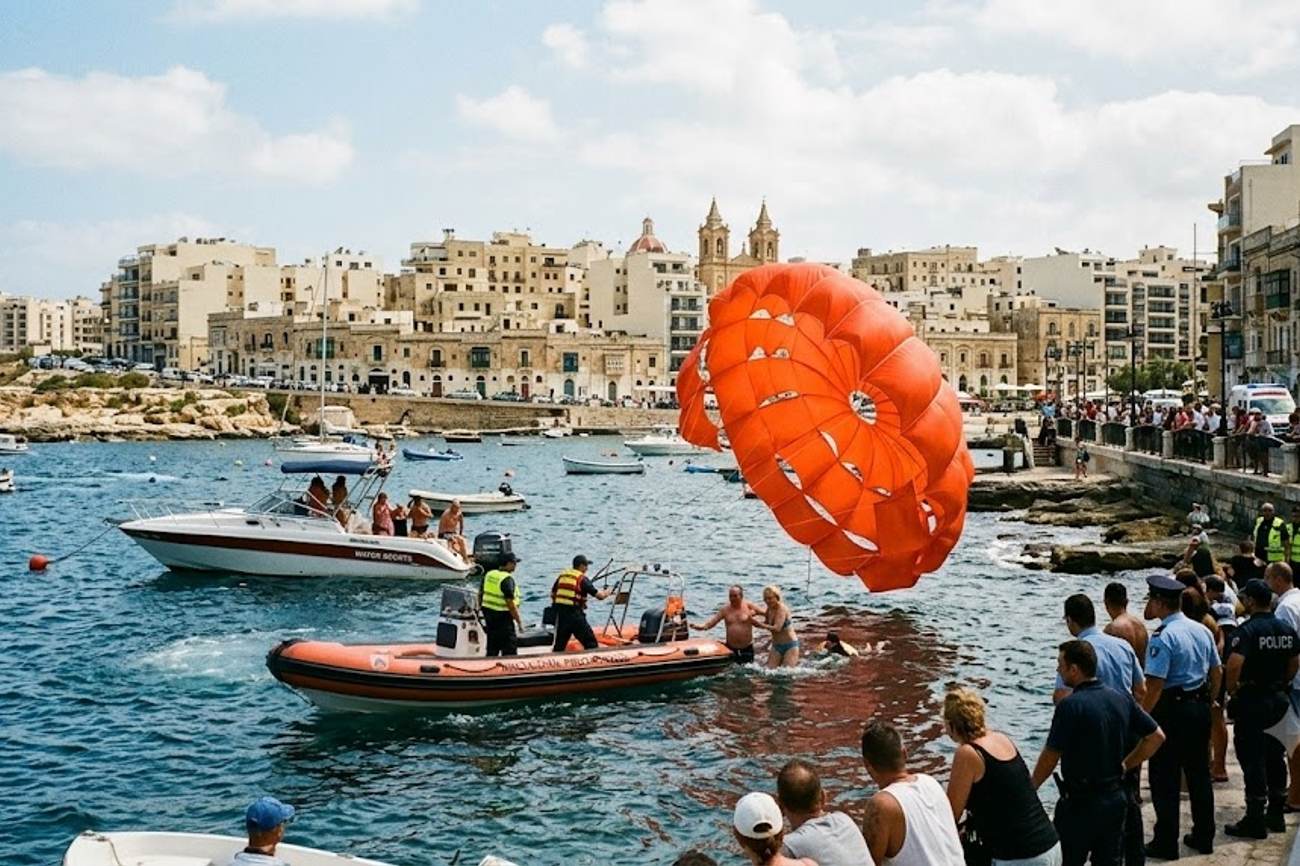
Image generated by AI
A couple enjoying a parasailing excursion off the coast of St Julian’s found themselves plunged into the Mediterranean on 19 September 2026, sparking an urgent investigation into the safety of Malta's adventure tourism sector. This incident, which occurred approximately one and a half miles from the shoreline, has shifted the conversation from simple leisure to the rigorous necessity of operator licensing and emergency response protocols.
Parasailing Incident off St Julian’s: The Facts
On 19 September 2026, the Malta Police Force responded to a maritime emergency involving a parasailing operation. According to official preliminary reports, two participants entered the water during the activity. The incident took place roughly 1.5 miles off the coast of St Julian’s, a primary hub for coastal leisure and high-density tourism.
While the immediate focus was on the rescue of the individuals, the Malta Police Force has launched a broader investigation into the contributing factors. Initial findings suggest that wind conditions may have played a significant role in the failure of the activity. This event has highlighted a critical vulnerability in the Mediterranean adventure tourism model: the gap between commercial growth and the stringent enforcement of weather-based operational ceilings.
Affected Regions and Activity Hubs
The disruption to visitor confidence and the subsequent regulatory scrutiny are centered on specific high-traffic coastal zones:
- St Julian’s: The primary site of the incident. As a major center for hotels, nightlife, and marine excursions, this area is the focal point for water sports management and visitor safety audits.
- Valletta: While primarily a UNESCO World Heritage site and cruise gateway, the capital's reputation is intrinsically linked to the safety standards of the surrounding coastal activities.
- Mediterranean Corridor: The ripple effects of this incident extend to similar marine markets in Italy, Greece, Spain, Croatia, and France, where the balance between tourism volume and safety regulation is under constant pressure.
Your Rights as a Passenger and Tourist
When booking adventure activities, passengers often assume they are covered by general travel insurance. However, legal protections vary depending on whether the activity was booked as part of a package or as a standalone "walk-up" experience.
1. Package Travel Regulations (EU/UK) If the parasailing trip was booked as part of a package holiday, the tour operator is legally responsible for the performance of all services included in that package. Under the Package Travel Directive (EU 2015/2302) and the UK's Package Travel and Linked Travel Arrangements Regulations 2018, the organizer is liable for any lack of conformity in the services provided. If a safety failure occurs due to an unlicensed operator chosen by the tour company, the passenger may be entitled to significant damages for personal injury or psychological distress.
2. Duty of Care and Negligence Under Maltese law and general European tort law, operators owe a "Duty of Care" to their clients. This includes:
- Vessel Certification: Ensuring the craft holds a valid commercial vessel certificate issued by Transport Malta.
- Qualified Personnel: Employing instructors with recognized nautical qualifications.
- Weather Monitoring: Aborting operations when wind speeds exceed safety thresholds.
If an operator fails to provide a safety briefing or ignores weather warnings, they may be found negligent. Passengers should document all interactions, save digital receipts, and request copies of the operator's license. You can verify general passenger rights through the UK Civil Aviation Authority or the US Department of Transportation if the trip was booked via a US-based agency.
3. Insurance Claims and Liability Standard travel insurance often excludes "extreme sports" unless a specific rider was purchased. In the event of an accident, the first point of legal recourse is the operator's commercial liability insurance. Passengers should demand proof of insurance before ascending.
Rebooking Strategy and Safety Alternatives
For travelers currently in Malta or planning a visit, the St Julian’s incident serves as a catalyst to change how adventure activities are sourced. Avoid "beach-front" informal providers and adopt the following strategy:
Verify the Licensing Chain Before paying a deposit, ask the provider for three specific documents:
- Their official water sports license managed by the maritime authorities.
- The commercial vessel certification for the specific boat being used.
- The nautical instructor's permit.
Alternative High-Safety Activities If you are hesitant about aerial marine activities following this event, consider these lower-risk alternatives in the region:
- Certified Diving: Malta is world-renowned for diving. Ensure the operator is PADI or SSI certified.
- Guided Coastal Sailing: Opt for larger, certified commercial charters that have stricter adherence to Transport Malta’s safety protocols.
- Cultural Tours in Valletta: Shift focus to the UNESCO heritage sites, which offer a safer, land-based exploration of the island.
Monitoring Real-Time Conditions Do not rely solely on the operator's word regarding the weather. Use professional tools like Flightradar24 to check for aviation alerts in the area or FlightAware to monitor general regional disruptions. More importantly, check local maritime weather forecasts to see if wind speeds are conducive to parasailing.
FAQ: Malta Adventure Tourism Safety 2026
Am I entitled to compensation after a safety incident? Yes, if the operator was negligent or unlicensed. If booked via a package, the tour operator is liable. If booked independently, you must claim against the operator's liability insurance or through a personal injury lawsuit based on the Duty of Care.
How can I tell if a water sports operator is licensed? Ask to see their Transport Malta commercial vessel certificate and their specific water sports license. Legitimate operators will have these documents readily available for inspection by passengers and authorities.
What should I do if an operator refuses to provide safety documentation? Do not proceed with the activity. A refusal to show certification is a primary red flag. Report the operator to the Malta Tourism Authority or the local police to ensure other tourists are protected.
Are wind conditions a valid reason for a refund? Yes. If an operator cancels due to weather, you are entitled to a full refund or a rebooking. If they proceed despite dangerous winds and an accident occurs, this constitutes a severe breach of safety protocols.
Safety in adventure tourism is not a luxury; it is a legal requirement that passengers must demand.
Tags: Malta-Police-Force, St-Julians-Maritime, Transport-Malta-Licensing, EU-Package-Travel-Directive, Marine-Safety-2026, Mediterranean-Adventure-Tourism
Related Travel Guides
- Glasgow Unveils New Green Travel Boost With £2.99 Bike Hire And Free Secure Cycle Parking For Visitors
- Norway and More European Countries Turn Dangerous Holiday Routes Into Intelligent Travel Networks
- UK Surpasses France and More Markets to Fuel Spain’s Tourism Growth as Hotel Overnight Stays Increase 1.4% in August 2026
This article is for informational purposes. Flight routes, passenger regulations, visa rules, and transit advisories are subject to change by airlines and aviation authorities. Readers are advised to verify schedules and travel documentation with relevant carriers and border agencies before departure.
Related Stories

European Mass Protests Disrupt Travel Across France, Italy, Belgium, and Turkey in 2026
The Best Things to Do in Vero Beach with Family: A Local Parent & Traveler's Guide