UK Surpasses France and More Markets to Fuel Spain’s Tourism Growth as Hotel Overnight Stays Increase 1.4% in August 2026

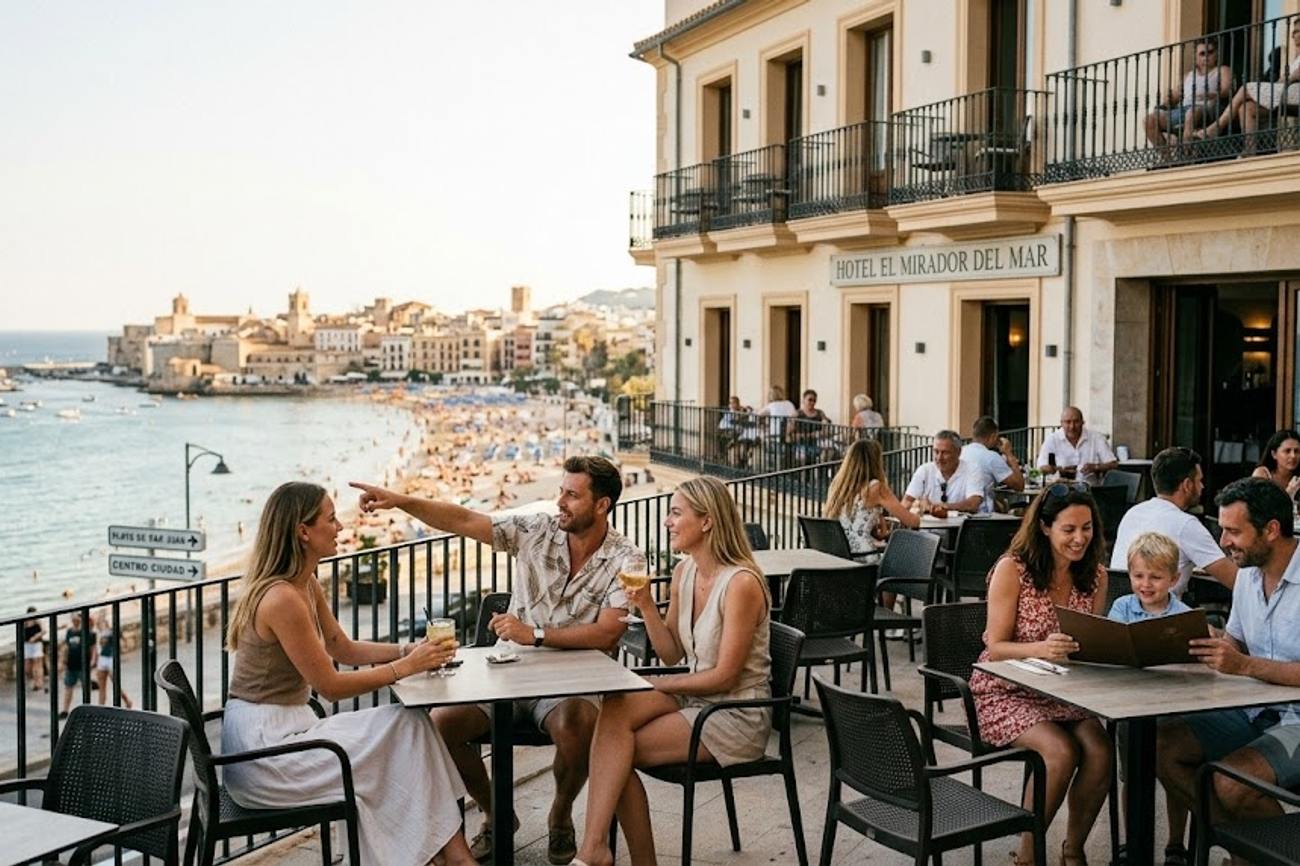
Image generated by AI
48.7 million hotel overnight stays in August 2026 signal a sustained expansion of the Spanish hospitality sector, driven almost exclusively by an influx of international visitors. This 1.4% year-on-year increase reveals a widening gap between the spending habits of foreign tourists and the domestic Spanish market, suggesting that the nation's tourism economy is becoming increasingly dependent on external demand.
The Divergence of Domestic and International Demand
The growth seen in August was not uniform across all traveler segments. While the total number of overnight stays rose, a granular look at the data shows a clear split: non-resident travelers drove a 2.8% increase in stays, whereas domestic hotel stays by Spanish residents actually contracted by 1.1%. This trend is not an isolated monthly anomaly but a pattern established throughout the year. From January through August 2026, Spain saw a total increase of 1.5% in hotel overnight stays, with international nights climbing by 2% and domestic demand stagnating at a marginal 0.4% growth.
The reliance on the Spain Tourism Board to attract high-spending foreign nationals is evident in the market share distribution. The United Kingdom remains the undisputed powerhouse of Spanish tourism, accounting for 25.5% of all non-resident hotel overnight stays in August. Germany follows as the second-largest contributor at 14.5%, with France providing 11.1%. Further down the list, Italy and the Netherlands contributed 6.2% and 4.8% respectively.
Regional Concentration and Occupancy Metrics
The geographic distribution of these travelers highlights a stark preference for coastal and island destinations over mainland urban centers. The Balearic Islands emerged as the primary magnet for international visitors, capturing 33% of all foreign hotel overnight stays. Catalonia followed with 20.6%, and the Canary Islands held 18.2%.
This concentration is most evident in the occupancy rates. Across the country, the average hotel occupancy for August stood at 76.1%, a 1.1% increase over August 2025. However, the Balearic Islands operated at a near-saturation point with 90.3% occupancy. In specific hotspots, the figures were even more extreme: Palma-Calvià reached 91.5%, while the municipality of Muro recorded the highest occupancy in the entire country at 98.2%. For those traveling on weekends, the pressure remained high, with Blanes hitting a 97.8% occupancy rate.
The following table breaks down the regional preferences based on the traveler's origin:
| Region | International Market Share | Domestic Market Share |
|---|---|---|
| Balearic Islands | 33% | Not Specified |
| Catalonia | 20.6% | 14.9% |
| Canary Islands | 18.2% | Not Specified |
| Andalusia | Not Specified | 24.4% |
| Valencian Community | Not Specified | 12.8% |
Expert Analysis: The Pricing Paradox and Revenue Shift
The most critical data point for the travel industry is not the volume of guests, but the cost of the stay. The Hotel Price Index surged by 6.3% year-on-year in August 2026. This indicates that the Spanish hospitality sector is successfully pivoting toward a high-yield model, prioritizing revenue per room over sheer occupancy volume.
The UK has become a significant contributor to Spain's tourism growth, surpassing France and other markets, with hotel overnight stays increasing by 1.4% in August 2026. According to the Spanish Tourism Board, this growth can be attributed to the rising number of tourists from the UK, who are drawn to Spain's rich culture, beautiful beaches, and vibrant cities. As a result, Spain's tourism industry is expected to continue booming, with many travelers booking flights and accommodations through official airline portals.
The Average Daily Rate (ADR) climbed to €166.90, representing a 7.3% increase. Simultaneously, the Revenue per Available Room (RevPAR) hit €133.10, a 7% jump. For the traveler, the direct consequence is a significant increase in the cost of mid-range accommodation. Specifically, two- and three-star silver establishments saw the sharpest price hike at 8.6%. This suggests that the "budget" segment of the market is evaporating, pushed upward by the sheer volume of demand from the UK and Germany.
The pricing pressure is not uniform, however. While Ceuta saw a massive 17.6% price spike, the Community of Madrid experienced a 3.3% decline. This suggests a tactical shift where urban centers are discounting to attract visitors away from the saturated coastlines. For the nomad or business traveler, this creates a strategic window: the coast is becoming prohibitively expensive and overcrowded, while the capital offers a rare pricing reprieve.
From a regulatory and business perspective, the reliance on the UK market (25.5% share) creates a systemic vulnerability. Any shift in UK economic policy or currency fluctuations could trigger a disproportionate shock to the Spanish hotel industry. The industry is effectively betting its growth on the continued appetite of the British middle class for Mediterranean resorts.
Key Takeaways
- International Dominance: Non-resident stays grew by 2.8% in August, offsetting a 1.1% decline in domestic Spanish hotel usage.
- UK Market Hegemony: British travelers are the primary engine of growth, accounting for over one-quarter (25.5%) of all international hotel nights.
- Hyper-Saturation in the East: The Balearic Islands are operating at critical capacity, with Muro reaching 98.2% occupancy and the region overall at 90.3%.
- Aggressive Pricing: The Average Daily Rate has risen to €166.90, with the most significant increases hitting 2- and 3-star silver hotels (+8.6%).
- Urban Discounting: While coastal prices soar, Madrid has seen a 3.3% decrease in hotel prices, offering a counter-trend to the national average.
FAQ: Spain Hotel Trends 2026
Why are hotel prices increasing so rapidly in Spain? Prices are rising due to a 2.8% increase in international demand and a shift toward high-yield revenue models. The Hotel Price Index rose 6.3% in August 2026, particularly in mid-range 2- and 3-star silver hotels.
The increase in tourism has also led to an increase in passenger traffic at Spanish airports, with many travelers passing through major hubs like Adolfo Suárez Madrid–Barajas Airport, which provides information on flight schedules and travel requirements on its official website, Aena. To accommodate the growing number of tourists, the Spanish government has implemented various measures to improve passenger logistics and enhance the overall travel experience. Additionally, the Ministry of Tourism of Spain offers valuable insights and resources for travelers planning a trip to Spain, including information on destinations, activities, and events.
Which Spanish region is the most crowded for tourists? The Balearic Islands are the most crowded, capturing 33% of all foreign overnight stays and reaching a regional occupancy rate of 90.3%, with Muro peaking at 98.2%.
Is it cheaper to stay in Madrid than on the coast? Yes. While the national trend is upward, the Community of Madrid saw a 3.3% decrease in hotel prices in August 2026, contrasting with the sharp increases seen in coastal regions and Ceuta.
Who are the main international visitors to Spain? The United Kingdom is the largest source market (25.5% share), followed by Germany (14.5%) and France (11.1%), according to August 2026 data.
The Spanish sun continues to draw millions, but the rising cost of entry suggests the era of the budget Mediterranean getaway is fading.
Tags: Spain Tourism 2026, Balearic Islands Hotels, UK-Spain Travel Trends, Spanish Hotel Price Index, Mallorca Tourism Data
Related Travel Guides
- Portugal Teams Up With Romania And More Countries Across Europe Facing Canada Immigration Hurdles As Atlantic Rules Tighten
- Birmingham Launches New Hotel Investment Model To Attract More Visitors And Events
- KLM Expands Winter Travel Network With More Global Flights New Routes And First Airbus A350 Operations
This article is for informational purposes. Flight routes, passenger regulations, visa rules, and transit advisories are subject to change by airlines and aviation authorities. Readers are advised to verify schedules and travel documentation with relevant carriers and border agencies before departure.
Related Stories

European Mass Protests Disrupt Travel Across France, Italy, Belgium, and Turkey in 2026

Mohala Boutique Hotel Opens in Diso: Former Tobacco Factory Transforms Into Luxury Salento Retreat 2026