Malta Surges to Second in EU Commercial Flight Growth as 2026 Travel Demand Reaches Historic Highs

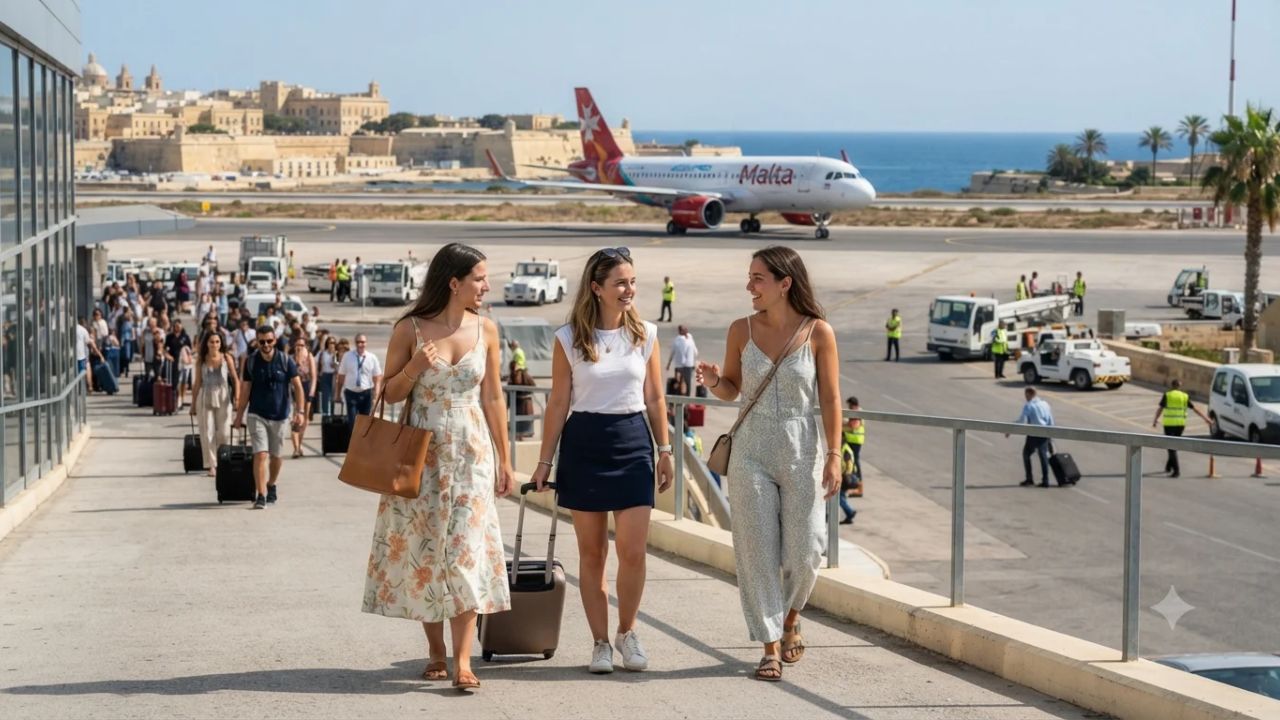
While major European aviation markets like Germany and Austria saw flight frequencies contract, the Mediterranean island archipelago of Malta achieved a staggering 12.4% year-on-year surge in commercial airline traffic in August 2026. Official Eurostat data reveals that Malta outpaced nearly every nation across the 27-member European Union, ranking second in overall flight growth across the bloc.
This aviation momentum reflects unprecedented international interest in the sun-drenched archipelago. Far from being just a summer beach retreat, Malta is experiencing an all-season cultural renaissance. With airlines adding frequencies and international tourist arrivals exceeding 2.62 million in the first seven months of 2026 alone, the island nation has cemented its position as one of Europe's top-performing travel destinations.
Behind Eurostat's 2026 Flight Statistics and Airport Operations
According to official Eurostat measurements covering scheduled passenger services, air freight, and charter flights operating under Instrument Flight Rules, European commercial aviation reached 708,980 total operations in August 2026, representing a modest 2.3% average increase compared to August 2025. Across the bloc, 19 member nations registered operational growth, while eight experienced reductions, led by contractions in Austria (-4.7%), Cyprus (-3.0%), and Germany (-2.4%).
Against this mixed continental backdrop, Malta's 12.4% flight expansion placed it behind only Slovakia (+37.0%) while firmly surpassing Estonia (+8.3%) and the wider EU average.
At the center of this movement is Malta International Airport at Luqa. During July 2026, the airport processed nearly 1.2 million passengers, accommodating an average of 108 commercial flights per day. This operational milestone built upon the record-setting achievements of 2025, when Malta welcomed 4.02 million inbound tourists—surpassing the four-million mark for the first time in history—and generated €3.9 billion in total visitor expenditure.
The upward trajectory accelerated during summer 2026. In July 2026, inbound tourist arrivals reached 489,494 visitors, reflecting a 20.8% increase compared to July 2025. Between January and July 2026, overall visitor numbers expanded by 18.6% year-on-year, sustaining strong occupancy across hotels, boutique palazzos, and heritage guesthouses.
What Sets Malta Apart: Ancient Stones and Baroque Fortresses
Covering just 316 square kilometers, the Maltese archipelago packs millennia of layered civilization into a compact Mediterranean territory. The capital city of Valletta, an inscribed UNESCO World Heritage site, stands as one of the world's most concentrated historic areas, built by the Knights of St. John following the Great Siege of 1565. Its grid-pattern limestone streets, grand auberges, and the gilded interior of St. John's Co-Cathedral—housing Caravaggio's masterpiece The Beheading of Saint John the Baptist—offer an open-air historical experience.
Beyond the fortified Grand Harbour, the islands possess prehistoric megalithic temples that predate Stonehenge and the Great Pyramids of Giza by centuries. Sites like Ħaġar Qim and Mnajdra sit perched on rugged limestone cliffs overlooking the Mediterranean Sea. Across the channel, the sister island of Gozo offers a tranquil counterpoint of terraced hillsides, salt pans at Qbajjar, and the ancient citadel of Victoria, presenting visitors with authentic island life supported by Visit Malta.
Visitor Insider Tips: Navigating Malta and Gozo
- Explore Valletta Before 09:30 or After 17:00: As cruise passengers and tour groups fill Republic Street during midday, plan your architectural walks and museum visits early in the morning or late in the afternoon when golden sunlight illuminates the honey-colored globigerina limestone.
- Cross the Grand Harbour via Traditional Dgħajsa: Avoid road traffic between Valletta and the historic Three Cities (Birgu, Senglea, and Cospicua) by hopping aboard a traditional wooden dgħajsa water taxi at the Lascaris water gate for roughly €2 per person.
- Base Yourself in Birgu or Victoria for Authentic Character: Instead of busy hotel strips in St. Julian's or Sliema, stay in a converted 16th-century townhouse in Birgu or an authentic limestone farmhouse on Gozo to experience local village squares and neighborhood bakeries.
- Savor Fresh Pastizzi and Ftira at Local Bakeries: Stop at local village band clubs or neighborhood bakeries like Crystal Palace in Rabat for freshly baked pastizzi filled with warm ricotta or mushy peas, and try traditional wood-fired Gozitan ftira topped with sliced potatoes, tomatoes, and goat cheese.
- Utilize the Fast Ferry to Gozo: Take the high-speed 45-minute passenger catamaran departing directly from Valletta's Grand Harbour to Mġarr Harbour in Gozo, bypassing the longer overland bus trip to the northern ferry terminal at Ċirkewwa.
Cultural and Environmental Context
Rapid tourism expansion has brought substantial economic prosperity to Malta, with visitor spending reaching €3.9 billion. However, accommodating over four million annual visitors on a densely populated island requires careful environmental stewardship and heritage preservation.
The Maltese government and local environmental organizations are actively implementing sustainable tourism strategies. Initiatives focus on distributing visitor footfall toward off-peak winter and shoulder seasons, encouraging agritourism on Gozo, preserving fragile marine biodiversity at the Blue Lagoon, and protecting the island's scarce freshwater resources through advanced seawater desalination plants powered by renewable energy.
FAQ: Visiting Malta in 2026
What is the primary airport for traveling to Malta?
All commercial international flights arrive at Malta International Airport (MLA), located in Luqa, just eight kilometers south of the capital, Valletta.
What is the best time of year to visit Malta?
April to June and September to November offer sunny weather, warm swimming conditions, and fewer crowds than the peak summer months.
How do I travel between the islands of Malta and Gozo?
You can take the 45-minute high-speed passenger fast ferry from Valletta or the 25-minute vehicle and passenger ferry from Ċirkewwa in northern Malta.
Do I need a visa to visit Malta?
Malta is a member of the European Union and Schengen Area; citizens from the US, UK, Canada, and Australia can enter visa-free for up to 90 days.
With ancient limestone ramparts glowing above the Mediterranean, Malta's historic shores have never been more accessible to world travelers.
Related Travel Guides
- Fort Lauderdale Beach Park Safety Guide 2026: Operating Hours, Lifeguard Schedules, and Regulations
- Elafiti Islands Itinerary Guide: Planning 1, 2, and 3 Day Trips from Dubrovnik in 2026
- Brazil and Mexico Reshape Americas Tourism as Inbound Surges, Aviation Milestones, and Domestic Spending Redefine Travel Power in 2026
This article is for informational purposes. Flight routes, passenger regulations, visa rules, and transit advisories are subject to change by airlines and aviation authorities. Readers are advised to verify schedules and travel documentation with relevant carriers and border agencies before departure.
Related Stories

Hanoi Opens 12 Old Quarter Heritage Sites for Creative Design Festival as Vietnam Accelerates High-Yield City Breaks
Albania’s Historic Castle Town of Krujë Pivots to Slow Travel as Overnight Stays Replace Day-Trip Crowds