
Maldives Joins Indonesia and More Beach Countries Trying to Reach Hard to Steal Nuptials with Five-Star Resorts and Over the Water Bungalows
Maldives Joins Indonesia and More Beach Countries Trying to Reach Hard to Steal Nuptials with Five-Star Resorts and Over the Water Bungalows

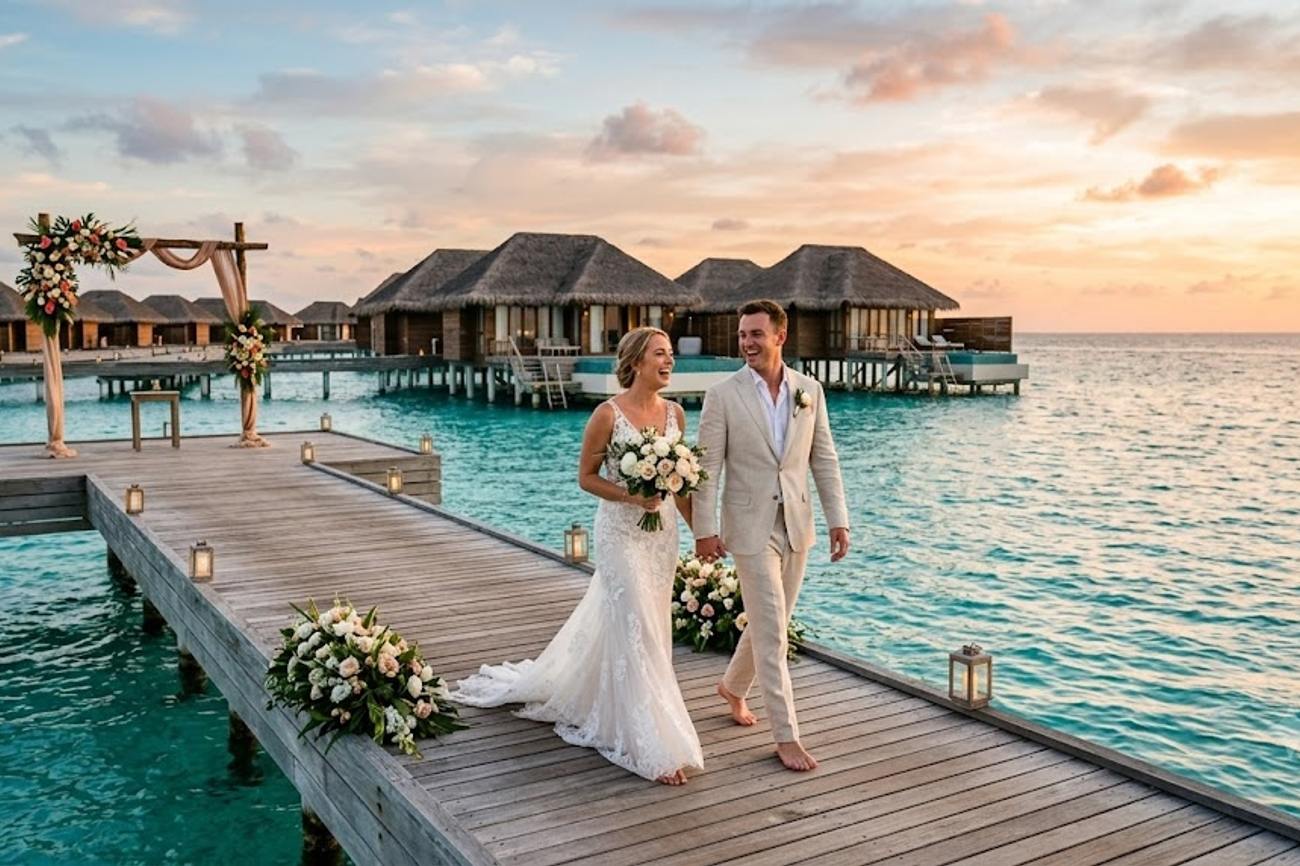
Image generated by AI
The Maldives is no longer just a sanctuary for the ultra-wealthy; it is aggressively pivoting to attract budget and medium-income travelers through local guest houses and activity-based retreats. While the world recognizes the archipelago for its floating villas, the current shift focuses on "experience-led" tourism, where surfing, yoga, and diving take precedence over the price tag of the room.
The New Battle for the Romantic Market
There is a quiet war currently being waged across the Indian Ocean and Southeast Asia. For decades, the Maldives held a near-monopoly on the "hard-to-steal" nuptial market—those high-spend honeymooners who seek absolute seclusion. However, as Indonesia and other beach-centric nations elevate their five-star offerings and over-the-water bungalow inventories, the Maldives is forced to evolve. It is no longer enough to provide a white strip of sand and a turquoise lagoon.
The modern romantic traveler is demanding a shift from passive luxury to active engagement. This means that while the architectural allure of a villa perched over a coral reef remains a powerful magnet, the decision-making process for couples now hinges on personalized wellness, high-end gastronomy, and authentic cultural immersion. The competition is driving a wave of innovation across the region, pushing resorts to move beyond the "sun and sea" cliché and offer curated journeys that feel personal rather than packaged.
What Makes the Maldives Different
Despite the rise of competitors in the Caribbean or the South Pacific, the Maldives possesses a geographic singularity that is nearly impossible to replicate. The "one island, one resort" concept provides a level of psychological detachment from the rest of the world that a standard coastal hotel in a city cannot match. When you are on a private island, the horizon is your only boundary, and the resort's ecosystem becomes your entire universe.
However, the real distinction now lies in the diversification of the stay. The archipelago is successfully splitting its identity. On one side, you have the benchmark of global luxury—international five-star brands that define the gold standard of service. On the other, there is a growing movement toward local-island stays. These guest houses allow travelers to interact with Maldivian communities, moving away from the sterilized environment of a luxury bubble and into the rhythmic, slower pace of island life.
Whether it is a liveaboard yacht experience that traverses multiple atolls or a dedicated surfing retreat, the Maldives is repositioning itself as a versatile playground. The marine environment remains the core attraction, but the way visitors access it is changing. You no longer need a massive budget to experience the world-class diving or the serenity of the lagoons; the entry point has lowered, making the destination accessible to a broader demographic of travelers.
Visitor Insider Tips
To experience the Maldives like a local—or at least like a seasoned traveler who avoids the tourist traps—you must look beyond the glossy brochures.
Timing and Crowds: To avoid the peak winter rush and secure better rates, aim for the "shoulder season" between May and October. While this is technically the rainy season, the storms are often brief and intense, followed by brilliant sunshine. You will find the resorts far less crowded, and the service is often more attentive.
The Local Island Pivot: If you want to avoid the isolation of a private resort, base yourself on a local island like Maafushi or Thulusdhoo. This allows you to stay in boutique guest houses and eat at small, family-run cafes. It is the only way to experience the true Maldivian culture, from the traditional boduberu drumming to the local markets.
Transport Hacks: Speedboats are the standard for shorter distances, but for a truly immersive arrival, book a seaplane. While more expensive, the aerial view of the atolls is a bucket-list experience in itself. For those on a budget, the public ferry system is available, though it is significantly slower and follows a strict government schedule.
Etiquette and Rules: Remember that the Maldives is a Muslim country. While bikinis and alcohol are perfectly acceptable on private resort islands, they are strictly forbidden on local inhabited islands. When visiting local villages, ensure your shoulders and knees are covered to respect the community.
Gastronomy: Move beyond the resort buffet. Try Mas huni—a traditional breakfast of tuna, onion, coconut, and chili—eaten with roshi flatbread. It is the fuel of the islands and provides a genuine taste of the region.
Cultural and Environmental Context
The tension between luxury tourism and environmental preservation is the defining challenge for the Maldives. As one of the lowest-lying nations on Earth, the archipelago is on the front lines of climate change. The very turquoise waters that attract millions are under threat from rising sea levels and coral bleaching.
Tourism is the lifeblood of the economy, but the construction of massive over-water bungalows and the dredging of lagoons for airports can disrupt fragile marine ecosystems. There is a growing push toward sustainable luxury, with many resorts now banning single-use plastics and implementing coral regeneration projects. Visitors are encouraged to support operators who prioritize reef health and employ local staff in management roles, rather than relying solely on expatriate labor.
The shift toward local-island tourism is also a cultural victory. By directing spending toward guest houses and local artisans, the economic benefits of tourism are distributed more equitably across the population, rather than being concentrated in the hands of international hotel chains. This creates a symbiotic relationship where the traveler gains authenticity and the community gains a sustainable livelihood. For more on the preservation of these unique environments, the UNESCO World Heritage Centre provides insight into the global importance of protecting such diverse marine landscapes.
To plan your logistics and understand the official entry requirements, always refer to the Visit Maldives official portal or consult with the Maldives Transport and Contracting Company for local transit options.
FAQ: Visiting Maldives 2026
What is the best time to visit? The dry season runs from December to April, offering the most sunshine and calmest seas. However, for those seeking value and fewer crowds, the shoulder months of May and October provide a great balance of weather and price.
Do I need a visa? Most nationalities are granted a free 30-day visa on arrival, provided you have a valid passport, a return ticket, and a confirmed hotel reservation. Always check current regulations via the official tourism board before flying.
How do I get there from Male? From Velana International Airport in Male, you can reach your destination via seaplane (for distant resorts), speedboat (for nearby islands), or the public ferry system (for local islands). Seaplanes only fly during daylight hours.
Is it safe for solo travelers? Yes, it is exceptionally safe. Solo travelers often find local guest houses a welcoming environment to meet others. On private resorts, the staff is trained to ensure solo guests feel comfortable and integrated into activities.
Trade the curated luxury of a brochure for the raw, salty reality of the atolls.
#MaldivesTravel2026 #IndianOceanHoneymoons #VisitMaldives #LuxuryIslandEscapes #MaldivesLocalTourism
Related Travel Guides
Disclaimer
This article is for informational and educational purposes only. It does not constitute legal, financial, or professional advice. While we strive to provide accurate and up-to-date information, travel policies, regulations, and conditions change rapidly. Always verify information with official sources before making travel decisions. Nomad Lawyer makes no representations about the accuracy, reliability, completeness, or suitability of the information provided. Readers should consult qualified professionals for advice specific to their circumstances. The views expressed in this article are those of the author and do not necessarily reflect the views of Nomad Lawyer.
Raushan Kumar
Founder & Lead Developer
Full-stack developer with 11+ years of experience and a passionate traveller. Raushan built Nomad Lawyer from the ground up with a vision to create the best travel and law experience on the web.
Learn more about our team →