
Busan Aligns with Seoul and More Cities in Fuelling Asia Tourism as South Korea Hotels Hold Strong in 2026
Busan Aligns with Seoul and More Cities in Fuelling Asia Tourism as South Korea Hotels Hold Strong in 2026

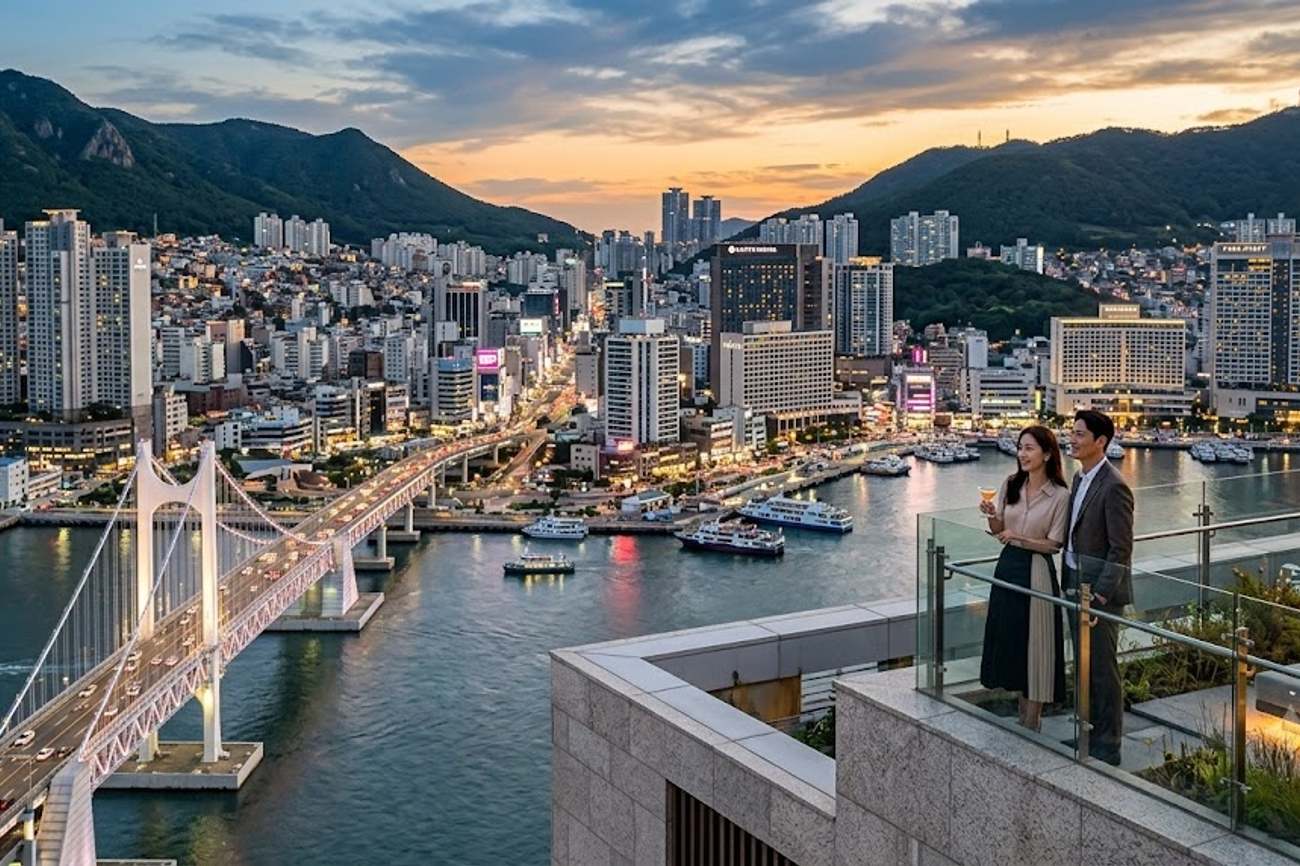
Image generated by AI
[Seoul, September 14, 2026] — South Korea has officially surpassed its preliminary tourism targets for 2026, driven by a record-breaking surge in international arrivals that has positioned Incheon International Airport as the busiest aviation hub in the world.
The growth is being spearheaded by the Ministry of Culture, Sports and Tourism (MCST), with a strategic focus on five key economic zones: Seoul, Busan, Jeju, Incheon, and Daegu. This expansion is fueled by a global obsession with "content tourism"—specifically K-pop, K-beauty, and K-dramas—which has shifted the market from budget group tours toward high-spending, experiential travelers. This shift has allowed the domestic hospitality sector to maintain premium pricing and high occupancy rates despite broader economic volatility in the East Asian region.
The K-Culture Tourism Catalyst
The current boom is the result of a deliberate paradigm shift in how South Korea markets its destination. Rather than competing on price, the government is leveraging cultural exports to create "inelastic demand," meaning visitors are continuing to book luxury stays regardless of exchange rate fluctuations or price hikes.
Data from the Korea Tourism Organization (KTO) confirms that inbound international arrivals hit 10.71 million visitors in the first half of 2026. This represents a 21.3 per cent increase over the same period in 2025. The momentum peaked in the summer, with July 2026 alone seeing 2,092,130 arrivals, surpassing the 1.99 million recorded in June 2026.
The demographic profile of the average visitor has diversified. While mainland China remains the largest source market—contributing 3.21 million visitors (roughly 30 per cent of total arrivals) in the first half of the year—other markets are growing faster. Taiwan saw a 33.4 per cent surge to 1.15 million visitors, and the United States grew by 11.1 per cent, exceeding 811,000 arrivals.
Global Aviation Dominance and Infrastructure
The scale of this influx is most evident at the nation's primary gateways. According to data verified by the Airports Council International (ACI), Incheon International Airport claimed the number one spot globally for international passenger traffic in the first half of 2026.
Incheon handled 38.39 million international passengers between January and June, beating out longtime leaders including London Heathrow (37.79 million) and Singapore’s Changi Airport (34.53 million). This is the first time since the airport opened in 2001 that it has held the top global ranking.
Key aviation metrics for the first half of 2026 include:
- Foreign Passenger Share: 44.4 per cent of total traffic at Incheon during Q2.
- Transit Volume: 4.24 million passengers (up 18.1 per cent year-on-year).
- European Route Growth: A 63.2 per cent increase in transfer routes from Europe.
- Regional Airport Traffic: Gimhae International Airport (Busan) saw 1.01 million arrivals, while Jeju International Airport handled 826,352 direct foreign entries.
- Maritime Arrivals: 1.24 million international arrivals via seaports (11.6 per cent of total inbound traffic).
To ensure these passengers stay in hotels rather than just transiting, the Ministry of Land, Infrastructure and Transport has optimized the K-ETA (Korea Electronic Travel Authorization) system and expanded rail and bus links from airports to provincial cities.
Who Is Affected
The tourism surge is distributed across several key sectors and regions, creating a ripple effect through the national economy.
| Sector/Region | Impact Level | Primary Driver |
|---|---|---|
| Seoul Hotels | Critical | High-value medical tourism and K-culture luxury stays. |
| Incheon Airport | Extreme | Record-breaking passenger volume; global #1 ranking. |
| Busan/Jeju | High | Increased direct foreign entries and cruise terminal traffic. |
| Luxury Retail | High | High-net-worth cruise passengers and "content tourists." |
| Medical Tourism | Extreme | 98 per cent YoY increase in financial transactions in Seoul. |
What This Means for Travelers
For those planning a trip to South Korea in late 2026 or 2027, the "K-culture boom" translates to several practical changes in the travel experience:
1. Higher Hotel Costs: Because demand is "inelastic," hotels in Seoul, Busan, and Jeju are maintaining premium pricing. Budget options are becoming scarcer as the market pivots toward luxury and experiential hospitality.
2. Easier Entry Processes: The optimization of the K-ETA system means faster processing for eligible travelers, reducing the friction of entering the country.
3. Better Regional Access: Travelers are no longer tethered to Seoul. The expansion of direct rail and bus linkages means it is significantly easier to move from Incheon Airport to regional hubs like Daegu or Busan.
4. Crowded Hubs: With Incheon now the busiest airport in the world, travelers should expect higher congestion levels during peak hours, particularly for those on European transfer routes which have seen a 63.2 per cent jump.
The Future of the Korean Peninsula Market
The South Korean government is now focusing on converting transit passengers into overnight guests. By coordinating the MCST and the Ministry of Land, Infrastructure and Transport, the state is building a "frictionless corridor" from the arrivals hall to the hotel lobby.
The focus is shifting toward "high-yield" tourism. Rather than seeking a higher volume of budget travelers, the strategy is to attract visitors who spend more per day on medical procedures, luxury shopping, and curated cultural experiences. With medical tourism spending in Seoul seeing a 98 per cent year-on-year increase, the government is likely to further integrate healthcare services with luxury hotel packages.
As the peninsula continues to take over the East Asian travel market, the competition between Seoul and other regional hubs like Tokyo or Singapore is intensifying, with South Korea currently holding the edge in aviation traffic and cultural draw.
FAQ: South Korea Travel 2026
Do I need a visa or K-ETA for 2026? Most eligible travelers still use the K-ETA (Korea Electronic Travel Authorization). The system has been recently optimized for faster processing to handle the record-breaking volume of arrivals at Incheon.
Which airport is the best entry point for regional travel? While Incheon is the primary hub, Gimhae (Busan) and Jeju International airports are seeing massive growth in direct foreign entries, making them viable alternatives for those avoiding Seoul.
Why are hotel prices increasing in Seoul? The rise of "content tourism" and a 98 per cent increase in medical tourism spending have created high demand for luxury accommodations, giving hoteliers more pricing power.
Is Incheon Airport currently the busiest in the world? Yes. For the first half of 2026, Incheon handled 38.39 million international passengers, surpassing London Heathrow and Singapore Changi.
South Korea is no longer just a stopover; it is the global center of aviation and cultural tourism.
#IncheonAirport2026 #KTO #SouthKoreaTourism #ICN #BusanTravel #MCST
Related Travel Guides
- Africa Safari Manyara Migombani Opens 52-Tent Glamping Resort in Tanzania's Northern Circuit
- AMSA Hospitality Blends Traditional Saudi Heritage and Modern Luxury at Palm Qassim Hotel
- Four Seasons Hotel San Francisco at Embarcadero Opens 40th Floor Terrace Bar Weather Permitting with Sunset Cocktail Offerings
Disclaimer
This article is for informational and educational purposes only. It does not constitute legal, financial, or professional advice. While we strive to provide accurate and up-to-date information, travel policies, regulations, and conditions change rapidly. Always verify information with official sources before making travel decisions. Nomad Lawyer makes no representations about the accuracy, reliability, completeness, or suitability of the information provided. Readers should consult qualified professionals for advice specific to their circumstances. The views expressed in this article are those of the author and do not necessarily reflect the views of Nomad Lawyer.
Raushan Kumar
Founder & Lead Developer
Full-stack developer with 11+ years of experience and a passionate traveller. Raushan built Nomad Lawyer from the ground up with a vision to create the best travel and law experience on the web.
Learn more about our team →