
Magnitude 5.0 Earthquake Hits Granada Spain: Andalusia Activates Emergency Plans Amid Visitor Safety Concerns 2026
A powerful magnitude 5.0 earthquake struck the Granada region of Andalusia, Spain, triggering emergency evacuations and high-alert monitoring for aftershocks during the peak summer travel season.

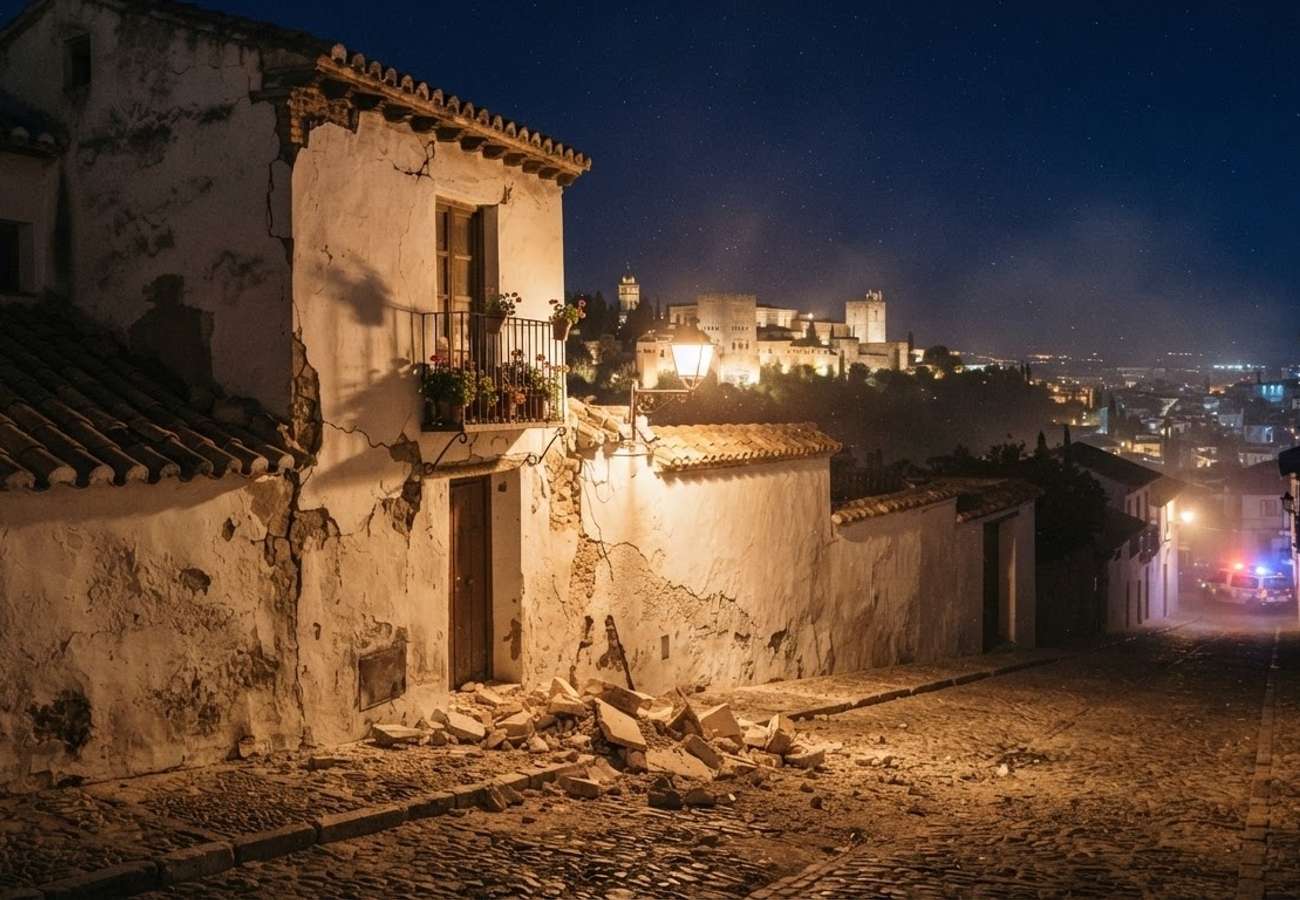
Image generated by AI
A magnitude 5.0 earthquake struck the Granada region of Andalusia, Spain, at 1:04 AM local time on August 15, 2026, prompting the immediate activation of regional emergency protocols. The shallow tremor, centered near Alhendín, was felt across multiple provinces, leading to precautionary building evacuations and a surge in emergency service reports as authorities monitor for dangerous aftershocks.
The seismic event occurred during the height of the summer tourism season, placing international visitors and local residents on high alert. Because the epicentre was located within the Granada metropolitan area, the intensity of the shaking was significantly amplified at the surface, causing widespread alarm throughout the province.
Seismic Data and Epicentre Analysis
The earthquake was characterized by its shallow depth, which typically results in more violent shaking felt by inhabitants regardless of the total magnitude. According to seismic monitoring data, the tremor originated approximately 2 kilometres below the surface.
The following technical specifications outline the event:
| Detail | Specification |
|---|---|
| Country | Spain |
| Region | Andalusia |
| Province | Granada |
| Magnitude | 5.0 |
| Epicentre | Near Alhendín, Granada |
| Primary Affected Areas | Armilla, Las Gabias, Ogíjares, Otura |
| Time of Occurrence | 1:04 AM local time |
| Depth | Approximately 2 kilometres |
The proximity of the epicentre to the metropolitan hub meant that the shockwaves were not merely felt as a distant rumble but as a disruptive force. Residents reported furniture shifting, windows rattling, and objects falling from shelves, indicating a high peak ground acceleration in the immediate vicinity of Alhendín and Armilla.
Andalusia Deploys Operational Level 1 Emergency Response
In response to the tremor, the Government of Andalusia immediately triggered Operational Level 1 of its regional seismic emergency plan. This escalation allows for the coordinated deployment of firefighters, security forces, and structural engineers to survey high-risk zones.
The scale of the public reaction was evident in the communication logs of emergency services. Initial reports indicate that over 80 calls were received immediately following the first shock. As the morning progressed, this number climbed to more than 200 reports. These calls primarily detailed structural concerns, such as the appearance of new cracks in masonry and the collapse of non-structural building elements like cornices and façades.
To mitigate risk, officials issued strict safety directives for both locals and tourists. The guidelines emphasize avoiding buildings with visible structural fissures and maintaining a safe distance from balconies and exterior walls where debris could potentially fall.
Structural Impact in Armilla and the Metropolitan Area
The municipality of Armilla, situated close to the seismic source, bore a significant portion of the impact. The tremor's passage through the urban corridor of the Granada metropolitan area resulted in various reports of minor property damage.
Observed effects in the metropolitan zone included:
- Displacement of heavy indoor furniture.
- Shattered or fallen decorative items from shelving units.
- Visible trembling of door frames and window panes.
- Surface-level cracks in residential and commercial buildings.
- Detached fragments of building façades falling into public walkways.
While the shaking was most intense in Granada, the reach of the earthquake extended across the Andalusian plateau. Reports of tremors were confirmed in the provinces of Almería, Málaga, Jaén, and Córdoba. Conversely, the westernmost provinces of Huelva and Cádiz reported no significant seismic impact.
Precautionary Evacuations in Las Gabias
A critical safety operation took place in Las Gabias, where emergency teams ordered the precautionary evacuation of a residential building. This move was executed as a preventive measure following reports of potential structural instability.
While officials have confirmed that no major injuries resulted from the magnitude 5.0 event, the evacuation in Las Gabias underscores the volatility of shallow earthquakes. Engineering teams are currently conducting detailed inspections of streets and infrastructure to identify "invisible" risks that could be exacerbated by subsequent tremors.
Aftershock Sequence and Ongoing Monitoring
Following the primary 5.0 magnitude shock, the region entered a period of seismic instability. A series of aftershocks have been recorded, primarily concentrated in the municipalities of Armilla, Alhendín, Gójar, Ogíjares, Otura, and La Zubia.
These subsequent tremors have ranged in magnitude from 2.2 to 3.7. While significantly weaker than the initial event, these aftershocks pose a risk to buildings already weakened by the first shock. Seismologists are closely monitoring the frequency and intensity of these events to determine if they are standard decay patterns or precursors to further activity.
Tectonic Drivers of Granada's Seismic Activity
The frequency of earthquakes in Granada is not accidental but a result of the region's complex geological positioning. Southern Spain sits atop a highly active tectonic boundary where the African Plate and the Eurasian Plate converge.
This convergence creates immense subterranean pressure, which is released through a network of active fault zones. While the majority of these releases result in micro-quakes that go unnoticed by the public, the existence of these faults makes Granada one of the most seismically active zones in the Iberian Peninsula. This history of activity is why the Andalusian government maintains a sophisticated monitoring network and a tiered emergency response system.
Essential Guidance for Travelers in Andalusia
For the thousands of tourists currently visiting the Alhambra, the Sierra Nevada, and the historic quarters of Granada, the earthquake serves as a reminder of the region's geological nature. Currently, there are no reports of widespread closures or major disruptions to the tourism infrastructure.
Travelers are advised to adopt the following precautions:
- Monitor Local Alerts: Stay tuned to official government channels for updates on building safety.
- Avoid Restricted Zones: Do not enter areas cordoned off by emergency services, even if they appear safe.
- Structural Vigilance: Be mindful of old masonry and façades in historic districts, which are more susceptible to aftershock damage.
- Emergency Readiness: Know the evacuation routes of your hotel or rental accommodation.
From a logistical standpoint, the region remains open for business, but a heightened sense of caution is recommended.
The rapid response of Andalusian authorities has successfully minimized the risk to life, yet the ongoing aftershocks serve as a stark reminder of the power of the African-Eurasian tectonic boundary.
Related Travel Guides
Disclaimer
This article is for informational and educational purposes only. It does not constitute legal, financial, or professional advice. While we strive to provide accurate and up-to-date information, travel policies, regulations, and conditions change rapidly. Always verify information with official sources before making travel decisions. Nomad Lawyer makes no representations about the accuracy, reliability, completeness, or suitability of the information provided. Readers should consult qualified professionals for advice specific to their circumstances. The views expressed in this article are those of the author and do not necessarily reflect the views of Nomad Lawyer.
Preeti Gunjan
Contributor & Community Manager
A passionate traveller and community builder. Preeti helps grow the Nomad Lawyer community, fostering engagement and bringing the reader experience to life.
Learn more about our team →