
Luxembourg Airport Suspends Operations After Suspected Drone Activity
Luxembourg Airport Suspends Operations After Suspected Drone Activity

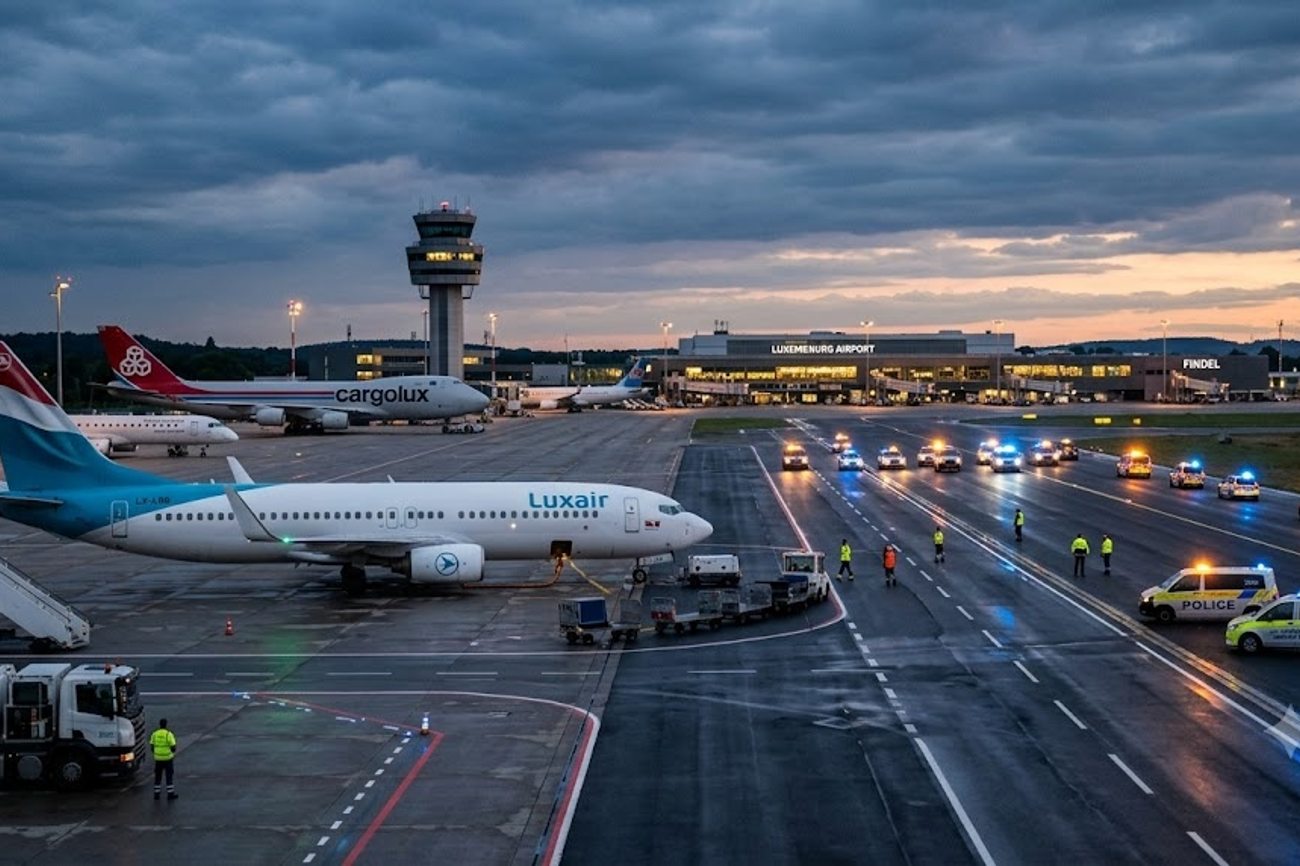
Image generated by AI
European airport closures due to unauthorized drone activity have seen a marked increase in frequency over the last five years, shifting from isolated curiosities to systemic operational risks. While a single event at Luxembourg Airport may seem anecdotal, it mirrors a broader trend where the proliferation of consumer-grade UAVs (Unmanned Aerial Vehicles) is colliding with rigid aviation safety protocols, leading to thousands of diverted passengers across the EU.
The Findel Disruption in Numbers
The recent operational failure at Luxembourg Airport (Findel Airport) provides a clear case study in how a single unauthorized drone can paralyze a national aviation gateway. The disruption began around 21:45 local time on a Friday evening, a period of peak operational activity. The immediate result was the suspension of incoming flights, forcing aircraft to seek alternative landing sites.
A critical data point from this incident is the diversion of a flight originating from London City to Luxembourg, which was rerouted to Liège Airport in Belgium. This specific diversion highlights the cascading complexity of drone-related closures: passengers were not merely delayed but were stranded on the aircraft upon landing in Liège, as border control procedures for UK arrivals required multi-agency coordination before terminal access could be granted.
The timeline of the event underscores the volatility of these disruptions:
- 21:45: Initial reports of suspected drone activity lead to immediate flight diversions.
- Friday Evening: Peak operational window compromised.
- Midnight: Passengers receive updates confirming continued unauthorized airspace penetration.
- Early Hours: Flight operations eventually resume after safety clearances.
Comparative Context: The Rise of UAV Interference
The incident at Findel Airport is not an outlier but part of a regional pattern of "drone-induced paralysis." When comparing this to historical benchmarks, the impact of a single drone has grown exponentially due to the increased density of European airspace and the tighter integration of hub-and-spoke networks. According to data trends tracked by IATA, the intersection of commercial aviation and unmanned aircraft represents one of the fastest-growing safety challenges in the industry.
Historically, airport closures were primarily driven by weather or technical failures. However, the "drone factor" introduces a variable that is unpredictable and often intentional. For instance, the 2018 Gatwick incident remains the gold standard for drone disruption, where a 48-hour closure affected 14,000 passengers. While the Luxembourg event was shorter in duration, the operational ripple effects—such as the redirection to Liège—demonstrate that even a few hours of closure can create a logistical nightmare for crew duty schedules and baggage coordination.
The following table illustrates the operational shift in how European airports handle airspace intrusions compared to traditional disruptions.
| Metric | Traditional Disruption (Weather/Tech) | Drone-Related Disruption (UAV) |
|---|---|---|
| Predictability | Moderate (Forecasts available) | Low (Spontaneous/Unauthorized) |
| Resolution Time | Variable (Based on repair/clearance) | Rapid to Prolonged (Based on detection) |
| Primary Impact | Schedule delays | Total airspace closure/Diversions |
| Regulatory Response | Standard SOPs | High-level security/Police intervention |
| Passenger Experience | Terminal waiting | Diversion to alternative cities/Border issues |
The shift toward UAV-related closures is further evidenced by the increasing investment in counter-drone technology across European hubs. Data from Statista indicates a rising market for airport security systems specifically designed to detect and neutralize small drones, signaling that industry leaders now view these events as a permanent threat rather than a temporary nuisance.
What This Means for Travelers
For the individual traveler, the Luxembourg incident proves that "flight status: on time" can change in seconds due to factors entirely outside the airline's control. The diversion to Liège Airport serves as a warning that a delay is not always a matter of waiting in a lounge; it can mean landing in a different country entirely.
If you are flying through primary European gateways, specifically those serving as national hubs like Luxembourg, the following data-driven booking and travel strategies are recommended:
- The "Alternative Hub" Contingency: When booking flights into smaller national airports (like Findel), identify the nearest diversion airports (e.g., Liège, Brussels, or Frankfurt). Knowing these locations helps you plan emergency ground transport or hotel options if you are diverted.
- Notification Latency: Relying on airport screens is insufficient. Enable push notifications for both the airline and the airport authority. In the Luxembourg case, the gap between the 21:45 diversion and the midnight updates created a window of high uncertainty for passengers.
- Border Documentation Readiness: As seen with the London City to Luxembourg flight, diversions can trigger unexpected border control requirements. Keep digital and physical copies of your passport and visa accessible, even if your final destination is within the Schengen Area, as diversion airports may have different processing protocols.
- Insurance Verification: Check if your travel insurance covers "airspace closure" or "unauthorized drone activity." Many basic policies cover weather but may have ambiguous language regarding security-related closures.
Forward Projection: The Future of Airspace Security
Based on the current trajectory of UAV adoption and the frequency of reports at airports like Findel, we can project a shift toward "Dynamic Airspace Management." We are moving away from the binary "Open/Closed" model toward a tiered restriction system.
Within the next 24-36 months, expect to see the integration of AI-driven detection systems that can pinpoint the location of a drone without requiring a full airport shutdown. This will likely involve a partnership between national aviation authorities and companies specializing in RF (Radio Frequency) sensing.
Furthermore, the regulatory environment is tightening. The UNWTO and other international bodies are pushing for stricter global standards on drone registration and geofencing. Geofencing—software that prevents a drone from physically entering a pre-defined "no-fly zone"—will likely become mandatory for all consumer drones sold within the EU to prevent incidents like the one in Luxembourg.
However, the "cat-and-mouse" game between regulators and unauthorized operators means that diversions will remain a risk. The operational complexity for airlines will increase as they must now build "drone buffers" into their scheduling to prevent a two-hour closure from ruining a three-day flight rotation.
FAQ: Drone Disruptions 2024
Will drone-related delays increase in frequency? Yes. As drone technology becomes more affordable and accessible, the likelihood of unauthorized flights near airports increases. While security is improving, the volume of devices in the air makes occasional disruptions inevitable.
Is it a good time to book flights to Luxembourg? Yes, but maintain flexibility. Luxembourg Airport is a critical hub for both Luxair and Cargolux. While disruptions are rare, the airport's role as the sole international gateway for the country means any closure has a high impact.
Which airlines are most affected by these diversions? Short-haul carriers and those operating "city-to-city" routes (like London City to Luxembourg) are most vulnerable. These flights often have tighter turnaround times and fewer alternative slots at destination airports.
How can I track if a drone is causing my flight delay? Check the "NOTAMs" (Notices to Air Missions) or official airport Twitter/X feeds. Airlines often use generic terms like "operational reasons," but airport authorities are more likely to specify "unauthorized drone activity."
The transition from open skies to contested airspace is the new reality for the modern nomad.
#LuxembourgAirport #FindelAirport #UAVInterference #EuropeanAviationData #FlightDiversionTrends #AirspaceSecurity2024
Related Travel Guides
- Uzbekistan Steps Up Tourism Growth as Etihad Airways Expands Flights, Marketing and Regional Access
- Narita Airport Expands Smart Travel With Multi-Cube Lockers Across All Terminals for Easier Luggage Handling
- Cathay Pacific Celebrates Skytrax Success With World’s Best Cabin Crew and Lounge Recognition
Disclaimer
This article is for informational and educational purposes only. It does not constitute legal, financial, or professional advice. While we strive to provide accurate and up-to-date information, travel policies, regulations, and conditions change rapidly. Always verify information with official sources before making travel decisions. Nomad Lawyer makes no representations about the accuracy, reliability, completeness, or suitability of the information provided. Readers should consult qualified professionals for advice specific to their circumstances. The views expressed in this article are those of the author and do not necessarily reflect the views of Nomad Lawyer.
Preeti Gunjan
Contributor & Community Manager
A passionate traveller and community builder. Preeti helps grow the Nomad Lawyer community, fostering engagement and bringing the reader experience to life.
Learn more about our team →