
La Orotava Acclimatisation Gardens Expands Sustainable Tourism Access in Tenerife with €3 Transit-Friendly Cultural Journeys for 2026 Visitors
Tenerife highlights La Orotava Acclimatisation Gardens (Jardín de Aclimatación de La Orotava) in Puerto de la Cruz, offering visitors an affordable €3 botanical transit escape.

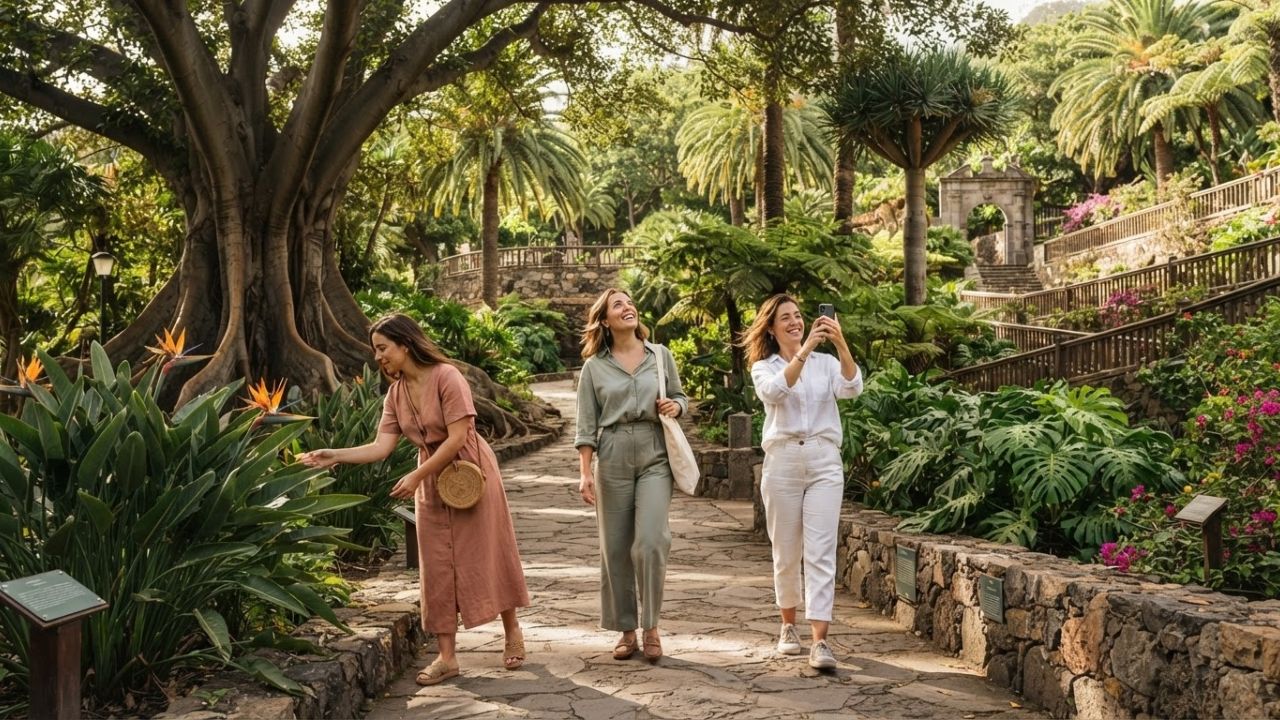
Image generated by AI
Tenerife's historic Jardín de Aclimatación de La Orotava in Puerto de la Cruz is emerging as a central hub for eco-conscious and culturally focused transit travelers across the Canary Islands. Established by royal decree in 1788, the €3 botanical facility provides a low-cost, high-value nature stop connected by regional bus networks to both island airports.
The Autonomous Community of the Canary Islands is actively diversifying its travel sector beyond high-density coastal beach resorts. In northern Tenerife, the city of Puerto de la Cruz is positioning its historic botanical institution—officially designated as the Jardín de Aclimatación de La Orotava—as a primary model for sustainable, slow-paced island exploration.
Royal Decree Origins and Scientific Mission
The institution was founded in 1788 under the order of King Carlos III of Spain. Its original directive was scientific and logistical: to serve as an intermediary acclimatization station for exotic flora collected during Spanish scientific expeditions across the Americas and Asia before being transplanted to the mainland royal gardens of Madrid and Aranjuez.
Managed under the auspices of scientific preservation agencies, the site has evolved over more than two centuries into an international botanical repository. The unique microclimate of northern Tenerife—characterized by maritime trade winds and consistent subtropical temperatures—enables rare tropical, subtropical, and equatorial species to flourish outdoors. The collection stands in stark contrast to the volcanic basalt geography that dominates much of the island's interior.
For international travelers navigating Spain's island territory, the site provides educational insight into global botanical migration and scientific heritage, serving as an alternative to typical leisure attractions.
Site Specifications and Operational Parameters
Situated at Calle Retama, number 2, in Puerto de la Cruz, the garden operates standard daily schedules designed for seamless integration into northern Tenerife travel itineraries.
| Parameter | Operational Specification |
|---|---|
| Official Designation | Jardín de Aclimatación de La Orotava (La Orotava Acclimatisation Gardens) |
| Physical Address | Calle Retama, No. 2, 38400 Puerto de la Cruz, Tenerife, Canary Islands, Spain |
| Standard Admission Fee | €3 per person (On-site ticketing) |
| Daily Operating Hours | 9:00 am – 6:00 pm (Monday through Sunday) |
| Annual Closures | 1 January (New Year's Day), Good Friday, 25 December (Christmas Day) |
| Primary Airport Gateways | Tenerife North Airport (TFN) - 26 km; Tenerife South Airport (TFS) - 90 km |
| Target Visitor Demographics | Independent travelers, botanical researchers, eco-tourists, families, photographers |
Entry fees are set at a fixed rate of €3 per individual, making it one of the most accessible cultural and scientific admissions in the archipelago. Advance reservation systems are not mandatory for general admission, allowing spontaneous visits for regional transit passengers.
Traveler Logistics and Multi-Modal Transit Connections
Navigating to Puerto de la Cruz requires understanding Tenerife's dual-airport layout and public transport structure.
Airport Transit Connections
-
Via Tenerife North Airport (Ciudad de La Laguna - TFN):
- Distance: Approximately 26 km east of Puerto de la Cruz.
- Public Bus (TITSA): Take Line 102 or Line 104 direct from the TFN arrivals terminal to the main Puerto de la Cruz Bus Station (Estación de Guaguas). Transit time is roughly 30 to 35 minutes.
- Direct Taxi: Taxis are queued outside arrivals; transit time is approximately 25 minutes along the TF-5 motorway.
-
Via Tenerife South Airport (Granadilla de Abona - TFS):
- Distance: Approximately 90 km south of Puerto de la Cruz.
- Public Bus (TITSA): Line 343 provides direct express service connecting TFS directly to Puerto de la Cruz without requiring a transfer in Santa Cruz. Travel time is approximately 1 hour and 30 minutes.
- Rental Vehicle: Drivers should follow the TF-1 motorway northbound toward Santa Cruz, merging onto the TF-2 bypass and taking the TF-5 westbound toward Puerto de la Cruz (Exit 32).
Urban Access in Puerto de la Cruz
- Local Bus Routing: Local TITSA urban lines (including Line 381 and Line 382) stop directly adjacent to Calle Retama. Passengers using the contactless Ten+ transit card receive discounted fares across all island bus routes.
- Pedestrian Access: Travelers staying in central Puerto de la Cruz can reach the site via a 15-to-20-minute uphill walk from the coastal promenade, or a short 5-minute taxi ride.
European Entry and Transit Compliance
Travelers arriving in Tenerife from outside the Schengen Zone must fulfill standard Spanish entry requirements. Citizens of visa-exempt non-EU nations must maintain valid travel documents aligned with European Travel Information and Authorization System (ETIAS) directives. Inter-island transit via passenger ferries (operated by Fred. Olsen Express and Naviera Armas from Santa Cruz de Tenerife port) requires government-issued photographic identification for boarding checks.
Visitor Optimization Tips
- Optimal Visiting Window: Plan visits between 9:00 am and 11:00 am to take advantage of cooler morning humidity and low foot traffic.
- Footwear and Accessibility: The pathways consist of natural gravel and stone surfaces; closed-toe walking shoes are recommended.
- Itinerary Combination: Combine the garden visit with the nearby historic center of La Orotava (located 5 km inland via TITSA Line 345 or Line 352) to explore 17th-century Canarian architecture and civic gardens.
Infrastructure Impact and Regional Tourism Strategy
The emphasis on the La Orotava Acclimatisation Gardens reflects a broader shift by Tenerife's tourism council (Turismo de Tenerife) and municipal authorities to redistribute tourist flow across the island.
By driving visitor volume toward northern cultural assets, the region reduces environmental congestion on southern beaches while supporting local commerce in Puerto de la Cruz. The model demonstrates how historical scientific infrastructure can be repurposed for sustainable tourism, offering high educational value without requiring massive capital development.
Related Travel Guides
Spain Leads 15% Canadian Tourism Surge as Mediterranean Demand Outpaces Portugal and Italy in 2026
Spain Leads September 2026 Travel Surge as Demand Shifts Across Global Markets
The 10 Best Botanical Gardens in Spain and the Canary Islands, According To Reddit
Disclaimer
This article is for informational and educational purposes only. It does not constitute legal, financial, or professional advice. While we strive to provide accurate and up-to-date information, travel policies, regulations, and conditions change rapidly. Always verify information with official sources before making travel decisions. Nomad Lawyer makes no representations about the accuracy, reliability, completeness, or suitability of the information provided. Readers should consult qualified professionals for advice specific to their circumstances. The views expressed in this article are those of the author and do not necessarily reflect the views of Nomad Lawyer.
Raushan Kumar
Founder & Lead Developer
Full-stack developer with 11+ years of experience and a passionate traveller. Raushan built Nomad Lawyer from the ground up with a vision to create the best travel and law experience on the web.
Learn more about our team →