Kuwait Airways Restarts Terminal 4: Gulf Travel Recovers After 8-Week Disruption

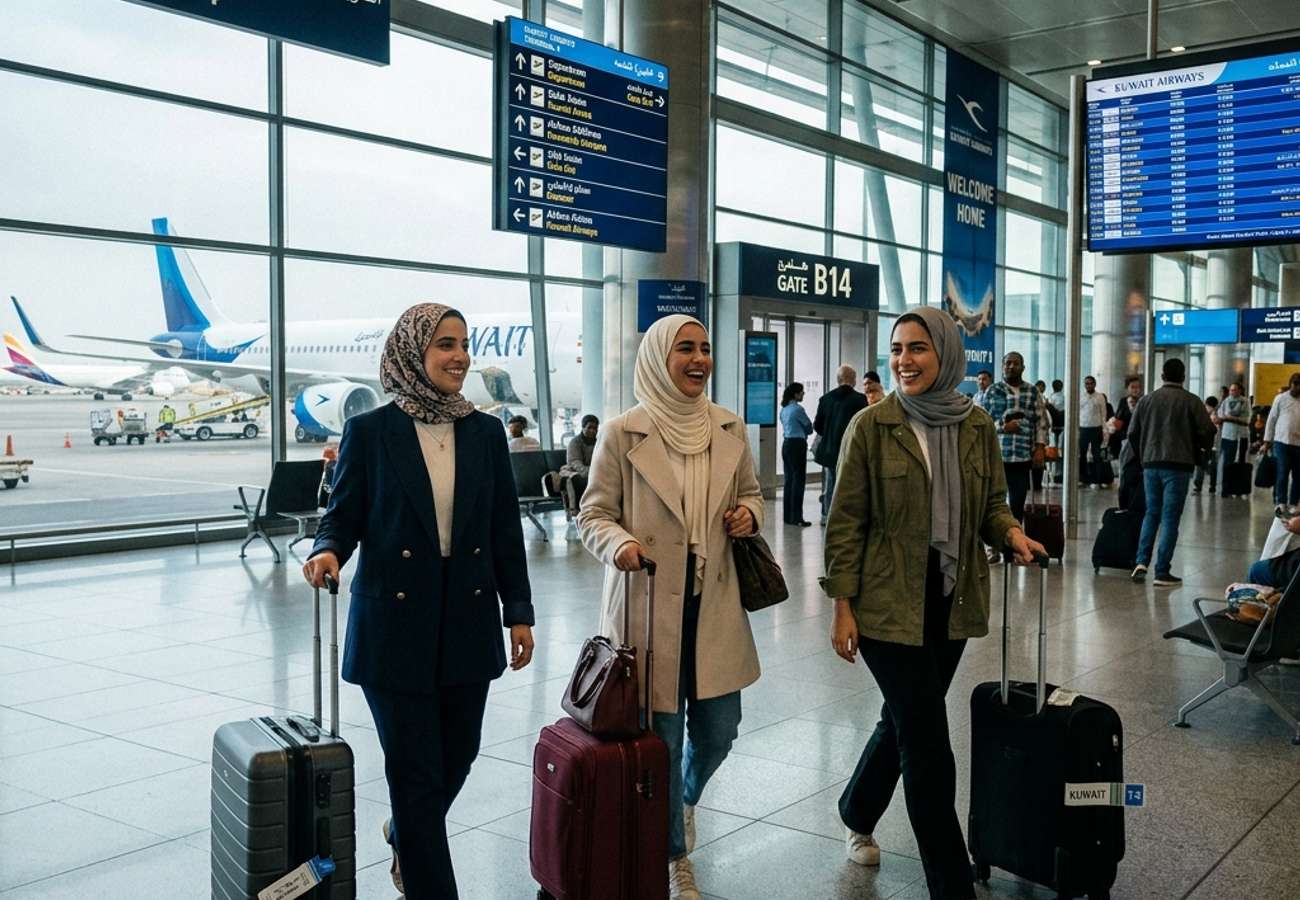
Image generated by AI
After an unprecedented eight-week suspension, Kuwait Airways initiates a phased resumption of services from Terminal 4, restoring a vital aviation lifeline for the Middle East.
Following nearly two months of severe aviation disruption triggered by aerial attacks on Kuwait International Airport, the Gulf nation’s commercial aviation network is officially returning to normalized operations. Kuwait Airways has initiated a structured, phased resumption of services from its primary hub at Terminal 4. By actively restoring connectivity to 29 initial destinations, the national carrier is signaling a crucial turning point for regional travel, tourism recovery, and business mobility across the broader Middle East.
The monumental recovery comes after repeated, targeted drone and missile strikes forced an absolute suspension of commercial operations, violently disrupting passenger flows throughout the Gulf aviation corridor. The strategic reopening carries major implications not only for Kuwait’s national carrier but for thousands of international travelers, transit passengers, and tourism stakeholders who rely heavily on stable Gulf connectivity.
Context and Background: An Eight-Week Operational Crisis
The gradual reopening of Terminal 4 marks one of the most critical recovery phases for the Kuwaiti aviation industry in 2026. Commercial operations at the airport were completely paralyzed for nearly eight weeks. During this volatile period, neighboring countries, predominantly Saudi Arabia and Egypt, stepped in to temporarily support displaced airline operations, preventing a total collapse of the regional transit matrix.
The disruption highlighted how deeply interconnected Middle Eastern aviation systems have become. According to the International Air Transport Association (IATA), the Middle East remains one of the fastest-growing aviation regions globally. Prior to the recent disruptions, Kuwait International Airport was handling approximately 15 million passengers annually, solidifying its position as a strategically vital Gulf transit point.
Breaking Down the Regional Impact: Data and Connectivity
The restoration of flights demonstrates the immense resilience of Middle Eastern aviation infrastructure and the aggressive contingency planning deployed by Gulf carriers.
- Kuwait Airways Route Restoration: Initial phased recovery includes the immediate resumption of services to 29 specific destinations directly from Terminal 4.
- Jazeera Airways Recovery: The Kuwaiti low-cost carrier, which temporarily shifted portions of its operations to Saudi Arabia and Egypt, successfully resumed full operations from Terminal 5 earlier in May.
- Passenger Volume: The hub is critical for processing a historical benchmark of 15 million annual passengers, linking Europe, Asia, and Africa.
- Economic Relief: The resumption brings immediate relief to Kuwait's hospitality sector, alleviating severe pressure on local hotels, airport retailers, and tourism operators heading into the peak summer vacation season.
What Guests Face: The Direct Impact on Travelers
While the resumption of flights is a massive positive step, passengers returning to Kuwait International Airport will experience a heavily modified operational environment:
- Heightened Security Protocols: Aviation authorities continue to prioritize intensive security screening and heavily coordinated airspace management. Travelers should expect extended processing times at check-in and security checkpoints.
- Schedule Volatility: Because services are being restored progressively, certain routes will initially operate under heavily modified timetables, requiring strict passenger vigilance.
- Pricing Stabilization: The reopening of Kuwait’s terminals is expected to rapidly reduce the severe airfare volatility that plagued the region during the operational suspension, as demand on neighboring hubs normalizes.
What This Means for Travelers: Navigating the Recovery Phase
Passengers planning to travel through Kuwait in the coming weeks must adopt a strategy of extreme flexibility. Aviation recovery plans frequently involve aggressive route prioritization and sudden aircraft repositioning, which inevitably leads to last-minute timetable adjustments.
Travelers flying with Kuwait Airways or Jazeera Airways must proactively monitor real-time flight alerts through official airline applications and double-check terminal assignments before departing for the airport. Furthermore, industry experts strongly recommend purchasing fully flexible tickets and comprehensive travel insurance for any Gulf-region itineraries while geopolitical conditions and airspace coordination continue to evolve.
FAQ: Kuwait Aviation Recovery 2026
How many destinations has Kuwait Airways restored from Terminal 4? During the initial recovery phase, Kuwait Airways has successfully restored operations to 29 international destinations from Terminal 4.
How long was Kuwait International Airport closed? Commercial operations were suspended for nearly eight weeks following regional aerial attacks.
Has Jazeera Airways resumed its flights? Yes, Jazeera Airways resumed full operations from Terminal 5 earlier in May after temporarily shifting operations to hubs in Saudi Arabia and Egypt during the crisis.
Related Travel Guides
This article is for informational purposes. Flight routes, passenger regulations, visa rules, and transit advisories are subject to change by airlines and aviation authorities. Readers are advised to verify schedules and travel documentation with relevant carriers and border agencies before departure.
Related Stories

12 Underrated Cities in China That International Travelers Are Starting to Discover

15 Forgotten Medieval Towns in Europe That Feel Like Stepping Back in Time