
Korean Air Launches New Direct Flights Connecting Seoul Incheon and Melbourne Starting December 2026 to Support Transpacific Transit Options
Korean Air expands its Oceania network with a new seasonal nonstop service between Seoul Incheon and Melbourne starting December 18, 2026.

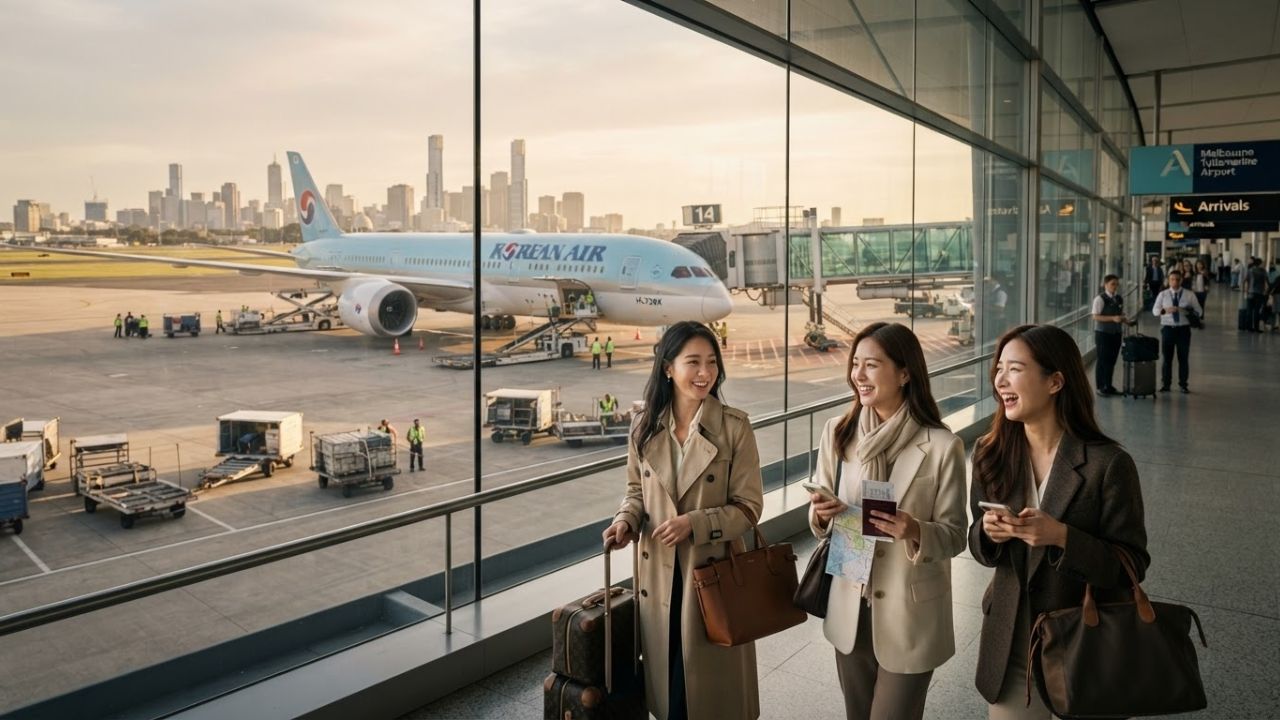
Image generated by AI
Korean Air is introducing a new seasonal nonstop flight route between Seoul Incheon International Airport and Melbourne Airport, starting December 18, 2026. The three-weekly round-trip service, operated by Boeing 787-9 Dreamliner aircraft, will run until March 14, 2027, to handle peak summer travel demand.
International airlines are expanding their transpacific networks, introducing direct services between major East Asian hubs and Australian metropolitan centers. Under this program, the launch of the new direct Seoul Melbourne flight route by Korean Air is set to provide three weekly round trips connecting Seoul Incheon International Airport with Melbourne Airport. Operating on Wednesdays, Fridays, and Sundays, the seasonal service will use Boeing 787-9 Dreamliner aircraft to accommodate passenger demand between South Korea and Australia during the peak travel window.
The Core Transit Update
The introduction of the Seoul-Melbourne service represents a significant expansion of Korean Air's Oceania network, adding a third Australian destination alongside its existing routes to Sydney and Brisbane. The seasonal route is scheduled to operate from December 18, 2026, to March 14, 2027, aligning with the period of peak travel demand between the Northern and Southern Hemispheres.
Under the regulatory approvals of the Ministry of Land, Infrastructure and Transport (MOLIT) of South Korea and the Civil Aviation Safety Authority (CASA) of Australia, the route will offer direct travel options for business travelers, international students, and leisure tourists. By bypassing the need for layovers in secondary hubs, the service is expected to reduce total travel times between the two countries, making regional connections more convenient.
For Australian travelers, the flight provides a direct gateway to Seoul Incheon (ICN), a key transit hub in East Asia, offering connections to destinations across East Asia, Central Asia, and Europe. For South Korean travelers, the route simplifies access to the state of Victoria, supporting tourism, educational exchanges, and commercial relationships.
Transit Schedule and Route Specifications
To help travel managers and logistics providers coordinate bookings, the table below outlines the flight schedules, operating days, and aircraft specifications for the new route:
| Route Direction | Flight Number | Operating Days | Departure Hub (Local Time) | Arrival Hub (Local Time) | Aircraft Model | Average Flight Duration |
|---|---|---|---|---|---|---|
| Seoul Incheon (ICN) to Melbourne (MEL) | KE137 (Target) | Wednesday, Friday, Sunday | Scheduled Departure / ICN Terminal 2 | Next Day Arrival / MEL Terminal 2 | Boeing 787-9 Dreamliner | 10 hours 30 minutes |
| Melbourne (MEL) to Seoul Incheon (ICN) | KE138 (Target) | Monday, Thursday, Saturday | Scheduled Departure / MEL Terminal 2 | Same Day Arrival / ICN Terminal 2 | Boeing 787-9 Dreamliner | 11 hours 35 minutes |
This seasonal service operates from 18 December 2026 through 14 March 2027, subject to slot updates and governmental approvals.
Traveler Logistics Guide
For passengers planning to utilize the new direct flight, understanding the airport configurations at both hubs can streamline transit. Seoul Incheon International Airport (ICN) operates out of two passenger terminals, and Korean Air flights depart and arrive at the modern Terminal 2. Terminal 2 features automated check-in kiosks, smart bag drop systems, and dedicated transfer lounges with sleeping areas, showers, and dining options for passengers connecting to flights across Asia or Europe.
Upon arrival at Melbourne Airport (MEL), international passengers will clear border controls at Terminal 2. Travelers who are not Australian citizens should verify visa requirements, including applying for an Electronic Travel Authority (ETA) if eligible, before booking their flight. For passengers connecting to domestic flights within Australia (e.g., to Adelaide, Hobart, or Canberra), Terminal 2 is connected to the domestic Terminals 1, 3, and 4 via walkable indoor pathways, eliminating the need for terminal shuttle buses.
When flying on the Boeing 787-9 Dreamliner, passengers can choose between Prestige Class (Business) and Economy Class. The Dreamliner features upgraded cabin pressure and humidity levels designed to reduce jet lag on long-haul flights. To ensure seat availability during the busy end-of-year travel window, passengers are advised to book their tickets early through official airline portals.
Infrastructure Impact and Regional Aviation Integration
The launch of the Seoul-Melbourne route highlights how international carriers are adjusting their flight networks to match changing passenger demands. By adding direct seat capacity between Victoria and South Korea, Korean Air is strengthening Melbourne's position as a major international gateway, supporting local hotels, transport operators, and hospitality businesses.
The route also supports regional trade by providing belly-hold cargo space on the Boeing 787-9, allowing for faster transit of perishable goods, electronic components, and e-commerce shipments between East Asia and southeastern Australia. This cargo capacity improves trade logistics, supporting commercial supply chains in both nations.
By establishing this seasonal corridor, the aviation industry is building a more resilient network that can adapt to seasonal travel flows. The project demonstrates the continuing value of direct international flights in supporting regional connectivity, trade links, and the long-term growth of the global travel sector.
Related Travel Guides
- Aer Lingus and British Airways Expand Transatlantic Routes to Mid-Sized United States Cities to Reshape Global Gateway Travel Map: New Travel Alert
- Lufthansa, WestJet, and Virgin Australia Expand Hybrid Partnerships to Reshape Global Airline Codeshare Networks: New Travel Alert
- Adelaide Airport Deploys Amadeus Cloud and Hybrid Self-Service Bag Drops to Streamline Passenger Journeys: New Travel Alert
Disclaimer
This article is for informational and educational purposes only. It does not constitute legal, financial, or professional advice. While we strive to provide accurate and up-to-date information, travel policies, regulations, and conditions change rapidly. Always verify information with official sources before making travel decisions. Nomad Lawyer makes no representations about the accuracy, reliability, completeness, or suitability of the information provided. Readers should consult qualified professionals for advice specific to their circumstances. The views expressed in this article are those of the author and do not necessarily reflect the views of Nomad Lawyer.
Raushan Kumar
Founder & Lead Developer
Full-stack developer with 11+ years of experience and a passionate traveller. Raushan built Nomad Lawyer from the ground up with a vision to create the best travel and law experience on the web.
Learn more about our team →