
Kiribati Travel Guide: Saltwater Fishing and World War II History
Explore Kiribati's remote Pacific atolls, featuring fly-fishing on Kiritimati and historical WWII battleground tours in South Tarawa.
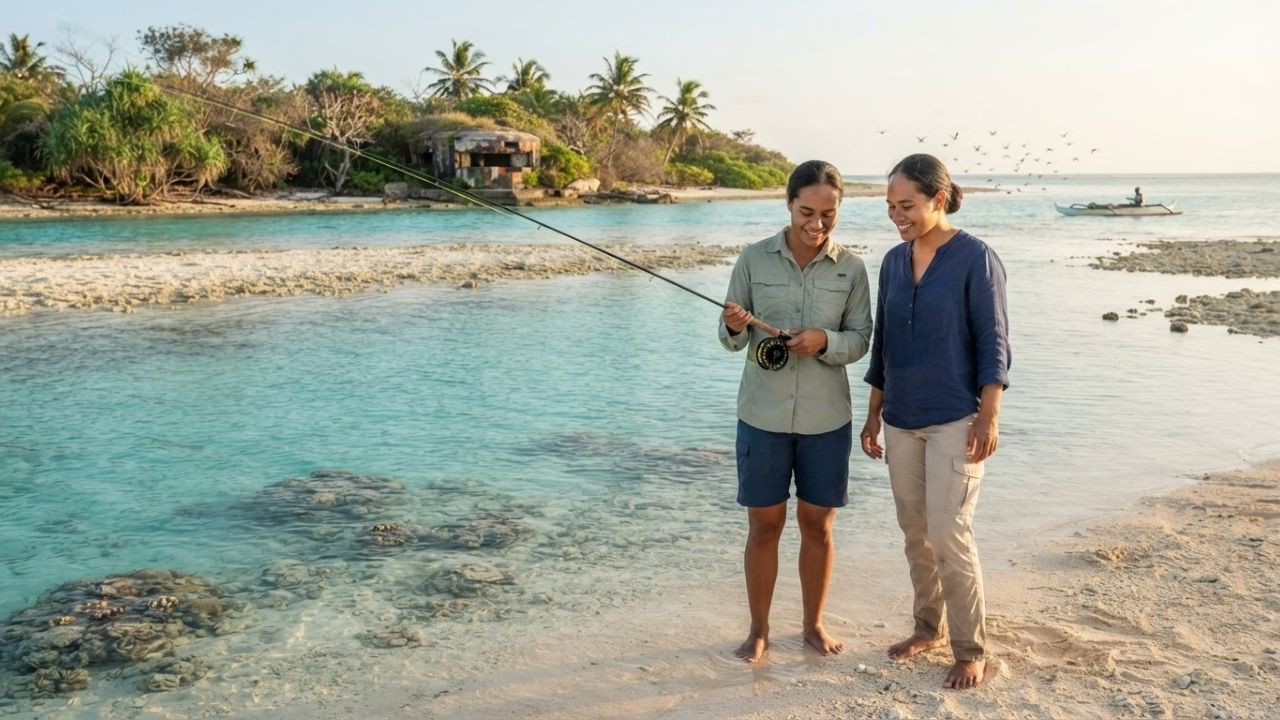
Image generated by AI
With Kiritimati offering world-class bonefish flats and Betio preserving physical bunkers from the Battle of Tarawa, Kiribati has emerged as a premium destination for fishing and historical exploration.
The Core Transit Update
Remote Pacific transit links and experiential marine tourism are under focus across Kiribati's 33 islands and atolls. For travelers seeking isolated outdoor adventure, Kiritimati (Christmas Island)—the world's largest coral atoll by land area—provides extensive flats for saltwater fly-fishing and birdwatching.
In the capital atoll of South Tarawa, guided historical tours trace the Battle of Tarawa (begun November 20, 1943), showcasing bunkers, coastal defense guns, and shipwrecks. Bonriki International Airport on Tarawa and Cassidy International Airport on Kiritimati receive scheduled Fiji Airways connections via Nadi, while Kiritimati maintains a weekly flight corridor through Honolulu.
Regional Geography & Transport Logistics
Coordinating travel between these isolated coral atolls requires tracking regional flight gateways alongside marine connection options. The following tables outline Kiribati's regional hubs and transit logistics.
| Kiribati Regional Hub | Land / Lagoon Area | Primary Strategic Experience | Access Gateway / Route |
|---|---|---|---|
| Kiritimati (Christmas Island) | 388 sq km land area | Fly-fishing (bonefish/trevally) & birds | Cassidy International (CXI) via Nadi/Honolulu |
| South Tarawa (Capital Atoll) | 500 sq km lagoon area | Battle of Tarawa WWII relics & Betio tours | Bonriki International (TRW) via Nadi flights |
| Phoenix Islands (PIPA) | Major marine reserve | 509 identified fish & seabird species | Specialized expedition vessel charter |
| Abaiang Atoll | Outer island | Traditional village Maneaba & homestays | Local passenger boat from Tarawa |
Kiribati geographical regions and visitor profiles.
| Transit Connection | Primary Operator | Service Frequency / Mode | Strategic Traveler Advice |
|---|---|---|---|
| Tarawa Airport (TRW) | Fiji Airways | Scheduled flights from Nadi | Main gateway for WWII Betio relics |
| Kiritimati Airport (CXI) | Fiji Airways | Weekly flights from Nadi & Honolulu | Essential gateway for saltwater flats |
| Abaiang Ferry Route | Local boat operators | Regular passenger boats | Verify ocean swell warnings before boarding |
| Inner-Atoll Transit | Local taxis / minivans | Non-scheduled road vehicles | Carry Australian Dollars (AUD) in cash |
Kiribati transit gateways and airport connections.
Traveler Logistics Guide
From a ground-level perspective, the best way to navigate this is to carry a substantial amount of Australian Dollars (AUD) in physical cash before departing Fiji or Hawaii, as credit card merchant terminals are non-existent outside primary government buildings in South Tarawa, and ATMs are unavailable on the outer islands. Checking flight timetables is recommended.
To plan your journey across Kiribati's remote atolls:
- Cassidy Airport Transfer: Cassidy International Airport (CXI) is situated near Banana village on Kiritimati. Pre-coordinate airport pick-up with your fishing lodge, as public taxi services are limited.
- Observe Surfing Seasons: Surfing is highly seasonal on Kiritimati. Plan your visit between October and March to target the peak Pacific swell windows.
- Respect Local Customs: When visiting traditional villages (maneaba), wait for an invitation to enter. Participating in local village homestays offers direct support to regional families.
- Prepare for Betio WWII Tours: Ensure you hire a registered local guide to explore Betio's Red Beach and bunker complexes, as many relics are situated within active community areas.
Infrastructure Impact Assessment
The development of structured flight corridors to Kiritimati and South Tarawa supports Kiribati’s national strategy to develop low-impact, sustainable tourism.
By channeling visitor interest into historic preservation, local homestays, and catch-and-release fly-fishing, national authorities protect delicate lagoon ecosystems like the Phoenix Islands Protected Area (PIPA) while generating vital revenue for outer-island communities.
Related Travel Guides
Aviemore Reopens as Cairngorms and Jasper Assess Wildfire Tourism Risks
Shravani Mela 2026 Deoghar Travel Tips and Logistics Guide
10 Best Travel Tips for Saltwater Fly-Fishing and WWII Touring in Kiribati, According to Reddit
Disclaimer
This article is for informational and educational purposes only. It does not constitute legal, financial, or professional advice. While we strive to provide accurate and up-to-date information, travel policies, regulations, and conditions change rapidly. Always verify information with official sources before making travel decisions. Nomad Lawyer makes no representations about the accuracy, reliability, completeness, or suitability of the information provided. Readers should consult qualified professionals for advice specific to their circumstances. The views expressed in this article are those of the author and do not necessarily reflect the views of Nomad Lawyer.