
The Savannah Gateway: How Emirates and Qatar Airways Reshape Kenya's Luxury Safari and Coastal Travel in 2026
Targeting 50,000 Middle East visitors and KSh15 billion in new economic impact, Kenya partners with Emirates and Qatar Airways to expand luxury safaris, Swahili coastal escapes, and MICE travel.

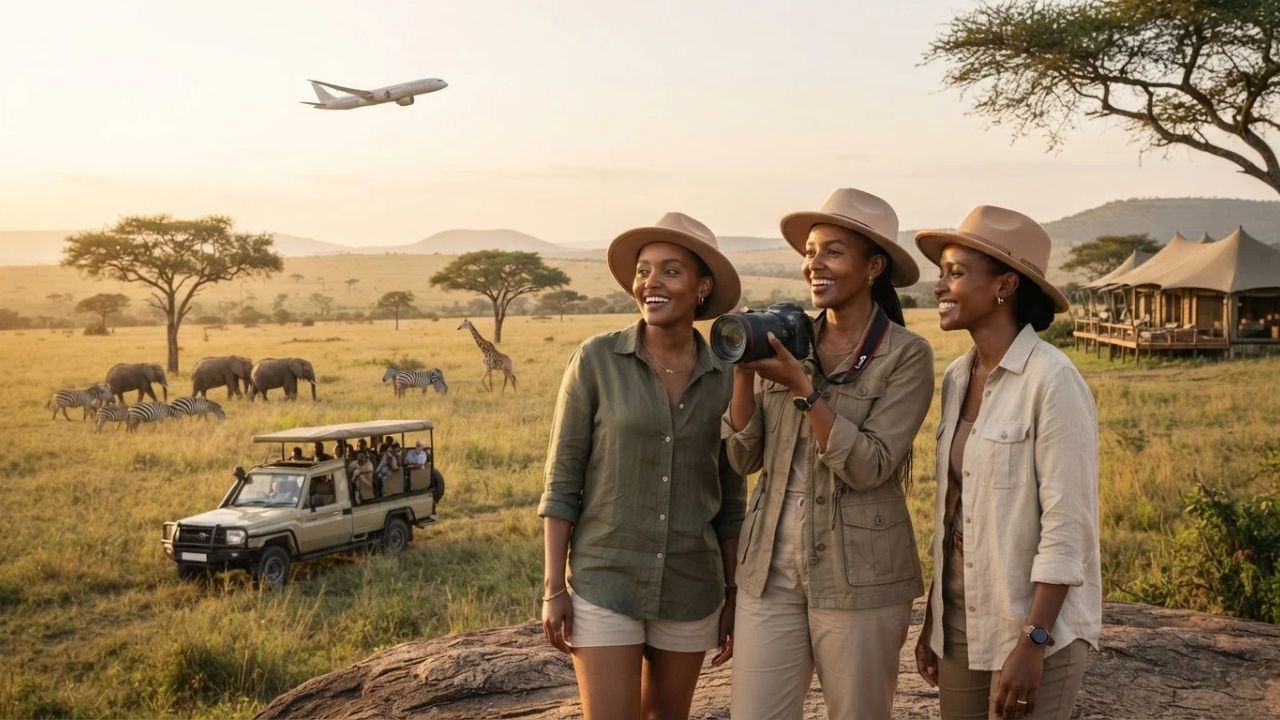
Expanded global airline links through Dubai and Doha connect international travelers directly to Kenya's wildlife conservancies and coastal Swahili heritage.
While traditional safari itineraries once required complex charter connections and days of tedious overland transit, Kenya's aviation network is undergoing an unprecedented expansion that links Gulf megahubs directly to East Africa's most pristine wildlife sanctuaries. Signed during the high-profile Arabian Travel Market (ATM) in Dubai, landmark strategic agreements between the Kenya Tourism Board (KTB), Emirates, and Qatar Airways are transforming how global travelers reach the savannah. By leveraging Emirates' three daily scheduled flights between Dubai and Nairobi alongside Qatar Airways’ extensive network through Hamad International Airport in Doha, Kenya is establishing a premier aviation corridor designed to channel high-value international travelers directly into its national parks, private conservancies, and Indian Ocean coastlines.
The economic ambition underlying these partnerships is immense. Kenya has set a target of welcoming 50,000 visitors from the Middle East, more than doubling the 20,480 arrivals recorded from the region during the 2025/26 financial year. With state economic data establishing that an average international visitor contributes approximately KSh300,000 during their stay, achieving this arrival milestone will inject roughly KSh15 billion in direct expenditure into the Kenyan economy. This surge builds upon a banner 2025 performance that recorded approximately 2.7 million international arrivals and generated roughly KSh500 billion in tourism earnings, advancing the nation toward its long-term target of KSh1 trillion in annual tourism revenue.
The Dual-Hub Strategy: Transforming Global Flight Capacity Into Confirmed Bookings
The collaboration with Emirates and Qatar Airways marks a strategic evolution in East African destination promotion. Rather than relying solely on general advertising billboards, the Kenya Tourism Board is focusing on conversion-driven sales strategies that translate traveler curiosity into immediate airline reservations, safari lodge bookings, and extended coastal holidays.
Under the partnership framework, Emirates supports targeted promotional initiatives by providing dedicated airline inventory, while the Kenya Tourism Board coordinates luxury accommodation and comprehensive ground services across the country. Emirates' triple-daily service between Dubai and Jomo Kenyatta International Airport (NBO) in Nairobi creates seamless flight connections for travelers departing from across Europe, North America, and the Gulf Cooperation Council (GCC) states.
In parallel, Qatar Airways expands Kenya's international footprint by deploying its Doha super-hub to tap emerging high-spend traveler demographics. Both carriers are actively coordinating travel trade roadshows, international media delegations, and familiarization journeys for premium tour planners. The primary marketing objective centers on positioning Kenya as an elite, multi-faceted destination capable of delivering wildlife safaris, deep-sea marine adventures, high-end wellness retreats, and world-class facilities for Meetings, Incentives, Conferences, and Exhibitions (MICE).
What Makes Kenya Different: Beyond the Traditional Big Five Safari
Kenya occupies a revered place in global conservation, yet its experiential richness extends far beyond checking off sightings of lions, leopards, rhinos, elephants, and cape buffalo. The country encompasses distinct climatic zones that allow visitors to transition from the cool central highlands to golden acacia plains and azure coastal reefs within hours.
The crown jewel of the interior remains the Greater Maasai Mara ecosystem, managed in close coordination with the Kenya Wildlife Service. Beyond the national reserve boundaries lie vast community-owned conservancies such as Mara North, Olare Orok, and Naboisho. In these private wilderness areas, strict vehicle limits ensure that travelers experience intimate wildlife encounters without the crowding often seen on public tracks. Night game drives, guided bush walks alongside indigenous Maasai naturalists, and off-road tracking provide unparalleled immersion into predator behavior.
To the north, the arid savannahs of Samburu and Laikipia reveal rare northern specialist species—the "Samburu Special Five," comprising the reticulated giraffe, Grevy’s zebra, Beisa oryx, Somali ostrich, and the long-necked gerenuk. Further south, Amboseli National Park provides an iconic stage where massive elephant herds graze against the snow-capped backdrop of Mount Kilimanjaro.
Along the eastern shoreline, the Indian Ocean reveals a contrasting cultural world. Historic coastal settlements like Lamu Old Town, an internationally celebrated UNESCO World Heritage site, preserve seven centuries of continuous Swahili maritime civilization. Car-free coral-rag stone streets, hand-carved wooden doorways, traditional lateen-sailed dhow boats, and the aroma of cardamoms and cloves transport travelers into the historical center of the monsoon spice trade. South of Mombasa, Diani Beach offers powder-white coral sands, kite surfing, and direct access to protected coral gardens teeming with green sea turtles and whale sharks.
Visitor Insider Tips: Navigating Safaris, Rail Links, and Bush Etiquette
Maximizing a journey through Kenya requires insider understanding of domestic transit networks, seasonal wildlife migrations, and cultural etiquette:
- Bypass Road Fatigue With the Madaraka Express: If combining a wildlife safari with coastal relaxation, avoid the congested highway between Nairobi and the coast. Book first-class tickets on the modern Standard Gauge Railway (SGR) Madaraka Express train. The journey glides from Nairobi through Tsavo National Park directly to Mombasa in under five hours, offering panoramic views of grazing zebras and elephants directly from your window.
- Choose Private Conservancies Over Public Gates: For the most exclusive safari experience, base yourself in private community conservancies adjoining the Maasai Mara or Amboseli. Unlike public national reserves, private conservancies prohibit day-tripper minibuses, permit off-road driving for rare wildlife sightings, and allow guided night drives when big cats are actively hunting.
- Master Safari Field Etiquette: When tracking big cats, maintain total silence in open-sided 4x4 vehicles; sudden loud voices or standing up breaks the vehicle's silhouette and alarms resting predators. Never encourage drivers to herd animals or crowd cheetahs on hunts. When visiting traditional Maasai or Samburu bomas (manyattas), ask your guide about photography protocols and purchase beadwork directly from the women who crafted them.
- Savor Regional Kenyan Gastronomy: Step outside international hotel menus to sample authentic regional cuisine. Enjoy traditional nyama choma (slow-roasted goat meat served on wooden boards with pungent kachumbari tomato-onion relish and warm maize ugali). Along the coast, delight in Swahili coconut fish curry, tamarind-glazed kingfish, and fragrant coastal chicken biryani infused with saffron and cloves.
- Tipping Norms in Safari Lodges: Tipping is deeply appreciated across the safari hospitality sector. A standard guideline is $15 to $20 per day for your dedicated professional safari field guide, and $10 to $15 per guest per day deposited into the communal staff gratuity box to reward kitchen crews, trackers, and housekeeping staff.
Cultural and Environmental Context: Community Conservancies and Anti-Poaching
The expansion of luxury tourism in Kenya is fundamentally entwined with community-led ecological protection. Decades ago, wildlife tourism operated under a colonial preservation model that often displaced indigenous pastoralists from their ancestral grazing lands. Today, Kenya leads the continent in community-owned conservancy models. Under these innovative frameworks, Maasai and Samburu landowners legally consolidate their ancestral parcels, leasing the acreage to high-end eco-operators.
The economic returns from these leases are transformative. The guaranteed monthly rental income and conservancy bed-night levies directly fund clean solar boreholes, primary school bursaries, and community clinics. In return, pastoralist families manage livestock grazing rotations sustainably, opening vast migratory corridors where wildlife can roam without the barrier of agricultural fencing.
In tandem, tourism revenues finance the dedicated rangers who protect endangered black rhinos and elephants from poaching syndicates. By employing hundreds of local community members as wildlife scouts, anti-poaching trackers, and safari lodge managers, Kenya demonstrates that wild animals are far more valuable alive than dead. When international travelers fly into Nairobi aboard Emirates or Qatar Airways and venture onto the plains, their patronage provides the direct financial oxygen that ensures Africa’s greatest wilderness remains wild for centuries to come.
FAQ: Visiting Kenya 2026
What are the primary airlines driving Kenya's international tourism connectivity? Emirates operates three daily flights between Dubai and Nairobi, while Qatar Airways connects travelers from across the globe through its central hub in Doha.
What visitor targets has Kenya set for Middle Eastern travelers? The Kenya Tourism Board aims to welcome 50,000 visitors from the Middle East, generating an estimated KSh15 billion in new economic spending.
What is the advantage of staying in private conservancies over national reserves? Private conservancies enforce strict vehicle caps, permit off-road tracking, allow guided night game drives, and channel lease fees directly into indigenous communities.
What is the best way to travel between Nairobi and the coastal beaches? The modern Madaraka Express train provides a comfortable, scenic journey between Nairobi and Mombasa in under five hours, passing directly through Tsavo National Park.
As dawn breaks over the Mara and acacia shadows lengthen, Kenya reminds the wandering soul that the wildest beauty is found where nature and community walk together.
Related Travel Guides
Disclaimer
This article is for informational and educational purposes only. It does not constitute legal, financial, or professional advice. While we strive to provide accurate and up-to-date information, travel policies, regulations, and conditions change rapidly. Always verify information with official sources before making travel decisions. Nomad Lawyer makes no representations about the accuracy, reliability, completeness, or suitability of the information provided. Readers should consult qualified professionals for advice specific to their circumstances. The views expressed in this article are those of the author and do not necessarily reflect the views of Nomad Lawyer.
Raushan Kumar
Founder & Lead Developer
Full-stack developer with 11+ years of experience and a passionate traveller. Raushan built Nomad Lawyer from the ground up with a vision to create the best travel and law experience on the web.
Learn more about our team →