
Middle East Airspace Crisis 2026: 104 Cancellations and 758 Delays Hit Dubai, Istanbul, and Riyadh
Geopolitical instability triggers sweeping flight disruptions across the Middle East, with 104 cancellations and 758 delays impacting major hubs in Saudi Arabia, UAE, and Türkiye.

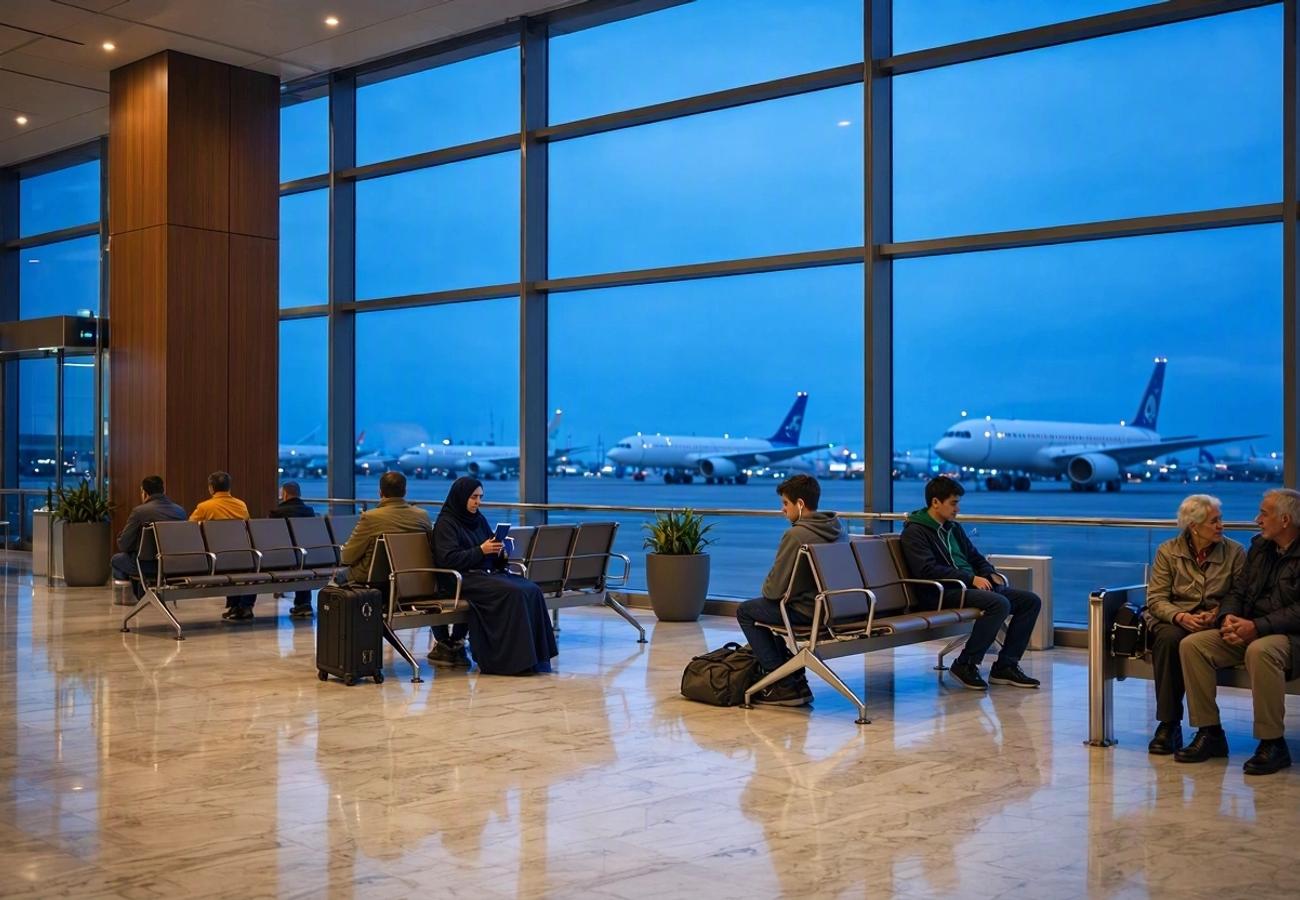
Image generated by AI
758 delays and 104 cancellations across the Middle East's primary aviation hubs signal a severe operational breakdown triggered by regional security volatility. This systemic instability has paralyzed travel across Saudi Arabia, the UAE, Qatar, Kuwait, Bahrain, Jordan, and Türkiye, stemming from reported drone and missile threats aimed at critical infrastructure. The volatility reached a peak with the temporary shutdown of Riyadh’s King Khalid International Airport, which only resumed operations on Sunday, October 25.
Geopolitical Volatility and Infrastructure Risk
The current disruption is not a result of technical failure or weather, but a direct consequence of airspace insecurity. When critical infrastructure, such as airports in Saudi Arabia, becomes a target for drone or missile activity, aviation authorities must implement immediate grounding orders to ensure passenger safety. This creates a domino effect; a closure in Riyadh forces diversions to Jeddah or Dubai, which then leads to gate congestion and crew timing-out across the network.
For the modern nomad or business traveler, this highlights the precarious nature of relying on "mega-hubs." While Dubai International Airport and Hamad International offer unparalleled connectivity, their concentration of traffic makes them vulnerable to regional airspace restrictions.
Regional Disruption Data: October 26, 2026
The following data, verified via FlightAware, illustrates the scale of the operational collapse. The impact is most heavily concentrated in Saudi Arabia, where the intersection of security threats and high passenger volume has created the highest cancellation rates.
Airport Disruption Metrics
| Airport | City | Delays | Cancellations |
|---|---|---|---|
| King Abdulaziz International | Jeddah | 219 | 35 |
| Dubai International | Dubai | 167 | 10 |
| Sabiha Gökçen International | Istanbul | 131 | 2 |
| Hamad International | Doha | 126 | 2 |
| King Fahd International | Dammam | 46 | 6 |
| King Khaled International | Riyadh | 19 | 35 |
| Bahrain International | Manama | 23 | 8 |
| Queen Alia International | Amman | 12 | 4 |
| Kuwait International | Kuwait City | 15 | 2 |
Carrier Performance Impact
| Airline | Delayed Flights | Cancelled Flights |
|---|---|---|
| Saudia | 128 | 26 |
| Qatar Airways | 100 | 2 |
| FlyDubai | 62 | 4 |
| Flynas | 39 | 1 |
| Gulf Air | 17 | 8 |
| Royal Jordanian | 5 | 3 |
Notably, King Abdulaziz International in Jeddah faced a departure delay rate of 28% and an arrival delay rate of 25%, reflecting the massive backlog of aircraft unable to land or depart during the height of the security alerts.
Expert Analysis: The Cost of Airspace Fragility
The data reveals a stark disparity between "delays" and "cancellations." For instance, Qatar Airways recorded 100 delays but only 2 cancellations. This suggests a strategy of "holding" flights—keeping passengers in terminals or on tarmacs—rather than scrubbing flights from the schedule. For travelers, this means the primary risk is not a total loss of the journey, but a massive loss of time and the potential failure of onward connections.
The pricing pressure resulting from this volatility will likely manifest in higher insurance premiums for carriers and, eventually, higher ticket prices for passengers as airlines price in the risk of "security-related diversions." For those booking routes through the Gulf, the direct consequence is a requirement for significantly larger buffers between connecting flights. A standard two-hour layover is no longer sufficient in a climate where a single drone alert can freeze an entire city's airspace.
From a legal standpoint, these disruptions fall under "extraordinary circumstances," which often exempts airlines from paying cash compensation under many regulatory frameworks, including those aligned with International Air Transport Association (IATA) guidelines. However, the duty of care—providing food, communication, and hotel accommodation—remains mandatory.
Key Takeaways
- Saudi Arabia is the Epicenter: Jeddah and Riyadh combined for 70 of the 104 total cancellations, making Saudi hubs the highest-risk points in the current network.
- High Delay-to-Cancellation Ratio: Most carriers, particularly Qatar Airways and FlyDubai, are opting for extensive delays over cancellations, increasing the risk of missed connections.
- Infrastructure Vulnerability: The temporary closure of King Khalid International Airport proves that regional security threats can instantaneously sever key transit arteries.
- Documentation is Vital: Passengers must retain all receipts for food and lodging, as "extraordinary circumstances" may limit compensation but not the reimbursement of essential expenses.
FAQ: Middle East Flight Disruptions 2026
Am I entitled to compensation for a flight cancelled due to security threats? Generally, no. Missile or drone threats are classified as "extraordinary circumstances" beyond the airline's control. However, the airline must still provide a refund or rebooking and cover basic needs like meals and hotels.
What should I do if my connecting flight is missed due to a delay in Dubai or Doha? Contact your airline immediately to be re-protected on the next available flight. If you booked separate tickets, you may be responsible for the new fare unless you have comprehensive travel insurance.
How can I tell if my flight is actually cancelled or just delayed? Avoid relying solely on airport screens. Use the airline's official mobile app or a real-time tracker like FlightAware for the most accurate status of your specific tail number.
When the airspace becomes a geopolitical chessboard, the passenger is often the first piece to be moved.
Related Travel Guides
Disclaimer
This article is for informational and educational purposes only. It does not constitute legal, financial, or professional advice. While we strive to provide accurate and up-to-date information, travel policies, regulations, and conditions change rapidly. Always verify information with official sources before making travel decisions. Nomad Lawyer makes no representations about the accuracy, reliability, completeness, or suitability of the information provided. Readers should consult qualified professionals for advice specific to their circumstances. The views expressed in this article are those of the author and do not necessarily reflect the views of Nomad Lawyer.
Kunal K Choudhary
Co-Founder & Contributor
A passionate traveller and tech enthusiast. Kunal contributes to the vision and growth of Nomad Lawyer, bringing fresh perspectives and driving the community forward.
Learn more about our team →