
Shores Beyond the Megaship: Ten Intimate North American Coastal Cruise Routes for 2026
From the kelp-wrapped sea caves of California's Channel Islands to the wild horses of Assateague and remote coral atolls of Dry Tortugas, explore ten small-ship coastal itineraries backed by National Park Service visitor data.

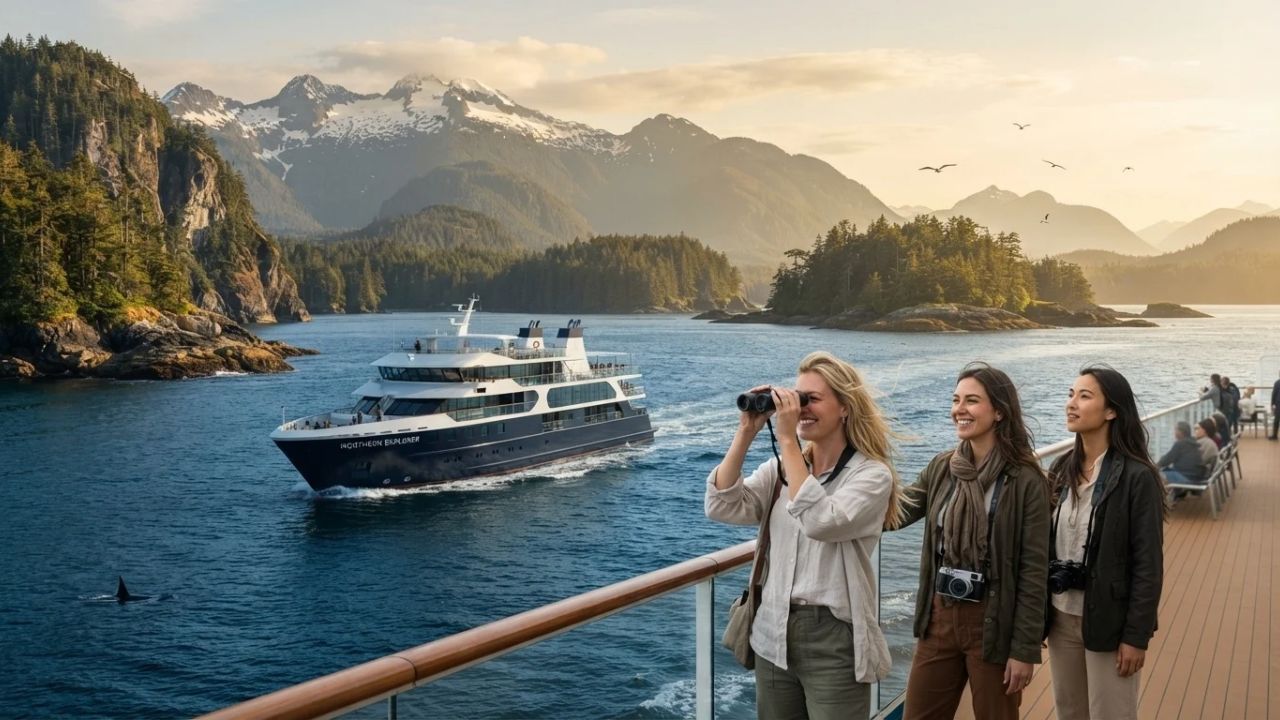
Small-ship expedition cruising unlocks secluded barrier islands, marine national parks, and historic ports inaccessible to massive cruise liners.
While massive commercial cruise liners carry five thousand passengers at a time into overcrowded tourist ports, North America's most captivating maritime sanctuaries remain completely inaccessible to deep-draft megaships. Across the continent's tidal estuaries, glaciated inlets, barrier island chains, and protected ocean parks, small-ship coastal cruising is redefining marine exploration. Operating vessels that carry anywhere from a dozen to a few hundred guests, these nimble expeditions navigate shallow channels, anchor in pristine coves, and deploy inflatable Zodiacs directly onto undeveloped beaches where nature still dictates the itinerary.
To understand where travelers are focusing their attention, official data compiled by the National Park Service provides an invaluable benchmark. Across ten representative coastal national parks and seashores, total recreation visits reached 106.2 million between 2021 and 2025. While these federal tallies measure overall destination visitation rather than exclusive cruise ship passenger manifests, they illuminate the profound contrast between heavily frequented Atlantic shores like Cape Cod (recording 19.30 million visits over five years) and secluded wild havens like Georgia's Cumberland Island (recording just 335,444 visits). For discerning maritime travelers, this data provides the foundation for crafting deeply immersive coastal expeditions.
The Small-Vessel Paradigm: Navigating North America's Protected Waters
Small-ship coastal cruising bridges the divide between adventurous wilderness exploration and refined maritime hospitality. Unlike conventional voyages that treat the ship as an isolated floating resort, small-craft itineraries treat the ocean vessel as a mobile basecamp. Passengers spend their days sea kayaking along kelp canopies, hiking remote ridgelines, and examining intertidal marine biology guided by resident naturalists.
This approach spans diverse geographic zones across the Atlantic, Pacific, and Gulf coasts, featured prominently across coastal travel networks guided by Visit The USA. By examining five-year federal recreation data, travelers gain critical context regarding crowd distribution, environmental protection mandates, and seasonal operating realities across ten distinct maritime routes.
What Makes These Ten Coastal Corridors Different: From Glaciers to Mangroves
Each of these ten small-ship routes offers an encounter with specific coastal ecosystems, cultural heritage, and maritime navigation:
1. Channel Islands Coastal Expedition: Southern California’s Galapagos
Departing from Ventura or nearby Southern California harbors, this route explores Channel Islands National Park, which protects five distinct islands: Anacapa, Santa Cruz, Santa Rosa, San Miguel, and Santa Barbara. A five-day expedition allows travelers to explore sea caves by kayak on Santa Cruz, hike windswept marine terraces on Santa Rosa, and photograph nesting seabirds on Anacapa. Total recreation visits recorded 319,252 in 2021, 323,245 in 2022, and 328,746 in 2023, before tapering to 262,581 in 2024 and 227,186 in 2025, generating a five-year total of 1,461,010 visits (a 28.8% decline). This lower visitation ensures untamed solitude for hikers and snorkelers.
2. Point Reyes and Northern California Coastal Discovery
Beginning with an urban waterfront departure from San Francisco, vessels sail north toward Point Reyes National Seashore. Protecting roughly 80 miles of shoreline, over 71,000 acres of terrain, and 32,000 acres of federally designated wilderness, the area supports more than 900 flowering plant species and 65 mammal species. Travelers explore Tomales Bay, hike the rugged headlands of Chimney Rock, and view elephant seal colonies. The seashore recorded 2,738,098 visits in 2021, 2,336,202 in 2022, 2,268,058 in 2023, 2,371,800 in 2024, and 2,429,601 in 2025, totaling 12.14 million visits over five years (an 11.3% decrease).
3. Redwood Coast and North Pacific Maritime Route
Connecting San Francisco with northern maritime bases like Eureka and Crescent City, this route highlights the intersection of ancient temperate rainforests and dramatic Pacific breakers. Redwood National and State Parks span 50 miles of coastline, including 37 miles of protected shoreline and 38,982 acres of ancient coast redwoods. Shore excursions access Klamath River Overlook, Enderts Beach, and Crescent Beach. Park visitation recorded 435,879 in 2021, 458,400 in 2022, 409,105 in 2023, 622,883 in 2024, and 1,202,480 in 2025 (totaling 3,128,747 visits, a 175.9% increase). The National Park Service noted that the sharp 2025 rise was heavily influenced by updated visitor-counting technology rather than an organic surge in tourists.
4. Olympic Peninsula and Strait of Juan de Fuca
Using Seattle as a primary international gateway, small expedition ships navigate into Port Angeles and along the wild maritime rim of Olympic National Park. The park safeguards 922,651 acres, including 876,447 wilderness acres, 73 miles of primitive wilderness coastline, 32 named glaciers, and over 3,000 miles of rivers and streams. Guests explore tidepools beneath looming sea stacks and observe seals, sea lions, and marine birds. Annual visits rose from 2,718,925 in 2021 to 2,432,972 in 2022, 2,947,503 in 2023, peaking at 3,717,267 in 2024, and remaining strong at 3,584,187 in 2025, creating a five-year total of 15.40 million visits (a 31.8% gain).
5. New York Harbor and Atlantic Gateway Passage
Combining metropolitan culture with historic coastal waterways, this voyage centers around the Statue of Liberty National Monument and Ellis Island in New York Harbor. Accessible via authorized ferry transit, the monument recorded 1,556,482 visits in 2021, surging post-pandemic to 3,141,213 in 2022, 3,739,607 in 2023, 3,722,029 in 2024, and 3,538,231 in 2025, generating 15.70 million visits over five years (a 127.3% jump). In 2023 alone, National Park Service economic models showed that visitor spending reached $250 million in gateway communities, supporting an estimated 2,700 regional jobs.
6. Cape Cod and Massachusetts Maritime Coast
Extending east from Boston, this classic New England coastal route navigates to Provincetown and Wellfleet along Cape Cod National Seashore, which protects 40 miles of Atlantic beach, coastal dunes, marshes, freshwater ponds, and historic lighthouses. Recording the highest volume among all ten proxies, the seashore logged 4,017,239 visits in 2021, 3,968,672 in 2022, 3,808,404 in 2023, 3,823,242 in 2024, and 3,682,771 in 2025, achieving an astounding five-year total of 19.30 million visits (down 8.3%). In 2024, 3.8 million visitors spent $598 million in surrounding towns, generating $754 million in cumulative economic benefit and supporting 5,385 local jobs.
7. Delmarva and Assateague Island Coastal Passage
Stretching 37 miles along the coasts of Maryland and Virginia, this barrier island route balances the protected wilderness of Assateague Island National Seashore with the marshes of Chincoteague National Wildlife Refuge. Famed for its wild horse herds—managed separately on the Maryland and Virginia sides—visitors must maintain at least 40 feet of distance from the animals. Visitation recorded 2,662,716 in 2021, 2,340,269 in 2022, 2,351,874 in 2023, 2,282,498 in 2024, and 2,325,195 in 2025, producing nearly 12 million visits across five years (a 12.7% drop).
8. Outer Banks Coastal Passage: North Carolina's Dynamic Barrier Reefs
Departing from Norfolk, Virginia, small craft navigate the sounds and oceanfront barrier sand spits of Cape Hatteras National Seashore, protecting over 70 miles of dynamic Atlantic shoreline and three celebrated historic lighthouses. The seashore recorded 3,206,056 visits in 2021, 2,862,844 in 2022, 2,826,169 in 2023, 2,762,954 in 2024, and 2,684,009 in 2025, accumulating 14.34 million visits over five years (a 16.3% decrease). In 2026, lighthouse climbing at Cape Hatteras Lighthouse remains unavailable due to comprehensive structural restoration, though the surrounding museum and coastal grounds remain accessible.
9. Georgia Sea Islands and Cumberland Island: Unspoiled Salt Marsh Sanctuaries
For travelers demanding absolute serenity, Cumberland Island National Seashore off Georgia sits between St. Andrews Sound and the St. Marys River. Covering 36,415 acres—with nearly half comprising undisturbed salt marsh habitat—the island boasts 17.5 miles of length and 17 miles of undeveloped sandy beach free of docks, roads, or commercial buildings. Accessible solely by passenger ferry or private vessel, it recorded only 72,240 visits in 2021, 64,387 in 2022, 73,812 in 2023, 64,706 in 2024, and 60,299 in 2025, totaling just 335,444 visits across five years (a 16.5% decline).
10. South Florida, Everglades, and Remote Gulf Coast
Departing from Miami, this subtropical expedition connects the mangrove estuaries of Everglades National Park with the coral reefs of the Florida Keys. The Everglades protects 1.5 million acres across Miami-Dade, Monroe, and Collier counties. Farther west, vessels venture 70 miles beyond Key West into Dry Tortugas National Park, accessible exclusively by boat or seaplane. Everglades recreation visits totaled 942,130 in 2021, peaked at 1,155,193 in 2022, moved to 810,189 in 2023, 741,983 in 2024, and reached 778,198 in 2025, yielding a five-year total of 4.43 million visits (a 17.4% drop). The region's dry season runs from December through April, offering prime wildlife viewing.
Marine stewardship along these waters is further guided by sanctuary regulations from the NOAA Office of National Marine Sanctuaries.
Visitor Insider Tips: Expedition Logistics, Tides, and Wilderness Etiquette
Maximizing a small-ship coastal cruise demands careful personal preparation and an understanding of marine dynamics:
- Build Pre-Cruise Buffer Days: Because small expedition vessels rely on tide tables, wind conditions, and landing swells, itineraries remain inherently fluid. Arrive in gateway cities like Seattle, San Francisco, Boston, or Miami at least one to two days prior to embarkation to account for flight delays and acclimate to coastal weather.
- Prepare for Wet Zodiac Landings: Many pristine stops—such as Cumberland Island, Dry Tortugas, or the Channel Islands—lack fixed concrete piers. Guests disembark into inflatable Zodiacs and step directly into knee-deep surf. Pack sturdy neoprene boots, waterproof dry bags for cameras, and water-resistant outer layers.
- Mind Wildlife Safety Regulations: When observing marine and terrestrial wildlife, observe strict federal boundaries. In Assateague, federal park rangers enforce a mandatory 40-foot buffer from wild horses to prevent kicks and bites. In Olympic and Channel Islands marine reserves, maintain safe distances from resting sea otters, seal haul-outs, and nesting marine birds.
- Seasonality Determines the Experience: Late spring through early autumn provides optimal daylight and sea conditions for northern Pacific and Atlantic routes, with autumn delivering crisp air and spectacular foliage around Cape Cod. For South Florida and the Everglades, schedule your sailing between December and April to enjoy mild temperatures and avoid humid summer storms.
- Pack for Remote Autonomy: Remote outposts like Dry Tortugas National Park have zero commercial food stands, freshwater outlets, or fuel stations. Carry your own personal essentials, reusable filtered water bottles, and marine-safe sunscreen to protect delicate coral reefs.
Cultural and Environmental Context: Fragile Estuaries and Marine Conservation
Small-ship cruising presents a responsible alternative to the environmental toll of massive commercial cruising. Large vessels discharge immense volumes of greywater, create severe acoustic disturbances that disrupt marine mammal communication, and overwhelm historic harbors with thousands of passengers at a single pier. Small expedition craft generate a fraction of the carbon footprint, utilize advanced onboard wastewater filtration systems, and distribute economic revenue into quiet coastal communities that cherish working waterfront traditions.
Simultaneously, these marine ecosystems face intense ecological pressures. Rising ocean temperatures threaten coral reefs in the Florida Keys, while frequent Atlantic storm surges rapidly reshape the barrier sandbars of Cape Hatteras and Assateague Island. In northern waters, permafrost thaw and coastal erosion demand strict adherence to "Leave No Trace" wilderness ethics.
By patronizing localized expedition providers, travelers directly support conservation rangers, marine biologists, and historic preservationists who safeguard 19th-century lighthouses and preserve Indigenous coastal shell middens. Small-ship cruising transforms travelers from passive vacationers into active maritime stewards, proving that the most profound travel memories arise not from onboard glitz, but from the raw majesty of undisturbed ocean horizons.
FAQ: Visiting North American Coastal Routes 2026
How do small-ship coastal cruises differ from conventional cruise ships? Small vessels carry fewer passengers, access shallow wilderness harbors and remote islands, provide direct Zodiac shore landings, and emphasize natural history and active exploration.
Which destination had the highest visitation among the ten national park proxies? Cape Cod National Seashore recorded the highest volume, with 19.30 million recreation visits between 2021 and 2025, generating hundreds of millions in local community spending.
What is the quietest coastal route for travelers seeking solitude? Cumberland Island National Seashore in Georgia recorded only 335,444 visits over five years, offering 17 miles of undeveloped beach accessible solely by passenger ferry or private boat.
Are lighthouse climbs open at Cape Hatteras in 2026? Cape Hatteras Lighthouse climbing remains closed throughout 2026 for extensive restoration work, although the keeper's quarters, museum, and beach grounds remain fully open.
Where the open tide meets the granite shore, small ships carry us away from the crowds and back to the wild heart of the sea.
Related Travel Guides
- Steins on the Prairie: How Lincoln Oktoberfest Reinvents Bavarian Tradition in Nebraska's Historic Haymarket
- Transcontinental River Deltas: How Dhaka's Direct New York Flight Ambition Opens Bangladesh to Global Travelers
- Cinematic Cartography: How Hollywood Location Scouting Reshapes Los Angeles Travel in 2026
Disclaimer
This article is for informational and educational purposes only. It does not constitute legal, financial, or professional advice. While we strive to provide accurate and up-to-date information, travel policies, regulations, and conditions change rapidly. Always verify information with official sources before making travel decisions. Nomad Lawyer makes no representations about the accuracy, reliability, completeness, or suitability of the information provided. Readers should consult qualified professionals for advice specific to their circumstances. The views expressed in this article are those of the author and do not necessarily reflect the views of Nomad Lawyer.
Raushan Kumar
Founder & Lead Developer
Full-stack developer with 11+ years of experience and a passionate traveller. Raushan built Nomad Lawyer from the ground up with a vision to create the best travel and law experience on the web.
Learn more about our team →