
WestJet and Qatar Airways Launch 14 Weekly Flights to Disrupt Canada-Middle East Aviation Corridors 2026
A strategic codeshare between WestJet and Qatar Airways introduces 14 weekly non-stop flights, connecting 11 Canadian cities to 170+ global destinations via Doha to challenge legacy airline monopolies.

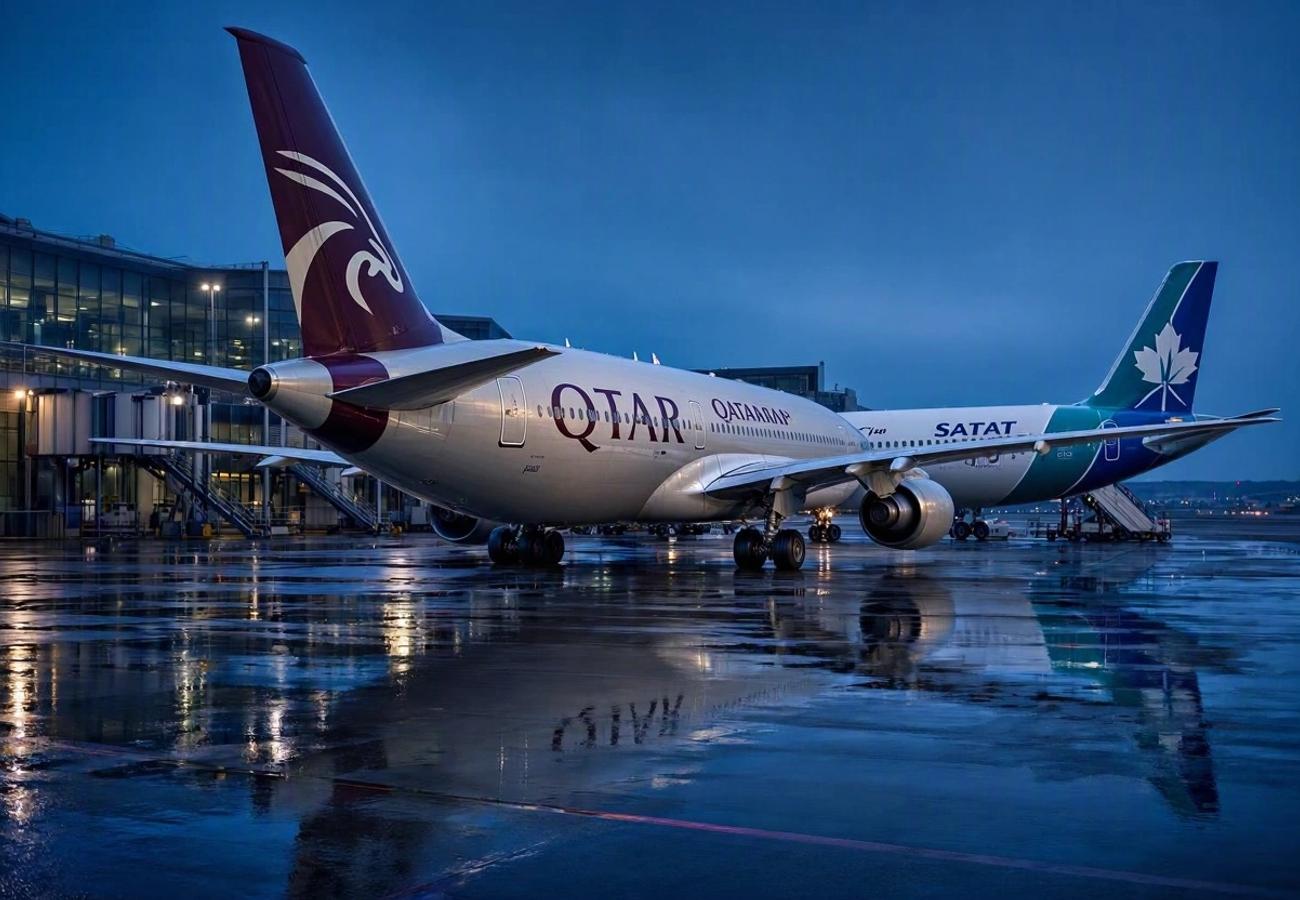
Image generated by AI
14 weekly non-stop wide-body flights now form the backbone of a strategic alliance between Qatar Airways and WestJet, designed to dismantle the long-standing dominance of legacy carriers on routes connecting North America to the Middle East, South Asia, and East Africa. This codeshare agreement transforms the logistics of long-haul travel for Canadians by integrating WestJet’s expansive domestic reach with the global network of the Gulf’s flagship carrier.
The Strategic Shift in Canadian Aviation
For years, travelers departing from outside Canada's primary international hubs were forced into restrictive itineraries, often requiring transfers through congested European gateways or the management of separate, uncoordinated tickets. The new partnership shifts this dynamic by anchoring Qatar Airways' operations into the domestic infrastructure of WestJet.
The operational core of this agreement centers on two primary gateways: Toronto Pearson International Airport (YYZ) and Montréal–Trudeau International Airport (YUL). By utilizing these hubs, Qatar Airways can now efficiently funnel passengers from the Canadian interior directly into Hamad International Airport (DOH) in Doha. Conversely, WestJet expands its international brand footprint without the capital risk of purchasing its own long-haul wide-body fleet.
Operational Breakdown and Route Integration
The alliance is not merely a marketing agreement but a deep operational integration. It synchronizes domestic "feeder" flights with intercontinental departures, ensuring that passengers from secondary markets have a streamlined path to over 170 international destinations.
Partnership Specifications and Capacity
| Operational Dimension | Implementation Detail | Strategic Significance |
|---|---|---|
| Weekly Flight Volume | 14 non-stop flights (7 from YYZ, 7 from YUL) | Provides daily scheduling reliability for business/leisure |
| Primary Hubs | Toronto (YYZ) & Montreal (YUL) | Creates dual-gateway access on the eastern seaboard |
| Domestic Reach | 11 Canadian cities | Opens single-ticket access for secondary markets |
| Global Connectivity | 170+ international destinations | Direct link from Canada to Asia, Africa, and Middle East |
| Ticketing | Fully integrated single-ticket | Unified disruption recovery and check-in |
| Baggage | Direct through-checked | Eliminates re-handling at domestic-to-intl transfers |
| Loyalty | WestJet Rewards integration | Points accrual across the entire journey |
Expert Analysis: The Economics of the Doha Connection
For travelers booking these routes, the direct consequence is a significant reduction in "transit friction." The ability to book a single ticket from a city like Saskatoon or Halifax to a destination in South Asia changes the legal and logistical protections afforded to the passenger. Under a single-ticket reservation, the carrier is responsible for rebooking the passenger in the event of a delay—a protection that does not exist when booking separate domestic and international flights.
The pricing pressure created by this move is substantial. By adding 14 weekly wide-body frequencies, the partnership introduces a high-capacity alternative to the Star Alliance and other legacy groups. This is particularly impactful for the high-volume diaspora corridors. Communities in Calgary, Edmonton, and Winnipeg—which have deep ties to cities like Mumbai, New Delhi, and Nairobi—now have a faster, more coordinated alternative to the traditional European stopover.
Furthermore, this creates a new "tourism pipeline." By removing the logistical hurdles of reaching regional Canada, the alliance is likely to increase inbound travel from the Gulf Cooperation Council (GCC) and Southeast Asia into the Rocky Mountains and Atlantic Canada, diversifying the typical tourist flow that usually stops in Toronto or Vancouver.
Key Takeaways
- Daily Frequency: 14 weekly flights (7 from Toronto, 7 from Montreal) ensure daily departures to Doha.
- Expanded Access: 11 domestic Canadian cities now have seamless, single-ticket connectivity to 170+ global destinations.
- Logistical Ease: Through-checked baggage and unified booking codes eliminate the need for manual transfers at YYZ or YUL.
- Loyalty Integration: WestJet Rewards members can now earn and track points on long-haul segments operated by Qatar Airways.
- Market Impact: Increased seat capacity is expected to drive down fares on routes to South Asia and East Africa.
FAQ: Canada-Qatar Flights 2026
Do I need to collect my bags in Toronto or Montreal when transferring? No. Because of the integrated baggage logistics, luggage checked at your regional Canadian departure airport is through-checked to your final international destination.
What happens if my WestJet flight is delayed and I miss my Qatar Airways flight? Since the journey is on a single-ticket reservation, the airlines are responsible for coordinated recovery, meaning you will be automatically rebooked on the next available flight without penalty.
Can I use WestJet Rewards for these long-haul flights? Yes, the agreement integrates WestJet Rewards, allowing passengers to earn tier-qualifying points and rewards on the Qatar Airways operated segments.
Which Canadian cities are included in the domestic feeder network? The network includes 11 cities, specifically highlighting hubs like Vancouver, Calgary, Edmonton, Winnipeg, Regina, Saskatoon, Ottawa, Halifax, and St. John’s.
The era of the European layover for Canadian travelers is facing its most serious challenge yet.
Related Travel Guides
Disclaimer
This article is for informational and educational purposes only. It does not constitute legal, financial, or professional advice. While we strive to provide accurate and up-to-date information, travel policies, regulations, and conditions change rapidly. Always verify information with official sources before making travel decisions. Nomad Lawyer makes no representations about the accuracy, reliability, completeness, or suitability of the information provided. Readers should consult qualified professionals for advice specific to their circumstances. The views expressed in this article are those of the author and do not necessarily reflect the views of Nomad Lawyer.
Naina Thakur
Contributor & Travel Specialist
Travel enthusiast and legal writer covering visa regulations, responsible tourism, and cultural journeys across global destinations.
Learn more about our team →