
Australian Travelers Pivot to Kazakhstan in 2026 as Silk Road Tourism Surges Over Europe
Australian long-haul travelers are increasingly swapping traditional European vacations for Kazakhstan, driven by a rise in specialized Silk Road tour packages and visa-free access.

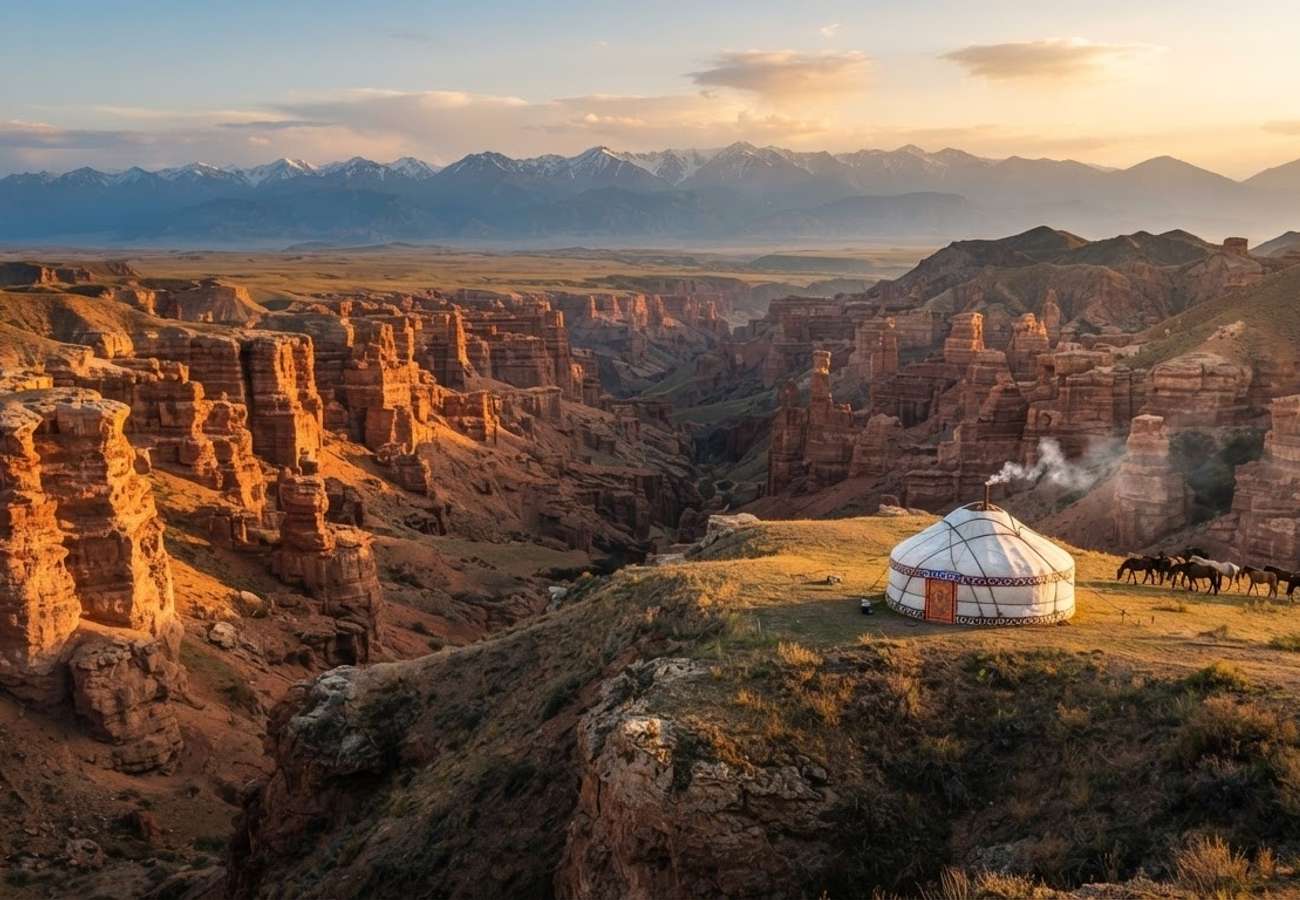
Image generated by AI
Australian outbound travelers are increasingly abandoning traditional European circuits in favor of Kazakhstan, as a surge in demand for Silk Road exploration transforms Central Asia into a primary long-haul destination for 2026 and 2027.
The shift represents a broader movement in traveler psychology, where high-net-worth and experiential tourists from Australia are seeking "under-the-radar" destinations to avoid the overcrowding prevalent in Mediterranean hotspots. Industry data indicates that Kazakhstan is now a cornerstone of multi-country itineraries that link the Kazakh steppe with neighboring Uzbekistan, Kyrgyzstan, and Tajikistan.
Shift Toward Central Asian Experiential Travel
Recent industry reporting and tour data reveal that Central Asia has become one of the fastest-growing regions for experiential tourism. Australian travel specialists are now aggressively marketing extended journeys that position Kazakhstan not just as a stopover, but as a primary destination. These curated experiences often combine the urban sophistication of Almaty with the raw, expansive landscapes of the Kazakh steppe.
According to the latest Australians on Holiday report from the Council of Australian Tour Operators, there is a sustained preference for structured, small-group journeys. In response, Australian operators have scaled their Central Asia offerings, introducing overland routes ranging from 16 to 26 days. These itineraries typically traverse the mountains and plains of Kazakhstan before moving into the historic trade hubs of Uzbekistan.
While the total volume of Australian visitors to Kazakhstan remains lower than the numbers seen in established European capitals, booking patterns for 2026 and 2027 show a marked increase. The fact that specialist agencies are now promoting these tours several years in advance suggests a long-term market shift rather than a temporary trend.
Almaty and the Steppe as Alternatives to European City Breaks
The appeal of Kazakhstan for the Australian market lies in its stark contrast to the congested city breaks of Western Europe. Most itineraries center on Almaty, where visitors experience a blend of Soviet-era architectural remnants and a thriving modern café culture. From this hub, travelers frequently venture to the alpine lakes and the dramatic vistas of Charyn Canyon.
Beyond the urban centers, the focus shifts to the Kazakh steppe. These excursions often involve 4x4 transport and traditional homestays, catering to a demographic that values remote environments and authentic cultural immersion over "checklist" tourism.
These journeys are frequently integrated into broader Silk Road narratives. Common travel patterns include:
- Rail Transit: Extended train journeys connecting Almaty to Tashkent.
- Cross-Border Circuits: Linking the modern infrastructure of Kazakhstan with the medieval architectural wonders of Samarkand and Bukhara in Uzbekistan.
- Adventure Add-ons: High-altitude trekking and yurt stays in Kyrgyzstan, which are often bundled into Kazakhstan-led packages to provide a mix of luxury and rugged adventure.
Government Policy and Infrastructure Enhancements
The rise in Australian arrivals is not accidental but the result of a deliberate multi-year tourism strategy by the Kazakh government. The state is working to diversify its economy by transforming the country from a transit zone into a destination. Official planning documents highlight a focus on upgrading national park facilities, improving hospitality standards, and streamlining entry requirements.
A significant catalyst for this growth is the visa-free entry regime for Australian citizens on short-term stays. By removing the bureaucratic hurdles associated with Central Asian travel, Kazakhstan has lowered the barrier to entry for independent and group travelers alike.
While non-stop flights from Australia do not currently exist, airline schedules indicate that efficient one-stop connections via Middle Eastern and East Asian hubs make Almaty and Astana highly accessible. Travel consultants note that these routes are now competitive with long-haul flights to Europe, particularly for those wishing to avoid the peak-season crowds of the Northern Hemisphere.
Furthermore, internal infrastructure is evolving. The development of "Silk Road heritage corridors," alongside improved domestic flight links and upgraded highways, has allowed tour designers to create more seamless multi-country packages.
The Influence of Digital Media and the "Elsewhere" Trend
Industry observers point to a shift in traveler psychology—the search for "elsewhere." After decades of visiting the same European landmarks, a growing segment of the Australian market is seeking destinations that feel undiscovered yet remain safe and welcoming.
The role of digital storytelling cannot be understated. Documentaries and social media content featuring the nomadic heritage, mountain passes, and desert caravans of the Silk Road have brought previously obscure geography into the Australian consciousness. High-impact imagery of yurts and the Charyn Canyon has transitioned Kazakhstan from a curiosity to a viable luxury travel option.
Because Kazakhstan and its neighbors still receive fewer Western tourists relative to their landmass, the "rarity value" of the experience is high. For the seasoned traveler who has already explored North America and Europe, the sense of discovery offered by the Kazakh steppe is a primary draw.
Infrastructure Gaps and Sustainability Concerns
Despite the optimistic growth, the transition is not without friction. Industry reports highlight that the tourism infrastructure in rural areas often lags behind the demand. Travelers may encounter a lack of English-language signage and inconsistent accommodation quality once they leave the primary hubs of Almaty and Astana. This gap explains why most Australians still prefer guided, tailor-made itineraries over solo exploration.
There are also environmental concerns. Analysts warn that a rapid influx of high-spend visitors could put undue pressure on the fragile ecosystems and ancient heritage sites of the Silk Road. While Kazakhstan's national strategy emphasizes sustainability, the actual implementation of these protections will be tested as the market expands.
As the trend continues, Kazakhstan is poised to move from a niche alternative to a mainstay on the Australian long-haul travel map, trading the overcrowded streets of Europe for the open horizons of Central Asia.
The shift toward the Silk Road suggests a new era of Australian travel where authenticity and isolation are the ultimate luxuries.
Related Travel Guides
Disclaimer
This article is for informational and educational purposes only. It does not constitute legal, financial, or professional advice. While we strive to provide accurate and up-to-date information, travel policies, regulations, and conditions change rapidly. Always verify information with official sources before making travel decisions. Nomad Lawyer makes no representations about the accuracy, reliability, completeness, or suitability of the information provided. Readers should consult qualified professionals for advice specific to their circumstances. The views expressed in this article are those of the author and do not necessarily reflect the views of Nomad Lawyer.
Raushan Kumar
Founder & Lead Developer
Full-stack developer with 11+ years of experience and a passionate traveller. Raushan built Nomad Lawyer from the ground up with a vision to create the best travel and law experience on the web.
Learn more about our team →