Karnataka Tourism Showcases India’s Heritage, Wildlife and Wellness Wonders at Arabian Travel Market Dubai 2026

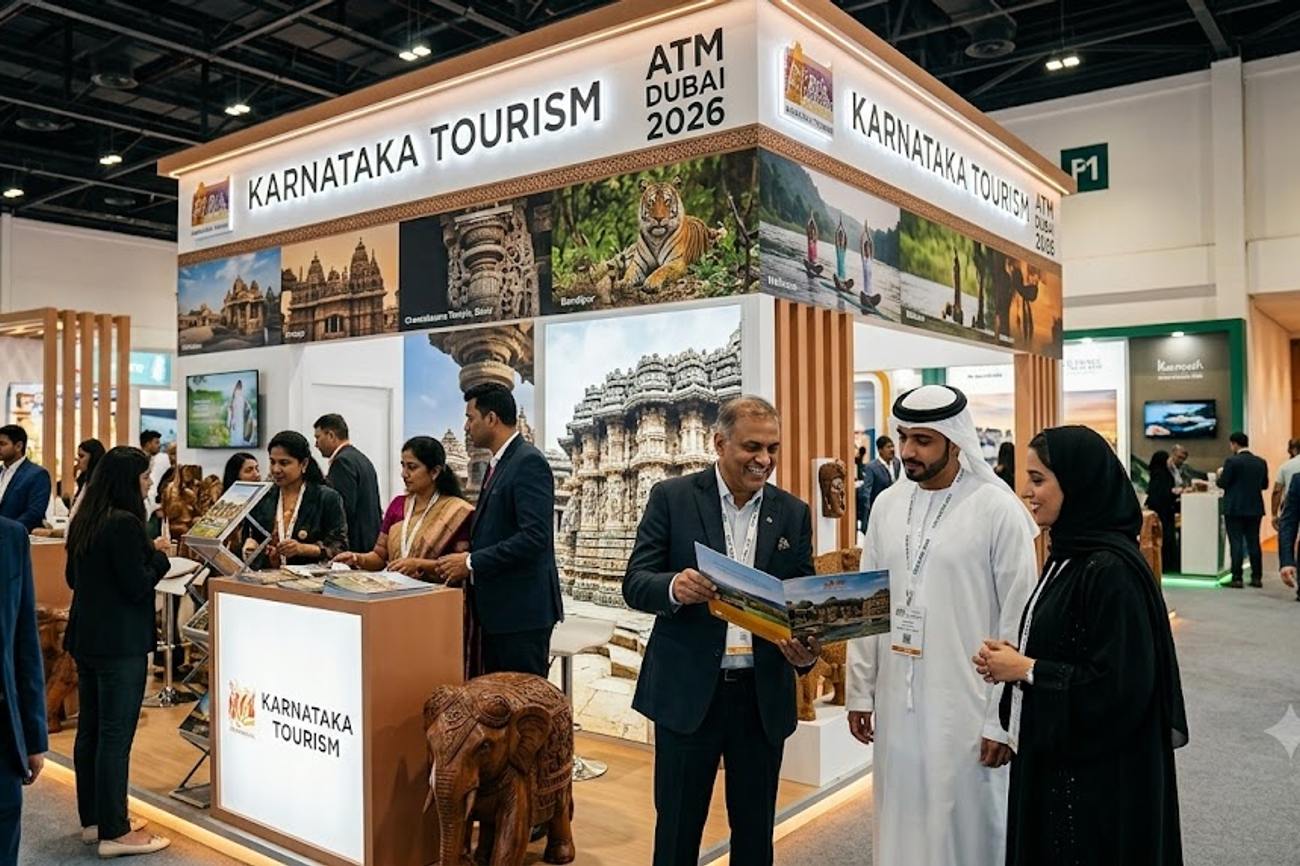
Image generated by AI
14th to 17th September 2026 marks the window where Karnataka Tourism aggressively pivoted its international acquisition strategy at the Dubai World Trade Centre. By securing Stall No. AS7254 at the 33rd edition of the Arabian Travel Market (ATM), the state of Karnataka transitioned from passive destination marketing to an active B2B offensive targeting the high-net-worth demographics of the UAE and the broader Gulf Cooperation Council (GCC) region. This move is not merely a promotional exercise but a calculated attempt to diversify the state's visitor profile away from domestic reliance toward luxury-spending international segments.
The Strategic Pivot to the GCC Market
The decision to anchor a presence at ATM 2026 aligns with a broader shift in Indian tourism policy, which now prioritizes "experiential" and "high-value" travel over mass tourism. By engaging directly with destination management companies (DMCs), corporate travel planners, and hospitality partners in Dubai, Karnataka is attempting to bypass traditional travel agency bottlenecks and create direct pipelines for Gulf travelers.
The timing of this engagement is critical. The event's overarching theme, “Travel 2040: Driving New Frontiers Through Innovation and Technology,” suggests that Karnataka is not just selling landscapes, but is attempting to integrate its tourism infrastructure with the digital transformation trends currently dominating the Middle East. For the state, the goal is to position itself as a year-round destination, effectively combating the seasonality that often plagues Indian tourism. This requires a sophisticated mix of business travel (MICE) and leisure, leveraging Bengaluru's status as a global tech hub to draw in corporate visitors who can be converted into leisure tourists.
Asset Diversification: From UNESCO Sites to the Arabian Sea
Karnataka's promotional strategy at the Dubai World Trade Centre was built on a multi-pillar asset model. Rather than relying on a single "hero" attraction, the state presented a diversified portfolio designed to appeal to different psychological profiles of the global traveler.
| Tourism Segment | Key Assets / Destinations | Strategic Objective |
|---|---|---|
| Cultural Heritage | Hampi, Pattadakal, Hoysala Ensembles, Mysuru Palace | Capturing the "Intellectual Traveler" via UNESCO-listed sites |
| Wildlife & Nature | Kabini, Bandipur, Nagarahole, Dandeli, Western Ghats | Attracting eco-conscious and adventure travelers |
| Wellness & Health | Traditional healing retreats, holistic centers | Targeting the luxury wellness and long-stay market |
| Coastal Tourism | Karwar, Gokarna, Murudeshwar, Malpe | Diversifying the "Beach Holiday" narrative beyond Goa |
| Local Industry | One District One Product (ODOP) initiatives | Integrating artisanal commerce with tourism |
The emphasis on the UNESCO World Heritage Convention sites—specifically the Group of Monuments at Hampi, Pattadakal, and the Sacred Ensembles of the Hoysalas—serves as a quality guarantee for international buyers. These designations provide a global benchmark of significance that reduces the perceived risk for travel operators building new itineraries. Simultaneously, the promotion of the Western Ghats positions Karnataka as a leader in biodiversity, appealing to the growing global trend of regenerative travel.
Expert Analysis: The Economics of the "High-Value" Visitor
For travel operators and nomads booking routes into Southern India, the direct consequence of this push is a likely increase in curated, high-end "circuit" packages. By promoting the "One District One Product" (ODOP) initiative alongside luxury wildlife safaris in Kabini and Bandipur, Karnataka is attempting to create a vertical integration of the tourist experience—where the traveler consumes the local art, stays in a high-end eco-lodge, and visits a UNESCO site in a single, seamless itinerary.
The pricing pressure this creates is significant. As Karnataka targets the Gulf market—known for higher average daily spends than European or Southeast Asian tourists—there will likely be a surge in the development of "ultra-luxury" infrastructure in previously rustic areas like the Western Ghats or the coastal towns of Karwar and Gokarna. While this increases the quality of amenities, it may lead to a "premiumization" of these destinations, potentially pricing out the budget-conscious independent traveler.
Furthermore, the focus on wellness and holistic healing is a direct response to the post-pandemic surge in health tourism. By positioning itself against established hubs like Kerala, Karnataka is attempting to carve out a niche that combines traditional Ayurvedic practices with the modern corporate infrastructure of Bengaluru. For the traveler, this means the emergence of "Bleisure" (Business + Leisure) packages where a corporate trip to the tech capital is paired with a wellness retreat in the hinterlands.
Karnataka is leveraging the Arabian Travel Market 2026 to attract international visitors through its diverse offerings in heritage and wellness. Travelers can explore detailed itineraries and official destination guides via the Karnataka Tourism portal to plan their visits.
The success of this strategy depends heavily on the connectivity provided by carriers and the efficiency of the International Air Transport Association (IATA) standards in streamlining arrivals. If Karnataka can synchronize its promotional efforts at ATM with increased flight frequencies from Dubai and Doha, the state could see a structural shift in its international arrival statistics.
Key Takeaways
- Targeted Market Expansion: Karnataka is aggressively pursuing the UAE and Gulf markets to move beyond domestic tourism and attract high-spending international visitors.
- Asset-Based Strategy: The state is leveraging three UNESCO World Heritage sites (Hampi, Pattadakal, and Hoysala Ensembles) as primary anchors for cultural tourism.
- Diversified Offerings: Promotion is split across five distinct pillars: heritage, wildlife (Bandipur/Nagarahole), wellness, coastal (Gokarna/Karwar), and artisanal products (ODOP).
- Business-Leisure Integration: The state is utilizing Bengaluru's tech reputation to create a "Bleisure" pipeline, encouraging corporate travelers to explore the state's nature and culture.
- Sustainability Focus: The Western Ghats are being positioned as a hub for responsible and sustainable tourism to align with global "Travel 2040" trends.
FAQ: Karnataka Tourism 2026
What are the best UNESCO sites to visit in Karnataka? The most prominent are the Group of Monuments at Hampi, the Group of Monuments at Pattadakal, and the Sacred Ensembles of the Hoysalas. These sites offer deep insights into India's architectural and royal history.
Which destinations in Karnataka are best for wildlife safaris? For high-quality wildlife experiences, focus on Kabini, Bandipur, and Nagarahole. For those seeking a mix of river activities and forests, Dandeli is the primary recommendation.
Where can I find beach destinations in Karnataka? The Arabian Sea coastline offers several options: Gokarna is famous for its spiritual atmosphere and beaches, while Karwar, Murudeshwar, and Malpe provide a mix of nature and pilgrimage sites.
What is the "One District One Product" (ODOP) initiative? It is a government program that promotes a unique craft or specialty product from each district, allowing tourists to buy authentic, regional handicrafts directly from the source.
Karnataka is no longer just a stopover for the tech-savvy; it is rebranding as a luxury sanctuary for the global elite.
Tags: Karnataka Tourism, Arabian Travel Market 2026, Dubai World Trade Centre, UNESCO World Heritage India, Gulf Tourism Market, ODOP Karnataka
Related Travel Guides
- Europe Enters a New Travel Era as Sustainable Connections Redefine Holiday Experiences: All You Need to Know
- Bolivia Wants Travellers to Stay Longer in La Paz as New Tourism Strategy Connects City, Mountains and Culture: All You Need to Know
- US Joins UK, Germany and Italy to Power Zagreb Tourism as Overseas Visitors Near Eighty Nine Percent of July Overnight Stays: What You Need to Know
This article is for informational purposes. Flight routes, passenger regulations, visa rules, and transit advisories are subject to change by airlines and aviation authorities. Readers are advised to verify schedules and travel documentation with relevant carriers and border agencies before departure.
Related Stories
Thailand Tourism Slowdown Tests Small Businesses as Kingdom Pivots to High-Yield Travel and Secondary Provinces

South Africa Expands Inclusive Wildlife Tourism with Woman-Owned Wellness Centre at Addo Elephant National Park