
US Joins UK, Germany and Italy to Power Zagreb Tourism as Overseas Visitors Near Eighty Nine Percent of July Overnight Stays: What You Need to Know
US Joins UK, Germany and Italy to Power Zagreb Tourism as Overseas Visitors Near Eighty Nine Percent of July Overnight Stays: What You Need to Know

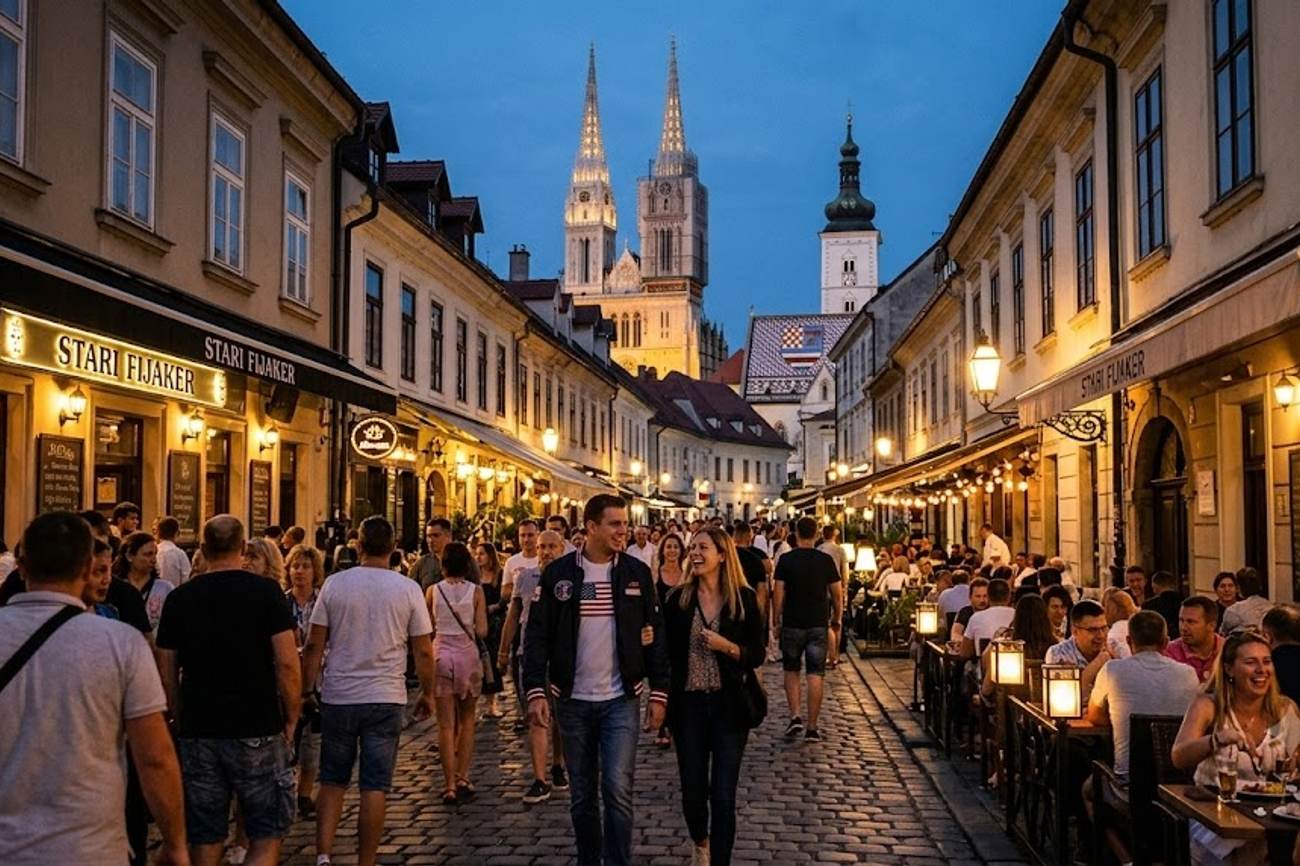
Image generated by AI
Domestic arrivals in Zagreb plummeted by 20.7% in July 2026, while foreign arrivals remained nearly flat with a marginal 0.9% dip—a divergence that has pushed the international share of overnight stays to a dominant 88.9%. This shift indicates a fundamental decoupling of the capital's tourism economy from its local base, transitioning Zagreb into a specialized hub for overseas short-stay travelers.
The Zagreb International Pivot in Numbers
The July 2026 data reveals a city that is increasingly an island of international demand within a fluctuating domestic market. Out of 146,460 total arrivals recorded in July, 129,535 were foreign nationals. When analyzing the volume of accommodation usage, the international dominance becomes even more pronounced: foreign travelers accounted for 238,940 overnight stays, representing 88.9% of the total commercial-accommodation nights.
This reliance on overseas markets is not merely a seasonal spike but a structural shift. While the city saw a total arrival decline of 3.6% and a 4.5% drop in total overnight stays compared to July 2025, the "softness" of the month was almost entirely driven by the collapse of domestic interest. Domestic arrivals fell 20.7%, and domestic overnight stays dropped 21.1% year-over-year. In contrast, the international segment proved remarkably resilient, with arrivals slipping by only 0.9% and overnight stays decreasing by a mere 1.9%.
The data also highlights a contraction in the length of stay. In June 2026, the average stay was 1.96 nights; by July, this figure tightened to 1.84 nights. This metric confirms that Zagreb is operating as a "stop-over" or "city-break" node rather than a primary destination, a pattern that aligns with wider IATA trends regarding the rise of short-duration urban tourism across Europe.
Comparative Market Context: Zagreb vs. National Trends
To understand Zagreb's current position, it must be compared against the broader Croatian tourism engine. While the capital experienced a slight contraction in July, the national figures tell a story of continued expansion. Across all of Croatia, July 2026 saw 4.476 million arrivals (up 2.7%) and 25.264 million overnight stays (up 1.2%).
The divergence is stark: the Adriatic coast continues to drive massive volume and longer durations of stay, while Zagreb functions as a high-turnover international gateway. This is further evidenced by the January 2026 source market data, which shows a diversified portfolio of high-spending long-haul and regional markets. Germany led with 9.5% of foreign nights, followed closely by Italy at 9.3%, Bosnia and Herzegovina at 7.5%, Serbia at 6.6%, and the United States at 5.9%. The presence of the US and UK in the top tiers of source markets suggests that Zagreb is successfully capturing the "North American in Europe" segment, which typically prioritizes capital cities as entry points.
The following table illustrates the volatility of the domestic market compared to the stability of the international segment during the peak summer transition of 2026.
| Metric | June 2026 | July 2026 | July YoY Change (vs 2025) |
|---|---|---|---|
| Total Arrivals | 132,293 | 146,460 | -3.6% |
| Foreign Arrivals | 107,291 | 129,535 | -0.9% |
| Domestic Arrivals | 25,002 | 16,925 | -20.7% |
| Foreign Share of Nights | 83.1% | 88.9% | +5.8% (Relative Share) |
| Domestic Overnight Stays | 43,717 | 29,893 | -21.1% |
| Average Stay (Nights) | 1.96 | 1.84 | -0.12 |
This data suggests that Zagreb is mirroring a trend seen in other Central European capitals, where domestic travelers migrate toward coastal or rural retreats during July, leaving the urban centers to be occupied almost exclusively by foreign tourists. According to STR, this pattern often leads to higher Average Daily Rates (ADR) as international travelers typically have a higher willingness to pay than domestic visitors.
Practical Traveler Advisory and Strategic Insights
The data-driven reality of Zagreb's 2026 summer season suggests that the city is now a high-demand, low-duration environment. For the individual traveler, this translates into specific booking and itinerary pressures.
First, the extreme concentration of international visitors (nearly 89% of nights) means that hotel availability in the city center will be tightly linked to international flight schedules rather than local holidays. If you are planning a visit in Q3, booking 8-12 weeks in advance is now essential to avoid the premium pricing that accompanies this international surge.
Second, the average stay of 1.84 nights confirms that Zagreb is a "fast" destination. Travelers should avoid scheduling more than 48 hours in the city unless they have a specific business or cultural objective. The infrastructure is currently optimized for the "city-break" model.
Finally, for North Americans and UK citizens, the increasing market share (with the US holding 5.9% of nights in early 2026) means that more services, signage, and tour operators are likely pivoting toward English-speaking markets. This makes Zagreb an ideal, low-friction entry point for those beginning a wider Croatian tour before heading to the coast.
Forward Projection: The Urban Gateway Trajectory
Based on the current trajectory, Zagreb is moving toward a state of "International Specialization." The sharp 21.1% decline in domestic nights suggests that the city is losing its appeal as a summer destination for Croatians, who are opting for the Adriatic. This leaves a vacuum that is being filled by a diversified mix of German, Italian, and American travelers.
Looking ahead to 2027, we can expect the "Foreign Share of Arrivals" to potentially breach the 90% mark during peak months. This will likely force the city to further optimize its short-stay infrastructure. We may see an increase in "micro-hotels" and high-turnover luxury rentals designed for the 1-2 night stay.
Furthermore, the national growth of Croatia—reaching 17.5 million arrivals and 90.5 million overnight stays through August 2026—indicates that the "top of the funnel" for the country is widening. As more foreigners enter Croatia via the UNWTO documented growth in European tourism, Zagreb will likely see its arrival numbers recover from the 3.6% dip as it captures a larger slice of the national growth pie. The city is no longer just a capital; it is a strategic logistics hub for the Adriatic.
FAQ: Zagreb Tourism Trends 2026
Will hotel prices in Zagreb increase? Yes. With domestic travel falling 21.1% and international visitors (who typically have higher budgets) now making up 88.9% of overnight stays, hotels are likely to shift pricing strategies to target higher-spending overseas markets.
Is July a good time to visit Zagreb? Data shows July is the peak for international arrivals (129,535). While the city is crowded, it is the best time for those seeking an international atmosphere and high service availability for English speakers.
Should I stay in Zagreb for more than two nights? The current average stay is 1.84 nights. Unless you have specific interests, the data suggests the city's primary attractions are consumable within a 48-hour window, making it a perfect stop-over before the coast.
Which markets are driving the most growth? Germany (9.5%) and Italy (9.3%) remain the primary drivers, but the United States (5.9%) is a significant and growing contributor to the city's international overnight stays.
Zagreb is no longer competing for the local traveler; it is successfully rebranding as the international gateway to the Balkans.
#Zagreb-International-Market-Share-2026 #Croatia-Domestic-Tourism-Decline #Urban-Short-Stay-Metrics #US-UK-Germany-Italy-Travel-Flows #Zagreb-Hotel-Occupancy-Trends
Related Travel Guides
- Spain Holiday Hotspots Under Weather Alert As Costa Blanca Storms Hit Xàbia And Dénia With Heavy Rain
- Malaysia Follows Australia And More In Powering Indonesia Tourism Success As H1 2026 Foreign Exchange Revenue Hits US$8.43 Billion
- Ukraine and Romania Among Top Visitors as Moldova Tourism Growth Overtakes Other European Countries in 2026
Disclaimer
This article is for informational and educational purposes only. It does not constitute legal, financial, or professional advice. While we strive to provide accurate and up-to-date information, travel policies, regulations, and conditions change rapidly. Always verify information with official sources before making travel decisions. Nomad Lawyer makes no representations about the accuracy, reliability, completeness, or suitability of the information provided. Readers should consult qualified professionals for advice specific to their circumstances. The views expressed in this article are those of the author and do not necessarily reflect the views of Nomad Lawyer.
Kunal K Choudhary
Co-Founder & Contributor
A passionate traveller and tech enthusiast. Kunal contributes to the vision and growth of Nomad Lawyer, bringing fresh perspectives and driving the community forward.
Learn more about our team →