
Europe Enters a New Travel Era as Sustainable Connections Redefine Holiday Experiences: All You Need to Know
Europe Enters a New Travel Era as Sustainable Connections Redefine Holiday Experiences: All You Need to Know

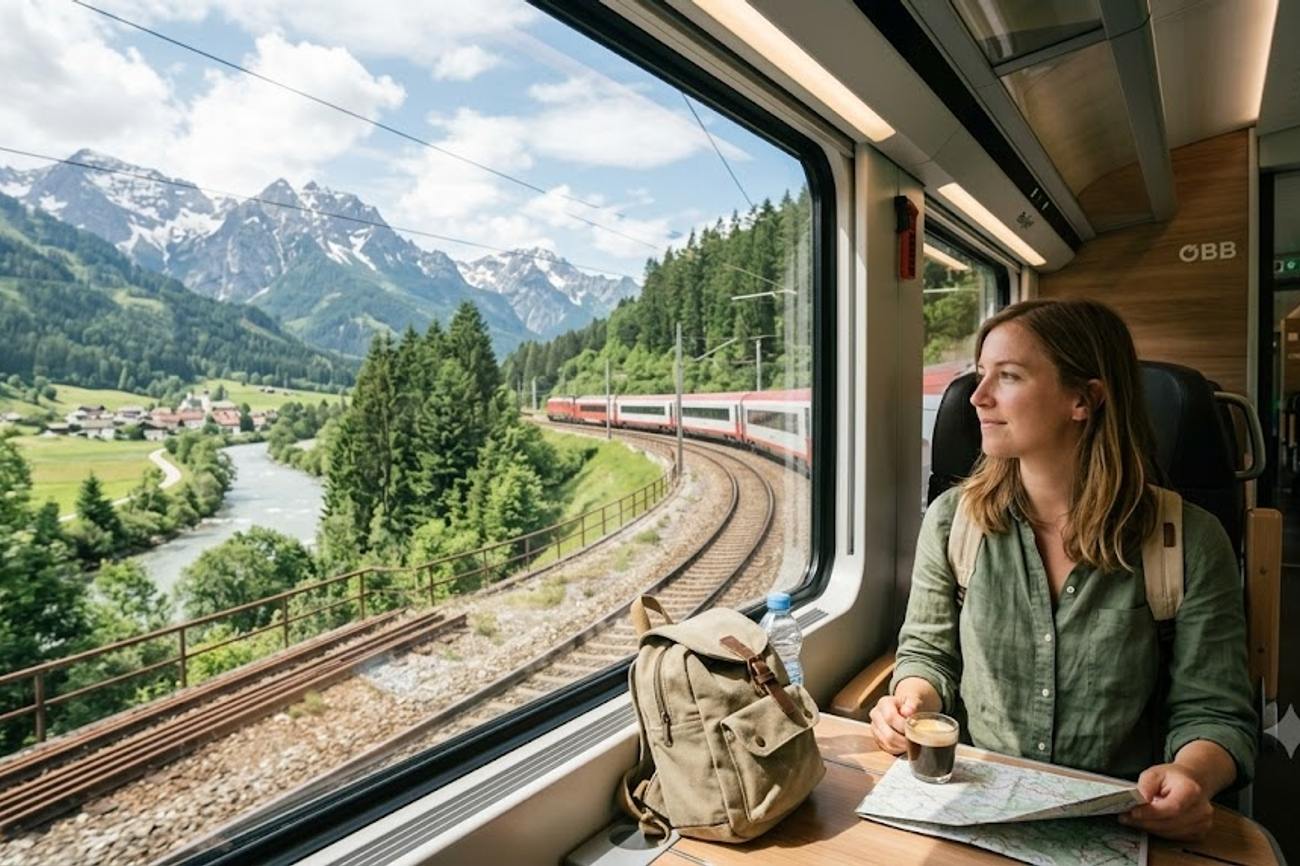
Image generated by AI
[Brussels, October 2023] — A decisive majority of European Union citizens now advocate for the promotion of rail travel as a primary mechanism to mitigate the environmental degradation caused by tourism. According to new data, 74% of EU residents support the expansion of rail networks to ensure the continent's tourism sector becomes fundamentally more sustainable.
The research, conducted by the Community of European Railway and Infrastructure Companies (CER), indicates a systemic shift in traveler preferences. This movement is driven by a desire to decouple European exploration from high-carbon aviation, favoring instead a "slow travel" philosophy that prioritizes regional immersion and lower atmospheric emissions.
The Catalyst for Rail Integration
The surge in rail demand is triggered by a convergence of environmental urgency and a changing psychological approach to vacationing. Travelers are increasingly rejecting the "airport-to-hotel" pipeline in favor of journeys where the transit itself constitutes a core part of the holiday experience.
This shift is supported by a broader institutional push toward green mobility. The European Travel Commission has begun integrating rail-centric models into its sustainability strategies, recognizing that the rail network can distribute tourist traffic more evenly across the continent, thereby reducing the "overtourism" currently paralyzing major hubs.
Markets and Routes Under Transformation
The transition toward rail-based tourism is most evident in the "Golden Triangle" of Western Europe, though it is expanding rapidly into the Nordics and the Alps.
| Region/Route | Primary Connectivity | Key Experience |
|---|---|---|
| France | Paris $\rightarrow$ Lyon, Bordeaux, Marseille | High-speed cultural corridors |
| Germany | Berlin, Munich, Rhine Valley | Regional heritage and urban hubs |
| Italy | Rome, Florence, Venice, Milan | Historic city-center integration |
| Switzerland | Alpine corridors | High-altitude scenic transit |
| Scandinavia | Northern European corridors | Nordic forests and lake districts |
| Cross-Border | Venice $\rightarrow$ Vienna | Trans-European landscape transit |
The impact extends beyond these primary corridors. By utilizing the International Union of Railways (UIC) standards for interoperability, rail travel is successfully funneling visitors into rural communities and heritage towns that lack airport infrastructure, thereby diversifying the economic benefits of tourism.
What This Means for Travelers
For the modern tourist, the transition from air to rail is not merely an ethical choice but a logistical one. The "Passenger Impact" of this shift manifests in three primary areas:
1. Elimination of Airport Friction Travelers are bypassing the traditional stressors of aviation—security queues, liquid restrictions, and remote airport transfers. Because rail stations are located in city centers, the "last mile" of the journey is significantly shortened, reducing total travel time despite slower transit speeds.
2. The Revival of the Night Train The resurgence of sleeper services allows passengers to cover vast distances without sacrificing a hotel night or a vacation day. This is particularly impactful for those combining professional obligations with leisure ("bleisure" travel), as it enables cross-border transit during dormant hours.
3. Access to "Hidden" Destinations Unlike flight paths, which are restricted to major hubs, the rail network provides direct access to smaller towns. This means travelers can now book trips to secondary cities in the Rhine Valley or the Italian countryside without needing a rental car, promoting a more authentic, less curated experience of Europe.
The Roadmap to Total Rail Integration
While the trend is accelerating, the transition is not without friction. The CER and other regulatory bodies identify several critical bottlenecks that must be resolved to make rail the default choice over short-haul flights.
Digital Infrastructure Current booking systems remain fragmented. A traveler planning a multi-country trip often has to navigate three or four different national rail websites. The industry is moving toward unified digital booking platforms to mirror the seamless experience of airline ticketing.
Pricing Parity Low-cost carriers have historically undercut rail pricing. To compete, European rail operators are under pressure to implement more competitive, transparent pricing models that reward early booking and sustainable choices.
Cross-Border Synchronization Technical disparities in signaling and ticketing systems at national borders still cause delays. Ongoing investments in infrastructure are aimed at creating a "seamless" border experience where trains move between jurisdictions without operational friction.
FAQ: European Rail Tourism 2023
Is train travel actually more sustainable than flying in Europe? Yes. Rail transport produces significantly lower carbon dioxide emissions per passenger kilometer compared to short-haul flights, making it the primary recommendation for eco-conscious travelers.
How do I book a multi-country rail trip? While some national sites are fragmented, travelers can use intermodal platforms or rail passes to coordinate journeys across France, Germany, Italy, and beyond.
Are night trains returning to all major European cities? Night train services are expanding rapidly, particularly for long-haul routes that previously required flights, allowing for overnight transit between major capitals.
Do I need a car to visit rural European towns via rail? Many rural destinations are now more accessible via regional rail links, though some "last mile" exploration may still require local cycling or walking.
The era of the airport shuttle is fading as the iron rail reclaims the European holiday.
#EUrail2023 #SustainableTourism #CER #EuropeanRailways #SlowTravelEurope #GreenMobility
Related Travel Guides
- Bolivia Wants Travellers to Stay Longer in La Paz as New Tourism Strategy Connects City, Mountains and Culture: All You Need to Know
- US Joins UK, Germany and Italy to Power Zagreb Tourism as Overseas Visitors Near Eighty Nine Percent of July Overnight Stays: What You Need to Know
- Spain Holiday Hotspots Under Weather Alert As Costa Blanca Storms Hit Xàbia And Dénia With Heavy Rain
Disclaimer
This article is for informational and educational purposes only. It does not constitute legal, financial, or professional advice. While we strive to provide accurate and up-to-date information, travel policies, regulations, and conditions change rapidly. Always verify information with official sources before making travel decisions. Nomad Lawyer makes no representations about the accuracy, reliability, completeness, or suitability of the information provided. Readers should consult qualified professionals for advice specific to their circumstances. The views expressed in this article are those of the author and do not necessarily reflect the views of Nomad Lawyer.
Raushan Kumar
Founder & Lead Developer
Full-stack developer with 11+ years of experience and a passionate traveller. Raushan built Nomad Lawyer from the ground up with a vision to create the best travel and law experience on the web.
Learn more about our team →