
Japan Raised Mount Tokachidake Volcano Alert to Level 3 as Hokkaido Hiking Routes and Tourism Access Face Restrictions
Japan Raised Mount Tokachidake Volcano Alert to Level 3 as Hokkaido Hiking Routes and Tourism Access Face Restrictions

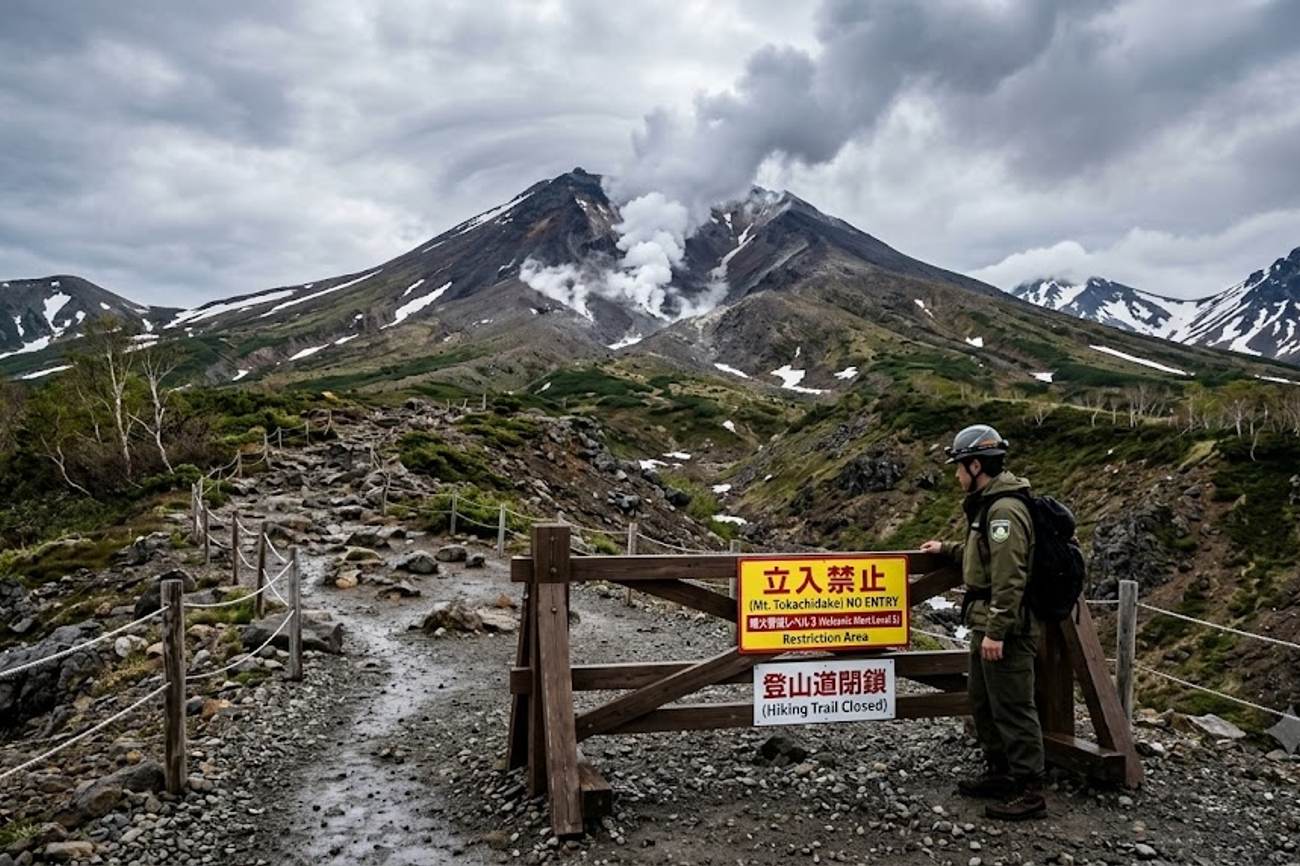
Image generated by AI
A single volcanic earthquake on September 12 at 8:20 a.m. was powerful enough to be felt throughout the foothills of Mount Tokachidake, triggering an immediate shift in safety protocols for northern Japan. This seismic event was the tipping point for the Japan Meteorological Agency (JMA), which officially elevated the volcano's alert status from Level 2 to Level 3 on September 12 at 9:30 a.m.
The Volcanic Shift in Hokkaido's Highlands
The current situation at Mount Tokachidake is a stark reminder of the geological volatility that defines Hokkaido. Since August 17, monitoring stations have recorded a steady increase in larger-amplitude volcanic earthquakes, signaling a surge in subterranean pressure. While the mountain has been under scrutiny for some time—including a small eruption from the 62-2 crater earlier in 2026—the current Level 3 designation marks a transition from "caution" to "active restriction."
For those of us who track the rhythms of the Daisetsuzan mountain region, this timing is particularly disruptive. September and October are the crown jewels of the Hokkaido calendar, when the alpine tundra transforms into a vivid palette of reds and golds. Usually, this is the peak window for hikers and photographers, but the JMA's decision has effectively carved a three-kilometre restricted zone around the 62-2 crater. The primary concern isn't just a full-scale eruption, but the high probability of volcanic rocks, ash, and smaller fragments being ejected into the immediate vicinity.
What Makes Tokachidake Different
Mount Tokachidake isn't just another peak; it is a living laboratory of volcanic activity. Unlike the dormant giants found elsewhere, Tokachidake provides a visceral connection to the earth's core through its thermal activity and steaming vents. The experience of visiting this region is traditionally a blend of high-altitude endurance and deep relaxation.
The geography here creates a unique tension. On one side, you have the rugged, unpredictable slopes of the volcano; on the other, you have the manicured, rolling hills of Biei and the floral expanses of Furano. This contrast is why the region attracts so many visitors. However, the current restrictions have severed the link between these two worlds. The Tokachidake Skyline, a route famous for its sweeping vistas, is now partially closed. Specifically, vehicle access between Biei Shirogane Onsen and Tokachidake Onsen is prohibited, with a gate near the Fukiage junction serving as a hard barrier to through traffic.
Visitor Insider Tips
Navigating Hokkaido during a volcanic alert requires a shift in strategy. You cannot simply wing it with a map; you need real-time data and a willingness to pivot your itinerary.
- Base Yourself in Biei or Furano: Despite the mountain's volatility, the towns of Furano and Biei remain fully operational. These are the best hubs for your stay. You can still enjoy the rural tourism experiences and local food attractions without being in the danger zone.
- Pivot Your Hiking Plans: With the Tokachidake Onsen Trailhead and Fukiage Trailhead strictly prohibited, do not attempt to "sneak" onto the trails. Instead, shift your focus to the lower-elevation walks in the Daisetsuzan National Park. Check the Japan Meteorological Agency for daily updates on ash drift.
- Transport Hacks: If you are relying on public transport, be aware that while buses are running, the stops for Hakuginso and Fukiage Roten-no-Yu are currently unavailable. If you are renting a car, avoid the Tokachidake Skyline and instead loop through the patchwork roads of Biei to see the autumn foliage.
- Onsen Alternatives: The Fukiage Roten-no-Yu Outdoor Bath and the Fukiage Onsen Health Center Hakuginso are closed until further notice. For that essential volcanic soak, look toward the Shirogane Onsen area, which remains a safe and stunning alternative for experiencing Hokkaido's geothermal waters.
- Gear Up for Ash: If you are staying in the wider region, keep a high-quality mask and goggles in your day pack. Even outside the three-kilometre zone, those located downwind can be affected by ash emissions.
Cultural and Environmental Context
In Japan, the relationship between the population and its volcanoes is one of profound respect and coexistence. The concept of shizen (nature) here isn't about conquering the wild, but adapting to its whims. The swift transition to a Level 3 alert is a testament to Japan's sophisticated disaster prevention culture.
The closure of local businesses, such as the Hakuginso health center, highlights the economic fragility of mountain tourism. These facilities are not just hotels; they are stewards of the land. When a volcano awakens, the local economy pauses. This interdependence ensures that tourism doesn't override safety. By restricting access to the UNESCO-recognized landscapes and national parks of Hokkaido, authorities are protecting both the visitors and the delicate alpine ecosystem from the chaos of an unmanaged evacuation during an eruption.
The environmental impact of such alerts also serves as a natural "reset" for the trails. The heavy foot traffic of the autumn season can strain the fragile tundra. While the closures are a blow to tourism operators, they provide a brief window for the land to breathe, away from the pressure of thousands of hiking boots.
FAQ: Visiting Hokkaido 2026
Is it safe to visit Furano and Biei right now? Yes. The Level 3 alert is localized to Mount Tokachidake. There is no general evacuation order for the surrounding towns, and general tourism in Furano and Biei continues as normal.
Can I still hike in the Daisetsuzan region? Only in non-restricted areas. Access via the Tokachidake Onsen and Fukiage trailheads is strictly prohibited. Always verify open routes via the Hokkaido Tourism Organization before heading out.
How do I get to Biei from Sapporo during these restrictions? The most reliable method is via JR Hokkaido trains to Asahikawa, followed by a local bus or rental car to Biei. Road closures are limited to the Tokachidake Skyline, not the main arteries from the city.
What should I do if I see ash falling? Stay indoors if possible. If outside, cover your nose and mouth with a mask and wear goggles to protect your eyes. Avoid driving in heavy ash fall, as it reduces visibility and can damage engines.
Respect the mountain's mood, and Hokkaido will reward you with beauty that defies description.
#TokachidakeVolcano #HokkaidoTravel2026 #DaisetsuzanNationalPark #BieiAutumn #JapanVolcanoAlert
Related Travel Guides
- Canada Updates Biometric Rules And Visa Awareness As Travel Applicants Learn New Identity Verification Steps
- Indonesia Travel Safety Under Spotlight As Java Sea Ferry Incident Raises New Concerns For Island Tourism Connectivity
- China Steps Up With Oman And More Nations To Offer Peace Efforts That Could Transform Middle East Tourism
Disclaimer
This article is for informational and educational purposes only. It does not constitute legal, financial, or professional advice. While we strive to provide accurate and up-to-date information, travel policies, regulations, and conditions change rapidly. Always verify information with official sources before making travel decisions. Nomad Lawyer makes no representations about the accuracy, reliability, completeness, or suitability of the information provided. Readers should consult qualified professionals for advice specific to their circumstances. The views expressed in this article are those of the author and do not necessarily reflect the views of Nomad Lawyer.
Raushan Kumar
Founder & Lead Developer
Full-stack developer with 11+ years of experience and a passionate traveller. Raushan built Nomad Lawyer from the ground up with a vision to create the best travel and law experience on the web.
Learn more about our team →